
Choosing between an inflatable tent house and a traditional frame tent for your camping trips in the Philippines comes down to balancing setup convenience against weight, cost, and transport limits. Inflatable tents, which use pressurized air beams instead of rigid metal or fiberglass poles, offer rapid pitching that is highly appealing for family car camping and beach trips. Traditional frame tents remain the standard for remote mountain treks where every gram matters and structural reliability must be maintained without carrying a heavy pump. Understanding how these two designs perform under tropical downpours, high humidity, and varied terrain will help you select the right shelter for your outdoor adventures.
Setup Time and Camp Convenience
Pitching a tent in the humid Philippine climate can quickly become an exhausting chore, making setup speed a primary consideration. With an inflatable tent house, the physical process is remarkably straightforward: you stake out the corners, attach a manual or electric pump to the inflation valves, and watch the structure rise as the air beams fill. This eliminates the tedious task of sorting, assembling, and threading traditional aluminum or fiberglass poles through tight fabric sleeves. For solo campers or parents managing young children at a busy campsite, this hands-free rising mechanism reduces physical effort and minimizes the frustration often associated with complex camp setups.
However, this convenience introduces a single point of failure: your entire shelter depends on a functional, compatible air pump. If you forget the pump at home, lose a crucial valve adapter, or suffer a pump malfunction in a remote area, pitching an inflatable tent becomes virtually impossible. Traditional frame tents, while requiring more manual coordination, offer a more predictable assembly process. Many modern frame designs feature color-coded clips and hub systems that simplify pole alignment, reducing the learning curve significantly. Even if a clip breaks or a pole section splits, resourceful campers can usually find a manual workaround to keep the tent standing, a luxury that a pumpless air tent cannot provide.
Products mentioned in this guide
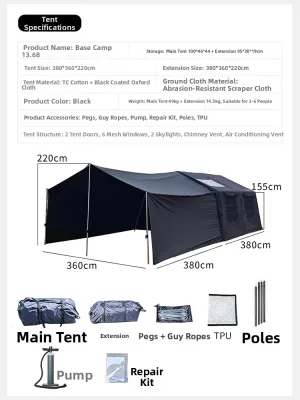
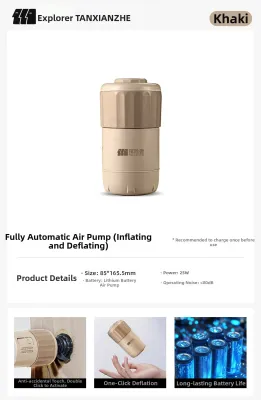
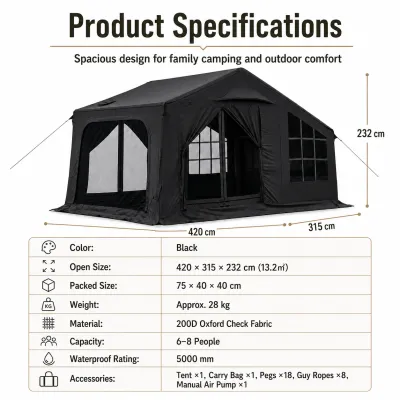
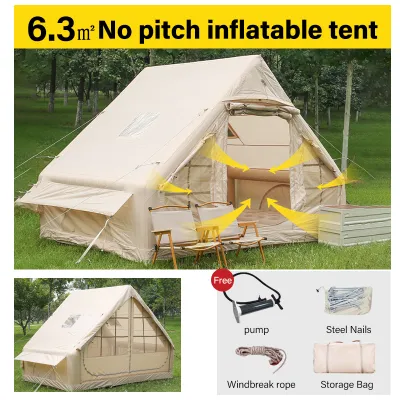
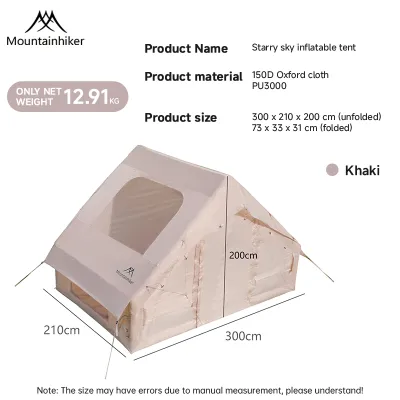
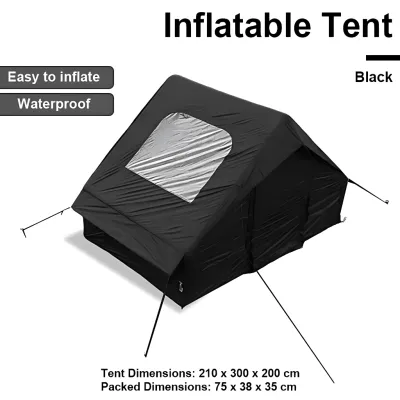
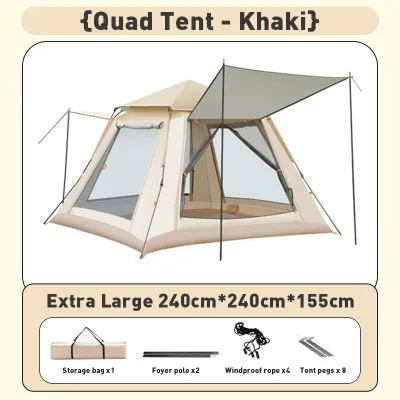
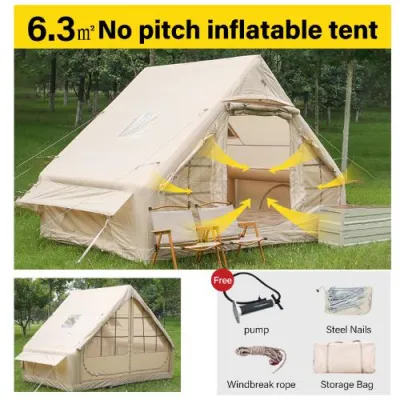
Prices are valid at publication and may change. Please refer to the product page for the latest price.
Weight, Packed Size, and Transport
When planning your journey, how you transport your gear dictates which tent structure is viable. Inflatable tents are inherently heavier and bulkier than their traditional counterparts because the thick, reinforced TPU or PVC sleeves required to contain high-pressure air weigh significantly more than lightweight aluminum poles. Additionally, you must factor in the physical space and weight of the pump itself, whether it is a dual-action hand pump or a battery-powered electric model. Before making a purchase, always check the manufacturer’s packed dimensions and total weight specifications printed on the product label to ensure the packed bundle fits comfortably in your vehicle’s trunk or storage area.

This weight penalty makes inflatable models highly impractical for multi-day hikes or steep ascents, such as trekking up Mount Pulag or Mount Dulang-Dulang. Carrying a heavy, bulky air tent along with your sleeping gear, food, and water will quickly lead to physical exhaustion on demanding trails. For these remote, self-supported expeditions, traditional frame tents are a much more practical choice. They pack down into compact, highly compressible bundles that can be easily lashed to the exterior of a backpacking pack or split among hiking partners to distribute the load evenly.
Durability, Weather Handling, and Repairs
Tropical weather in the Philippines presents unique challenges, from sudden afternoon downpours to strong coastal winds. The structural differences between the two tent types dictate how they respond to these environmental stresses. Traditional frame tents rely on rigid poles that bend to shed wind; however, under extreme gusts, these poles can reach their physical limit, flexing to the point of snapping and potentially tearing the tent fabric. In contrast, inflatable air beams are remarkably resilient in high winds. When hit by a powerful gust, the air beams simply deform or collapse temporarily to absorb the impact, then instantly bounce back into their original shape without any structural damage.
To ensure your shelter can withstand heavy tropical rains, you must look beyond the pole structure and examine the fabric specifications. Check the product spec sheet for a high hydrostatic head rating (preferably 2,000mm or higher for the rainfly and floor) to verify water resistance, and confirm that all seams are fully taped. The aerodynamic shape of the tent also plays a critical role; dome or tunnel profiles tend to shed wind and shed water much more efficiently than tall, cabin-style inflatable structures.
Field repairs also differ significantly between the two designs. If an air beam suffers a puncture from a sharp branch or a stray rock, you must locate the leak and apply a specialized adhesive patch kit to restore airtight integrity. While modern air beams are heavily armored, a slow leak overnight can result in a sagging shelter. With a traditional frame tent, a snapped pole segment can be quickly repaired in the field using a metal splint sleeve and some heavy-duty duct tape, allowing you to maintain a stable structure until you return home.
Price, Lifespan, and Overall Value
Your budget plays a decisive role in this comparison, as inflatable tents generally command a premium price. In the local market, entry-level traditional frame tents are highly accessible, often starting around ₱1,500 to ₱3,000, making them ideal for casual campers or those testing the waters. High-end backpacking frame tents can reach ₱15,000 or more, reflecting advanced lightweight materials. In contrast, quality inflatable tent houses typically start in the mid-to-high price tiers, often ranging from ₱8,000 to well over ₱25,000, due to the complex manufacturing of airtight bladders and heavy-duty outer sleeves.
Beyond the initial purchase price, you must account for potential hidden or accessory costs. An inflatable tent may require you to invest in a high-quality electric pump to save physical effort, or proprietary patch kits designed for specific bladder materials. Traditional tents might eventually require replacement shock cords or individual pole segments, which are widely available and inexpensive. When evaluating overall value, carefully review the manufacturer’s warranty terms and check if the brand offers local customer support or spare parts in the Philippines, as shipping replacement air bladders from overseas can be costly and time-consuming.
Decision Framework: Which Tent Fits Your Camping Style?
To finalize your decision, align the strengths of each tent design with your specific camping habits and typical destinations.
An inflatable tent house is highly suitable if you primarily engage in car camping, beach camping, or family trips where you can drive directly to your campsite. This style is excellent if you want to eliminate the stress of pole assembly, prioritize a fast and straightforward setup, and have ample cargo space in your vehicle to accommodate a heavier, bulkier packed bag.
A traditional frame tent is more practical if you plan to hike, backpack, or camp in remote, elevated terrains where you must carry all your gear on your back. It is also the ideal choice if you are operating on a tighter budget, require a highly compressible packed size, or want a time-tested design that does not rely on a separate pump to function.
Verify first if your intended campsites feature rough, rocky ground or sharp volcanic soils, which may require an extra-thick footprint to protect inflatable air beams from punctures. Additionally, always confirm pump valve compatibility and test your inflation equipment at home before heading out into the field.
Frequently Asked Questions (FAQ)
Are inflatable tents prone to bursting in hot weather?
Inflatable tents are designed to handle temperature fluctuations, but basic physics dictates that air expands when heated. Under the intense tropical sun of the Philippines, the pressure inside the air beams will rise during the hottest parts of the day. To prevent damage, high-quality inflatable models are equipped with pressure relief valves that automatically vent excess air if the pressure exceeds safe limits. When using a model without these valves, it is crucial to check the manufacturer’s recommended PSI limits and avoid over-inflating the beams during your morning setup, leaving some room for daytime expansion.
Can I use an inflatable tent for backpacking in the mountains?
Using an inflatable tent for backpacking is generally not recommended due to the severe weight and bulk penalties. The heavy-duty TPU air bladders, reinforced protective sleeves, and the mandatory air pump add significant weight that will quickly fatigue a hiker on steep, uneven mountain trails. For multi-day treks where pack space and weight distribution are critical, traditional lightweight frame tents utilizing aluminum poles remain the practical and safe standard.

Community discussion
Share your experience or ask a question. Comments are reviewed before publication.