
Choosing the right badminton racket can transform your performance on the court, but selecting a frame with the wrong balance can lead to frustration and physical strain. A head-heavy badminton racket is designed specifically to amplify power, making it a popular choice for players who love to dominate from the back of the court. However, this extra power comes at the cost of speed and maneuverability. Determining whether this racket type matches your playstyle requires an honest look at your physical conditioning, swing technique, and typical game scenarios.
In tropical playing environments, such as indoor sports centers across the Philippines, humidity can significantly affect both shuttlecock flight and player endurance. High humidity makes the air denser, which can slow down the shuttlecock and require more physical effort to clear or smash. In these conditions, choosing the correct racket balance becomes even more critical to sustain your performance throughout long, exhausting matches.
How Weight Distribution Changes Your Game
Every badminton racket has a specific balance point, which is the distance from the bottom of the handle to the point where the racket balances perfectly on a thin support. When this balance point is shifted further up the shaft toward the frame, the racket is classified as head-heavy. This design concentrates more mass at the top of the racket, directly influencing how the frame behaves during a swing.
Products mentioned in this guide
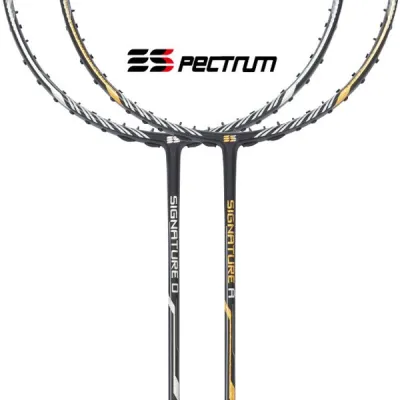


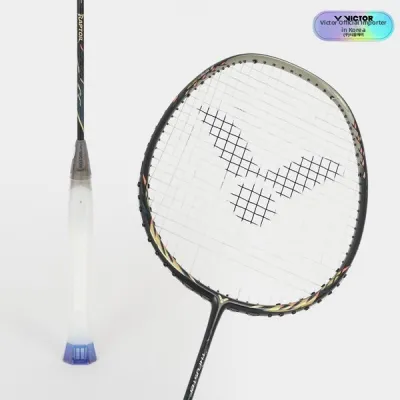


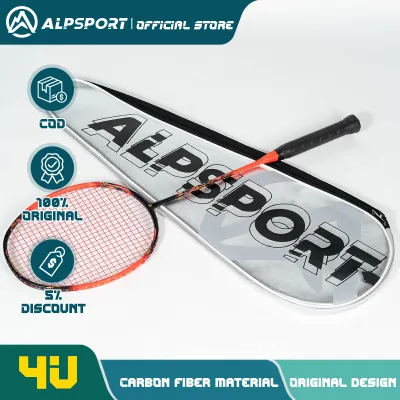
Prices are valid at publication and may change. Please refer to the product page for the latest price.
The physics behind a head-heavy racket relies on momentum. During an overhead swing or a smash, the extra mass at the racket head increases the kinetic energy transferred to the shuttlecock upon impact. This momentum generation allows players to produce deeper clears and faster, more powerful smashes with less effort from the arm itself, provided they can swing the racket at a high velocity.
However, this power-oriented design introduces a distinct trade-off in defensive reaction speed. Because more weight is concentrated at the tip, it takes more physical effort to change the racket’s direction quickly. When defending against rapid drives or body smashes, a head-heavy frame can feel sluggish compared to even-balance or head-light alternatives, making quick reflex blocks more challenging to execute.
Evaluate Your On-Court Habits and Physical Readiness
To determine if a head-heavy racket suits your game, you must first analyze your primary playing style and position on the court. If you are primarily a singles player or a baseline attacker in doubles who relies on heavy smashes to win points, the added power of a head-heavy frame aligns with your tactical goals. Conversely, if you prefer playing at the net, executing quick interceptions, or managing fast-paced defensive rallies, a lighter head is generally more advantageous.

Your current shot outcomes can also highlight whether a change in racket balance is necessary. If you consistently find your clears falling short of the opponent’s baseline or your smashes lacking the depth to finish rallies, a head-heavy frame can provide the mechanical assistance needed to lengthen your shots. However, if your main struggle is keeping up with fast drives or defending the body, adding weight to the head of your racket will likely worsen these issues.
Physical conditioning is the final, crucial element of this self-assessment. Swinging a head-heavy racket repeatedly requires significant strength in your wrist, forearm, and shoulder. In warm, humid local courts where sweat can affect your grip and fatigue sets in quickly, managing a top-heavy frame demands excellent muscular endurance to prevent your swing speed from dropping as the match progresses.
Check Your Technique and Injury Risk Factors
Using a head-heavy racket safely depends heavily on your swing mechanics and timing. Because of the increased momentum, your wrist and shoulder must absorb more deceleration force at the end of each stroke. Proper follow-through and a relaxed grip before the moment of impact are essential to allow this energy to dissipate safely without straining your joints.
For beginners, a head-heavy racket often introduces a steep learning curve that can hinder skill development. Novice players frequently rely on arm strength rather than wrist snap and body rotation to generate power, which can lead to mistimed shots when using a top-heavy frame. Intermediate and advanced players who have developed consistent timing and clean contact are much better equipped to handle the unique feel of a head-heavy racket.
Before upgrading to a power-oriented frame, perform a quick self-check of your current technique. You should be able to hit consistent, high clears from your own baseline to the opponent’s baseline using an even-balance racket without feeling physical strain. If you struggle with basic clear depth or cannot control your drop shots consistently, focusing on your footwork and swing mechanics is a safer path to improvement than relying on a heavier racket head.
Practical Ways to Test Racket Balance Before Buying
When shopping for a new racket, understanding manufacturer specifications is the first step in identifying balance. Rackets are typically categorized by their overall weight class, such as 3U (85–89 grams) or 4U (80–84 grams), and their balance point measured in millimeters. A balance point of 295mm or higher generally indicates a head-heavy racket, while anything below 285mm is considered head-light.
If you are browsing options in a physical sports shop, you can perform a simple finger-balance test to verify the weight distribution. Extend your index finger and balance the racket shaft on it until the frame rests horizontally. If the balance point lies closer to the frame than the middle of the shaft, you are holding a head-heavy model, which will provide a heavier feel during your swing.
To truly understand how a racket behaves under match conditions, try to borrow or demo different models before making a purchase. Many local badminton clubs or sports shops offer demo programs, or you can ask a playing partner to let you try a few shots with their gear. Pay close attention to how your wrist feels after a few consecutive smashes and whether you can transition quickly from a smash to a defensive block.
Choose Your Next Step Based on Your Assessment
If your self-assessment shows that you have solid swing mechanics, sufficient forearm strength, and an aggressive playing style, proceeding with a head-heavy racket is a logical choice. When purchasing, look for a model that matches your physical limits, and consider pairing it with a slightly lower string tension (such as 22 to 24 lbs) to increase the sweet spot and reduce the impact shock on your arm.
If your priority is defensive speed, quick net play, and minimizing physical fatigue during long sessions, an even-balance or head-light alternative is the better path. These rackets offer superior maneuverability, allowing you to react faster to quick drives and maintain control during rapid, flat exchanges without putting excessive strain on your wrist.
If you realize that your technique is still developing or you frequently experience shoulder discomfort after playing, the best decision is to stick with your current gear. Focus your efforts on physical conditioning, wrist-strengthening exercises, and coaching drills to refine your swing mechanics. Once your technique is consistent and your muscles are conditioned, you can safely transition to a head-heavy frame to elevate your power game.
Frequently Asked Questions (FAQ)
Can a beginner use a head-heavy badminton racket?
While a beginner can physically swing a head-heavy racket, it is generally not recommended. Novice players are still developing their timing, grip transition, and swing mechanics, and the extra weight at the head can make it difficult to learn the correct wrist snap. Starting with an even-balance racket allows beginners to focus on clean contact and proper form before introducing the specialized demands of a power-oriented frame.
Does a head-heavy racket cause arm injuries?
A head-heavy racket does not directly cause injuries, but it can increase the risk of strain if used with improper technique or insufficient physical conditioning. The extra momentum of a heavy frame head puts more stress on the wrist, elbow, and shoulder joints during deceleration. To minimize injury risk, ensure you warm up thoroughly, maintain a relaxed grip until the moment of impact, and stop playing immediately if you experience persistent joint pain.

Community discussion
Share your experience or ask a question. Comments are reviewed before publication.