
Upgrading your e-bike controller is worth the investment if you want to unlock better acceleration, customize your riding modes, or replace a failing unit that disrupts your daily commute. However, if your motor and battery are already operating at their thermal and electrical limits, a controller upgrade alone will not transform a low-powered commuter bike into a high-speed cargo hauler. Deciding whether to swap this vital component requires diagnosing your current system, understanding your riding goals, and verifying compatibility.
The controller acts as the brain of your electric bicycle, regulating the flow of energy from the battery to the motor based on inputs from your throttle or pedal assist sensors. When it functions correctly, your ride feels smooth and responsive. When it begins to fail, or when its factory settings limit your riding style, evaluating your options becomes essential.
Common Signs Your E-Bike Controller is Failing
Identifying a failing controller early can prevent damage to other expensive components like your battery pack or hub motor. One of the most common symptoms of a degrading controller is intermittent power loss or sudden cut-offs when riding under load. If your e-bike shuts down completely while climbing a steep incline or accelerating from a complete stop, the internal transistors—known as MOSFETs—may be overheating or failing to handle the current demand.
Products mentioned in this guide
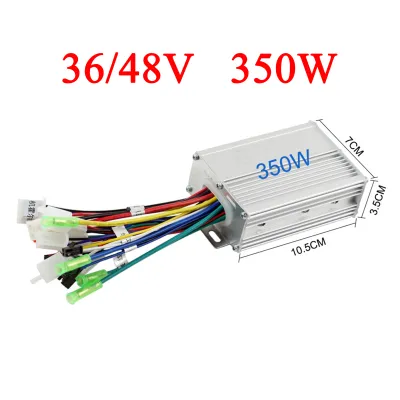
28 Lazada user ratings
Powerful motor for smooth rides, Efficient and reliable motor controller, Easy to install and use, Dual mode for versatile use, Smooth accel…Read full reviewShow less
Powerful motor for smooth rides, Efficient and reliable motor controller, Easy to install and use, Dual mode for versatile use, Smooth acceleration and deceleration, Smooth acceleration and deceleration, Enhances the performance of your e-bike, Provides a comfortable riding experience,
High-quality materials for durability, Enhances the performance of your e-bike, Enhances the performance of your e-bike, Great value for the…Read full reviewShow less
High-quality materials for durability, Enhances the performance of your e-bike, Enhances the performance of your e-bike, Great value for the price, Dual mode for versatile use, Dual mode for versatile use,
Dual mode for versatile use, Great value for the price, Smooth acceleration and deceleration, Easy to install and use, Efficient and reliabl…Read full reviewShow less
Dual mode for versatile use, Great value for the price, Smooth acceleration and deceleration, Easy to install and use, Efficient and reliable motor controller,
Enhances the performance of your e-bike, Efficient power management system, Powerful motor for smooth rides
🔨Durability:good
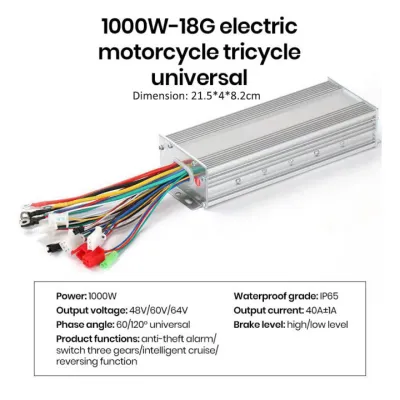
13 Lazada user ratings
si pa na try sna compatable thanks
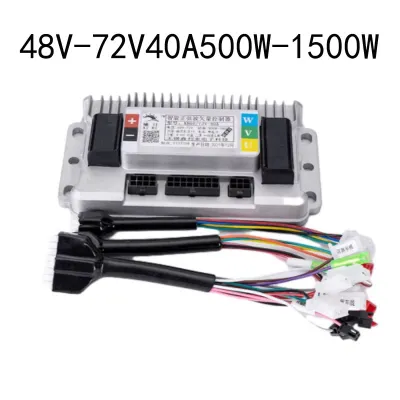
15 Lazada user ratings
arrived in good package. it looks good.. notyet installed . hopefully it will work.. no diagram inclution. . it needs litle research for the…Read full reviewShow less
arrived in good package. it looks good.. notyet installed . hopefully it will work.. no diagram inclution. . it needs litle research for the wiring configuration
The motor controller makes my ebike run faster Soft mode makes it suitable from overheating It fit very well with the brand of my ebike
Supports 48V-72V voltage, My E bike is very smooth to run again. Super ganda na uli ang performance at takbo ng ebike
Smooth and powerful acceleration, Easy to install and use, Provides precise control over motor speed
Perfect for ebike, Lightweight design, High performance, 3-mode sine wave
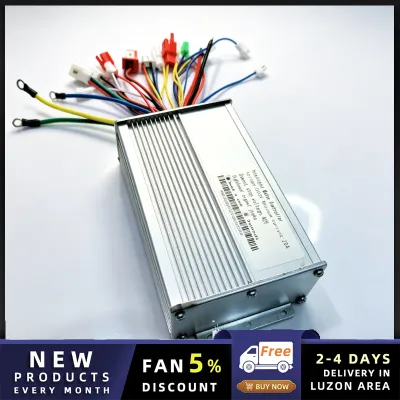
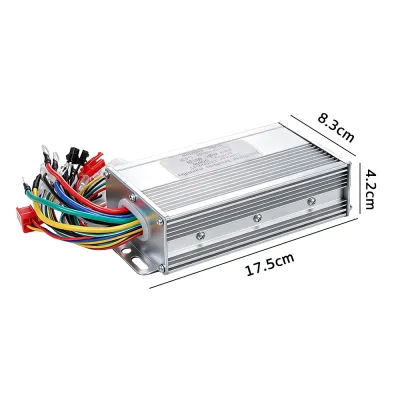
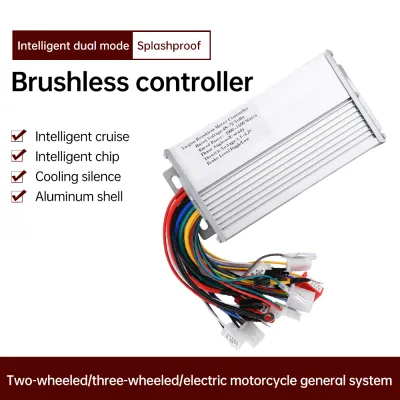
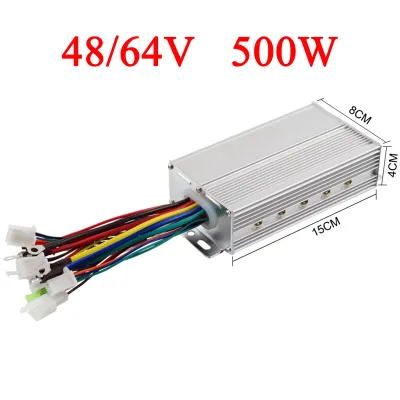
620 Lazada user ratings
ok naman po siya nakabalot naman po ng mabuti...at tama rin po ung items na dumating po sa akin......at da raider naman po na nag deliver ng…Read full reviewShow less
ok naman po siya nakabalot naman po ng mabuti...at tama rin po ung items na dumating po sa akin......at da raider naman po na nag deliver ng items ko po salamat din po....hindi hindi ko pa lng na ikakabit.....
Provides a comfortable riding experience, Efficient and reliable motor controller, Enhances the performance of your e-bike,
Great value for the price, Powerful motor for smooth rides, Provides a comfortable riding experience,
Enhances the performance of your e-bike, Great value for the price, Powerful motor for smooth rides,
okay naman item. properly wrap maganda din may label bawat cable
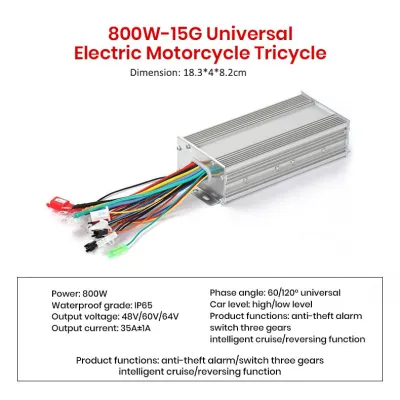
253 Lazada user ratings
Easy to install and set up, Great value for the price, Versatile compatibility with different voltage options, Efficient and reliable motor …Read full reviewShow less
Easy to install and set up, Great value for the price, Versatile compatibility with different voltage options, Efficient and reliable motor controller, Smooth and responsive acceleration, Durable construction for long-lasting use, Quiet operation for a peaceful riding experience,
Thank you seller for being very responsive . appreciate much. (Recommended) on time delivery. I still have to check the Qual Run if ok. pack…Read full reviewShow less
Thank you seller for being very responsive . appreciate much. (Recommended) on time delivery. I still have to check the Qual Run if ok. packaging is OK Well packed.most impt as of this time product is operating.
Easy to install and set up, Smooth and responsive acceleration, ok na uli takbo ng ebike namin battery naman ang need palitan
Great value for the price, Efficient and reliable motor controller, Enhances the performance of your e-bike,
wala sira hndi may nabasag n parts sa loob nta hndi rin nagamit kc nainet at bigla nasira narin agad
Prices are valid at publication and may change. Please refer to the product page for the latest price.
Another clear indicator is the appearance of specific error codes on your handlebar LCD screen. While error codes vary by manufacturer, codes pointing to over-current protection, throttle communication failure, or motor phase issues often stem from a malfunctioning controller board. Consulting your e-bike’s manual will help you decode these digital warnings.
Unexplained speed limitations can also point to a controller issue. If your bike suddenly refuses to exceed a slow crawl despite a fully charged battery, the controller’s internal programming or hardware may have entered a permanent safe mode due to a partial component failure.
Physical damage and sensory clues are the most urgent signs that you need a replacement. A strong chemical burning smell coming from the frame compartment or visible melting on the plastic wire connectors indicates catastrophic thermal failure. If you notice these signs, stop riding immediately and disconnect the battery to prevent a potential electrical short.
Finally, an unresponsive throttle or pedal assist system (PAS) often points to a controller that can no longer process input signals. If your sensors are clean, properly aligned, and securely plugged in, but the motor fails to engage when you pedal or twist the throttle, the controller’s input ports are likely damaged.
Controller Issues vs. Motor or Battery Problems
Before purchasing a replacement, you must perform basic diagnostic checks to ensure the controller is actually the source of the problem. Because e-bike electrical systems are interconnected, a failing battery or a damaged motor can easily mimic a bad controller.

Start by checking your battery voltage under load. You can do this by connecting a digital multimeter to the battery’s discharge terminals or by closely watching the voltage readout on your display while accelerating. If the voltage drops drastically—a phenomenon known as voltage sag—and triggers a system shutdown, your battery cells or its Battery Management System (BMS) are likely worn out, rather than the controller.
Next, inspect the motor hall sensors and phase wires. Locate the thick blue, green, and yellow phase wires that deliver power from the controller to the motor. If these wires have rubbed against the frame or overheated, their insulation may have melted, causing a short circuit. A short in the phase wires will cause the motor to resist turning and feel rough or notched even when the bike is turned off.
Verifying your wiring harness connections is another crucial diagnostic step. Unplug each connector, starting from the handlebars down to the controller housing, and inspect them for bent pins, green corrosion, or moisture. Cleaning these connections with a dedicated electrical contact cleaner and re-seating them securely can resolve intermittent power drops without requiring new hardware.
Finally, use a multimeter to perform basic continuity and voltage checks. Test the throttle signal wire, which should output a smooth, variable voltage (typically ranging from 1.0V at rest to 4.2V at full twist) when the system is powered. If the controller receives this variable voltage but fails to send power to the motor phase wires, the controller’s internal output stage is likely dead.
When to Repair vs. When to Upgrade Your Controller
Once you have isolated the issue to the controller, you must decide whether to repair the existing setup, replace it with an identical original equipment manufacturer (OEM) unit, or invest in a high-performance upgrade. This decision depends on your technical skill, your riding environment, and your budget.
Evaluating the financial aspect is a practical starting point. A basic, direct-replacement OEM controller typically costs between ₱1,500 and ₱3,500 on reputable online marketplaces. In contrast, a high-performance, programmable aftermarket controller can range from ₱5,000 to over ₱10,000, and often requires purchasing a matching LCD screen to access its customization features.
If your diagnostic checks revealed a simple external issue, such as a corroded pin or a melted connector plug, a repair is highly cost-effective. You can cut away the damaged connector, solder the wires directly, and seal them with marine-grade, adhesive-lined heat shrink tubing. This repair costs only a few hundred pesos and restores a reliable, weather-resistant connection.
However, if the failure is internal, such as a blown capacitor or a shorted MOSFET on the circuit board, attempting a repair is rarely practical. E-bike controllers are typically filled with a potting compound or sealed tightly to prevent water ingress, making board-level soldering incredibly difficult. In these scenarios, a full replacement is the safest and most reliable path forward.
If you must replace the unit, upgrading to a higher-amperage controller is tempting, but you must first assess whether your motor and battery can safely handle the extra load. Upgrading to a controller that draws more current than your battery’s BMS can safely discharge will cause the battery to shut down constantly under load, rendering the upgrade useless and potentially damaging your battery cells.
What to Expect from an E-Bike Controller Upgrade
Installing a higher-specification controller can significantly alter your riding experience, but it is important to maintain realistic expectations regarding performance changes and system limitations.
The most noticeable improvement from a higher-amp controller is enhanced acceleration and stronger hill-climbing torque. Because torque is directly proportional to current, sending more amperes to your motor allows you to maintain speed on steep inclines and accelerate away from stops much more quickly. This is particularly beneficial for cargo bike users or riders navigating hilly terrain.
However, this performance boost introduces thermal risks. Your stock motor will generate significantly more heat when subjected to higher current. If you push the motor too hard on long, steep climbs, you risk melting internal nylon gears or demagnetizing the rotor magnets. Additionally, drawing more current will drain your battery much faster, noticeably reducing your riding range per charge.
Matching your system’s nominal voltage is an absolute necessity. A controller designed strictly for 48V will not function on a 36V battery pack, as it will trigger a low-voltage cutoff to protect the battery from over-discharge. Always ensure the new controller’s voltage rating matches your battery’s output.
You must also consider local speed and power regulations in the Philippines. The Land Transportation Office (LTO) and local government units enforce specific guidelines regarding electric bicycle classifications, speed limits, and road access. Upgrading your controller to bypass factory speed limits (which often restrict light electric vehicles to 25 km/h on public roads) can affect your vehicle’s legal classification and safety on busy public streets.
How to Choose a Compatible Replacement Controller
Selecting a compatible replacement controller requires matching several critical electrical and physical specifications to ensure a safe integration with your existing e-bike components.
Begin by matching the nominal and peak voltage ratings of your battery. While some aftermarket controllers are multi-voltage compatible (supporting 36V, 48V, and 52V systems), you must verify this compatibility on the product label or manufacturer datasheet before installation.
Next, verify the maximum continuous and peak current limits, measured in amperes (A). If your stock controller was rated for 15A, upgrading to a 20A controller is generally safe for most standard hub motors. However, you must check your battery’s maximum continuous discharge rating to ensure it can supply this current without overheating or tripping its internal safety circuits.
Physical dimensions are another critical factor that is easily overlooked. High-power controllers require larger internal heatsinks and more physical space to dissipate heat safely. Measure your e-bike’s internal controller compartment or external frame bag carefully to ensure the new, larger unit will fit securely without pinching any wires.
Finally, prepare for connector compatibility. Unless you purchase a plug-and-play kit designed specifically for your exact e-bike model, the connectors on the new controller will likely not match your existing wiring harness. You should plan to cut, solder, and insulate the phase wires, hall sensors, throttle, brakes, and display connections using high-quality heat shrink tubing to protect the system from water damage during wet-weather rides.
Frequently Asked Questions (FAQ)
Can I install a higher-amp controller on my stock e-bike motor?
Yes, but you must respect the thermal limits of your motor. A higher-amp controller sends more current, which generates more heat inside the motor casing. If your motor is rated for 250W or 350W, running a 25A or 30A controller can quickly melt the internal nylon gears, degrade the phase wire insulation, or demagnetize the magnets. Always check your motor manufacturer’s maximum recommended current before upgrading.
Will a new controller increase my e-bike's top speed?
A new controller will primarily improve acceleration and torque rather than top speed. Top speed is fundamentally limited by your battery’s voltage and the motor’s physical winding design (its KV rating). However, if your stock controller has an active electronic speed limiter (such as a speed-limiting wire or a firmware cap), upgrading to an unrestricted or programmable controller can unlock the true top speed potential of your existing voltage setup.

Community discussion
Share your experience or ask a question. Comments are reviewed before publication.