
Choosing the right home cardio equipment from Johnson Fitness requires balancing your personal fitness objectives with the practical realities of your living space. Whether you are setting up a workout corner in a Metro Manila condominium or dedicating a room in a spacious suburban home, selecting between a treadmill, a spin bike, and a rowing machine is a major decision. Each machine targets different muscle groups, places varying levels of stress on your joints, and demands a unique physical footprint.
To make an informed investment, you must evaluate how each machine aligns with your physical capabilities, your daily routine, and the environmental conditions of your home. High humidity levels in tropical climates like the Philippines mean that equipment durability, sweat resistance, and ease of maintenance are just as critical as the workout itself. By analyzing the specific design features, space requirements, and training outcomes of these three classic cardio options, you can select the machine that will keep you consistent and injury-free over the long term.
Assessing Your Fitness Goals and Home Setup
Before browsing specific models, you must clearly define what you want to achieve during your workouts. If your primary objective is functional daily movement, bone density preservation, or training for an outdoor race, your needs will differ significantly from someone looking for high-intensity interval training (HIIT) or a low-impact, full-body conditioning routine. Weight management and cardiovascular endurance can be achieved on all three machines, but the path your body takes to get there varies.
Products mentioned in this guide
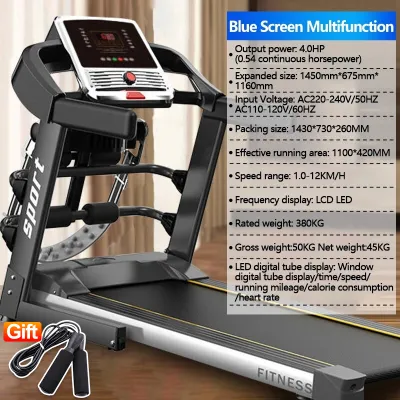
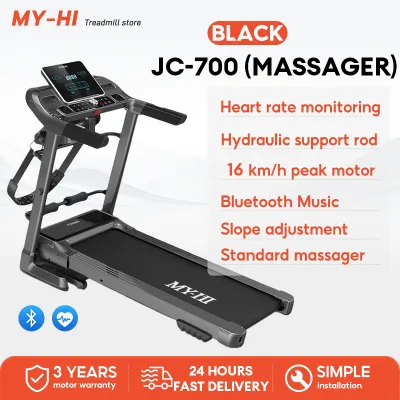
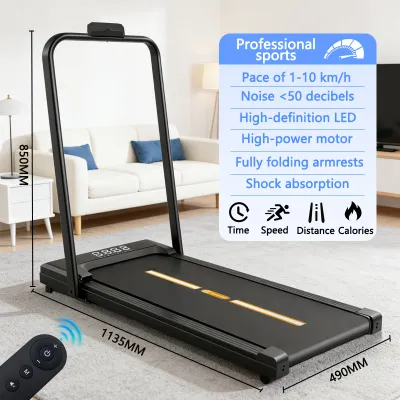
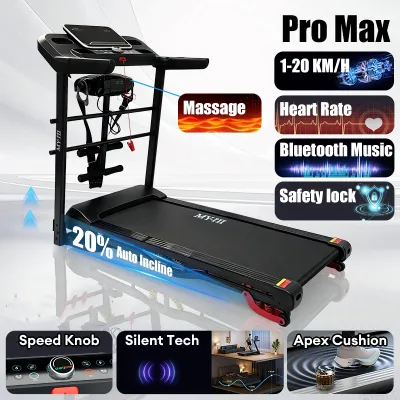
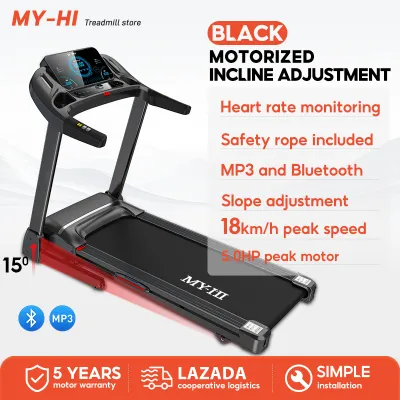
Prices are valid at publication and may change. Please refer to the product page for the latest price.
Physical space is often the ultimate deciding factor for home gym equipment. You must measure not only the flat floor space required for the machine’s footprint but also the active clearance zone around it to ensure safe mounting and dismounting. For treadmills, ceiling height is a critical safety consideration, especially when factoring in the deck height and the maximum incline level of the machine. Additionally, consider whether you need a unit that folds and rolls away, or if you have a dedicated area where the machine can remain permanently assembled.
Joint health and physical limitations must also guide your decision. High-impact exercises like running place substantial stress on the joints, which may not be suitable if you are recovering from an injury or managing chronic discomfort. Low-impact alternatives like cycling and rowing allow you to elevate your heart rate and burn calories without the repetitive shock of hitting a hard running deck.
Finally, the local environment plays a vital role in equipment longevity. In warm, humid climates, sweat evaporation is slower, leading to more moisture dripping onto the machine’s frame, console, and moving parts. You must assess whether your workout space has adequate ventilation, air conditioning, or dehumidification to protect both your body from overheating and your fitness equipment from premature corrosion.
Johnson Fitness Treadmills: Running, Walking, and Incline Training
Johnson Fitness treadmills are engineered to replicate natural human gait patterns, making them the go-to choice for walkers, joggers, and competitive runners alike. When evaluating these machines, the continuous horsepower (CHP) rating of the motor is your primary indicator of performance suitability. A higher CHP motor is essential for sustaining high running speeds over long periods, whereas a lower horsepower motor may be perfectly adequate if your routine consists primarily of walking or light jogging.

The dimensions of the running belt are equally important for safety and comfort. Taller users or those with longer strides should verify that the belt length and width provide ample room to run naturally without the risk of stepping off the side or hitting the motor cover. A wider deck also offers a greater margin of safety during high-speed intervals when your lateral stability might waver.
To protect your joints from the repetitive impact of running, you should examine the deck’s shock absorption system. Quality treadmills feature zoned cushioning that is softer in the landing zone to absorb shock and firmer in the push-off zone to provide a stable platform. Additionally, check the incline range specifications; utilizing incline training is an excellent way to increase cardiovascular intensity and target the glutes and calves without increasing the impact on your joints.
Because treadmills are typically the largest and heaviest of the three cardio options, pay close attention to the folding mechanisms and transport wheels. Many models feature hydraulic assist systems that make lifting and lowering the deck manageable for a single user. Always verify the folded dimensions against your storage space and ensure there is sufficient clearance behind the treadmill during use to prevent accidents in case of a slip.
Johnson Fitness Spin Bikes: Low-Impact Cardio and HIIT
Spin bikes offer a highly concentrated lower-body workout that is ideal for high-intensity interval training and rapid calorie burning without joint impact. The heart of any spin bike is its flywheel and resistance system, which dictate the smoothness of the pedal stroke. A heavier flywheel generally provides a more realistic road feel by maintaining momentum, while the type of resistance—magnetic or friction—determines how quiet and maintenance-free the bike will be over its lifespan.
Ergonomic adjustability is crucial for preventing strain and ensuring a comfortable ride, especially in multi-user households. You should check the range of adjustments for both the seat height and its fore-and-aft position, as well as the handlebar height and reach. Proper alignment ensures that your knees are not over-extended or excessively bent at the bottom of the pedal stroke, which protects your patellar tendons from repetitive strain.
Modern spin bikes often emphasize digital connectivity to keep you motivated. When comparing models, evaluate the console features to see if they support wireless heart rate monitoring or connect to popular third-party cycling applications. If you prefer interactive training sessions or virtual scenic rides, verify whether the bike requires a subscription or if it can operate independently using manual controls.
The compact footprint of a spin bike makes it highly suitable for smaller living spaces, such as apartments or bedroom corners. Unlike treadmills or rowers, a spin bike occupies a relatively small rectangular area and does not require extensive clearance to the front or rear. This makes it an excellent option for urban homes where floor space is at a premium and noise minimization is a priority for neighboring residents.
Johnson Fitness Rowing Machines: Full-Body Conditioning
Rowing machines provide a unique combination of cardiovascular endurance and strength training by engaging nearly every major muscle group in a single, fluid motion. A proper rowing stroke utilizes approximately 60 percent leg power, 20 percent core stabilization, and 20 percent upper body pulling. This balanced distribution of effort makes the rower exceptionally efficient for full-body conditioning and posture improvement, as it strengthens the posterior chain muscles that are often neglected during prolonged sitting.
When selecting a rowing machine, the resistance mechanism is a key specification to analyze. Air resistance rowers provide a dynamic response where the resistance increases the harder you pull, but they can be quite noisy due to the fan blade. Magnetic resistance rowers offer a whisper-quiet workout with manually or digitally adjustable resistance levels, making them highly suitable for shared living spaces or early morning workouts.
The physical dimensions of the rower require careful verification, particularly the monorail length. Taller users must check the manufacturer’s specifications to ensure the rail is long enough to allow for full leg extension at the end of the drive phase without hitting the seat stops. Additionally, verify the maximum weight capacity of the frame to ensure structural stability and smooth seat travel during intense workouts.
Although rowing machines have a long active footprint, many models are designed with space-saving storage solutions. Some rowers can be folded in half or stood upright on their end when not in use, reducing their floor footprint to a fraction of their active size. This vertical storage capability is highly advantageous for multi-purpose rooms where you need to clear the floor space once your workout is complete.
Comparing Key Specifications and Space Requirements
To help streamline your decision, it is useful to compare the physical demands and operational characteristics of these three machines side by side. Treadmills require the most significant amount of dedicated space, both in terms of floor area and vertical clearance. They also generate the highest level of ambient noise and floor vibration due to the impact of your feet striking the deck, which may require a heavy-duty rubber equipment mat to dampen sound in multi-story buildings.
Spin bikes are the most space-efficient option, requiring minimal floor space and virtually no vertical clearance concerns. They operate very quietly, especially models equipped with magnetic resistance, making them ideal for workouts at any hour of the day. The physical impact is extremely low, focusing almost entirely on lower-body muscular endurance and cardiovascular conditioning.
Rowing machines occupy a long but narrow footprint during use, requiring ample clearance behind the user for the lean-back phase of the stroke. While they take up significant floor space when active, their ability to store vertically makes them highly adaptable. Rowers offer a low-impact workout that engages both the upper and lower body, making them the most balanced option for overall muscular conditioning.
Maintenance routines also differ across the three types. Treadmills require regular belt lubrication and alignment checks to prevent motor strain. Spin bikes need periodic inspection of the pedal connections and seat adjusters, while rowing machines require keeping the seat rail clean and free of dust to ensure smooth roller movement. In humid environments, all machines must be wiped down thoroughly after every session to prevent sweat from corroding metal frames and electronic consoles.
Decision Framework: Which Equipment Should You Buy?
Choosing the right cardio machine comes down to matching your personal physical needs, lifestyle, and home environment to the strengths of each equipment type.
You should choose a treadmill if your primary goal is to maintain natural walking or running mechanics, build bone density through weight-bearing exercise, or train for outdoor walking and running events. It is the most intuitive machine to use, but it requires the largest budget, the most floor space, and a high tolerance for joint impact.
You should choose a spin bike if you have limited floor space, live in an apartment where noise is a concern, or prefer high-intensity interval training that is gentle on your knees and hips. The spin bike is highly efficient for lower-body conditioning and cardiovascular health, though it offers minimal upper-body engagement.
You should choose a rowing machine if you want a highly efficient, full-body workout that builds muscular endurance in both your upper and lower body while protecting your joints. It is excellent for improving posture and core strength, provided you are willing to invest the time to learn and maintain proper rowing technique.
Before finalizing your purchase, always verify if any specific medical conditions or physical limitations require a particular type of movement. Consult with a healthcare professional if you have pre-existing back, knee, or shoulder issues, as certain motions may exacerbate these conditions. Finally, measure your designated workout area twice to ensure you have the necessary clearance for safe operation and comfortable movement around the machine.
Frequently Asked Questions (FAQ)
How do I maintain the belt on a Johnson Fitness treadmill?
To maintain the belt on your treadmill, you must perform regular visual checks and routine lubrication. Refer to your specific model’s user manual to determine the exact lubrication intervals, which are typically based on hours of use or mileage. Only use the manufacturer-approved 100% silicone lubricant; never use household oils or WD-40, as these can damage the belt and deck materials. To check the belt tension, ensure the treadmill is unplugged, then lift the belt in the middle of the deck; it should lift about two to three inches. If the belt slips during use or drifts to one side, use the rear roller bolts to adjust the alignment and tension gradually, making small quarter-turn adjustments at a time.
What is the difference between magnetic and friction resistance on spin bikes?
The primary difference between magnetic and friction resistance lies in how the braking force is applied to the flywheel and the resulting maintenance needs. Magnetic resistance uses powerful magnets placed near the flywheel; as you adjust the resistance, the magnets move closer or further away without ever making physical contact. This results in a whisper-quiet ride, incredibly smooth transitions, and zero wear and tear on the components. Friction resistance, on the other hand, uses felt or leather pads that physically press against the flywheel. While friction resistance offers a highly tactile feel and infinite micro-adjustments, the pads will eventually wear down over time and require replacement, and they can produce a slight whispering noise during operation.

Community discussion
Share your experience or ask a question. Comments are reviewed before publication.