
Finding the right badminton racket in the Philippines often means balancing the intense humidity of local indoor courts with your personal playing style. The Kawasaki Aurora series is designed as a versatile option, but whether it is the right match for you depends entirely on how its specific weight, balance, and shaft flexibility align with your current physical capability and court strategy. Rather than assuming a single racket fits every player, you must evaluate its technical specifications against your personal development as a player.
Understanding the Kawasaki Aurora Design Profile
To determine if this racket fits your game, start by analyzing how the manufacturer positions the Aurora line. Kawasaki typically categorizes its rackets into distinct series targeting power, speed, or control. The Aurora series is generally marketed with an emphasis on maneuverability and visual appeal, often featuring colorful, iridescent cosmetics that stand out under court lighting.
When examining the product packaging or official online specifications, look closely at the balance point and shaft flexibility ratings. The Aurora line often utilizes aerodynamic frame shapes designed to cut through the air quickly, which reduces drag during rapid swings. This design philosophy prioritizes speed and quick recovery over raw, head-heavy smashing power.
Products mentioned in this guide
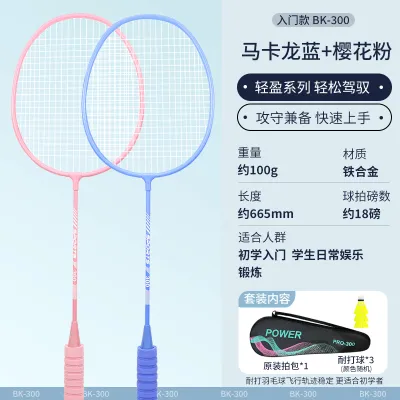

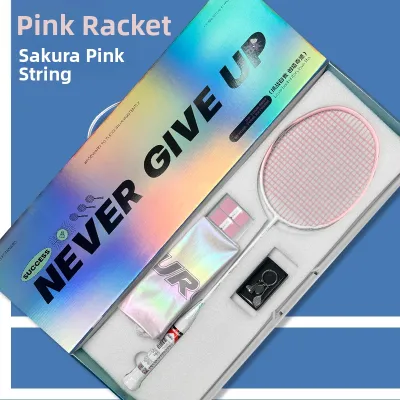
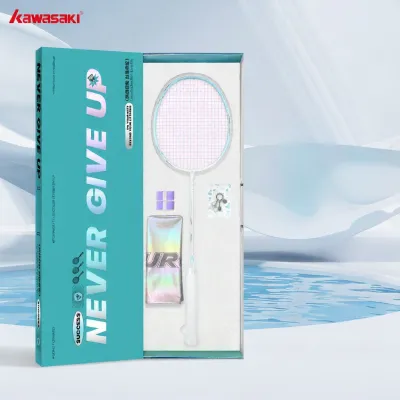
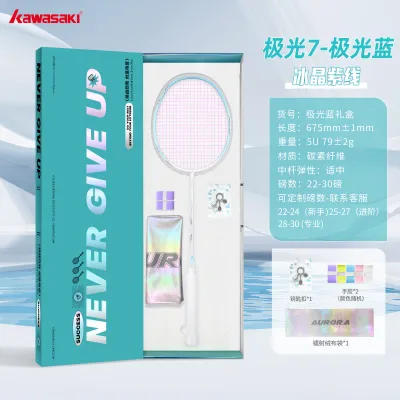
Prices are valid at publication and may change. Please refer to the product page for the latest price.
Unlike heavier, stiffer series in the Kawasaki lineup that target advanced tournament players, the Aurora models are engineered to be more accessible. They often feature a medium-to-flexible shaft that helps players generate depth on their clears without requiring elite wrist strength. Understanding this positioning helps you avoid buying a racket that is either too demanding for your current physical conditioning or too flexible for highly aggressive play.
Matching the Racket to Your Skill Level
Your technical proficiency is the most critical factor when choosing a racket, as an mismatched frame can hinder your progress or even lead to repetitive strain injuries. For beginners playing on local indoor or outdoor courts, a racket must offer a high degree of forgiveness. This means looking for a model within the Aurora series that features an isometric frame shape, which enlarges the sweet spot and ensures decent power even on off-center hits.

Beginners also benefit significantly from flexible shafts. In tropical climates where high humidity can make the shuttlecock feel slightly heavier and slower through the air, a flexible shaft acts like a spring, assisting you in clearing the shuttle from baseline to baseline. This flexibility reduces the physical strain on your shoulder and elbow, allowing you to focus on mastering basic footwork and stroke mechanics.
As you transition to an intermediate level, your needs shift toward a balance of control and power. Intermediate players should look for Aurora variants that offer a medium-stiff shaft and an even-balance distribution. This configuration provides enough feedback to refine your drop shots and net play while still offering sufficient whip for mid-court drives and defensive blocks during fast-paced rallies.
Advanced players, by contrast, require a racket that responds instantly to precise wrist snaps and high-speed swings. If you are an advanced competitor, you will want to verify if the specific Aurora model you are eyeing features a stiff shaft and a slightly head-heavy balance. These characteristics demand excellent timing and physical conditioning, but they reward you with maximum control over shuttle placement and explosive power during offensive plays.
Aligning with Your Play Style and Game Format
Your preferred tactics on the court dictate whether a racket’s physical properties will support or hinder your performance. If your play style is highly offensive, characterized by continuous smashes and aggressive attacking clears, you need to check the racket’s balance point. A head-heavy balance assists in transferring momentum into the shuttle, but it can tire your arm quickly during long sessions in warm, humid sports centers.
For defensive players who rely on quick reflexes, drop shots, and cross-court net lifts, a headlight or even-balanced Aurora model is highly advantageous. The aerodynamic frame design allows for rapid transitions from a low defensive stance to a high intercepting position. This speed is crucial when defending against hard smashes, enabling you to redirect the shuttle into open spaces with minimal effort.
The game format also plays a major role in your selection. In doubles, where rallies are incredibly fast and dominated by flat drives and quick net interceptions, a lighter racket (such as a 4U classification) is generally preferred. It allows you to react quickly during rapid rotations and keep up with the fast-paced nature of the game.
In singles play, where court coverage is paramount and rallies are more tactical, a slightly heavier setup (such as a 3U classification) can provide better baseline control and stability. The extra mass helps you maintain depth on your clears and control the pace of the game, forcing your opponent to cover more ground.
Before finalizing your choice, always check the manufacturer’s stated string tension limits. High-tension setups offer superior control but require precise hitting, whereas lower tensions provide a trampoline effect that aids power. Ensure the racket frame can safely support your preferred tension without risking structural damage during intense play.
Verifying Specifications and Authenticity Before Purchase
With many options available on online marketplaces and local sports shops, verifying the authenticity and exact specifications of your Kawasaki Aurora racket is essential. Start by locating the weight and grip size codes, which are typically printed on the racket cone just above the handle or along the shaft. These codes, such as 3U (85-89 grams) or 4U (80-84 grams), and G4 or G5 for grip thickness, must match your physical preferences.
To protect yourself against counterfeit products, inspect the racket’s build quality and security features closely upon delivery. Authentic Kawasaki rackets feature clean, crisp decals without paint runs or misaligned graphics. Look for the official hologram sticker and scratch-off serial number on the shaft or cone, which you can verify on the manufacturer’s official website to confirm legitimacy.
When purchasing from an online marketplace, carefully compare the specifications listed by the seller with the physical labels on the product you receive. Check the grommet strip quality, the alignment of the stringing holes, and the feel of the factory grip. If any specification, such as the recommended tension range or weight classification, deviates from the official manufacturer guidelines, contact the seller or a qualified professional before stringing or using the racket.
Frequently Asked Questions (FAQ)
What string tension is recommended for the Kawasaki Aurora?
The recommended string tension for the Kawasaki Aurora series typically ranges from 20 to 28 lbs, though the exact maximum limit varies by specific model and is printed on the racket cone or shaft. Beginners should opt for a lower tension, around 20 to 22 lbs, to maximize the sweet spot and gain extra power assistance. Advanced players seeking precise control and crisp feedback can string closer to the maximum limit, provided their physical technique can generate the necessary power.
How do I know if the grip size is correct for my hand?
To check if a grip size like G5 (smaller) or G4 (larger) fits your hand, hold the racket in a standard forehand grip; there should be a finger’s width of space between your ring finger and your palm. You can also measure the distance from the middle crease of your palm to the tip of your ring finger to match standard sizing charts. If the grip feels slightly too small, you can easily customize it by wrapping an overgrip over the factory grip, which also helps absorb sweat in hot, humid playing conditions.

Community discussion
Share your experience or ask a question. Comments are reviewed before publication.