
Setting up a home training area for your child is an excellent way to encourage physical fitness, coordination, and confidence. However, choosing a kids boxing set requires a careful balance between safety, durability, and physical scaling. Unlike adult training gear, equipment designed for children must protect developing bones, accommodate smaller hands, and fit seamlessly into a residential space. In tropical climates like the Philippines, where indoor humidity can accelerate wear and tear, selecting the right materials and design features becomes even more critical.
To find the ideal setup, you must evaluate how the equipment absorbs impact, how easily it adjusts to your child’s growth, and whether the installation matches your home’s layout. A poorly sized glove or an unstable punching bag can lead to joint strain or accidental tipping, turning a fun activity into a safety hazard. By focusing on structural stability, ergonomic sizing, and material resilience, you can create a secure and engaging environment that supports your child’s active lifestyle.
Prioritizing Safety and Structural Stability
When setting up a boxing corner at home, the stability of the equipment is your primary safety concern. Freestanding punching bags and reflex stands rely on a heavy base to remain upright during use. Most home sets feature hollow plastic bases designed to be filled with either water or sand. While water is highly convenient to fill and drain, sand provides greater density and weight, making the base significantly more stable and less prone to shifting across the floor. For active children who strike with more force, a combination of sand topped with water can maximize the base weight. Additionally, look for bases equipped with heavy-duty suction cups on the bottom; these provide vital secondary grip on smooth surfaces like ceramic tiles or polished concrete, preventing the unit from sliding during a workout.
Products mentioned in this guide
![99.9 BUY MORE SAVE MORE Toys Boxing Gloves and Punching Bag (Super Fighter Boxing Set) for Kids [2004B/8101-19/8101-43]](https://img.lazcdn.com/g/p/235fc65dcce2db00ef1988dbf2779fc1.jpg_400x400q80.jpg_.webp)
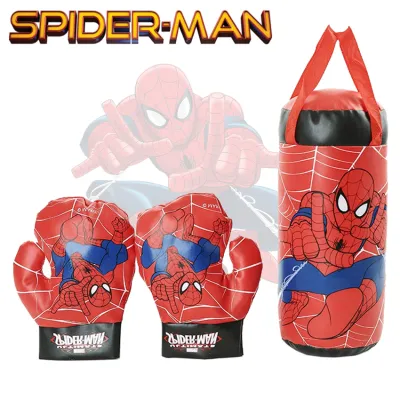
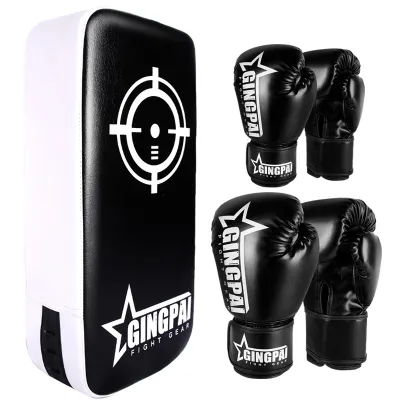
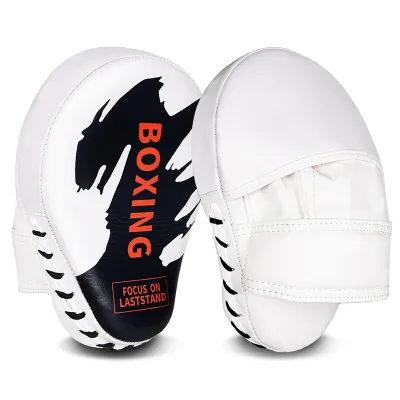
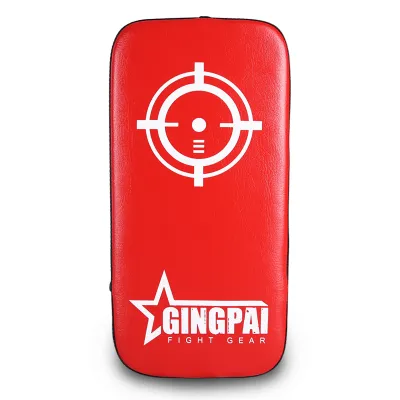
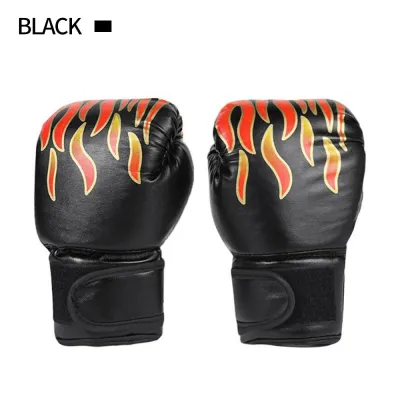
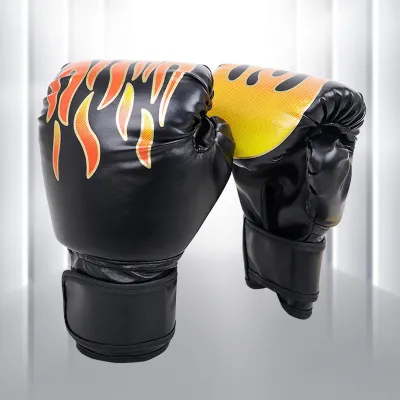
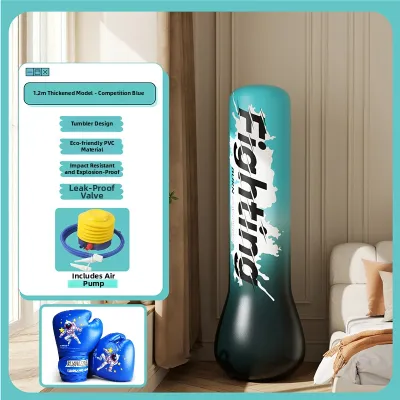
Prices are valid at publication and may change. Please refer to the product page for the latest price.
Impact absorption is another critical factor in protecting your child’s developing joints, wrists, and shoulders. When a child strikes a target, the kinetic energy must be dissipated safely. High-quality kids boxing sets utilize multi-layered foam padding or air-filled bladders that yield slightly upon impact. Avoid bags that are packed too densely with hard synthetic materials, as these can cause micro-trauma to small knuckles and wrists over time. The bag should have enough give to cushion the blow while still offering enough resistance to rebound effectively.
Height-adjustable models are incredibly popular for home use, but they introduce a potential failure point: the adjustment pole. Ensure the set features a robust locking mechanism, such as a steel locking pin that passes directly through the pole, rather than relying solely on a plastic tension knob. Under the repeated vibration of punches, simple tension knobs can loosen, causing the pole to collapse suddenly and potentially pinch fingers or cause the child to lose balance. A dual-locking system—combining a threaded collar with a physical metal pin—offers the highest level of security for active play.
Matching Size, Weight, and Ergonomics to the Child
Using adult-sized or poorly fitted gear is one of the most common causes of injury in youth sports. For boxing, the glove is the most personal piece of equipment, and its size is measured by weight in ounces (oz). For younger children aged four to seven, gloves weighing 4 oz to 6 oz are generally appropriate, while older children from eight to twelve typically require 8 oz gloves. The glove must fit snugly over the hand without restricting circulation, leaving enough room for hand wraps if they are used. Pay close attention to the thumb design; quality kids’ gloves feature an attached thumb or a thumb-lock design that prevents the thumb from bending backward or sticking out, which is a frequent cause of sprains during off-center hits.

The weight and density of the punching bag itself must also align with your child’s physical development. A bag that is too heavy will feel like hitting a brick wall, transferring dangerous shock waves up the child’s arm. Conversely, a bag that is too light will swing wildly after a single strike, making it difficult for the child to establish a rhythm and increasing the risk of the bag swinging back and hitting them unexpectedly. As a general guideline, a hanging youth bag should weigh no more than ten to fifteen percent of the child’s body weight, while a freestanding reflex bag should have a highly responsive spring at the base that allows for quick, controlled rebounds without excessive whip.
Because children grow rapidly, an adjustable height range is essential for extending the lifespan of the equipment. The target area of the punching bag or ball should ideally align with the child’s chest and chin level. If the bag is set too high, the child will be forced to punch upward, putting unnecessary strain on their shoulders and neck. If it is too low, they will hunch forward, compromising their posture and balance. Look for a set that offers at least 30 to 40 centimeters of height adjustment, allowing the equipment to grow alongside your child over several years.
Evaluating Essential Components and Material Durability
The durability of a kids boxing set is largely determined by its construction materials, especially when subjected to the high humidity and warm temperatures common in Philippine homes. The outer cover of the gloves and the bag is typically made of synthetic leather, such as Polyurethane (PU) or Polyvinyl Chloride (PVC). While genuine leather offers maximum longevity, high-grade PU is often the preferred choice for children’s gear because it is lightweight, highly flexible, and easy to wipe clean after a sweaty session. Ensure the synthetic leather is thick and features reinforced, double-stitched seams with heavy-duty nylon thread. Single-stitched seams are prone to splitting under repeated impact, leading to exposed padding or leaking fill material.
Inside the gloves, look for multi-layer foam padding rather than single-density sponge. Multi-layer foam distributes the force of a punch across a wider surface area, offering superior protection for delicate hand bones. Breathability is another crucial feature; look for gloves with mesh palms or ventilation holes. In a humid environment, trapped moisture inside a glove quickly leads to unpleasant odors and material degradation. Proper ventilation allows the gloves to dry quickly between uses, preserving the integrity of the inner lining.
Many kids boxing sets are sold as packages that include supplementary items like hand wraps, reflex balls, or jump ropes. While these add-ons can provide excellent variety to a workout, evaluate their quality carefully. Hand wraps included in budget sets are often too short or made of stiff, non-stretch polyester that is difficult to wrap securely around small hands. Look for semi-elastic “Mexican-style” wraps that offer a slight stretch, as they conform much better to the contours of a child’s wrist and knuckles. Reflex balls attached to headbands are excellent for hand-eye coordination, but ensure the elastic cord is durable and the ball is soft enough to avoid injury if it rebounds toward the face.
Assessing Space Requirements and Installation Needs
Before purchasing any boxing set, you must carefully measure your designated training area to ensure a safe workout environment. A common mistake is only measuring the physical footprint of the equipment itself, neglecting the clearance zone required during active use. For a freestanding reflex bag, you need to calculate a safety radius of at least 1.5 to 2 meters around the unit. This space ensures that even if the bag swings to its maximum angle or the child takes a step back to dodge, they will not collide with walls, furniture, or sharp corners.
If you are considering a traditional hanging punching bag, the structural integrity of your home is a primary consideration. Hanging bags require a secure mounting point, typically a heavy-duty ceiling hook bolted into a solid wooden ceiling joist or a concrete slab. Never hang a punching bag from drywall, plaster, or decorative ceiling panels, as the constant vibration and downward pull will quickly cause structural damage and pose a severe collapse hazard. If your home features drop ceilings or lacks accessible structural beams, a freestanding unit is a much safer and more practical alternative.
The type of flooring in your training area also dictates what additional accessories you might need. Hard surfaces like ceramic tiles or polished concrete can be slippery, causing freestanding bases to slide and scuff the floor. Placing a high-density EVA foam mat or a non-slip rubber mat under the boxing set is highly recommended. This mat not only anchors the base securely but also absorbs a significant portion of the impact noise and vibration. This is particularly important in multi-story homes or condominiums, where the repetitive thudding of a workout can easily transfer through the floor and disturb family members or neighbors below.
Building Your Shortlist: A Pre-Purchase Evaluation Checklist
To make an informed decision when browsing online marketplaces or local sporting goods stores, it helps to have a structured evaluation framework. Start by verifying the manufacturer’s explicit age, height, and weight recommendations. These guidelines are not arbitrary; they indicate the physical limits for which the safety mechanisms, spring tensions, and glove sizes were engineered. Avoid buying an oversized set with the intention of having your child “grow into it,” as oversized gloves and overly stiff targets can lead to immediate injury.
Next, examine the warranty terms and the availability of replacement parts. Because home boxing sets are subjected to repetitive impact, certain components—such as the inner bladders of speedballs, the tension springs, or the elastic bungee cords—will naturally wear out over time. Choosing a brand that offers replacement bladders or springs can save you from having to purchase an entirely new set when a single component fails. Check if the manufacturer provides clear assembly instructions and customer support channels for troubleshooting.
Finally, compare the overall value in ₱ against the quality of the materials rather than just choosing the cheapest option. A budget set priced under ₱1,000 might seem appealing, but if it features thin plastic poles, single-stitched seams, and a lightweight base that tips over constantly, it will likely need to be replaced within a few months. Investing slightly more in a mid-range set with a reinforced steel pole, a high-capacity sand base, and properly padded PU gloves ensures a safer, more satisfying training experience that will last for years.
Frequently Asked Questions (FAQ)
At what age can a child safely start using a home boxing set?
Most manufacturers design introductory kids boxing sets for children starting around age four to five. At this stage, children have developed the basic motor skills, balance, and hand-eye coordination required to interact with a moving target. However, regardless of the child’s age, active adult supervision is absolutely essential. An adult should always be present to ensure the child maintains proper form, wears their protective gloves correctly, and does not use the equipment in a hazardous manner.
Do kids need hand wraps when using padded boxing gloves?
For light, recreational play on a soft reflex bag, well-padded youth gloves are often sufficient on their own. However, if your child is training more intensely, using a heavier hanging bag, or showing signs of wrist discomfort, hand wraps are highly recommended. Wraps secure the small bones in the hand and provide vital lateral support to the wrist joint, preventing hyperextension when punches land at odd angles. Teach your child how to wrap their hands snugly but comfortably, ensuring circulation is never restricted.
Is a freestanding bag better than a hanging bag for children?
For most home environments, a freestanding bag is the more practical and versatile choice. It requires no permanent installation, can be easily moved out of the way when not in use, and its height can be adjusted as the child grows. Hanging bags offer a more realistic swinging motion and are excellent for developing footwork, but they require a highly secure structural mount and a dedicated, permanent space. For apartments, rentals, or homes with limited space, a freestanding reflex bag is generally the superior option.

Community discussion
Share your experience or ask a question. Comments are reviewed before publication.