
Choosing an inflatable kayak for adult use requires translating technical specifications into real-world safety and performance on the water. Unlike rigid kayaks, inflatable models offer unmatched portability and storage convenience, making them highly appealing for exploring coastal coves, calm lakes, and slow-moving rivers. However, water sports inherently carry risks, and no piece of equipment can replace formal safety training, personal flotation devices (PFDs), and sound judgment. Before purchasing, you must evaluate how a kayak’s dimensions, materials, and safety features align with your physical build, paddling experience, and local water conditions.
Determine Weight Capacity and Dimensions for Adult Paddlers
To ensure stability and tracking on the water, you must first calculate the total weight capacity your kayak will need to support. Add your body weight to the weight of all the gear you plan to carry, including dry bags, water bottles, and safety equipment. As a safety rule, look for a kayak with a manufacturer-rated weight capacity that exceeds this total by at least 20 to 30 percent. Operating too close to the maximum weight limit compromises the kayak’s buoyancy, causes it to sit lower in the water, and significantly reduces its stability and maneuverability.
The physical dimensions of the kayak—specifically its length and width—directly dictate how it behaves on the water. Longer, narrower kayaks generally offer better tracking, meaning they travel in a straight line with less effort, making them ideal for open water or longer touring trips. Conversely, shorter and wider kayaks provide greater initial stability and are much easier to turn, which is highly beneficial when navigating tight mangrove channels or mild river currents.
Products mentioned in this guide
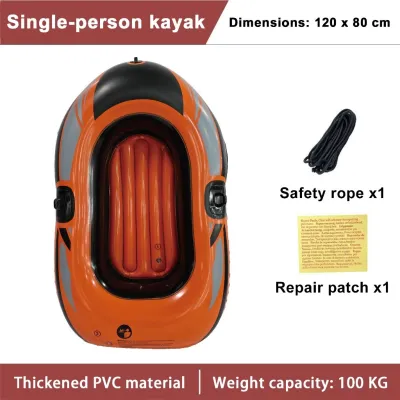
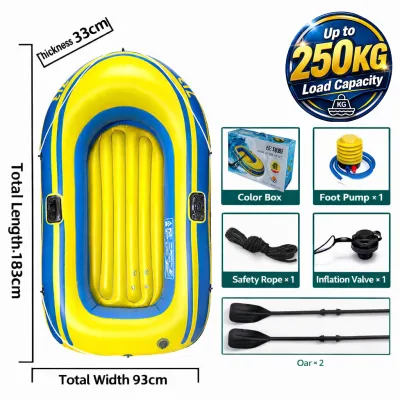
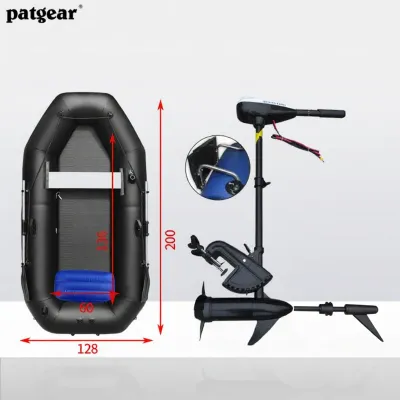
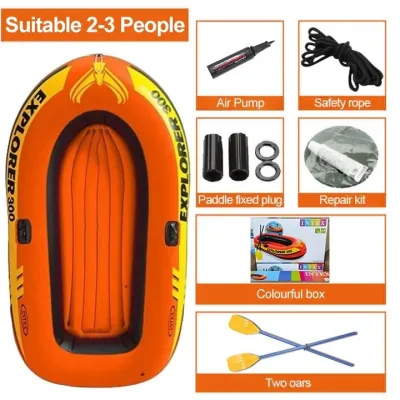
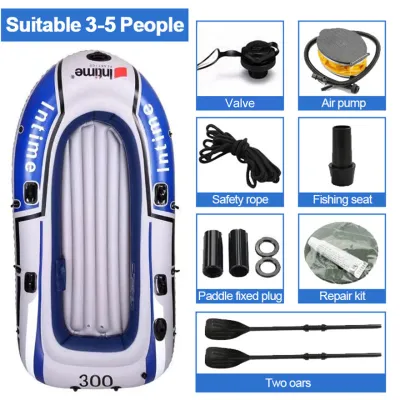
Prices are valid at publication and may change. Please refer to the product page for the latest price.
For adult paddlers, interior cockpit dimensions are just as critical as external measurements. Taller or broader individuals need to verify that the interior layout offers sufficient legroom and adjustable footrests to maintain a comfortable, ergonomic paddling posture. A cramped cockpit not only leads to rapid physical fatigue but also limits your ability to exit the kayak quickly and safely in the event of a capsize.
Evaluate Material Durability and Construction Standards
The durability of an inflatable kayak depends heavily on the materials used in its construction, with different fabrics offering distinct trade-offs in weight, puncture resistance, and cost. Polyvinyl chloride (PVC) is the most common material used in recreational models because it is lightweight, highly patchable, and relatively affordable. However, for rugged environments where scraping against rocks, branches, or coral is likely, look for heavy-duty PVC reinforced with a polyester fabric core, or alternative materials like Nitrylon or polyurethane, which offer enhanced abrasion resistance.

Beyond the base fabric, pay close attention to how the kayak is put together by checking the manufacturer’s specifications for seam construction and floor design. Welded seams, which use heat or radio frequency to fuse the material layers together, generally offer greater longevity and resistance to high pressure than glued seams, which can degrade over time when exposed to heat and moisture. Additionally, models featuring a high-pressure drop-stitch floor provide a rigid, flat platform that mimics the feel of a hard-shell kayak, greatly improving both paddling efficiency and standing stability.
To verify the ruggedness of a kayak before buying, look for specific metrics on the product label rather than relying on vague marketing terms. Check the denier rating of the fabric, which measures the thickness of the individual threads; a higher denier rating typically indicates a tougher, more puncture-resistant material. You should also verify whether the outer coating includes specific UV-inhibiting additives, which are essential for preventing the material from becoming brittle and cracking under prolonged exposure to intense sunlight.
Assess Air Chamber Design and Safety Features
A primary safety consideration for any inflatable watercraft is the design and number of its air chambers. High-quality inflatable kayaks feature multiple independent air chambers—typically at least three, consisting of the floor and two separate side tubes. This multi-chamber configuration ensures that if one chamber suffers a puncture or a valve failure, the remaining chambers will retain enough buoyancy to keep the kayak afloat, allowing you to paddle safely back to shore.
The valves used to inflate and deflate the kayak are another critical component to inspect. Look for high-quality, one-way valves such as Boston valves or military-style high-pressure valves, which prevent air from escaping when the pump nozzle is removed and allow for rapid deflation when packing up. Ensure that the valves are compatible with standard manual or electric pumps, and always check the manufacturer’s recommended pounds per square inch (PSI) rating for each chamber to avoid under-inflation, which causes sagging, or over-pressurization, which can rupture the seams.
Integrated safety and utility features on the kayak’s exterior should also influence your decision. Look for robust grab lines or molded handles at the bow and stern, which are essential for carrying the kayak and securing it to docks or launch points. D-rings and bungee rigging are highly useful for securing dry bags and safety gear, while self-bailing drain plugs are a must-have feature if you plan to paddle in rougher waters, as they allow splashed water to drain out automatically rather than pooling in the cockpit.
Judge Seat Comfort and Accessory Inclusions
Long-term physical comfort on the water is largely determined by the quality and adjustability of the kayak’s seating system. Look for seats with dense foam padding that support your lower back and can be securely clipped into the kayak’s floor and side tubes using adjustable straps. High-back seats provide better support for extended paddling sessions, helping to prevent lower back strain, while adjustable seat positioning allows you to optimize the kayak’s trim and balance based on your height and weight distribution.
Many inflatable kayaks are sold as complete packages that include paddles, a pump, a carry bag, and a basic repair kit. While these packages offer excellent out-of-the-box convenience, you must carefully inspect the quality of these included accessories to ensure they meet your performance needs. For example, a heavy, poorly balanced aluminum paddle can quickly tire your arms, and a low-capacity hand pump may make the inflation process unnecessarily exhausting.
It is common for paddlers to use the included accessories initially and then gradually upgrade to higher-quality gear as their skills progress. When evaluating a package, consider the cost of potentially replacing a basic paddle with a lighter fiberglass model or upgrading to a dual-action hand pump or an electric pump that plugs into a vehicle’s power outlet. Always ensure that a functional repair kit containing matching patch material and a valve wrench is included and kept on board during every trip.
Align Specifications With Your Paddling Environment
To get the most out of your inflatable kayak, you must match its technical design to the specific water conditions and climate where you plan to paddle. If you intend to paddle primarily on flatwater lakes, calm bays, or slow rivers, a kayak with a removable tracking fin or skeg is essential to help you maintain a straight course against crosswinds and currents. For shallow, rocky streams, a kayak with a flatter bottom and no protruding fins will help you avoid snagging on underwater obstacles.
Paddling in tropical climates, such as the coastal waters and inland lakes of the Philippines, introduces specific environmental challenges that require careful material care. The combination of intense UV radiation, high ambient temperatures, and high humidity can accelerate the degradation of adhesives and plastics. To protect your investment, look for kayaks with robust UV-resistant coatings, and always rinse your kayak with fresh water to remove salt, sand, and organic debris before drying it completely in the shade to prevent mold and mildew growth during storage.
Finally, it is vital to recognize the inherent performance limits of inflatable designs compared to traditional hard-shell kayaks. Inflatables sit higher on the water and have a larger surface area exposed to the wind, making them more susceptible to drifting in strong crosswinds. If you plan to undertake long-distance coastal touring, navigate high-grade whitewater, or paddle in extreme weather conditions, a specialized hard-shell kayak or professional training is a much safer and more appropriate choice.
Frequently Asked Questions (FAQ)
How long does it typically take to inflate an adult-sized kayak?
Inflation time generally ranges from 5 to 15 minutes, depending on the kayak’s volume, the number of air chambers, and the type of pump you use. A high-output, dual-action manual pump or a dedicated electric pump will significantly speed up the process compared to a basic foot pump. Always use a pressure gauge to verify that each chamber is inflated to the manufacturer’s exact recommended PSI to ensure proper rigidity and safety on the water.
Can an inflatable kayak be safely used in saltwater?
Yes, most modern inflatable kayaks made from high-quality PVC, polyurethane, or Nitrylon are fully compatible with saltwater environments. However, saltwater is highly corrosive to metal components and can leave abrasive salt crystals on the fabric when it dries. To prevent damage, you must thoroughly rinse the entire kayak, including the valves, D-rings, and seat straps, with clean fresh water after every saltwater excursion.
What is the best way to store an inflatable kayak in a tropical climate?
In tropical regions with high heat and humidity, proper storage is essential to prevent mold, mildew, and seam degradation. After rinsing your kayak, allow it to dry completely in a shaded, well-ventilated area before folding it loosely to avoid sharp creases. Store the packed kayak in a cool, dry indoor space away from direct sunlight, pests, and sharp objects, and avoid storing it in hot, unventilated outdoor sheds or car trunks.

Community discussion
Share your experience or ask a question. Comments are reviewed before publication.