
Determining whether a Naturehike carabiner is safe for actual rock climbing depends entirely on whether the specific model carries explicit climbing certifications and the corresponding load markings. Naturehike is widely recognized for producing budget-friendly camping and outdoor gear, ranging from lightweight tents to backpacking accessories. However, because the brand manufactures both utility hardware and technical gear, you must never assume a carabiner is safe for climbing simply because of the brand name on the spine.
To be safe for life-support systems, such as rock climbing, belaying, or anchoring, a carabiner must carry verified safety certifications and clear kilonewton strength ratings. In the tropical, highly humid climbing environments of the Philippines—such as the limestone crags of Cantabaco in Cebu or the rugged walls of Wawa Gorge in Rizal—gear is subjected to intense moisture, sweat, and environmental wear. Verifying your gear’s exact specifications is a non-negotiable safety step before you tie into any rope.
Understanding Climbing Carabiner Safety Standards (UIAA and CE)
To understand why certification matters, you must look at the international organizations that govern climbing safety. The Union Internationale des Associations d’Alpinisme (UIAA) and the European Committee for Standardization (which issues the CE mark) are the two primary bodies that define safety requirements for mountaineering equipment. When a manufacturer designs a carabiner for climbing, they must submit the product to independent, certified laboratories for rigorous destructive testing.
Products mentioned in this guide
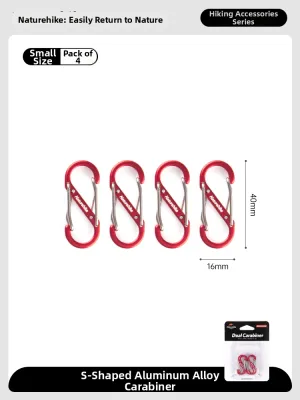
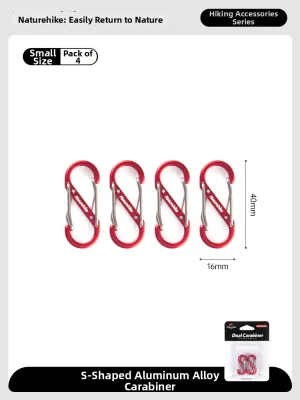
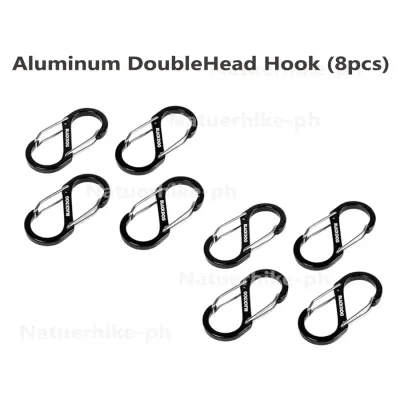
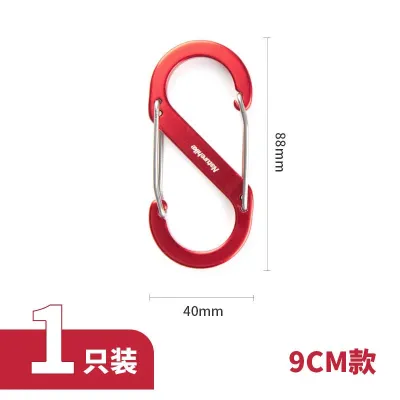
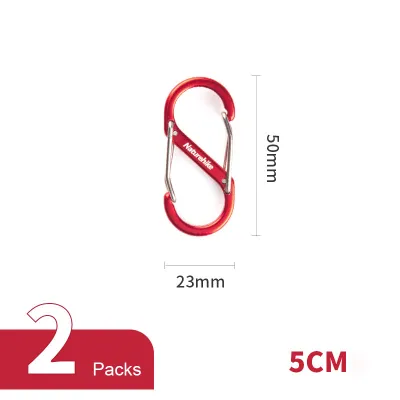
Prices are valid at publication and may change. Please refer to the product page for the latest price.
The CE standard for climbing connectors is EN 12275. This standard classifies carabiners into specific types, such as basic, HMS, or belay connectors, and mandates minimum strength thresholds under different loading configurations. The UIAA 121 standard closely aligns with these European norms but often includes additional safety margins or testing protocols to ensure maximum reliability in alpine and vertical environments.
When inspecting a Naturehike carabiner, you must look for these specific certification marks. They are typically laser-engraved or stamped directly into the metal spine of the carabiner. A legitimate climbing carabiner will display the CE logo followed by a four-digit number, which identifies the specific notified body responsible for auditing the manufacturer’s production quality. It may also feature the UIAA logo.
If a carabiner lacks these markings, or if the packaging only mentions general terms like “outdoor use” or “high strength” without referencing EN 12275 or UIAA 121, it is not certified for climbing. Using uncertified gear in a life-support system is an unacceptable risk. In the event of a fall, an uncertified connector can fail catastrophically, leading to severe injury or system failure.
Decoding kN Load Ratings and Strength Markings
Understanding how to read strength ratings is just as critical as verifying certifications. Climbing carabiners do not use static weight limits like kilograms or pounds. Instead, they are rated in kilonewtons (kN), which is a unit of force. One kilonewton is equivalent to approximately 100 kilograms of static force, but in a dynamic climbing fall, the forces generated can easily exceed several kilonewtons in a fraction of a second.

A certified climbing carabiner must display three distinct strength ratings on its spine, usually accompanied by small diagrams indicating the direction of force. The first is the major axis rating, which measures the strength of the carabiner when loaded end-to-end with the gate fully closed and locked. For standard climbing use, the major axis rating must be at least 20 kN, though many modern locking carabiners are rated to 24 kN or higher.
The second rating is the minor axis, or transverse, rating, which measures the strength when the carabiner is cross-loaded side-to-side. Carabiners are significantly weaker in this orientation, which is why the minimum standard for minor axis strength is typically only 7 kN or 8 kN. Cross-loading can occur accidentally during a climb, making this rating a vital safety buffer.
The third rating is the open-gate strength, which measures the carabiner’s resistance to breaking if the gate is forced open during a fall. Because a carabiner loses a massive portion of its structural integrity when the gate is open, this rating is also much lower, generally requiring a minimum of 7 kN. This rating helps protect against gate flutter, where rope movement or vibrations cause the gate to open momentarily.
To verify a Naturehike carabiner, you must physically locate these three numbers stamped on the metal. If you only see a single rating, or if the numbers are lower than the standard climbing baselines, the carabiner is not designed to hold a human fall. You should also cross-reference these engraved numbers with the technical data sheets provided on the manufacturer’s official website to ensure they match.
Climbing-Rated vs. Accessory Carabiners: Critical Distinctions
Outdoor brands often cater to a wide range of outdoor enthusiasts, from casual campers to technical mountaineers. Consequently, their product catalogs contain both heavy-duty climbing hardware and lightweight utility accessories. Distinguishing between these two categories is a matter of life and safety.
Accessory carabiners are designed for low-load applications such as hanging lanterns inside a tent, securing a water bottle to a backpack, or tensioning a hammock rainfly. These clips are often made from low-grade cast aluminum, plastic, or thin wire. They rarely feature locking sleeves, and if they do, the locking mechanism is often purely cosmetic and not designed to withstand structural loads.
A key indicator of an accessory carabiner is the presence of explicit warning labels. Many carry the stamp “NOT FOR CLIMBING” or “NO PARA ESCALAR” on the spine or gate. Even if a utility clip feels solid or is marketed as “heavy duty,” the lack of a kilonewton rating and a CE or UIAA certification means it has not undergone the quality control and testing required to guarantee your safety on the rock.
Using an accessory carabiner in a climbing system—such as a belay anchor, a quickdraw, or a rappel setup—is extremely dangerous. Under the dynamic force of a lead fall, a utility clip can snap instantly, causing a complete system failure. When purchasing gear, always read the product description carefully and avoid buying generic carabiner multi-packs unless they are explicitly sold by a reputable climbing retailer and carry verified certifications.
Pre-Climb Inspection Protocols and Retirement Conditions
Even if you possess a certified, climbing-rated carabiner, its safety is only as good as its current physical condition. Before every climbing session, you must perform a thorough visual and tactile inspection of your hardware. This is especially important in tropical climbing destinations, where high humidity, intense heat, and coastal salt air can accelerate gear degradation.
Begin your inspection by checking the gate mechanism. The gate should open smoothly and snap shut instantly when released. If the gate hangs open, feels sticky, or requires manual assistance to close, the internal spring may be compromised or clogged with dirt. For locking carabiners, ensure the screw sleeve or auto-locking collar rotates freely and locks securely without binding.
Next, run your fingers along the metal body to feel for any sharp edges, deep grooves, or burrs. Over time, running ropes can wear deep channels into the aluminum, which can weaken the structure and damage your climbing ropes. If you detect any cracks, deep gouges deeper than one millimeter, or visible bending in the frame, the carabiner must be retired immediately.
Environmental factors also play a massive role in gear longevity. If you climb near coastal areas, salt spray can cause stress corrosion cracking in aluminum alloys. Look for signs of oxidation, which often appear as a white, powdery residue or pitting on the metal surface. Exposure to harsh chemicals, such as battery acid in a car trunk or strong household cleaners, can also silently destroy the structural integrity of the metal without leaving obvious visual clues.
If a carabiner fails any part of your inspection, or if you have any doubts about its history, you must retire it immediately. To prevent yourself or anyone else from accidentally using a retired carabiner in the future, destroy it before throwing it away. You can do this by bending the gate with pliers, cutting the body with a hacksaw, or marking it permanently with spray paint as retired.
Frequently Asked Questions (FAQ)
Can I use a Naturehike carabiner for top-rope or lead climbing?
You can only use a Naturehike carabiner for top-rope or lead climbing if the specific model is explicitly certified to CE (EN 12275) or UIAA standards and features the appropriate kilonewton ratings stamped on its spine. Most Naturehike carabiners available on online marketplaces are accessory clips designed for camping, backpacking, or hammock suspension. Always verify the exact model’s certifications in the official product documentation before clipping it into any life-support system.
What should I do if the kN rating or certification mark is worn off?
If the kilonewton rating or certification mark on your carabiner has worn off, faded, or become illegible, you must retire the carabiner from climbing use immediately. Without readable markings, you cannot verify the gear’s safety limits or certification status. Relegate the worn carabiner to non-safety utility tasks, such as carrying keys or organizing camp gear, and replace it with a fully legible, certified climbing carabiner.

Community discussion
Share your experience or ask a question. Comments are reviewed before publication.