
Choosing the right fishing line is one of the most critical decisions an angler can make, as it serves as the direct link between you and the fish. There is no single universal line that excels in every environment; the ideal choice depends entirely on your target species, water clarity, lure selection, and specific fishing technique. Nylon monofilament offers excellent buoyancy, shock absorption, and a budget-friendly option for bulk spooling. Fluorocarbon provides near-invisibility in clear water and a rapid sink rate for subsurface presentations. Braided line delivers maximum sensitivity, zero stretch for deep hook sets, and high tensile strength to pull fish out of heavy cover.
In tropical environments like the Philippines, these material differences become even more pronounced. High humidity, intense sunlight, and diverse fishing venues—ranging from brackish mangrove estuaries to deep offshore drop-offs—put unique stresses on your tackle. Understanding how each material behaves under these conditions will help you select the right line, protect your gear, and improve your catch rate.
Core Differences Between Nylon, Fluorocarbon, and Braided Lines
Before selecting a line for your next outing, it is helpful to compare the fundamental physical properties of these three materials. Each line type behaves differently under tension, refracts light at different rates, and features a distinct ratio of diameter to breaking strength.
Products mentioned in this guide
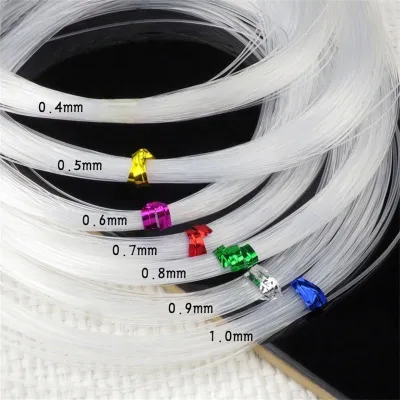
Prices are valid at publication and may change. Please refer to the product page for the latest price.
Stretch and shock absorption vary widely across these materials. Nylon possesses high elasticity, allowing it to stretch significantly under load to cushion sudden impacts. Braided line has virtually no stretch, transmitting every vibration directly to the rod tip. Fluorocarbon sits in the middle, offering minimal stretch under light tension but yielding slightly under extreme pressure.
Visibility underwater is determined by how light passes through the material. Fluorocarbon has a refractive index very close to that of water, making it nearly invisible to fish. Nylon is moderately visible depending on its color and thickness, while braided line is completely opaque and highly visible underwater.
Line diameter directly impacts casting distance, spool capacity, and how the line behaves in currents. Braided line is the thinnest option for its strength rating, allowing you to pack more line onto a spool. Nylon and fluorocarbon are much thicker for the same pound-test rating, which increases their water resistance but also provides a thicker physical barrier against structural wear.
| Line Type | Stretch & Elasticity | Underwater Visibility | Relative Diameter (for same strength) | Buoyancy |
|---|---|---|---|---|
| Nylon (Monofilament) | High | Moderate | Thick | Slow-Sinking / Near-Neutral |
| Fluorocarbon | Moderate | Very Low | Thick | Fast-Sinking |
| Braided Line | Near-Zero | High | Very Thin | Floating |
Note: Exact specifications, diameters, and actual pound-test performance must be verified on the specific product spool before purchase, as manufacturing processes vary.
When to Choose Nylon (Monofilament) Fishing Line
Nylon monofilament remains a staple for anglers due to its versatility and forgiving nature. Its near-neutral buoyancy makes it an excellent choice for topwater lures, surface presentations, and shallow-running crankbaits. Unlike dense lines that sink and drag the nose of a surface lure downward, nylon allows poppers and walking baits to work with their intended action.

The inherent stretch of nylon acts as a highly effective shock absorber. When a fish strikes aggressively close to the boat or shore, this elasticity cushions the impact. This cushioning is particularly beneficial when using hard-bodied lures equipped with treble hooks, as it prevents the hooks from tearing out of the fish’s mouth during a violent struggle.
For beginners and those managing multiple setups, nylon is highly practical. It is generally more economical than fluorocarbon or braid, making bulk spooling highly cost-effective. Additionally, nylon is exceptionally pliable, which makes it easy to tie secure knots that resist slipping, even for novice anglers.
However, nylon has distinct environmental limitations. The intense ultraviolet (UV) rays of tropical climates accelerate the degradation of nylon polymers, making the line brittle over time. It also absorbs water, which can gradually reduce its overall breaking strength during long fishing sessions. Anglers should regularly inspect nylon line for a chalky appearance, stiffness, or coiling memory, and replace it when these signs of wear appear.
When to Choose Fluorocarbon Fishing Line
Fluorocarbon is the premier choice when stealth and depth are your primary objectives. Because its refractive index closely matches that of water, it does not glint or cast harsh shadows underwater. This makes it indispensable when fishing in crystal-clear waters or targeting highly pressured, line-shy species that easily spook at the sight of standard tackle.
The high density of fluorocarbon causes it to sink quickly through the water column. This rapid sink rate is ideal for subsurface presentations, such as drop shots, soft plastics, and deep-diving crankbaits. It helps your lure reach the strike zone faster and keeps the line pinned down, reducing the bowing effect caused by surface winds and strong currents.
While fluorocarbon is stiffer than nylon, this rigidity contributes to improved sensitivity. You can feel subtle bottom transitions and light bites more clearly than with nylon. However, this stiffness requires careful handling; you must set your reel’s drag system appropriately and use specific, well-lubricated knots to prevent the line from burning or weakening itself during tying.
Because fluorocarbon is highly dense, it generally offers good resistance to scraping against hard surfaces. However, actual abrasion resistance can vary significantly depending on the brand and product tier. Always check the manufacturer’s packaging for specific ratings regarding structural hardness before fishing around sharp structures.
When to Choose Braided Fishing Line
Braided line is engineered for heavy-duty applications and maximum feedback. Composed of multiple woven synthetic fibers, it features near-zero stretch. This lack of elasticity provides unmatched sensitivity, allowing you to feel the lightest nibble at great depths and drive hooks firmly into tough mouths even at the end of a long cast.
The primary advantage of braided line is its incredible strength-to-diameter ratio. Because it is exceptionally thin, you can spool a high volume of heavy-test line onto a relatively small reel. This thin profile also cuts through water and wind with minimal resistance, facilitating long casts and allowing you to pull fish out of dense vegetation or thick structures.
Despite its strength, braided line is highly visible underwater and lacks any shock-absorbing qualities. For these reasons, it is rarely tied directly to the lure in clear water. Instead, anglers typically pair a braided main line with a fluorocarbon or nylon leader to combine the strength of braid with the stealth or stretch of a single-strand line.
Braided line also requires careful management to avoid complications. It is susceptible to wind knots if spooled loosely, and it can be easily cut by friction when dragged across sharp rocks or coral. Anglers should regularly inspect the last few meters of their braided line for fraying, especially after pulling a snag free or fishing near abrasive obstacles.
How to Match the Line to Your Specific Fishing Scenario
Selecting the right line requires analyzing your immediate fishing environment, your target species, and your gear setup. By matching the line’s physical properties to these variables, you can optimize your presentation and prevent avoidable gear failures.
Choose nylon if you are planning a day of topwater casting, working within a tight budget, or teaching a beginner the basics of knot tying. It is also highly suitable for trolling with diving plugs, where the line’s natural stretch prevents the hooks from pulling free during a high-speed strike. If you are fishing in shallow, sandy areas with minimal sharp structure, nylon provides a reliable and forgiving setup.
Choose fluorocarbon if you are targeting wary fish in clear, open water, or using lightweight soft plastics that need to sink quickly. It is the ideal choice for finesse techniques where the fish have ample time to inspect the lure before striking. If you are fishing around moderate structure like submerged timber or bridge pilings, a high-quality fluorocarbon line provides the necessary stealth and sinking properties.
Choose braided line if you are casting into heavy cover, such as dense mangrove roots, thick reeds, or lily pads, where you must immediately muscle the fish away from obstructions. It is also the standard choice for deep-water jigging, where feeling the bottom and detecting subtle vertical bites is critical. The thin diameter of braid is also beneficial when you need to maximize your casting distance from the shore.
For many experienced anglers, a hybrid approach offers the best of both worlds. Spooling your reel with a braided main line provides maximum casting distance and sensitivity. You can then tie on a one- to two-meter leader of fluorocarbon for stealth and abrasion resistance, or a nylon leader for a bit of shock absorption. When using this system, always ensure your leader’s pound-test is matched appropriately to your main line and target species, and use a reliable line-to-line knot to secure the connection.
Frequently Asked Questions (FAQ)
Can I use braided line without a leader?
Yes, you can run braided line directly to your lure, but this is generally limited to specific conditions. Direct braid is highly effective in muddy, stained, or highly turbid water where fish cannot easily see the line, or when fishing in extremely thick vegetation where strength is the only priority. In clear water or when fishing around sharp rocks, coral, and concrete structures, using a fluorocarbon or nylon leader is highly recommended to prevent spooking fish and to protect the line from friction cuts.
How often should I respool my fishing line?
There is no fixed timeframe for respooling, as line wear depends on usage, storage, and environmental exposure. You should inspect your line before every trip for visible signs of damage, such as fraying, discoloration, excessive coiling memory, or a dry, brittle texture. Nylon degrades relatively quickly under intense tropical sunlight and water absorption, often requiring replacement every few months of active use. Braided line generally lasts much longer, but you must still trim away any frayed sections at the end of your line to maintain its breaking strength.
Which line type is the easiest to tie knots with?
Nylon monofilament is widely considered the easiest and most forgiving line for knot tying. Its supple texture and natural elasticity allow knots to seat tightly and grip securely without slipping. In contrast, fluorocarbon is stiffer and prone to friction damage if knots are not properly lubricated with water or saliva before tightening. Braided line is exceptionally slick, meaning standard knots can easily slip loose; it requires specific knots, such as the Palomar knot, to ensure a secure connection.

Community discussion
Share your experience or ask a question. Comments are reviewed before publication.