
Selecting the ideal orange pompoms for a school cheerleading competition requires balancing visual impact, performance dynamics, and environmental conditions. There is no single “best” material; the right choice depends on your specific venue, lighting, budget, and routine style. Classic tissue pompoms offer unmatched volume and fluff for dry indoor settings on a limited budget. Metallic options deliver maximum reflectivity under bright stage lights or evening stadium spotlights. Meanwhile, plastic (vinyl) pompoms provide the durability and weather resistance needed for outdoor performances and long-term use across multiple school seasons.
To make an informed decision, your coaching staff must first assess the primary competition venue. Indoor gymnasiums present different challenges than open-air sports complexes. In tropical climates like the Philippines, high humidity levels and sudden afternoon rain showers can instantly ruin certain materials, making weather resistance a primary aesthetic concern. Additionally, evaluate the venue’s lighting conditions. A dimly lit school gym requires a material that catches and multiplies available light, whereas a bright, sunlit outdoor field demands vibrant, solid colors that do not cause distracting glare for the judges.
Budget constraints and equipment lifespan are equally critical factors. School athletic departments often operate on strict budgets, meaning every purchase in Philippine Pesos (₱) must be justified by how many seasons the equipment will last. Finally, analyze your routine’s choreography. High-impact routines featuring complex tumbling and rapid transitions require lightweight, secure-grip pompoms that will not slip or shed strands mid-performance, while traditional sideline cheering can accommodate heavier, high-volume options.
Products mentioned in this guide
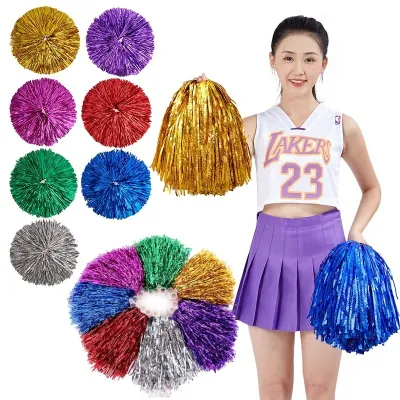
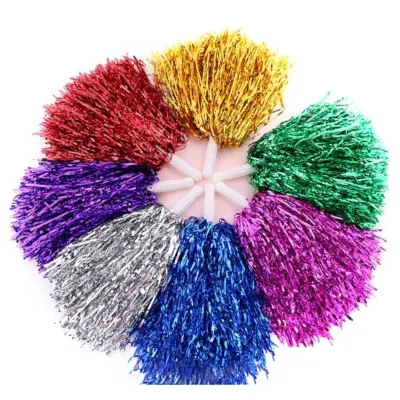
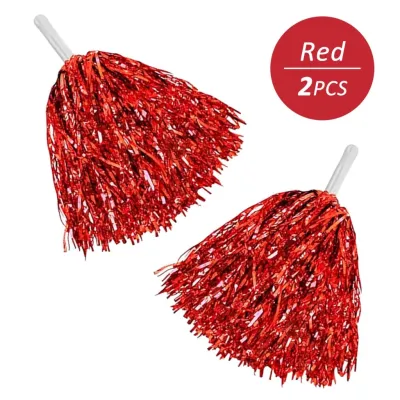
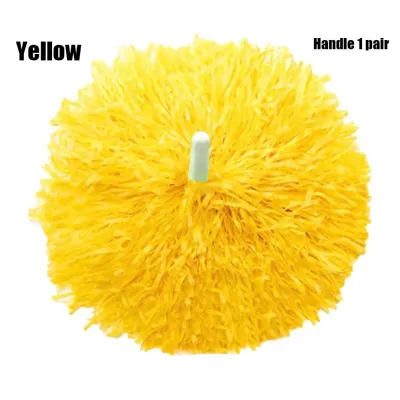
Prices are valid at publication and may change. Please refer to the product page for the latest price.
Evaluating Tissue, Metallic, and Plastic Pompoms
Understanding how different materials behave during movement is key to selecting the right gear. The density, strand width, and cut of the material directly affect the overall weight, aerodynamic drag, and visual volume of the pompoms. While specific performance traits, exact weights, and reflectivity levels vary by manufacturer, understanding the general characteristics of tissue, metallic, and plastic options allows you to match the gear to your team’s athletic needs.
Tissue Pompoms: Classic Volume for Indoor Gyms
Tissue paper pompoms are celebrated for their classic, ultra-fluffy appearance. When fully fluffed, they create a dense, solid sphere of color that looks exceptionally full under standard indoor gymnasium lighting. This high-volume look is highly favored in traditional cheer routines where clean, sharp lines and massive blocks of color are essential for visual synchronization. Because tissue is lightweight, it allows cheerleaders to execute fast arm movements and sharp motions without experiencing premature shoulder fatigue during long routines.
However, the delicate nature of paper presents significant practical limitations. Tissue pompoms are highly fragile and susceptible to moisture, sweat, and tearing. In humid tropical environments, the moisture in the air alone can cause the paper strands to lose their crispness, resulting in a limp, deflated appearance before the routine even begins. Sweat from a cheerleader’s hands can cause the orange dye to bleed, potentially staining uniforms. Consequently, tissue is best reserved for single-event indoor competitions, dry climates, or situations where a school team needs an affordable, short-term solution for a specific indoor performance.
Metallic Pompoms: Maximum Reflectivity for Stage and Stadium Lights
Metallic pompoms, typically made from thin polyester film with a reflective coating, are designed for maximum visual drama. Under evening stadium lights, bright gym spotlights, or stage lighting, these pompoms catch and reflect light with every shake, creating a shimmering effect that commands attention. The bright orange metallic strands glint dynamically, making the team’s movements appear faster and more energetic to judges seated far away in the stands.
Despite their stunning visual appeal, metallic pompoms have distinct physical characteristics that teams must adapt to. The material is stiffer than tissue or soft plastic, which alters the movement dynamics of the strands; they tend to hold their shape rather than flowing smoothly. This stiffness also produces a distinct crinkling sound during rapid movements, which can either add an exciting acoustic element to the routine or distract from the background music. Additionally, metallic strands can be sharp if brushed against the face during complex stunts, requiring cheerleaders to practice careful handling during high-impact transitions.
Plastic Pompoms: Durability for Outdoor and Frequent Use
Plastic pompoms, often constructed from durable vinyl or polyethylene, are the workhorses of the cheerleading world. Their primary advantage is their exceptional resilience against moisture, humidity, sweat, and unpredictable outdoor weather conditions. If your school team frequently performs at outdoor sports games where sudden tropical downpours are common, plastic pompoms will survive the wet weather without losing their shape, clumping together, or bleeding color onto expensive uniforms.
The trade-off for this extreme durability is weight. Plastic strands are heavier than both tissue and metallic alternatives, which increases the physical effort required to hold, shake, and transition the pompoms throughout a three-minute routine. This added weight can lead to quicker fatigue, meaning squads must build up shoulder endurance during practice sessions. However, for school athletic programs looking to build a long-term inventory, the ability of plastic pompoms to withstand years of rough handling, outdoor storage, and frequent washing makes them a highly cost-effective investment.
Quick Comparison Matrix for School Teams
To help your school’s athletic department or booster club compare options quickly, the matrix below outlines how each material performs across key categories. Keep in mind that exact specifications, such as strand count, strand width, and handle designs (such as baton, loop, or block handles), vary significantly between brands. Always verify these details on the manufacturer’s product label or specification sheet before finalizing a bulk purchase.

| Material Type | Best Environment | Relative Durability | Visual Effect | Maintenance Needs |
|---|---|---|---|---|
| Tissue | Indoor Gyms (Dry) | Low (Single-use/Short-term) | Classic, Matte, High-Volume Fluff | Keep completely dry; cannot be cleaned |
| Metallic | Stage & Night Stadiums | Moderate (Prone to creasing) | High-Shine, Shimmering, Reflective | Shake out gently; store flat to avoid creases |
| Plastic | Outdoor Fields & All-Weather | High (Multi-season) | Vibrant, Solid Color, Semi-Gloss | Wipe clean with damp cloth; air dry |
Making the Final Decision for Your Team
Choosing the right orange pompoms requires a systematic evaluation of your team’s specific circumstances. Start by analyzing your primary performance venue. If your competition schedule is strictly limited to indoor, air-conditioned arenas where humidity is controlled, and your budget is highly restricted, tissue pompoms provide the classic, high-volume look at a lower initial cost. This option is particularly suitable for one-off championship events where the gear does not need to survive past the final buzzer.
If your routine is designed for high-profile showcase events, televised regional competitions, or evening games under powerful stadium floodlights, metallic pompoms are the clear choice. The reflective orange strands will elevate your visual presentation, ensuring that even the smallest hand movements are visible to the judges and spectators at the top of the bleachers. Ensure your team practices with these beforehand to get used to the unique sound and stiffer texture of the metallic film.
For squads that support outdoor sports teams, perform in high-humidity environments, or require gear that can be passed down to next year’s roster, plastic pompoms are the most practical choice. They withstand the wear and tear of outdoor practices, bus rides, and wet weather, offering the best long-term value for your school’s budget.
Before placing a bulk order with a sports equipment supplier, always request a sample or carefully verify the manufacturer’s specifications. Pay close attention to the handle style—baton handles are excellent for quick hand-to-hand transitions, while loop or strap handles are preferred for routines that involve frequent tumbling where the cheerleader must keep the pompom secured to the wrist or fingers. Check the exact weight per pompom to ensure it matches the physical capabilities of your athletes.
Extending the Lifespan of Your Pompoms
Regardless of the material you choose, proper care and maintenance will significantly extend the lifespan of your team’s orange pompoms, protecting your school’s financial investment. Proper storage is the most critical factor in preventing damage. Never cram pompoms tightly into gear bags or equipment closets, as this crushes the strands and ruins their symmetrical shape. Instead, store them hanging from hooks or placed loosely in spacious, breathable mesh bags that allow air circulation, which is especially important for preventing mold in humid climates.
Cleaning methods must be strictly tailored to the specific material. Tissue pompoms cannot tolerate any moisture; if they become dusty, gently shake them out outdoors or use a dry, soft-bristled brush to remove debris. Plastic pompoms can be easily maintained by wiping the strands and handles with a damp cloth and a mild soap solution, followed by thorough air-drying before storage. For metallic pompoms, avoid using harsh chemical cleaners or alcohol-based sprays, as these can strip the reflective coating from the polyester film; instead, use a dry microfiber cloth to wipe away sweat and oils.
Establish a regular inspection routine before every major competition. Check for heavily frayed strands, loose handles, or significant shedding. Uniformity is key to a high-scoring presentation, so any pompoms that have lost their fullness, faded in color, or suffered structural damage should be retired. Keeping a small inventory of matching replacement pairs ensures your squad always takes the floor looking cohesive and professional.
Frequently Asked Questions (FAQ)
Can we mix different pompom materials in the same routine?
Mixing different pompom materials within a single routine is generally not recommended for competitive cheerleading. Different materials move, catch light, and weigh differently, which can disrupt the visual synchronization of your performance. For example, if half the team uses matte tissue and the other half uses reflective metallic, the judges may perceive the routine as asymmetrical or disorganized, even if the choreography is perfectly timed. To maintain a polished, professional, and unified team appearance, it is best to ensure that all team members use identical pompoms of the same material, size, and handle type.
How many orange pompoms should we order for a school team?
When calculating your order size, always plan for more than the exact number of cheerleaders currently on your roster. A practical guideline is to order the total number of active athletes (remembering that pompoms are typically used in pairs, so two per cheerleader) plus an additional fifteen to twenty percent as backups. This buffer accounts for unexpected roster additions, mid-season damage, or loss during travel. Additionally, check with your supplier regarding minimum order quantities and bulk packaging discounts, as ordering a larger quantity at once often reduces the unit cost in Philippine Pesos (₱) and ensures that all your pompoms come from the same dye lot, guaranteeing a perfect color match.

Community discussion
Share your experience or ask a question. Comments are reviewed before publication.