
Quick Answer: Which Fishing Boat Should You Choose?
Selecting between a rigid plastic fishing kayak and an inflatable fishing boat comes down to your storage capacity, transport options, and the specific waters you plan to fish. Neither vessel is universally superior; instead, each serves a distinct style of angling and logistical setup. Your choice must align with how you plan to store, transport, and launch your watercraft.
Rigid plastic kayaks excel if you prioritize on-water speed, precise tracking, and the ability to drag your boat over gravel or launch from rocky shores. They are ideal for anglers with dedicated garage space and a vehicle equipped with a roof rack or trailer. In contrast, inflatable fishing boats are the go-to option for apartment dwellers, owners of compact cars, and travelers who need a highly buoyant, stable platform that packs down into a trunk.
Durability and Hull Maintenance
When evaluating durability, you are comparing the rigid resilience of high-density polyethylene plastic against the flexible strength of reinforced PVC or Hypalon fabrics. Polyethylene hulls are incredibly tough, easily sliding over river rocks, scraping against concrete launch ramps, and resisting impacts from submerged logs. However, the tropical climate in the Philippines presents a specific challenge: intense ultraviolet (UV) radiation and high ambient heat can degrade plastic over time, causing it to warp or become brittle if left unprotected.
Products mentioned in this guide
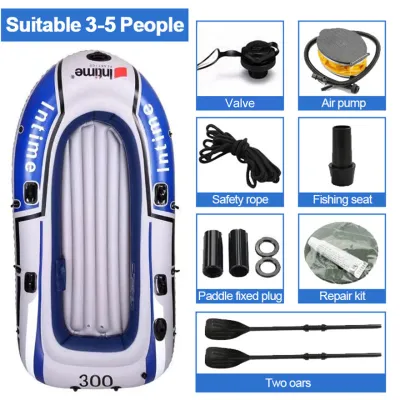
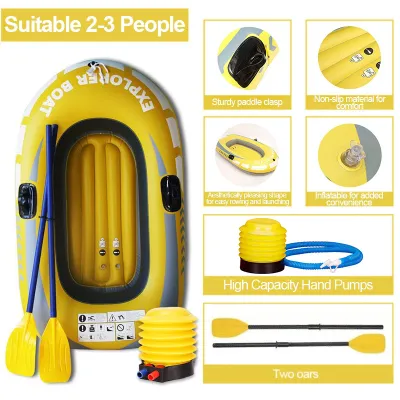
Prices are valid at publication and may change. Please refer to the product page for the latest price.

To prevent UV damage on a plastic kayak, you must store the vessel out of direct sunlight, preferably in a shaded garage, under a specialized UV-resistant cover, or suspended on wall cradles. Applying a marine-grade UV-protectant spray to the hull twice a year helps maintain the plastic’s flexibility. Additionally, avoid storing a plastic kayak on its bottom on flat ground for extended periods, as the constant pressure under high heat can deform the hull shape.
Inflatable boats utilize heavy-duty, multi-layered fabrics designed to resist punctures from fish hooks, stray knives, and submerged branches. Despite this toughness, they remain vulnerable to sharp barnacles, jagged oyster reefs, and metal debris. The seams and valves of an inflatable are its most critical maintenance points; high tropical temperatures cause the air inside the chambers to expand, which can stress the seams if the boat is overinflated.
Before every launch, establish a strict visual inspection routine for your inflatable. Inflate the chambers to the manufacturer’s recommended pressure using a reliable pressure gauge, and check for air leaks by spraying soapy water around the valves and along the seams. Look for any signs of fabric delamination, peeling seam tape, or valve degradation. After fishing in saltwater, thoroughly rinse the entire boat with fresh water and allow it to dry completely in the shade before folding it; storing a damp inflatable in a humid environment promotes mold, mildew, and adhesive breakdown.
Portability, Storage, and Transport Logistics
Transporting a rigid plastic fishing kayak requires dedicated hardware and physical effort. Because these boats cannot be folded, you must install a certified roof rack system, a specialized kayak carrier, or use a utility trailer. Lifting a heavy plastic kayak onto a vehicle roof requires proper lifting technique to avoid back strain, and it often requires two people if the wind is strong.
Before transporting a rigid kayak, verify your vehicle’s roof payload limit in the owner’s manual. Always secure the kayak using heavy-duty cam straps wrapped around the roof rack bars, and always attach bow and stern tie-down lines to your vehicle’s towing eyes to prevent the wind from lifting the boat at highway speeds. Never rely solely on elastic bungee cords to secure a rigid boat during transport.
Inflatable fishing boats offer unmatched convenience for those with limited space. When deflated, these boats fold down into a carrying bag that fits easily into the trunk of a compact sedan or a closet in a high-rise condominium. This eliminates the need for expensive roof racks or trailers, making them highly accessible for urban anglers.
However, the trade-off for this portability is the preparation time required at the water’s edge. You must dedicate 15 to 30 minutes before and after each trip to inflate, deflate, and assemble the boat. This process involves operating high-volume manual foot pumps or portable electric pumps, installing rigid floorboards or drop-stitch floors, and mounting seats and accessories. In hot, humid weather, this assembly process can be physically demanding before you even begin fishing.
On-Water Performance and Fishing Features
On-water performance differs significantly due to hull design and water displacement. Rigid plastic kayaks typically feature streamlined V-hulls or catamaran-style pontoon designs that cut through waves efficiently. This shape provides excellent tracking—the ability to maintain a straight line while paddling—and allows you to cover long distances with less physical exertion, even when paddling against moderate coastal currents.
Inflatable boats sit high on top of the water rather than cutting through it, which creates a larger profile for the wind to catch. This high freeboard makes inflatables highly susceptible to wind drift, meaning a strong breeze can quickly blow you off your target fishing spot. To counteract this, inflatable anglers often need to deploy anchors or drift socks, which adds to the gear you must carry and manage.
Weight capacity and gear distribution are critical safety factors for both vessel types. Inflatables generally offer massive weight capacities because their large air chambers provide incredible buoyancy, making them highly stable and difficult to capsize. However, you must distribute your gear evenly across the deck; placing too much weight in the bow or stern can cause the flexible floor to sag, increasing drag and reducing maneuverability.
Rigid plastic kayaks have lower overall weight capacities than large inflatables, but they handle concentrated loads exceptionally well. They allow you to mount heavy accessories like deep-cycle batteries, trolling motors, and loaded tackle crates in designated wells without affecting the structural integrity of the hull. Before purchasing, check the manufacturer’s specifications for built-in accessory tracks, rod holders, and motor mount compatibility. If you plan to stand while casting, verify that the kayak’s beam width and hull design are specifically rated for standing stability.
Final Decision Framework
To make your final decision, evaluate your personal storage limits, transport capabilities, and typical fishing environments against the following criteria.
Choose a plastic fishing kayak if:
- You have a garage, yard, or dedicated storage space at least 3 to 5 meters in length.
- Your vehicle is equipped with a sturdy roof rack, or you own a utility trailer.
- You frequently fish in shallow rivers with sharp rocks, coastal reefs, or areas with heavy timber.
- You prefer a quick launch process with zero assembly time at the water's edge.
- You want to cover long distances quickly using paddles or a pedal-drive system.
Choose an inflatable fishing boat if:
- You live in an apartment or condominium with no outdoor storage space.
- You drive a compact car without a roof rack and want to transport your boat inside the trunk.
- You prioritize maximum stability and buoyancy over speed and tracking.
- You plan to fish with a partner and need a high weight capacity for multiple people and heavy gear.
- You do not mind spending extra time inflating and deflating the vessel at the launch site.
Verify first if:
- You have checked local maritime and municipal regulations in the Philippines regarding boat registration, especially if you plan to attach a gasoline or electric motor.
- You have budgeted for essential safety gear, including a personal flotation device (PFD) for every passenger, a signaling whistle, and a manual bilge pump or bailer, which can cost from ₱1,500 upward depending on the brand and certification.
- You have verified the saltwater compatibility of all metal hardware, valves, and zipper components on the boat to prevent rapid corrosion.
Frequently Asked Questions (FAQ)
Can I attach an outboard motor to both plastic and inflatable fishing boats?
Yes, both plastic fishing kayaks and inflatable boats can support motors, but you must strictly adhere to the manufacturer’s maximum horsepower and weight limits. Inflatable boats require a rigid, integrated transom board or a heavy-duty transom mount bracket to support the weight and torque of a motor. Plastic kayaks require specialized stern-mount plates or side-mount brackets designed specifically for kayak hulls. Always secure your motor with a safety lanyard attached to the vessel, and verify that your battery or fuel tank is positioned to maintain proper weight distribution and balance.
How do I repair a puncture or a deep scratch on the water?
If you experience a puncture on an inflatable boat while on the water, immediately head toward the nearest safe shoreline; do not attempt a permanent repair while afloat. Carry a marine-grade emergency repair kit containing temporary adhesive patches or specialized sealing tape to slow down air loss until you reach land. For permanent repairs, clean the area thoroughly, apply a marine adhesive, and press a matching PVC or Hypalon patch firmly over the puncture according to the manufacturer’s instructions. Deep scratches on plastic kayaks are common and usually cosmetic; however, if a scratch penetrates through the hull, you must use a plastic welding kit or consult a professional repair service once the kayak is completely dry on land.

Community discussion
Share your experience or ask a question. Comments are reviewed before publication.