
Selecting the right home cardio equipment requires balancing your personal fitness goals, physical health, and the practical realities of your living space. In the Philippines, where tropical heat, high humidity, and sudden monsoon rains can make outdoor workouts challenging, having a reliable indoor exercise option is essential. The three most popular choices—portable pedal exercisers, treadmills, and spin bikes—each offer distinct advantages depending on your lifestyle, budget, and physical needs.
A portable pedal exerciser is a compact, lightweight device designed for low-intensity, seated workouts that can be done while working at a desk or watching television. A treadmill provides a classic, high-intensity, weight-bearing workout that closely mimics natural walking or running, making it highly effective for cardiovascular conditioning. A spin bike offers a high-intensity, low-impact cycling experience that targets the lower body and core, providing a vigorous workout without the heavy joint impact associated with running.
Understanding how each machine affects your joints is crucial for long-term safety and consistency. Running on a treadmill subjects your ankles, knees, and hips to repetitive ground reaction forces, which can exacerbate existing joint issues if the deck lacks adequate cushioning. Spin bikes significantly reduce this stress because your feet remain securely clipped or strapped to the pedals, allowing you to elevate your heart rate without jarring your joints. Portable pedal exercisers offer the lowest impact of all, as you remain seated in a supportive chair, removing your body weight entirely from the equation while keeping your lower joints moving.
Products mentioned in this guide
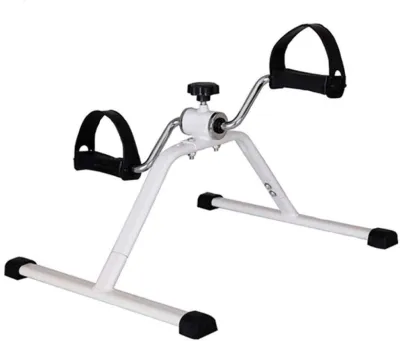
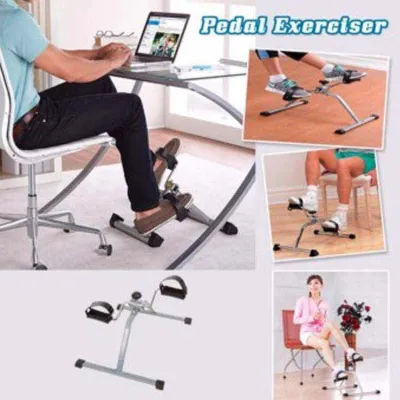
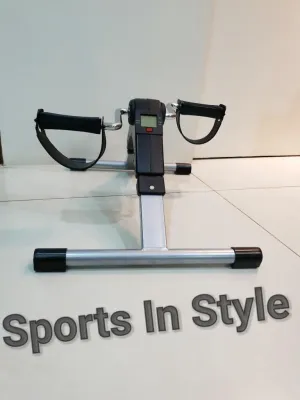
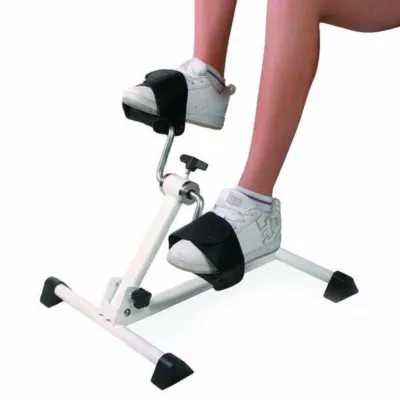
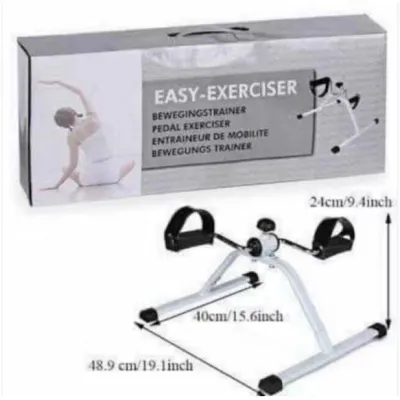
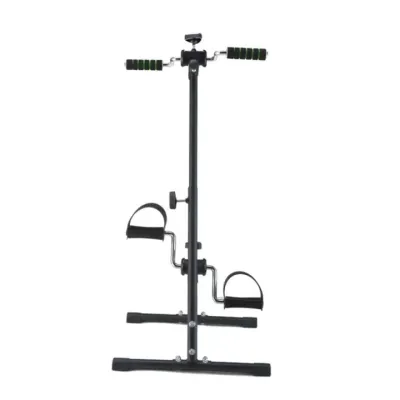
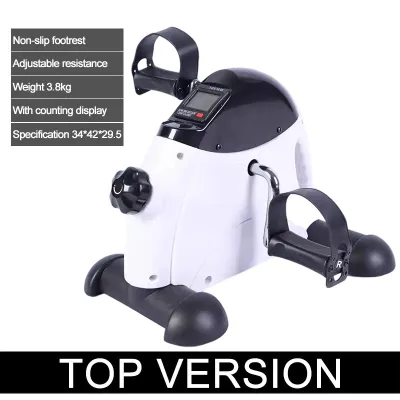
Prices are valid at publication and may change. Please refer to the product page for the latest price.
Cardiovascular intensity and muscle engagement also vary widely across these three options. Treadmills engage your entire body, requiring active leg drive, core stabilization, and arm swing, which naturally demands more energy and elevates your heart rate quickly. Spin bikes focus intensely on the lower body, specifically targeting the quadriceps, hamstrings, glutes, and calves, while requiring core engagement during standing climbs. Pedal exercisers provide a much milder workout, focusing primarily on gentle leg or arm rotation to promote circulation and joint mobility rather than intense athletic conditioning.
Before committing to any equipment, always verify the manufacturer’s specifications regarding weight capacity and resistance mechanisms. Treadmills rely on motor horsepower and belt durability, which must align with your body weight and training intensity. Spin bikes and pedal exercisers utilize magnetic or friction resistance; magnetic systems offer smoother, quieter transitions but may carry a higher price tag. Checking these specifications ensures the machine can safely support your body and provide enough resistance to match your fitness level as you progress.
Evaluating Space, Portability, and Home Setup
Your home’s layout and floor plan are major deciding factors when choosing fitness equipment. A treadmill requires a permanent, dedicated space, typically measuring at least 1.5 to 2 meters in length and nearly a meter in width. You must also account for safety clearance, leaving at least one to two meters of open space behind the belt in case of accidental slips. Additionally, check your ceiling height; because a treadmill deck elevates your standing position by several inches, taller users must ensure they will not hit their heads during a run.
Spin bikes are far more compact, generally requiring a footprint of about 1.2 meters by 0.6 meters. They do not raise your head significantly higher than your normal standing height, making them suitable for rooms with standard ceilings. Portable pedal exercisers require virtually no dedicated floor space when not in use. They can be placed under a dining table, tucked beneath an office desk, or stored in a small closet, making them the ultimate space-saving solution for studio apartments or shared bedrooms.
The weight of the machine affects how easily you can clean your workout area or rearrange your furniture. Treadmills are heavy, often exceeding 50 kilograms, and even folding models can be cumbersome to maneuver alone. Spin bikes are moderately heavy, usually weighing between 30 and 45 kilograms, but they typically feature front-mounted transport wheels that allow you to tilt and roll the bike out of the way. Portable pedal exercisers are incredibly light, often weighing less than 5 kilograms, and frequently include built-in carrying handles for effortless transport.
Noise levels and floor protection are critical considerations, especially if you live in a multi-story condominium or a shared household. Treadmills generate the most noise, combining motor hum with the thud of your feet hitting the deck, which can easily vibrate through tiled or wooden floors. Spin bikes operate much more quietly, particularly those equipped with magnetic resistance and belt drives, though they still require a protective rubber mat to catch sweat and prevent the frame from scratching your floor. Pedal exercisers are nearly silent, producing only a quiet mechanical whir that will not disturb others or interfere with online meetings.
Budgeting for Initial Cost and Long-Term Upkeep
Planning your financial investment involves looking at both the initial purchase price and the long-term costs of maintenance and parts. In the Philippines, fitness equipment prices span a wide range across online marketplaces and local sporting goods stores. Entry-level portable pedal exercisers are highly budget-friendly, typically costing between ₱1,500 and ₱4,000. These devices offer an affordable entry point for those seeking light activity without a major financial commitment.

Spin bikes occupy the mid-to-high price tier, with basic friction-resistance models starting around ₱8,000. High-quality spin bikes featuring magnetic resistance, heavy flywheels, and digital connectivity generally range from ₱15,000 to over ₱35,000. Treadmills represent the most significant financial investment. While you can find basic manual or low-horsepower motorized treadmills starting around ₱12,000, durable motorized models designed for running typically cost between ₱25,000 and ₱60,000, with premium commercial-grade units exceeding ₱100,000.
Long-term upkeep is essential to ensure user safety and protect your investment. Treadmills require the most hands-on maintenance, including regular belt alignment, tension adjustments, and deck lubrication with specialized silicone oil to prevent motor burnout. Spin bikes require periodic checks to tighten the pedals, inspect the drive belt or chain for wear, and clean sweat off the frame to prevent rust in humid tropical climates. Pedal exercisers are highly durable and require minimal maintenance, though you should occasionally check the pedal threads and ensure the resistance knob remains secure.
Before purchasing, verify the warranty coverage and the availability of replacement parts in your local area. Motorized treadmills should ideally come with a multi-year warranty on the motor and frame, as these components are expensive to repair. Spin bikes and pedal exercisers are mechanically simpler, but it is still wise to choose brands that offer accessible customer support and stock replacement parts like pedal straps, resistance pads, or digital monitors.
Final Decision Framework: Making Your Choice
To make the right choice, align the unique features of each machine with your daily routine, physical capabilities, and household environment.
Choose a portable pedal exerciser if:
- You have extremely limited living space or want to exercise while working at a desk.
- You are recovering from an injury and require very low-impact, gentle joint movement.
- You want an affordable, lightweight device that is easy to store and transport.
- Your primary goal is to improve circulation and stay active during long periods of sitting.
Choose a treadmill if:
- Your main fitness goal is to train for running, walking, or hiking events.
- You want to maximize your calorie burn and engage in high-intensity, full-body workouts.
- You have a dedicated workout space with high ceilings and a budget that allows for regular maintenance.
- You prefer natural, weight-bearing movement and have healthy joints that can handle ground impact.
Choose a spin bike if:
- You want a high-intensity cardiovascular workout that builds lower-body strength.
- You prefer low-impact exercise that protects your knees, hips, and ankles from repetitive impact.
- You have moderate floor space and need a machine that operates quietly in a shared home.
- You enjoy cycling-style workouts and want a durable, stable machine with adjustable resistance.
Verify first if:
- Any potential user has balance issues, severe joint degeneration, or cardiovascular conditions; in these cases, consult a physical therapist or physician before starting a new exercise regimen.
- Your flooring can support the weight and vibration of a treadmill or spin bike, and invest in a high-quality equipment mat to protect your home.
- The electrical outlets in your workout area match the voltage and power requirements of a motorized treadmill to prevent electrical overloads.
Frequently Asked Questions (FAQ)
Can a portable pedal exerciser provide the same calorie burn as a treadmill?
A portable pedal exerciser generally cannot match the calorie burn of a treadmill under typical workout conditions. Treadmills require you to support your entire body weight, engage your core, and actively swing your arms, which recruits large muscle groups and demands a high amount of energy. A pedal exerciser is used while seated, which significantly reduces the muscular effort required to stabilize your body. To monitor your actual energy expenditure, check your device’s digital display or use a personal wearable fitness tracker, as individual metabolic rates, pedaling speed, and resistance levels will ultimately determine your total calorie burn.
Is a spin bike or a pedal exerciser better for knee rehabilitation?
Both machines offer excellent low-impact movement for knee recovery, but they are suited for different stages of rehabilitation and physical ability. A portable pedal exerciser allows you to sit in any supportive chair, giving you complete control over your seating height and leg angle, which is highly beneficial during the early stages of recovery when joint mobility is limited. A spin bike provides a highly stable, adjustable riding position that helps maintain proper joint alignment, but it requires greater knee flexion and a higher baseline of physical effort to turn the heavy flywheel. Always consult a physical therapist or medical professional to evaluate your specific joint health, and check the manufacturer’s guidelines to ensure you are using the correct resistance and posture for safe rehabilitation.

Community discussion
Share your experience or ask a question. Comments are reviewed before publication.