
Starting your roller skating journey as an adult in the Philippines is an exciting way to stay active, explore outdoor spaces, and join a vibrant community. However, choosing your first pair of roller skates can feel overwhelming given the wide variety of designs, wheel types, and technical specifications available online. To ensure a safe and enjoyable learning experience, adult beginners must prioritize structural ankle support, appropriate wheel hardness for local paved surfaces, and a secure closure system that prevents foot slippage.
In a tropical climate characterized by high humidity and warm temperatures, selecting the right skate also involves practical considerations like material breathability and moisture resistance. Standard concrete barangay courts, public park pathways, and subdivision roads present unique challenges, including rough textures, cracks, and occasional debris. Understanding how different skate components interact with these environments will help you make an informed investment that keeps you safe while you build your confidence on wheels.
Key Selection Criteria for Adult Beginners
When evaluating roller skates, the boot construction is your first line of defense against injury and fatigue. Adult beginners generally benefit most from a hard-shell boot, which features a rigid plastic outer casing. This structure provides exceptional lateral ankle support, preventing your ankles from rolling inward or outward as you learn to balance. While soft boots—constructed from fabric and reinforced mesh—offer immediate comfort and superior breathability in hot weather, they often lack the structural stiffness required to support an adult’s weight during initial learning phases. For the best of both worlds in a tropical climate, look for hard-shell skates that feature removable, washable mesh liners to manage sweat and maintain hygiene.
Products mentioned in this guide
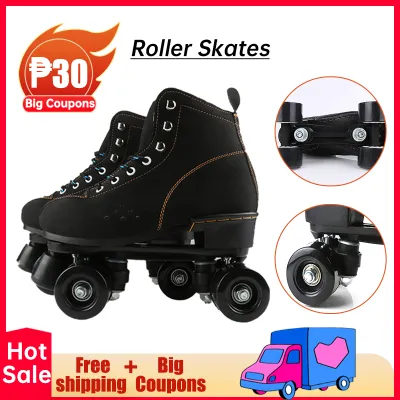
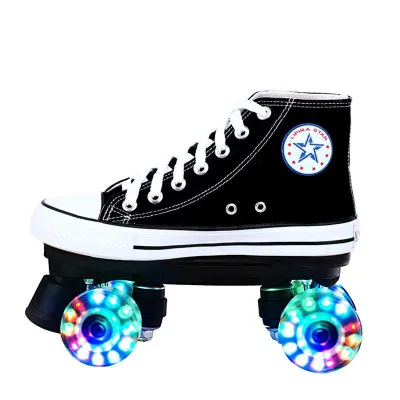
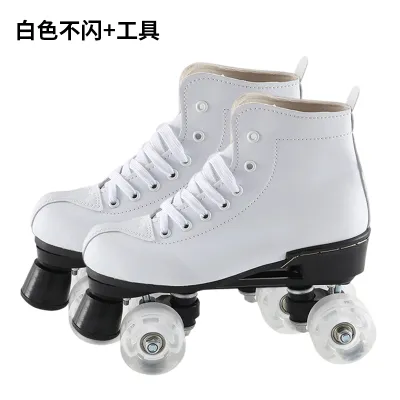
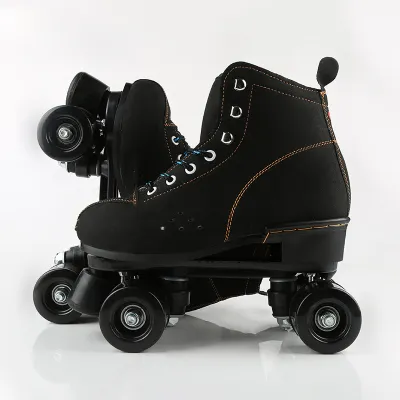
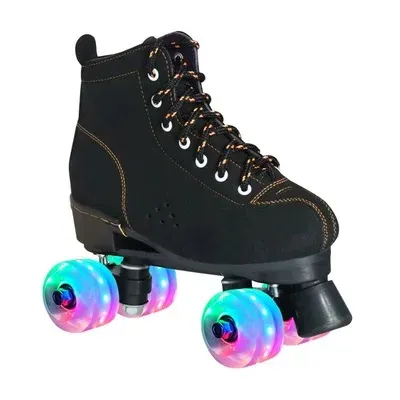
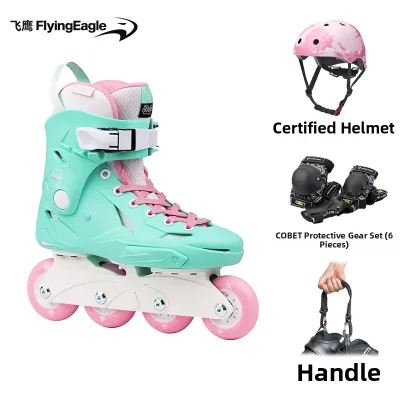
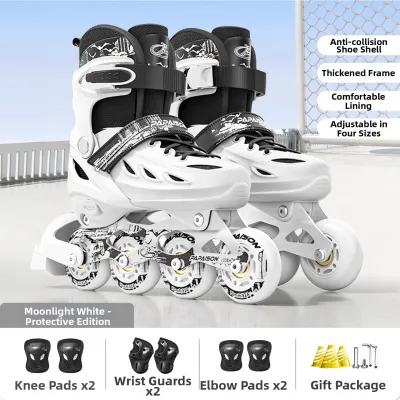
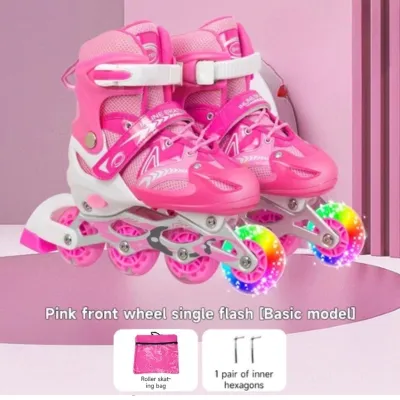
Prices are valid at publication and may change. Please refer to the product page for the latest price.
Wheel hardness, measured by the durometer rating (indicated by a number followed by the letter “A”), directly impacts your stability and comfort on local pavements. For outdoor skating on typical Philippine roads, concrete courts, or park paths, softer wheels with a durometer rating between 78A and 82A are highly recommended. These wheels absorb road vibrations and provide a reliable grip on uneven surfaces, reducing the risk of slipping on dusty or slightly rough concrete. Harder wheels, such as those rated 85A and above, are designed for smooth indoor rinks; using them outdoors can result in a harsh, jarring ride that quickly fatigues your leg muscles. Additionally, beginners should opt for moderate wheel sizes—typically 72mm to 80mm for inline skates—to maintain a lower center of gravity and improve overall balance.
The frame of the skate holds the wheels in place and bears your entire body weight, making its material composition a critical safety factor. Aluminum frames are highly durable, rigid, and offer excellent power transfer, meaning less energy is wasted with each stride. However, they can transmit more road vibration to your feet. Composite or plastic frames are more flexible and absorb shock better, providing a smoother ride on rough asphalt, but they may flex under heavier adult riders. Always verify the manufacturer’s specified weight limit on product listings to ensure the frame can safely support your body weight without bending or compromising your stability.
A secure closure system is essential to prevent lateral foot movement inside the boot, which can lead to blisters, loss of control, and ankle strain. High-quality adult skates utilize a three-part closure system: traditional laces, a 45-degree midfoot strap (often Velcro or a ratchet buckle), and a secure cuff buckle at the top of the ankle. The laces allow you to customize the tightness across your instep, the midfoot strap locks your heel firmly into the back of the boot, and the ankle buckle provides the rigid lateral support necessary to keep your lower leg aligned with the skate frame. Avoid skates that rely solely on laces or cheap plastic clips, as they tend to loosen quickly during a session.
Sizing and Fit Checklist for Adult Feet
Achieving the perfect fit is the most critical step in purchasing roller skates, yet it is where many beginners make mistakes, especially when shopping online. You should never rely on your standard street shoe size, as skate sizing is highly brand-specific and often runs smaller or larger than everyday footwear. To find your true size, place a sheet of paper against a wall, stand on it with your heel touching the wall, and mark the longest point of your foot. Measure this distance in millimeters for both feet, as one foot is often slightly larger than the other, and use the larger measurement to cross-reference the manufacturer’s specific size chart.

When you try on your skates for the first time, look for specific indicators of a correct fit. Your heel should feel locked into the back pocket of the boot with minimal to no lifting when you bend your knees and push your shins forward. Your toes should gently brush the front of the toe box when you stand completely upright, but they should pull back slightly and have enough room to wiggle when you drop into a proper skating stance with bent knees. If your toes are cramped, curled, or pressing hard against the front, the skates are too small; conversely, if your foot slides back and forth, the skates are too large and will cause painful friction blisters.
In the Philippines, the tropical heat and humidity cause feet to swell naturally during physical activity. To account for this, always measure your feet or try on your skates in the afternoon or evening when your feet are at their largest. Additionally, perform your fitting while wearing the exact socks you plan to skate in. Opt for medium-thickness, moisture-wicking athletic socks rather than thick cotton socks, which trap heat and sweat, leading to discomfort and slippage inside the boot.
Before finalizing any online purchase, carefully review the seller’s return and exchange policies regarding sizing issues. A reputable seller should offer a clear window for exchanges if the skates do not fit perfectly. When testing your new skates at home, always wear them on a clean, carpeted indoor surface. This prevents the wheels from getting scratched or dirty and keeps the frames pristine, ensuring you remain eligible for a return or exchange if you need to swap them for a different size.
Braking Systems and Essential Safety Gear
Before you take your first stride on the pavement, you must understand how to stop safely and equip yourself with the necessary protective gear. For inline skates, a traditional heel brake attached to the right skate is the most reliable stopping mechanism for beginners, allowing you to apply gradual pressure to slow down. For quad skates, adjustable toe stops located at the front of the boot are used to drag or push off. Always check if the brake pad is adjustable to suit your stance and verify that the manufacturer or seller offers replacement pads, as these components wear down over time and must be replaced to maintain stopping power.
Protective gear is non-negotiable for adult beginners. A proper safety set includes a certified helmet, wrist guards, knee pads, and elbow pads. When falling, the natural human instinct is to reach out with open hands, making wrist guards the most critical piece of gear for preventing fractures and severe scrapes. Knee and elbow pads should feature hard plastic caps to slide along the concrete, absorbing the impact and protecting your joints. Ensure all pads fit snugly without sliding down your limbs during movement, as loose gear cannot provide adequate protection during a fall.
As an adult learner, recognizing your physical limits and environmental hazards is crucial for staying safe. Physical fatigue is a primary cause of accidents; when your leg muscles tire, your form deteriorates, and your reaction times slow down. If you begin to lose control, feel persistent joint pain, or encounter unsuitable terrain like wet pavement, steep hills, or heavy traffic, stop practicing immediately. Equipment cannot replace proper training and judgment, so consider seeking professional instruction or joining local beginner-friendly skating groups to learn correct falling and stopping techniques.
Developing a pre-ride inspection routine is a simple yet highly effective way to prevent equipment failure. Before every single skating session, spend two minutes performing a visual and physical check of your skates. Ensure all axle bolts holding the wheels are tight, check that the wheels spin freely without wobbling or grinding noises, and verify that your brake pad is securely fastened and has not worn down past its limit line. This quick habit ensures that a loose bolt does not turn into a dangerous fall on the road.
Verifying Specifications When Shopping Online
Buying roller skates online requires a discerning eye to separate high-quality entry-level skates from cheap, unsafe imitations. Start by thoroughly reading the product labels and specification tables provided in the listing. Look for explicit details regarding the maximum weight limit, frame material (such as aircraft-grade aluminum or reinforced composite), and bearing ratings (such as ABEC-5 or ABEC-7). If a listing lacks these technical details and instead relies on generic marketing buzzwords, it is highly likely a toy-grade product that will not support an adult’s weight or withstand the friction of outdoor skating.
Evaluate the credibility of the seller by reading customer reviews and analyzing the product description. Look for reviews from verified buyers who discuss the long-term durability of the skates, how well the wheels hold up on rough concrete, and whether the sizing chart provided by the seller was accurate. Be skeptical of listings that have exclusively five-star reviews with generic, repetitive text, as these can be artificial. Genuine reviews often mention minor drawbacks, such as a stiff cuff or the need to break in the liner, which provide valuable context for your purchase.
Confirm the availability of replacement parts and warranty terms before clicking the buy button. Even high-quality skates will eventually require new wheels, bearings, and brake pads due to regular wear on rough outdoor surfaces. Check if the seller or local specialty shops stock these specific replacement parts to avoid a situation where your skates become unusable because you cannot find a compatible brake pad. Additionally, look for sellers that offer at least a basic warranty against manufacturing defects on the frame and boot shell.
Be vigilant against common red flags in online listings. Extremely low prices—such as adult skates priced under ₱1,500—are a major warning sign, as quality materials and safety-tested components cannot be manufactured at that price point. Other red flags include missing specification details, unrealistic performance claims like “maintenance-free bearings,” or protective gear sets that lack clear safety certifications. Investing in a reputable, well-documented pair of skates ensures your safety and provides a much smoother, more encouraging learning curve.
Frequently Asked Questions (FAQ)
Can I use regular sneakers instead of dedicated roller skate shoes?
No, you should never attempt to skate using regular sneakers or strap-on wheel attachments. Dedicated roller skates are engineered with rigid boot structures, high cuffs, and secure closure systems specifically designed to provide lateral ankle support and prevent your ankles from rolling under your body weight. Regular sneakers lack this structural integrity, leaving your ankles completely unsupported and highly vulnerable to severe sprains or fractures. Furthermore, dedicated skates feature integrated frames and reliable braking systems that standard footwear cannot replicate, making sneakers an extremely dangerous alternative for learning how to skate.
How often should I check the tightness of the wheels and axles?
You should perform a quick physical check of your wheels and axles before every single skating session. Use a standard skate tool or Allen key to ensure that the axle bolts are snug, but avoid overtightening them to the point where the wheels cannot spin freely. In addition to pre-ride checks, inspect your hardware immediately if you experience a hard impact, ride over rough terrain like deep cracks or gravel, or notice any unusual rattling, clicking, or grinding noises. If any component feels loose, misaligned, or damaged, stop skating immediately and consult the manufacturer’s manual or a local professional skate shop.

Community discussion
Share your experience or ask a question. Comments are reviewed before publication.