
Selecting the right roller skate shoes for an 8-year-old in the Philippines involves navigating a unique mix of tropical outdoor conditions, varying skating surfaces, and rapid physical growth. At eight years old, children are developing better motor skills, balance, and coordination, making it an ideal age to introduce roller skating. However, because local skating environments range from smooth indoor rinks to rough, concrete barangay basketball courts and subdivision roads, a generic toy-grade skate will not suffice. Parents must prioritize structural integrity, adjustable sizing, and proper wheel specifications to ensure their child’s safety and enjoyment.
By focusing on how a skate supports the ankle, adapts to growing feet, and handles local outdoor heat and humidity, you can make an informed investment that keeps your child active and safe. This guide outlines the essential criteria for selecting, fitting, and purchasing age-appropriate roller skates, helping you make a confident decision whether buying from a local sports store or an online marketplace.
Matching Skate Types to Your Child's Skill Level
Quad skates feature a four-wheel configuration arranged in a two-by-two rectangular pattern, providing a highly stable base that makes standing and balancing easier for absolute beginners. This wider wheelbase helps build initial confidence, as it minimizes the risk of the skate tipping sideways while the child is learning the basics of pushing off and gliding. For an 8-year-old who is just starting out, quads offer a reassuring platform that allows them to focus on posture and basic movement without feeling constantly off-balance.
Products mentioned in this guide
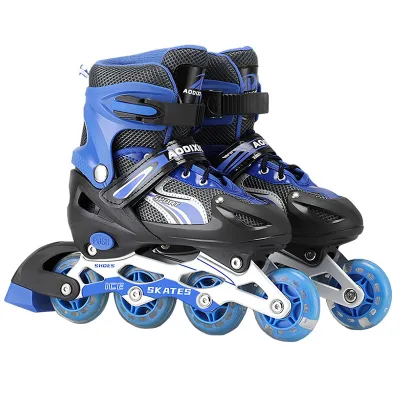
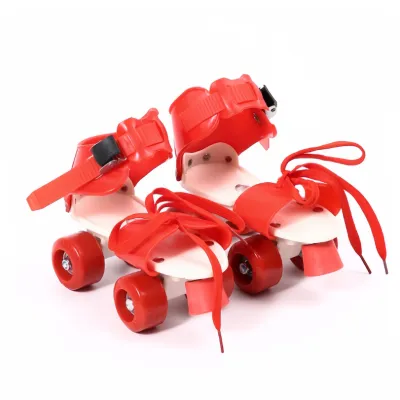
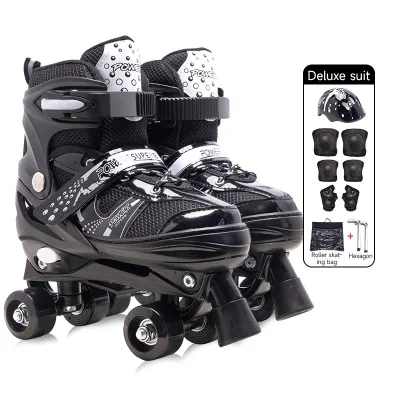
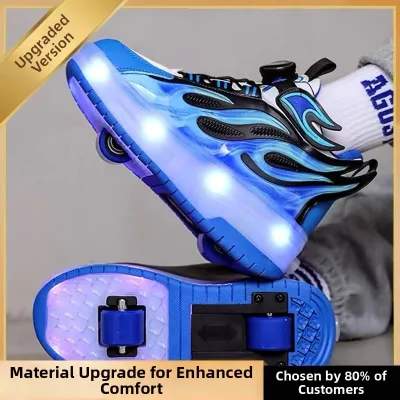
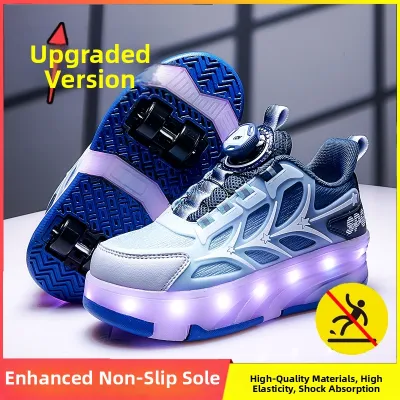
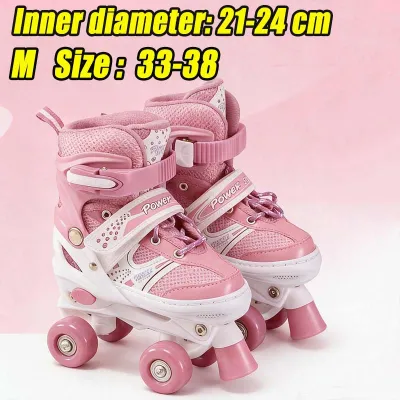
Prices are valid at publication and may change. Please refer to the product page for the latest price.
In contrast, inline skates feature wheels arranged in a single line, which requires greater lateral ankle strength and a more developed sense of balance. Inline skates are better suited for children who want more speed, agility, and a feel closer to ice skating. If your child has already mastered basic balance on quads or is naturally athletic, transitioning to inline skates can offer a more dynamic and fast-paced skating experience, especially on longer paved paths.
For an 8-year-old whose feet are growing rapidly, adjustable frames are highly practical and cost-effective. These skates typically allow the boot to expand across three to four sizes via a simple push-button mechanism, extending the product’s lifespan over several growth spurts. Fixed-size boots, however, are preferred for intermediate or advanced skaters who require a highly rigid, unyielding structure for precise maneuvers, as the adjustable joints in growing skates can introduce minor structural flex.
Wheel hardness is measured on the durometer scale, indicated by a number followed by the letter ‘A’. For outdoor skating on rough Philippine concrete or asphalt, softer wheels (ranging from 78A to 82A) are essential because they absorb vibrations and provide better grip on uneven surfaces. Harder wheels (85A and above) are designed for smooth indoor rink floors, offering less rolling resistance but significantly less traction and shock absorption on outdoor pavements. Additionally, smaller wheels (64mm to 70mm) keep the skater lower to the ground, lowering their center of gravity and improving overall stability.
Sizing, Fit, and Ankle Support Requirements
Never rely solely on your child’s current school shoe size when purchasing roller skates, as sizing standards vary widely between different manufacturers. To get an accurate measurement, place a piece of paper against a wall, have your child stand on it with their heel touching the wall, and mark the longest toe. Measure this distance in centimeters and compare this exact measurement to the manufacturer’s specific size chart, keeping in mind that some brands design their boots narrower or wider than standard footwear.

Once the skates arrive, perform the “finger test” to verify a proper fit before letting your child skate. Have your child slide their foot forward so their toes lightly touch the front of the boot, then attempt to slip one finger down the back of the boot behind their heel. If you can easily fit two or more fingers, the skate is too large, which will cause the heel to lift and slide during use, leading to painful friction blisters and a significant loss of control. The heel must remain locked firmly in place when the skate is fully fastened.
Developing ankles require robust lateral support to prevent inward or outward rolling, which can cause painful strains or sudden falls. Look for skates featuring a reinforced high-cut cuff made of stiff composite plastic that wraps securely around the ankle joint. The closure system should offer a triple-threat combination: traditional laces for a customized fit across the top of the foot, a wide Velcro power strap to secure the heel back into the pocket, and a micro-adjustable top buckle that locks the upper cuff firmly around the lower shin.
Essential Safety Gear and Protective Boundaries
No child should step onto roller skates without a complete set of protective gear, regardless of their skill level. This includes a certified multi-impact helmet (such as a skateboard or bicycle helmet that covers the back of the head), wrist guards, knee pads, and elbow pads. Ensure these items are purchased based on your child’s physical measurements rather than a generic “one-size-fits-all” age label, as loose-fitting pads will slide out of place during a fall and fail to protect the joints.
Before every skating session, inspect the protective gear to ensure it is in safe working condition. Check that the Velcro straps are elastic and can be pulled tight enough to prevent the pads from shifting. The plastic hard shells on the knee and elbow pads must be free of deep cracks, and the internal foam padding should be thick enough to absorb impact. Wrist guards are particularly critical for beginners, as the natural instinct during a fall is to reach out with open hands, risking wrist fractures.
Establish clear boundaries for where your child is allowed to skate to minimize the risk of accidents. Ideal locations in the Philippines include flat, dry, and clean surfaces like dedicated indoor skating rinks, smooth concrete subdivision driveways, or empty, fenced barangay courts. Avoid areas with vehicular traffic, steep slopes, or loose gravel. Skating must be stopped immediately if it begins to rain, as wet concrete becomes incredibly slick, reducing wheel traction and compromising the skate’s braking efficiency while risking rust damage to the steel bearings.
Purchasing Channels and Pre-Checkout Verification
Buying roller skates in the Philippines can be done through physical sporting goods stores or online marketplaces. Physical stores allow your child to try on different models, ensuring an immediate fit check and allowing you to feel the stiffness of the ankle support firsthand. Online marketplaces offer a much wider selection of styles, sizes, and price points, but they require extra diligence to ensure you are purchasing a high-quality product rather than a low-grade toy.
When shopping online, verify that the seller is an authorized distributor of the brand to avoid counterfeit products. Carefully read the return and exchange policies, specifically checking if they allow size exchanges if the skates do not fit upon arrival. Look for warranty coverage that protects against manufacturing defects in the frame, axles, or buckle mechanisms, which provides peace of mind and protects your investment.
Be cautious of very cheap, unbranded skates often marketed as toys on online platforms. These products frequently use soft plastic frames that flex under weight, low-grade plastic wheels that offer zero grip, and substandard bearings that do not roll smoothly. Instead, look for skates that carry recognized international safety certifications (such as EN 13843 for inline skates or EN 13899 for roller skates) printed on the packaging or product labels, ensuring they have undergone structural load and impact testing.
Frequently Asked Questions (FAQ)
How often should I check the fit of my child's adjustable roller skates?
You should check the fit of your child’s adjustable roller skates every two to three months, or at the start of any active skating season. Children’s feet can grow rapidly, and an ill-fitting boot can quickly cause discomfort or injury. Look for physical indicators that the skates need adjustment, such as your child complaining of toe pain, visible redness or rubbing on the toes and heels, or a sudden struggle to maintain balance due to compressed feet. If the toes are pressed hard against the front of the toe box, use the skate’s adjustment mechanism to expand the boot by one size increment.
Can I replace the wheels and bearings on kids' roller skates?
Yes, most high-quality children’s roller skates allow you to replace both the wheels and the bearings once they become worn or damaged. This is a highly cost-effective way to extend the life of the skates without buying a completely new pair. Before purchasing replacements, check the manufacturer’s manual or product specifications to identify the correct wheel diameter (usually measured in millimeters, such as 70mm) and the bearing standard (typically ABEC ratings like ABEC-5 or ABEC-7). Ensure the replacement wheels match the skating surface, opting for softer wheels for outdoor use and harder wheels for indoor rinks.
What is the maximum weight limit for children's adjustable skates?
The maximum weight limit for children’s adjustable skates varies by model and size, but it typically ranges between 50 to 60 kilograms (approximately 110 to 130 pounds) for recreational youth skates. You can find the exact weight capacity printed on the product’s safety label, the packaging, or within the manufacturer’s instruction manual. Exceeding this weight limit poses serious mechanical risks, including the bending or cracking of the plastic or aluminum frame, axle deformation, and a significant reduction in the responsiveness of the rear brake pad, which compromises your child’s safety.

Community discussion
Share your experience or ask a question. Comments are reviewed before publication.