
A rotating carabiner features a specialized swivel joint that allows the attachment point to spin independently of the main body. This mechanism is designed to prevent ropes, slings, and lanyards from twisting during complex climbing maneuvers. Understanding how this joint functions and interpreting its specifications will help you decide if it solves a specific gear management issue in your setup or simply adds unnecessary weight.
Because rock climbing is an inherently high-risk activity, specialized equipment like rotating carabiners cannot replace proper safety training, sound judgment, and regular gear inspections. Before incorporating a swivel mechanism into your setup, you must understand your own technical limits and know how to verify that each component is functioning correctly. If you encounter severe weather, unexpected gear resistance, or any doubt about your system’s integrity, you should stop climbing immediately and re-evaluate your setup.
How the Swivel Mechanism Actually Works
The core of a rotating carabiner is the integrated swivel joint, which sits between the main basket or spine and the lower attachment eye. Inside this joint, manufacturers typically install sealed steel ball bearings or a smooth friction pin. This design allows the lower loop to rotate a full 360 degrees along the vertical axis, even when the system is under tension.
Products mentioned in this guide
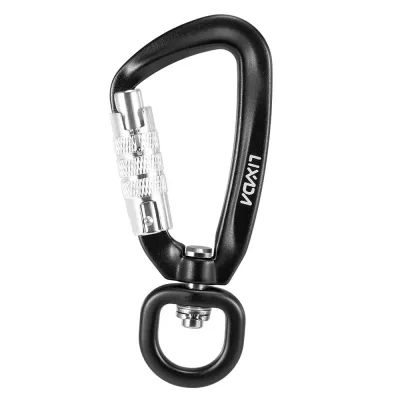
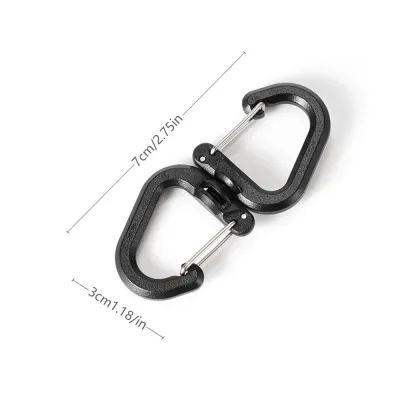
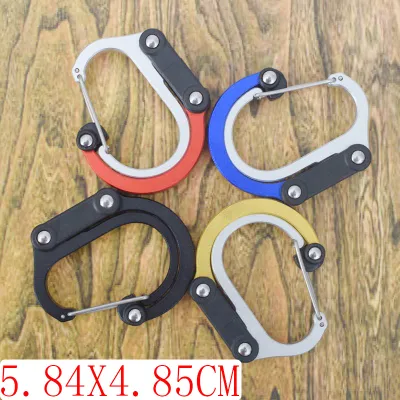
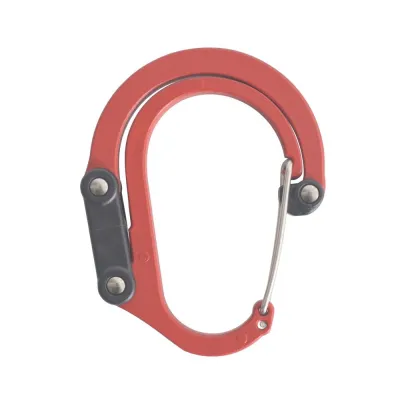
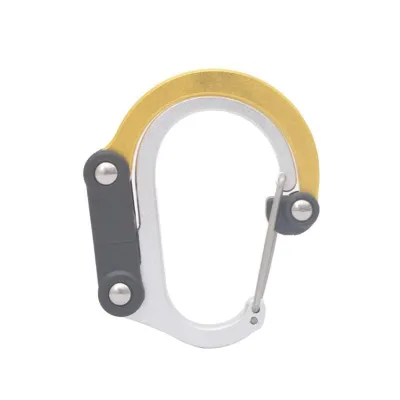
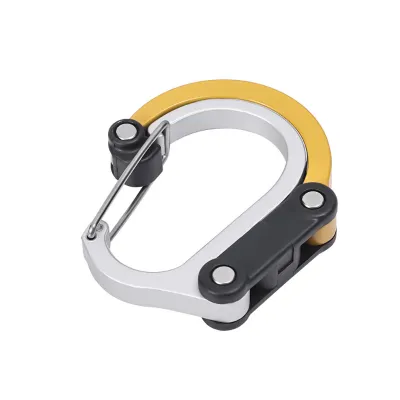
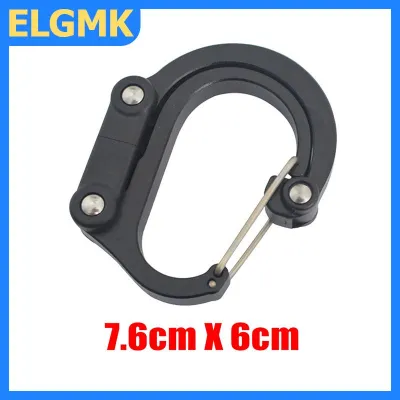
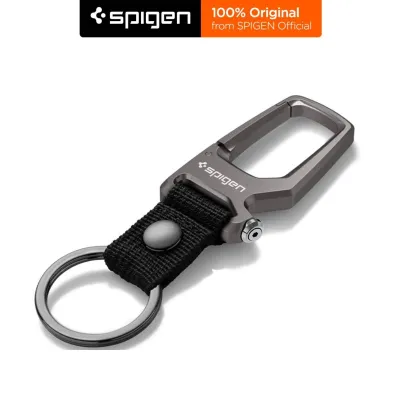
Prices are valid at publication and may change. Please refer to the product page for the latest price.
Unlike standard fixed-eye carabiners that lock your rope or sling into a single orientation, the rotating variant constantly adjusts to the direction of pull. This independent movement prevents the twisting forces of a spinning climber or a shifting load from transferring up the line.
Before you clip a rotating carabiner into any system, you should manually inspect its rotation. Hold the main body of the carabiner and spin the swivel eye to ensure it rotates smoothly without catching, grinding, or showing any lateral play. The alignment between the rotating parts must be perfectly centered to prevent uneven wear during use.
Decoding the Specs: What the Labels Mean for Your Climb
When selecting a rotating carabiner, you must carefully read the markings stamped onto the metal spine. These markings indicate the minimum breaking strength in kilonewtons (kN) for the major axis, minor axis, and with the gate open. Because the swivel joint introduces an extra mechanical connection, verifying these certified ratings is essential to ensure the device matches the safety requirements of your specific climbing discipline.

The mechanical complexity of a swivel joint inevitably adds weight and bulk to your rack. A rotating carabiner is significantly heavier than a standard locking carabiner, which can become a noticeable burden on long approaches or multi-pitch climbs. You must weigh the benefit of twist prevention against the physical effort of carrying heavier gear up the wall.
Gate locking mechanisms on rotating carabiners generally mirror those on standard models, ranging from manual screwgates to multi-action auto-lockers. For personal tethers or anchor systems where the carabiner might rub against rock faces, an auto-locking gate provides an extra layer of security, ensuring the gate remains closed even as the swivel rotates.
Matching the Swivel to Your Climbing Setup
A rotating carabiner is highly effective in specific rigging scenarios where gear twisting is a constant challenge. For example, top-rope anchors, multi-pitch belay stations, and personal anchor systems often benefit from a swivel because they accommodate frequent climber transitions and directional changes. In these setups, the swivel keeps your ropes running cleanly and prevents slings from bunching up.
Conversely, there are many situations where a rotating carabiner is unnecessary and even counterproductive. Standard sport climbing quickdraws, traditional gear racking, and simple top-rope belays do not require a swivel. In these cases, the extra bulk and weight of a rotating joint offer no practical advantage and only complicate your gear management.
Before investing in specialized hardware, consider whether you can manage rope twist through improved clipping techniques and organized rope management. Often, paying closer attention to how you stack your rope or arrange your anchor slings can eliminate the need for a heavy, mechanical solution.
Safety Checks and Maintenance for Moving Parts
Operating in tropical environments, such as the humid climbing crags of the Philippines, exposes your gear to moisture, salt air, and fine grit. This makes regular inspection of the moving parts critical. Before every climb, perform a thorough visual and tactile check of the swivel joint, looking for signs of corrosion, dirt buildup, or stiffness that might hinder free rotation.
To clean a dirty swivel, rinse it thoroughly in warm, clean water to flush out any trapped sand or salt crystals. If the manufacturer’s instructions permit, you may apply a dry, wax-based lubricant specifically designed for climbing hardware. Avoid using heavy oils or wet lubricants, as these will attract abrasive dust and accelerate wear inside the bearing housing.
You must retire a rotating carabiner immediately if you observe any restricted movement in the swivel, visible deformation of the metal, or deep grooves worn into the swivel pin. Additionally, if the gate fails to lock smoothly or if there is excessive play in the rotating joint, the carabiner is no longer safe for use and must be taken out of service.
Frequently Asked Questions (FAQ)
Can I use a rotating carabiner for lead climbing quickdraws?
Using a rotating carabiner on lead climbing quickdraws is generally not recommended. The added bulk and weight can cause the quickdraw to sit awkwardly against the rock, increasing the risk of the carabiner shifting into a bad position. Furthermore, the swivel mechanism introduces a higher risk of cross-loading during a fall, where the force is applied along the weaker minor axis rather than the strong major axis. Standard, fixed-eye carabiners remain the safest and most stable choice for lead protection.
Does the swivel mechanism reduce the overall strength of the carabiner?
A certified rotating carabiner is engineered to meet the same rigorous safety standards as standard climbing carabiners. The presence of the swivel joint does not inherently make the device weaker, provided it carries the appropriate certification markings. Always check the kilonewtons (kN) rating stamped on the spine of the carabiner to verify its strength limits, and ensure it meets the standard requirements for your climbing activities before use.

Community discussion
Share your experience or ask a question. Comments are reviewed before publication.