
To safely explore the underwater world, a standard waterproof flashlight will not suffice. For recreational scuba diving, you generally need a dedicated dive light with an explicit depth rating of at least 100 meters (330 feet) and a brightness output of 800 to 1,000 lumens. While these specifications serve as an excellent baseline for most tropical reef dives, the ideal combination of waterproof integrity and light output depends heavily on your specific diving environment, water clarity, and whether you are diving during the day or at night.
Understanding Waterproof and Depth Ratings for Dive Lights
Standard outdoor gear often uses the Ingress Protection (IP) system, such as IPX7 or IPX8. While an IPX8 rating means a device can withstand continuous submersion, it is typically tested at shallow depths of only 1.5 to 3 meters for a limited duration. Scuba diving subjects equipment to immense hydrostatic pressure that increases by one atmosphere every 10 meters, easily crushing standard seals.
Therefore, you must look for an explicit depth rating certified by the manufacturer, usually expressed in meters or feet. For recreational diving, a rating of 100 meters provides a safe margin of error, even if your certification limits you to 30 or 40 meters. Technical dive lights often carry ratings of 150 to 200 meters or more to withstand extreme pressures.
Products mentioned in this guide
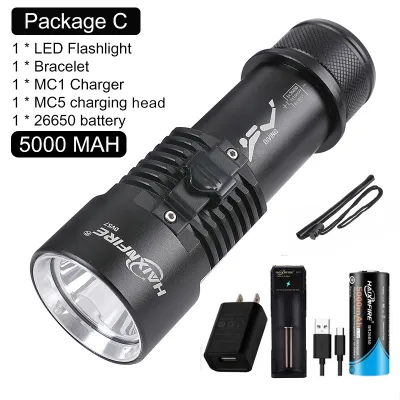
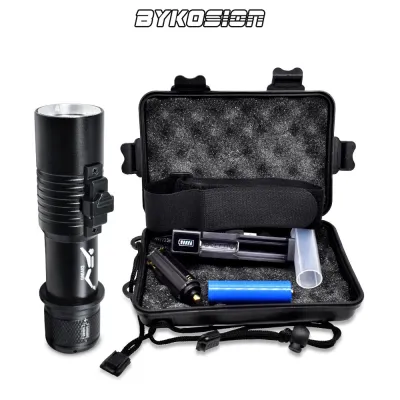
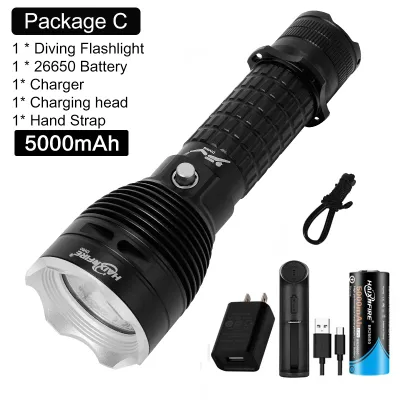
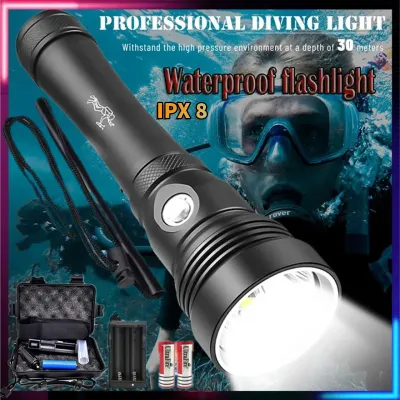
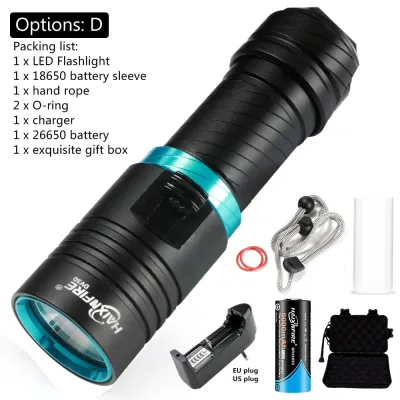
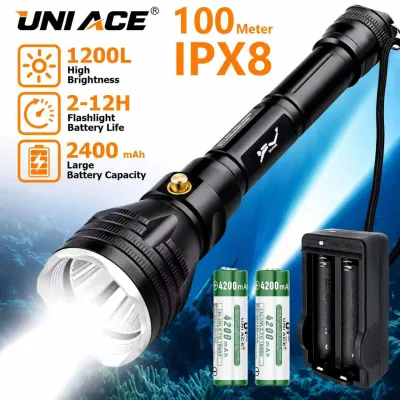
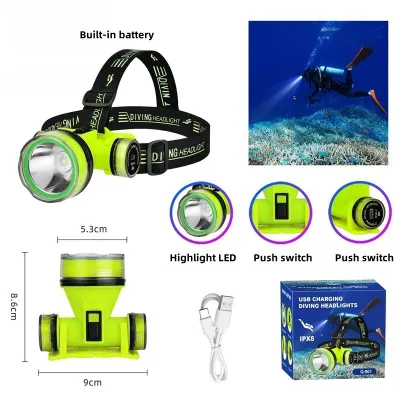
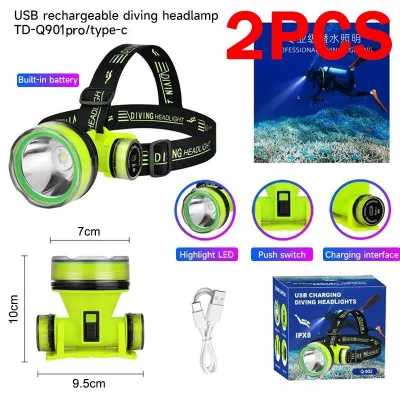
Prices are valid at publication and may change. Please refer to the product page for the latest price.
The waterproof integrity of any dive light relies entirely on its physical seals, primarily rubber O-rings. These small rings prevent water from entering the battery compartment under high pressure. Before every dive, you must inspect these O-rings for hair, sand, or cracks, and apply a thin layer of silicone lubricant to keep them pliable and effective.
Decoding Lumens: How Much Brightness You Actually Need
Lumens measure the total amount of visible light emitted by a source, but underwater, how that light is distributed is just as important. A light with 2,000 lumens spread over a wide 120-degree flood beam will look much dimmer than a 1,000-lumen light focused into a tight 10-degree spot beam. Spot beams cut through the water to highlight distant marine life, while flood beams are ideal for wide-angle underwater photography.

Your diving scenario dictates your lumen requirements. During daytime dives in bright tropical waters, you actually need a surprisingly powerful light—often 1,000 lumens or more—to restore the warm red and orange colors lost to water absorption in deep reef crevices. For night diving, a more modest 800 to 1,000 lumens is usually perfect, as your eyes naturally adjust to the darkness, and overly bright lights can startle marine life.
Keep in mind the physical trade-offs of high-lumen outputs. Extremely bright lights generate significant heat, which is why many high-end dive lights feature thermal protection that automatically dims the light when used out of the water. High brightness also drains batteries rapidly, so always verify the manufacturer’s runtime specifications across different power modes to ensure the light will last the entire duration of your planned dive.
Matching Specs to Your Diving Environment and Activity
Your choice of specifications should align with your specific diving style. Recreational open-water divers exploring shallow coral reefs can easily get by with a single, compact primary light. In contrast, technical, wreck, or cave divers require a highly reliable primary light with a tight, penetrating beam, supplemented by at least one or two independent backup lights to ensure safety in overhead environments.
Water clarity plays a massive role in how light behaves underwater. In the crystal-clear waters of tropical destinations like the Philippines, a wide beam can beautifully illuminate a reef wall. However, if you are diving in murky, plankton-rich, or sediment-heavy waters, a high-lumen flood light will cause severe backscatter—reflecting light off suspended particles directly back into your eyes, much like high-beam headlights in thick fog. In low-visibility conditions, a tight, focused spot beam of 800 lumens is far more effective than a wide 2,000-lumen flood.
Before finalizing your gear setup, it is wise to consult with local dive professionals or check your certification agency’s guidelines. Local dive shops can provide invaluable insights into the typical visibility and current conditions of your specific dive sites, helping you choose the exact beam pattern and brightness level that will serve you best.
Key Physical Features to Verify Before Purchasing
Beyond raw specifications, the physical design of a scuba diving flashlight determines its usability in the water. Look for switch mechanisms that are easy to operate under pressure and while wearing thick neoprene gloves. Magnetic slider switches and rotary bezels are highly popular because they eliminate physical openings in the light body, reducing potential leak points while remaining easy to toggle.
The build quality must withstand harsh marine environments. Anodized aluminum bodies offer excellent corrosion resistance against saltwater and help dissipate heat efficiently. Additionally, ensure the light has secure attachment points for a heavy-duty lanyard, bolt snap, or a Goodman handle, which allows you to mount the light on the back of your hand so your fingers remain free to manage other gear.
Finally, consider the power source. Rechargeable lithium-ion batteries are the standard for modern dive lights due to their high energy density and consistent output. However, if you plan to travel by air to your diving destinations, always check airline and airport security regulations regarding lithium-ion batteries, as they must be carried in your cabin baggage and often have specific watt-hour limits.
Frequently Asked Questions (FAQ)
Can I use a regular waterproof flashlight for scuba diving?
No, standard waterproof flashlights are not designed to withstand the immense pressure of scuba diving. While a regular flashlight might have an IPX7 or IPX8 rating for shallow, temporary submersion, it will quickly fail, crack, or flood when subjected to the high-pressure environment of a deep dive. Dedicated dive lights feature specialized double O-ring seals, thicker lenses, and pressure-resistant bodies specifically engineered for deep-water use.
Does a higher lumen rating always mean a better dive light?
Not necessarily. While high lumen ratings sound impressive, they often come at the cost of shorter battery life, increased heat generation, and potential backscatter in murky water. A high-quality dive light balances brightness with an appropriate beam angle, efficient thermal management, and reliable battery runtime, ensuring you have the right type of illumination for your specific diving conditions rather than just raw power.

Community discussion
Share your experience or ask a question. Comments are reviewed before publication.