
Black paracord is one of the most versatile utility tools you can pack for outdoor adventures in the Philippines, but it is critical to understand its strict limitations before heading into the mountains. While it is indispensable for securing gear, building emergency shelters, and repairing equipment, paracord is never a substitute for certified climbing ropes, professional training, or sound outdoor judgment. In the humid, high-UV environments of local trails—from the muddy slopes of Mount Makiling to the sharp limestone of Mount Daraitan—choosing the right utility cord requires a clear understanding of material specifications, load limits, and verification methods. Before relying on any cordage in the field, outdoor enthusiasts must recognize that survival equipment is only as effective as the user’s ability to inspect, deploy, and maintain it under challenging tropical conditions.
Understanding Paracord Specifications for Climbing and Survival
Understanding the technical classifications of paracord ensures you select a cord capable of handling your specific utility needs. The most common variant found on the market is Type III paracord, widely known as 550 paracord. This classification signifies a minimum breaking strength of 550 pounds under static laboratory conditions. Type III cord typically features a braided outer sheath enclosing seven to nine inner core strands, with each inner strand constructed of two-ply or three-ply nylon yarn. This design provides a balance of strength, flexibility, and lightweight packability, making it the standard choice for general outdoor utility.
For heavier-duty applications, Type IV paracord, or 750 paracord, offers an upgraded alternative. With a minimum breaking strength of 750 pounds, Type IV cord utilizes eleven inner core strands and a slightly thicker outer sheath. This added material increases the overall diameter and weight of the cord, which is an important consideration when packing light for multi-day ascents. While Type IV cord provides a higher margin of safety for heavy gear hauling, it occupies more space in your pack and can be more difficult to tie.
Products mentioned in this guide
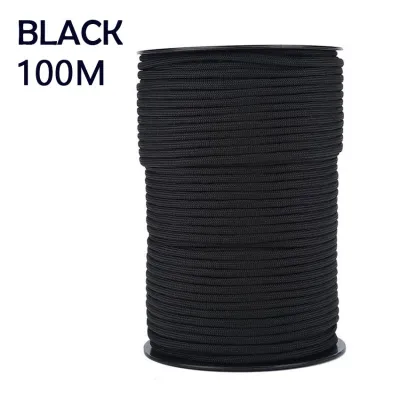
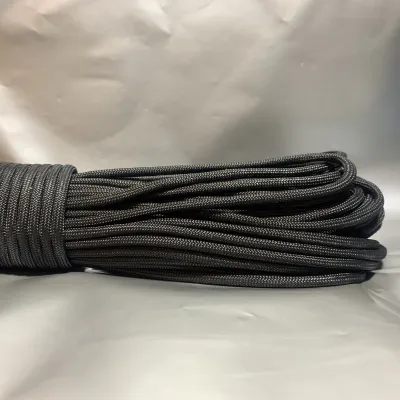
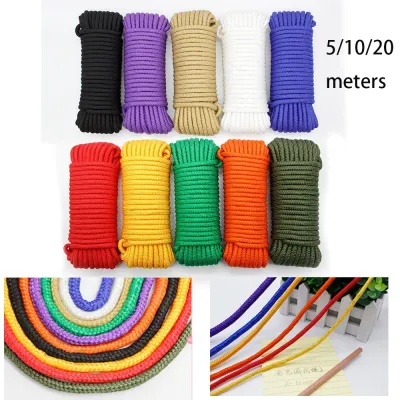
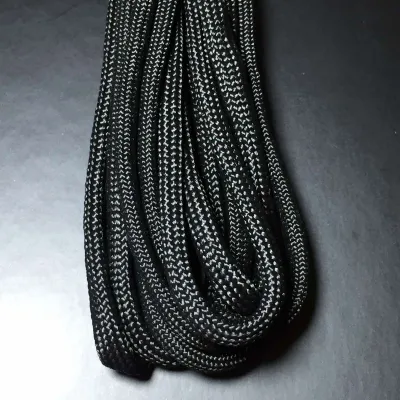
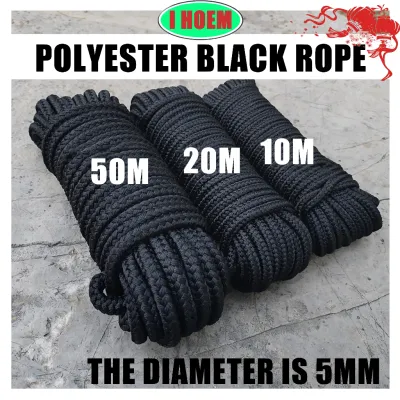
Prices are valid at publication and may change. Please refer to the product page for the latest price.
A critical point of safety for any outdoor enthusiast is the distinction between a cord’s rated breaking strength and its safe working load limit. The 550-pound or 750-pound rating refers strictly to static tensile strength under a gradual, uniform pull. In real-world mountain environments, knots, moisture, dirt, sharp rocks, and sudden movements drastically reduce this threshold. As a general rule of thumb, the safe working load limit of utility paracord should be calculated at 10% to 15% of its rated breaking strength. For 550 paracord, this means you should never subject the cord to a continuous or dynamic load exceeding 55 to 82 pounds.
The material composition of the inner strands also dictates how the cord behaves under tension. High-quality paracord is made of nylon, which allows the cord to stretch up to 30% of its original length. This elasticity is highly beneficial for absorbing sudden shocks, such as a gust of wind catching a tarp or a heavy pack shifting during a steep descent. However, some budget-friendly cords utilize polyester or polypropylene cores. Polyester has much less stretch and absorbs less water than nylon, but it lacks the shock-absorbing capabilities required for dynamic utility tasks. Understanding these material differences allows you to match the cord’s physical properties to the specific demands of your trek.
Key Features to Look for in Black Paracord
Selecting a reliable black paracord requires looking beyond the color and examining the manufacturing standards. True military-specification (mil-spec) paracord is manufactured under the MIL-C-5040H standard. Mil-spec cord must be made of 100% nylon, feature three-ply inner strands (rather than the cheaper two-ply strands found in commercial variants), and include a unique, color-coded manufacturer identification strand woven into the core. Commercial-grade paracord, while often sufficient for basic camping tasks, does not undergo the same rigorous testing and may exhibit inconsistent sheath thickness, looser weaves, or lower-quality inner yarns.

Choosing black paracord offers distinct advantages and challenges in the tropical climate of the Philippines. Black paracord is highly favored for its low-profile aesthetic, resistance to showing dirt or mud, and its ability to blend seamlessly with tactical or dark-colored gear. However, black pigments absorb more thermal energy from the intense tropical sun, which can accelerate the degradation of the underlying nylon fibers if the material is not properly treated. When purchasing black paracord, it is essential to verify that the manufacturer has integrated UV inhibitors into the nylon extrusion process to prevent the cord from becoming brittle and losing its tensile strength over prolonged exposure to sunlight.
Another key feature to evaluate is the inclusion of specialized survival strands within the core. Some modern manufacturers offer “survival paracord” that includes unique utility lines alongside the standard nylon strands. These specialized additions typically include a waxed jute thread for starting fires in wet weather, a high-test monofilament nylon line for emergency fishing, or a thin brass wire for binding gear or fashioning emergency snares. While valuable in a survival kit, these multi-functional cords often make the cord stiffer and more difficult to knot. For general climbing utility and gear rigging, standard 100% nylon paracord remains the preferred choice due to its superior flexibility and knot retention.
Safety Limits and Proper Usage in Mountain Environments
The most critical safety rule is absolute: paracord must never be used as a life-safety rope. It is strictly a utility cord and is entirely unsuitable for supporting human weight, belaying, rappelling, constructing climbing harnesses, or arresting falls. Certified climbing ropes are engineered with highly sophisticated dynamic cores designed to stretch and absorb thousands of pounds of force generated during a fall. Paracord lacks the diameter, tensile strength, dynamic elongation, and international safety certifications (such as UIAA or CE standards) required to protect human life. Attempting to use paracord for life-safety applications carries an extremely high risk of catastrophic failure and severe injury.
Instead, reserve paracord for static utility applications that support camp comfort and gear organization. Excellent uses include pitching tarps and rainflies to shield your campsite from sudden tropical downpours, securing gear to the exterior of your backpack, and hanging food bags high in the trees to protect them from rodents or wild animals. Paracord is also highly effective for minor gear repairs, such as replacing a broken bootlace, lashing a damaged tent pole, or securing a loose sole to a hiking boot. In emergency scenarios, it can be used to lash branches together to construct a temporary litter or to secure a splint to an injured limb, provided the application does not subject the cord to high-impact dynamic forces.
Establish a strict inspection routine to know when to retire your cord. Before every trek, run the entire length of the paracord through your hands to feel for inconsistencies. Look for a fuzzy or frayed outer sheath, which indicates abrasion damage from contact with sharp rocks or rough tree bark. Feel for flat spots, hard lumps, or areas where the core feels disconnected from the sheath, as these are signs of internal strand failure. Additionally, inspect the cord for discoloration or stiffness, which can indicate chemical contamination or severe UV rot. If any of these signs are present, or if the inner white core strands are visible through the outer sheath, the cord must be retired from active outdoor use immediately.
How to Evaluate and Buy Paracord from Online Retailers
Purchasing paracord from online marketplaces in the Philippines requires a strategic approach to avoid low-quality counterfeits. Because you cannot physically handle the cord before buying, you must scrutinize the product listings and seller profiles carefully. Begin by reading the technical specifications in the product description. Look for explicit, detailed claims such as “100% nylon,” “MIL-C-5040H compliant,” “7-strand 3-ply core,” or “verified 550-pound tensile strength.” Be highly skeptical of listings that use generic, sensationalized titles like “ultra-strong military rope” but fail to provide specific material compositions or strand counts in the technical details.
Buyer reviews are invaluable for verifying real-world quality. Look specifically for reviews that include photos or videos of the product, particularly those showing the cut ends of the cord. This allows you to visually verify the number of inner strands and confirm whether they are multi-ply yarns or cheap, single-ply threads. Pay close attention to feedback regarding “core slippage,” which occurs when the outer sheath slides loosely over the inner core, making the cord difficult to knot and prone to tangling. If multiple reviewers complain about the cord snapping under light loads, fraying easily, or feeling stiff and plastic-like, it is highly likely a cheap polyester or polypropylene imitation.
Finally, evaluate the credibility of the seller. Prioritize purchasing from established outdoor specialty brands, official flagship stores, or sellers with high positive ratings and a history of selling climbing and survival gear. Check the seller’s return and refund policies to ensure you can return the product if it arrives mislabeled or fails a basic visual inspection. A reputable seller should stand behind their product’s specifications and be willing to answer detailed questions about the manufacturing origin and material testing of their cordage.
Essential Knots and Maintenance for Outdoor Paracord
Mastering essential knots is crucial for deploying your paracord securely under wet, muddy, or windy conditions. The Bowline is widely considered the most important knot to learn, as it creates a secure, fixed loop at the end of the cord that will not slip or tighten under load. It is exceptionally reliable for securing gear or anchoring a line to a tree, yet it remains easy to untie even after bearing a heavy load. For tensioning tent guy lines or tarp ridge lines, the Taut-line hitch or Midshipman’s hitch is indispensable. This friction hitch allows you to easily slide the knot to adjust the tension of the line and locks securely in place once tension is applied, which is vital when nylon cord stretches in wet weather.
Proper maintenance preserves the strength and lifespan of your paracord in the humid, tropical climate of the Philippines. After a trek where the cord was exposed to mud, sweat, or saltwater, it must be cleaned to remove abrasive particles that can wear down the fibers. Wash the cord by hand in a bucket of lukewarm water using a mild, non-detergent soap. Avoid using bleach, harsh chemical cleaners, or hot water, as these can chemically degrade the nylon polymers. Gently agitate the cord to work out the dirt, rinse it thoroughly with clean water, and squeeze out the excess moisture.
Drying and storing your paracord correctly prevents mold and mildew from weakening the fibers over time. Always air-dry the cord completely in a shaded, well-ventilated outdoor area or indoors; never expose it to direct, intense sunlight for drying, and avoid using a mechanical dryer, as the high heat can shrink or melt the nylon. Once fully dry, coil the cord loosely to prevent kinks and store it in a cool, dry, dark place, such as a dedicated gear bin or closet. Keeping the cord away from direct sunlight, high humidity, and household chemicals ensures that it remains strong, flexible, and ready for your next mountain adventure.
Frequently Asked Questions (FAQ)
Can I use black paracord as a primary climbing rope?
No, you must never use paracord as a primary climbing rope or for any application that supports human weight. Paracord is a static utility cord designed for light loads and lacks the dynamic stretch required to absorb the impact of a fall. It does not possess the necessary diameter, tensile strength, or international safety certifications (such as UIAA or CE standards) required for life-safety equipment.
Does the black dye affect the strength or UV resistance of the cord?
High-quality black paracord that is properly manufactured does not suffer any reduction in tensile strength due to the dyeing process. While black pigment naturally absorbs more heat from the sun, reputable manufacturers treat the nylon with UV inhibitors to protect the fibers from solar degradation. This ensures the cord maintains its strength and colorfastness even during prolonged exposure to intense tropical sunlight.
How do I test the authenticity of mil-spec paracord after purchase?
To verify your paracord, cut a small section and inspect the inner core. True mil-spec (MIL-C-5040H) paracord will contain 7 to 9 inner strands, each made of three-ply twisted yarn, along with a colored manufacturer identification strand. You can also perform a melt test: high-quality nylon will melt smoothly, smell slightly sweet (similar to celery), and leave a hard, round, amber-colored bead, whereas cheap polyester or polypropylene will produce black smoke, a harsh chemical odor, and a dark, irregular residue.

Community discussion
Share your experience or ask a question. Comments are reviewed before publication.