
Selecting the right size 4 futsal ball is the single most important decision you can make to ensure a fast-paced, high-skill game on indoor or covered courts. Unlike standard outdoor soccer balls, a dedicated futsal ball is engineered specifically for tight spaces, rapid footwork, and hard surfaces. To find the perfect match, you must evaluate its bounce characteristics, cover material durability, bladder construction, and how well it performs on the specific court surfaces available in your area.
In the Philippines, where futsal is rapidly growing in schools, barangays, and indoor sports complexes, choosing the right ball requires understanding how local playing conditions affect equipment. High humidity, warm temperatures, and a prevalence of concrete playing surfaces mean that a ball’s materials and construction are put to the ultimate test. By focusing on key quality indicators, you can select a ball that offers excellent control, predictable behavior, and a long lifespan.
Quick Selection Guide for Size 4 Futsal Balls
The defining characteristic of any futsal ball is its low-bounce, or reduced rebound, design. Standard soccer balls are highly elastic and bounce unpredictably on hard court surfaces, making close-control passing and dribbling nearly impossible. Futsal balls solve this by incorporating specialized dampening materials inside the bladder, ensuring the ball stays close to the ground where quick footwork dominates.
Products mentioned in this guide
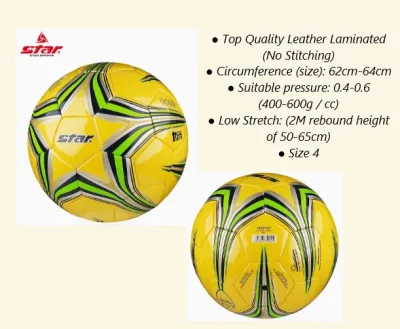
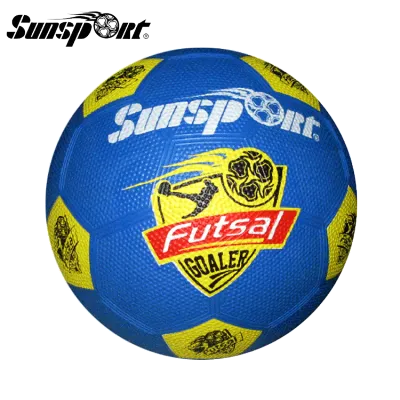
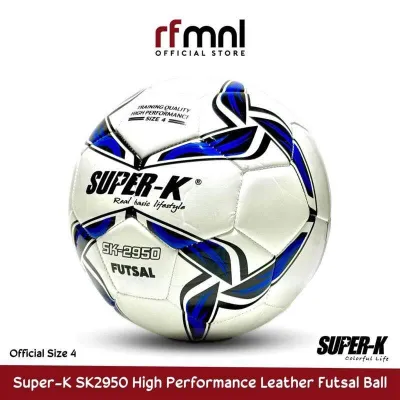
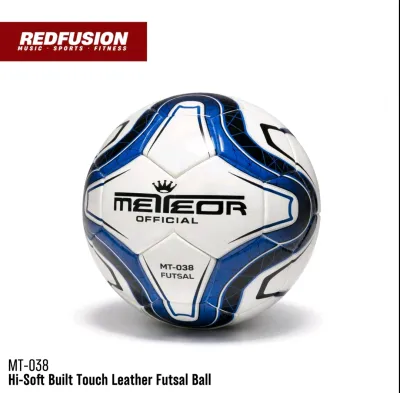
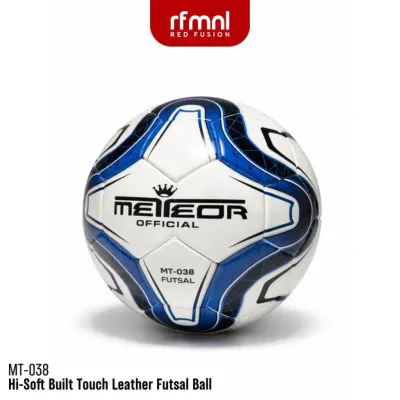
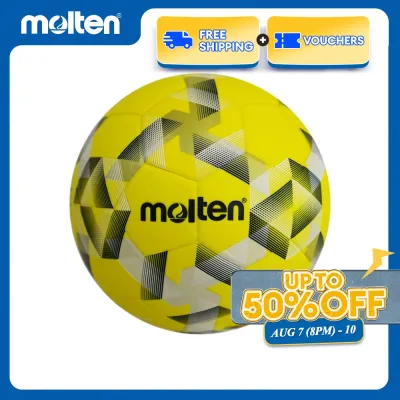
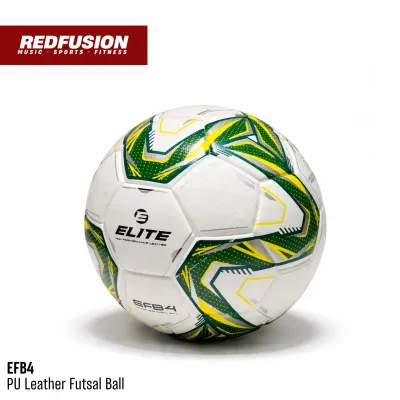
Prices are valid at publication and may change. Please refer to the product page for the latest price.
When making a quick decision, your top evaluation priorities should be cover material durability, bladder type for air retention, and court surface compatibility. If you primarily play on smooth indoor hardwood, a soft polyurethane cover provides the best tactile feel and grip. For rougher outdoor concrete courts, a tougher polyvinyl chloride or hybrid cover is essential to prevent premature wear and tear.
Market tiers generally correlate with price ranges in ₱, allowing you to align your purchase with your budget. Entry-level training balls, often priced under ₱1,000, focus heavily on durability and are excellent for rough surfaces. Mid-range options, typically ranging from ₱1,000 to ₱2,000, offer a balanced mix of softness and durability. Premium, match-approved balls exceeding ₱2,500 deliver elite touch and precise flight characteristics but require more careful maintenance and are best reserved for high-level competition.
Understanding Standard Size 4 Specifications
Futsal is officially played with a size 4 ball, which is distinct from both standard size 5 soccer balls and smaller size 3 youth balls. While it is smaller in circumference, it is relatively heavy, giving it a solid feel that helps players maintain control in tight spaces. Verifying these physical dimensions is crucial to ensuring you are practicing with the correct equipment.

A standard size 4 futsal ball must have a circumference of 62 to 64 centimeters. In terms of weight, it should weigh between 400 and 440 grams at the start of play. This specific weight-to-size ratio ensures that the ball reacts predictably when zipped across a flat court, preventing it from lifting too easily into the air during passes.
The mechanics of the low-bounce requirement are strictly defined to facilitate close-control play. When dropped from a height of 2 meters onto a hard surface, a regulation futsal ball must rebound between 50 and 65 centimeters. This controlled bounce is achieved through internal stuffing, such as synthetic fibers or foam layers, which absorb the impact energy rather than releasing it as a high bounce.
To verify these baseline specifications, always check the product packaging, manufacturer labels, or official certification marks. Look for recognized quality stamps, such as international match-ball certifications, printed directly on the casing. These marks indicate that the ball has undergone rigorous testing for roundness, water absorption, weight, and bounce consistency under standardized conditions.
Evaluating Cover Materials and Internal Construction
The external cover of a futsal ball dictates its touch, responsiveness, and resistance to abrasion. Polyurethane (PU) is widely regarded as the premium choice for indoor play. It offers a soft, natural feel, excellent elasticity, and a responsive touch that advanced players prefer for intricate footwork. However, pure PU covers can wear down quickly if subjected to highly abrasive surfaces.
Polyvinyl Chloride (PVC) is a much harder synthetic material that excels in durability. PVC covers are highly resistant to scuffs, scratches, and moisture, making them the ideal choice for rough concrete courts or outdoor play. The trade-off is that PVC feels stiffer and less tactile, which can make precise ball control slightly more challenging for beginners.
Synthetic leather hybrids offer an excellent middle ground for players who want both durability and a decent touch. These materials combine the soft feel of PU with the tough, wear-resistant properties of PVC. They are highly versatile and perform well across a variety of court types, making them a popular choice for recreational players.
Inside the ball, the bladder material determines how well it retains air and maintains its shape. Butyl bladders are highly popular for training balls because they offer exceptional air retention, often holding pressure for weeks without needing a top-up. Latex bladders, on the other hand, provide a softer touch and a more responsive bounce, but they are highly porous and lose air daily, requiring inflation before every game.
Beneath the outer cover lie multiple backing layers, usually made of polyester and cotton blends, which give the ball its structural strength and help it retain its spherical shape over time. High-quality balls also feature a layer of foam padding, such as EVA foam, directly under the cover. This padding cushions the impact, providing a softer touch that reduces foot fatigue and discomfort, which is especially valuable during long sessions or when playing with lightweight footwear.
Matching Bounce, Grip, and Court Compatibility
In the Philippines, futsal is played on a diverse array of surfaces, ranging from polished indoor hardwood and synthetic taraflex courts to the ubiquitous concrete covered courts found in almost every barangay. Each of these surfaces interacts differently with the ball, meaning your choice of equipment should directly reflect where you play most often.
On smooth indoor hardwood or synthetic courts, surface grip is essential. A ball with a slightly textured or glossy PU cover provides the necessary friction to prevent the ball from sliding out of control when trapped with the sole of the foot. The panel design also plays a role; thermally bonded or hybrid-stitched panels offer a seamless surface that ensures a smooth, predictable roll across polished floors.
On rough concrete courts, abrasion resistance is the primary concern. The friction generated by concrete can quickly shred soft PU covers and wear down the stitching of hand-stitched balls. For these environments, a ball with a textured PVC cover and reinforced hybrid stitching is highly recommended. Hybrid stitching combines stitching with adhesive bonding, hiding the seams and protecting the threads from direct contact with the abrasive ground.
To ensure your ball is performing correctly, you can perform simple, observable checks in a physical store or immediately upon delivery. Conduct a basic drop test by holding the ball at eye level and letting it fall onto a hard floor. It should bounce up to approximately your knee or mid-thigh; if it bounces higher, it may be overinflated or lack the necessary internal dampening.
Additionally, perform a tactile squeeze test. Press your thumbs firmly into the ball’s surface. It should feel solid and firm, yet offer a slight, cushioned give. If it feels rock-hard, it will be uncomfortable to kick and control; if it feels soft and mushy, it will lack the responsiveness needed for quick passing.
Aligning the Ball With Your Skill Level and Goals
Selecting the right futsal ball also depends on your experience level, team requirements, and how you plan to use the equipment. Training balls are engineered primarily for durability and cost-effectiveness. They feature thicker outer covers and robust construction designed to withstand hours of repetitive drills, making them perfect for daily practice sessions and recreational play.
Match-approved balls, by contrast, are precision-engineered to meet strict manufacturing tolerances. They prioritize performance, offering a pristine touch, perfect roundness, and highly predictable flight paths. While they deliver an unmatched playing experience, they are more delicate and expensive, making them best reserved for official matches and competitive league play.
For beginners, features that enhance control and visibility are highly beneficial. A ball with a softer cover and extra foam padding provides a more forgiving touch, helping new players develop their trapping and passing techniques without foot discomfort. High-visibility colors, such as bright neon yellow, orange, or pink, are also excellent for beginners, especially when playing in poorly lit indoor sports centers or covered courts during late afternoon or evening sessions.
Advanced players require a ball that responds precisely to subtle technical inputs. They should look for premium PU covers with low-profile seams that allow for clean contact, predictable spin, and maximum accuracy. The ball’s response must be consistent across all areas of the casing, ensuring that every pass and shot behaves exactly as intended.
From a logistical and financial standpoint, buying in bulk is often the smartest approach for schools, clubs, or organized barkada training. Purchasing multi-packs of mid-tier training balls ensures that all players practice with consistent equipment while keeping costs manageable. You can then invest in one or two premium match balls to be kept in pristine condition exclusively for game days.
Sourcing Safely and Inspecting Your Purchase
To ensure you receive a genuine, high-quality product, always source your futsal ball from authorized sports retailers, official brand stores, or reputable online marketplaces. Counterfeit balls are common in the market and often look identical to premium models, but they typically use cheap, single-layer covers and low-grade bladders that warp, leak, or pop after only a few uses.
When your ball arrives, perform a thorough unboxing inspection before inflating or using it. Check the seam integrity by examining the stitching or bonding between the panels; there should be no loose threads, gaps, or uneven seams. Inspect the valve area to ensure the valve core is centered, flush with the cover, and free of any manufacturing debris or dust.
Next, roll the ball across a flat, smooth floor to verify its roundness. A high-quality ball will roll in a perfectly straight line without any wobbling or hopping. If the ball veers off course or shows visible lopsidedness, it may have an internal defect and should be returned or exchanged immediately.
Proper inflation is critical to preserving the ball’s low-bounce characteristics and protecting its internal bladder. Always lubricate the pump needle with a drop of glycerin, valve oil, or soapy water before inserting it into the valve. Inserting a dry needle can scratch, tear, or push the valve core out of place, leading to slow, frustrating air leaks that ruin the ball.
Use a pump equipped with a reliable pressure gauge to inflate the ball to the manufacturer’s recommended pressure, which is typically printed directly around the valve opening. Avoid the temptation to overinflate the ball to make it feel “harder.” Overinflation stretches the seams, warps the spherical shape, and increases the bounce, stripping the ball of its specialized futsal characteristics and making it difficult to control.
Frequently Asked Questions (FAQ)
Can I use a size 4 futsal ball for outdoor soccer practice?
Using a size 4 futsal ball for outdoor soccer practice on grass or artificial turf is highly discouraged. Futsal balls are specifically engineered with a low-bounce design and a heavier feel to suit hard, flat indoor courts. On outdoor grass or turf, which naturally absorbs impact, a futsal ball will feel incredibly heavy, dead, and difficult to lift, severely hindering your training. Additionally, the rough elements of outdoor fields, such as dirt, moisture, and abrasive turf fibers, will rapidly degrade the specialized cover materials and stitching of an indoor ball. For outdoor practice, always use a standard size 4 or size 5 soccer ball designed specifically for those outdoor surfaces.
How often should I check the air pressure of my futsal ball?
You should check the air pressure of your futsal ball before every single playing session. Futsal balls with latex bladders lose air pressure daily due to the natural porosity of the material, while those with butyl bladders hold air much longer but still experience gradual pressure drops over time. The tropical heat and high humidity in the Philippines can also cause air pressure inside the ball to fluctuate significantly. To maintain consistent bounce, optimal grip, and to protect the ball’s structural integrity, always use a calibrated pressure gauge and a lubricated needle to adjust the pressure to the manufacturer’s recommended specifications before stepping onto the court.

Community discussion
Share your experience or ask a question. Comments are reviewed before publication.