
Selecting the right fishing gear can transform your experience on the water, whether you are casting along tropical coastlines, navigating freshwater marshes, or targeting species in local estuaries. The choice between a spinning reel and a baitcasting reel depends entirely on your current casting proficiency, the weight of the lures you plan to throw, and the specific fish species you are targeting. Spinning reels offer a forgiving learning curve and excel with lighter tackle, making them ideal for beginners and finesse techniques. Baitcasting reels demand more thumb control and brake tuning but provide superior accuracy, power, and line capacity for heavier lures and dense cover. Rather than looking for a universal winner, evaluate your typical fishing environment and verify the manufacturer’s specifications for drag and line capacity to match your specific needs.
Core Mechanics and Operational Differences
To make an informed decision, you must first understand how these two types of fishing reels operate mechanically. A spinning reel features a fixed spool design where the spool remains stationary. When you cast, the line uncoils freely off the front of the spool. A metal wire arm, known as the bail, wraps the line back onto the spool during retrieval. Because the spool does not rotate during the cast, there is very little mechanical resistance, allowing light lures to travel significant distances. However, this free-flowing uncoiling can sometimes introduce line twist, especially if the line is wound under tension or if the lure spins in the water.
In contrast, a baitcasting reel utilizes a revolving spool mechanism. When you cast a baitcaster, the weight of the lure pulls the line, forcing the entire spool to rotate. This design creates a direct path from the spool through the rod guides, minimizing line twist and offering a direct connection to your lure. However, because the spool spins rapidly, it can easily rotate faster than the lure is traveling through the air. When this happens, the excess line bunches up on the spool, resulting in a severe tangle commonly referred to as a backlash or “bird’s nest.”
Products mentioned in this guide
![[COD] Spinning Reel 6 Ball Bearings 5.2:1 Gear Ratio Spinning Fishing Reel 1000 2000 3000 Series Anti-Corrosion Drive Gear Fishing Wheel for Freshwater and Salwater](https://img.lazcdn.com/g/p/4bc7c8457631426ac9503525dd53b8ed.jpg_400x400q80.jpg_.webp)
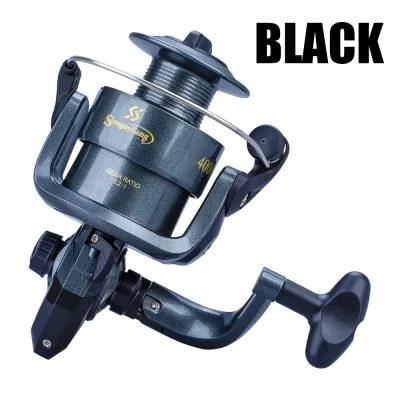
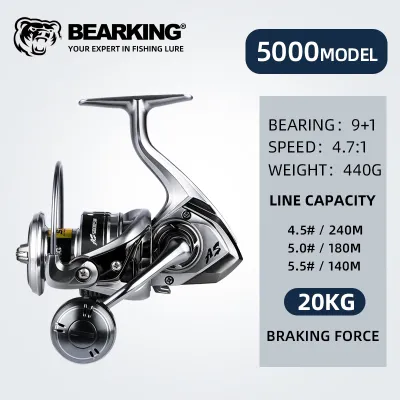
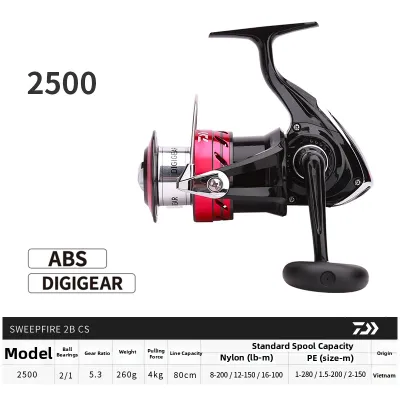
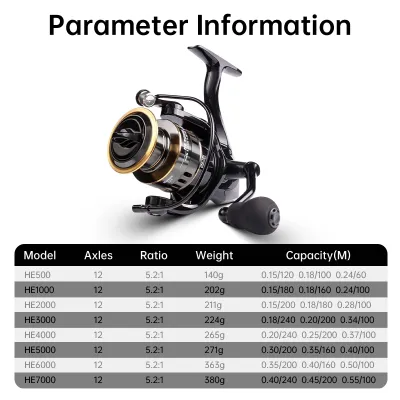
Prices are valid at publication and may change. Please refer to the product page for the latest price.
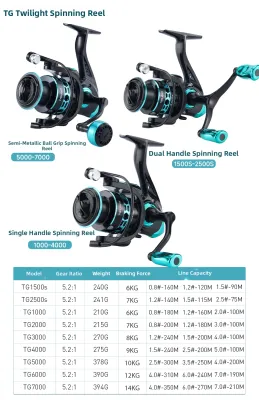
When comparing these mechanisms, you should also look closely at gear ratios and retrieve speeds. The gear ratio, such as 5.2:1 on a spinning reel or 7.3:1 on a baitcaster, indicates how many times the spool rotates with a single turn of the handle. A higher ratio retrieves line faster, which is beneficial when you need to quickly collect slack or pull a fish away from hazards. Rather than assuming one reel type is inherently faster or more powerful, always check the manufacturer’s specifications on the product packaging to verify the exact line recovery rate per turn.
Matching the Reel to Your Skill Level and Learning Curve
Your experience level and the amount of time you want to spend practicing casting techniques should heavily influence your choice. Spinning reels are exceptionally forgiving, making them the standard recommendation for beginners, casual anglers, and those who want a hassle-free day on the water. Operating a spinning reel requires simple coordination: you open the bail arm, hold the line against the rod grip with your index finger, cast, and then flip the bail back down to engage the gears. Even if your casting motion is uneven or you face a sudden gust of wind, the risk of a catastrophic line tangle remains very low.

Baitcasting reels present a steeper learning curve that requires physical coordination and mechanical adjustment. To cast a baitcaster successfully, you must use your thumb as a manual braking system. As the lure flies through the air, your thumb must lightly feather the spinning spool to prevent it from overrunning. If you do not apply the correct pressure, or if you fail to stop the spool the exact instant the lure hits the water, a backlash is almost guaranteed.
Furthermore, baitcasters rely on internal braking systems—typically magnetic, centrifugal, or a combination of both—to help control the spool’s rotation. You must adjust these brakes every time you change to a lure of a different weight or when the wind direction shifts. Before committing to a baitcasting setup, evaluate your patience for tuning these mechanical systems and your willingness to practice thumb control. For many anglers, mastering the baitcaster is a rewarding challenge, but it does require dedicated practice before it becomes second nature.
Choosing Based on Target Species and Lure Weight
The physical demands of your target fish and the weight of your chosen lures are critical factors in this decision. Spinning reels are the premier choice for light to medium lures, such as small jigs, soft plastics, and finesse rigs. Because the line flows freely off a fixed spool, you can cast incredibly light baits that would be nearly impossible to throw on a baitcaster. If you are targeting smaller or highly pressured species in clear water—such as tilapia, local river perch, or smaller saltwater species—a spinning reel paired with a light fluorocarbon or monofilament line allows for natural, subtle presentations.
Baitcasting reels are built for heavy-duty applications. They excel at handling heavy lures, thick braided lines, and high-resistance baits like large swimbaits, heavy jigs, and topwater frogs. If your fishing style involves targeting powerful, hard-fighting species like barramundi (apahap) or giant snakehead (dalag) in dense structural cover, a baitcaster provides the necessary winching power. The direct line path and robust gear design allow you to apply maximum pressure to pull a strong fish out of thick water hyacinths, submerged branches, or mangrove roots before it can break your line.
To ensure your gear can handle these forces safely, never rely on general assumptions about reel strength. Always verify the reel’s maximum drag rating and line capacity, which are clearly printed on the product label or manufacturer’s specification sheet. Ensure the drag system can exert enough pressure to stop your target species, and confirm that the spool can hold an adequate length of your chosen line class without overfilling.
Evaluating Casting Techniques and Fishing Environments
Where you fish and how you need to present your lure should also guide your selection. Baitcasting reels offer unparalleled pinpoint accuracy. Because you can control the spool’s rotation directly with your thumb, you can slow down or stop the lure mid-flight. This level of control allows experienced anglers to place a lure softly into tight pockets of water, such as skipping a soft plastic bait deep under overhanging branches, low-hanging docks, or coastal structures. If your fishing style relies on precise target casting along complex shorelines, the baitcaster is highly advantageous.
Conversely, spinning reels offer superior performance when casting into the wind or covering vast expanses of open water. When casting a baitcaster directly into a headwind, the wind slows down the lure while the spool continues to spin at high speed, almost always causing a backlash. A spinning reel does not suffer from this issue because the wind-resistant lure simply pulls only as much line as its momentum allows. This makes spinning reels highly versatile for open-water casting, surf fishing along windy beaches, or exploring large lakes where maximizing casting distance is more important than surgical accuracy.
When making your choice, take a moment to analyze your typical fishing environments. Consider the local weather conditions, such as sudden tropical squalls or persistent coastal breezes, as well as the water clarity and the density of underwater structures. If you frequently fish in open, windy areas with light lures, a spinning reel is highly practical. If you find yourself dissecting heavy cover in calm, tight waterways, a baitcaster will serve you better.
Decision Framework: Which Fishing Reel Should You Buy?
To finalize your decision, use this structured framework to match your specific fishing style and environment to the correct reel type.
Choose a spinning reel if:
- You are a beginner or a casual angler who prefers an easy, intuitive casting experience.
- You primarily throw light lures, finesse rigs, or baits weighing under 7 grams.
- You frequently fish in windy conditions, open coastal waters, or surf environments.
- You prefer using light monofilament or fluorocarbon lines for clear-water presentations.
Choose a baitcasting reel if:
- You have experience casting or are willing to invest time in mastering thumb-control techniques.
- You plan to use heavy lures, thick braided lines, or high-resistance baits.
- You target powerful fish species in dense cover, such as mangroves, weeds, or submerged timber.
- You require extreme casting accuracy to place lures into tight, specific targets.
Verify first if: Before purchasing any reel, you must verify its compatibility with your fishing rod. Spinning reels must be paired exclusively with spinning rods, which feature large guide rings on the underside of the blank to accommodate the wide loops of uncoiling line. Baitcasting reels must be paired with casting rods, which feature smaller, closely spaced guides on top of the blank and a specialized trigger grip on the reel seat. Mixing these components will severely restrict your casting distance, cause excessive line friction, and potentially damage your rod under heavy loads. For highly specific regional fishing conditions or unique target species, consider consulting a local tackle shop or reviewing the manufacturer’s detailed compatibility guidelines.
Frequently Asked Questions (FAQ)
Can I use a spinning reel on a baitcasting rod?
You should avoid mounting a spinning reel on a baitcasting rod. Spinning rods are engineered with large, high-clearance guide rings near the reel seat to gather and tame the wide, looping line as it uncoils from the fixed spool. Casting rods, designed for baitcasters, feature much smaller, low-profile guides positioned along the top of the rod blank to handle line flowing in a straight path. If you attempt to use a spinning reel on a casting rod, the looping line will choke at the first small guide, severely reducing your casting distance and causing heavy friction. Additionally, casting rods feature a trigger grip on the underside of the reel seat, which interferes with the proper hand placement required to operate a spinning reel.
Which reel type requires more maintenance?
While both reel types require regular care to ensure longevity, baitcasting reels generally demand more frequent and meticulous maintenance. Because a baitcaster features an exposed spool and an open level-wind system that moves back and forth to distribute line, dirt, sand, and saltwater spray can easily penetrate the internal gears and bearings. This is especially true in humid, tropical environments where moisture can trap corrosive elements. Spinning reels have more enclosed gearboxes, but their line rollers and drag assemblies still require regular attention. To prevent premature wear or gear failure, always consult the manufacturer’s maintenance schedule for specific instructions on where and how often to apply specialized bearing oil and gear grease.

Community discussion
Share your experience or ask a question. Comments are reviewed before publication.