
Choosing between a suspension fork and a rigid fork often leaves cyclists torn between the desire for a smooth, cushioned ride and the appeal of a lightweight, maintenance-free setup. The choice ultimately depends on your primary riding terrain, budget, and willingness to perform regular maintenance: suspension forks excel at absorbing heavy impacts and maintaining tire traction on rough, technical trails, whereas rigid forks offer unmatched pedaling efficiency, lower weight, and hassle-free durability for paved roads, gravel paths, and smooth commutes. By understanding how these two fork types affect your bicycle’s handling, comfort, and long-term costs, you can make a well-informed decision that aligns with your specific cycling goals.
How Do Suspension and Rigid Forks Compare in Weight and Pedaling Efficiency?
Rigid forks are significantly lighter and transfer pedaling energy directly to the road, whereas suspension forks add noticeable weight but trade absolute efficiency for control on rough surfaces. The weight difference between these two components is one of the most immediate changes you will feel when lifting your bicycle or steering through tight corners. A typical rigid fork, whether constructed from steel, aluminum, or carbon fiber, generally weighs between 500 grams and 1.2 kilograms. In contrast, a suspension fork contains complex internal dampers, metal coil springs or air chambers, stanchions, and lubricating oil, which pushes its weight to anywhere from 1.8 to 2.5 kilograms or more.
This weight penalty directly impacts how your bicycle handles. A lighter front end makes it much easier to loft the front wheel over obstacles, hop curbs, or carry your bicycle up stairs and onto public transport. It also reduces steering inertia, giving the bicycle a more agile, responsive feel on paved roads and smooth paths.
Products mentioned in this guide
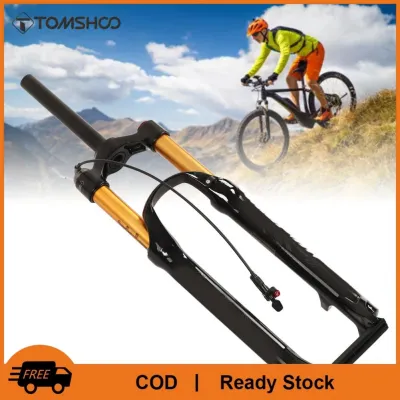
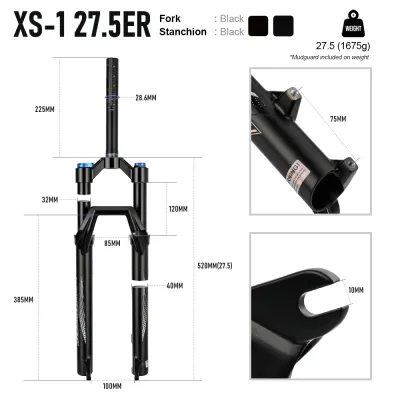
1 Lazada user ratings
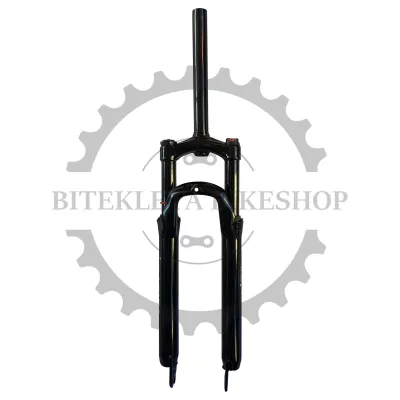
recieved the parcel late and had guarantee compensation in the form of lazrewards, mtb fork is lightweight and seems durable, have yet to in…Read full reviewShow less
recieved the parcel late and had guarantee compensation in the form of lazrewards, mtb fork is lightweight and seems durable, have yet to install and test for break-in to know performance
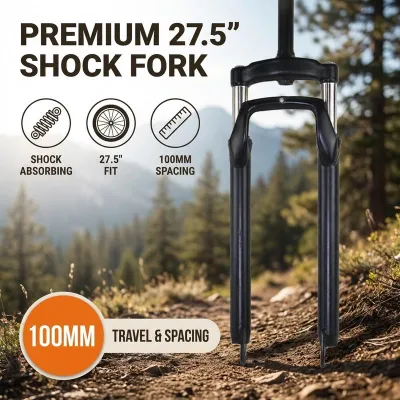
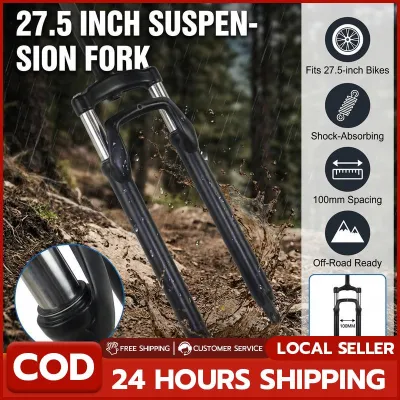
8 Lazada user ratings
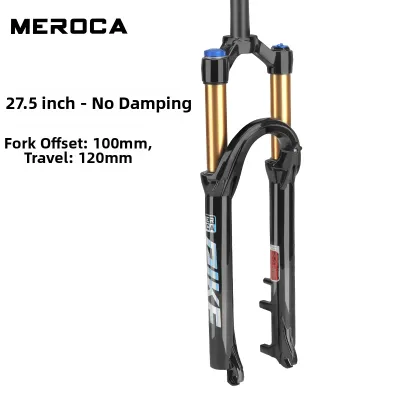
Salamat Seller maganda! Maayos pagkakabalot! Manilis pang dumating!! Salamat din lazada!!! 10⭐️ akin!! Para sa akin highly recommended kayo!!
not a ragusa brand as the stock indicates
Steel construction ensures durability,
ok nman may kunti lang gasgas pero tnx
sulit sa presyo 👍👍👍
33 Lazada user ratings
Finally, after 30 days my order was delivered. Actually, it's NOT the Seller or LAZ problem, it's the local courier XDE. They tag twice as F…Read full reviewShow less
Finally, after 30 days my order was delivered. Actually, it's NOT the Seller or LAZ problem, it's the local courier XDE. They tag twice as Failed Delivery due to customer unreachable but in reality they never deliver or call me. Im tracking this when the status was ready for delivery and was at home the whole day and weeks. The courier was dishonest and they wanted to blame the customer instead of their fault. The courier posted a pic of call log, they call at 12AM midnight and 10:28PM just to say they have proof, how dumb they are! Thanks to LAZ they escalated my complaint and was delivered the following day. For the product, I'm 101% certified. To LAZ agent, good job👍
🔨Durability:good 👍👍👍Sturdy construction, 🔌Compatibility:good 👍👍👍 🛠️Ease of Installation:good 👍👍👍 quality Fast shipping service, Good size compatibi…Read full reviewShow less
🔨Durability:good 👍👍👍Sturdy construction, 🔌Compatibility:good 👍👍👍 🛠️Ease of Installation:good 👍👍👍 quality Fast shipping service, Good size compatibility, maraming salamat seller and lasada
🔨Durability:good legit solid 🔌Compatibility:good size 26 🛠️Ease of Installation:thanks seller and delivery kahit matagal dumating dahil over …Read full reviewShow less
🔨Durability:good legit solid 🔌Compatibility:good size 26 🛠️Ease of Installation:thanks seller and delivery kahit matagal dumating dahil over seas sulit sa price
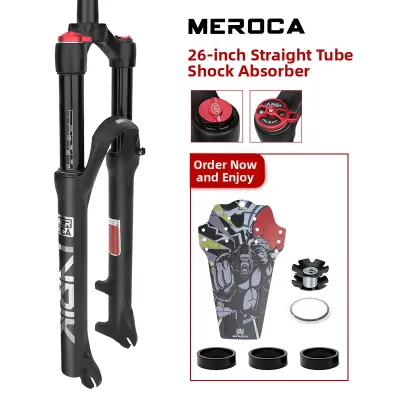
The Meroca Airfork is good and overall fork parts is working. Good for everyday ride in different kind of roads.
very good, ganda ng gawaDurable gold tube, Excellent shock absorption,
122 Lazada user ratings
Good product quality, Great value for money, Excellent shock absorption,
It really looks great, I fell in love with it as soon as I saw it.
Fast shipping service, High-quality durable material,
Good product quality, High-quality durable material,
Prices are valid at publication and may change. Please refer to the product page for the latest price.
Pedaling efficiency is another area where the two designs diverge sharply. When you pedal hard—especially when standing up to climb a steep hill or sprinting to beat a traffic light—your downward force compresses the front suspension. This movement, commonly referred to as “suspension bob,” absorbs a portion of your pedaling energy and dissipates it as heat inside the fork’s damper. This means some of your physical effort is lost rather than being converted into forward momentum.
Rigid forks completely eliminate this energy loss. Because there are no moving parts to compress under load, every watt of power you generate is transferred directly through the frame to the rear wheel. This direct power transfer makes rigid forks highly efficient for climbing smooth hills, accelerating from a standstill in heavy traffic, and maintaining high speeds on flat, paved surfaces. For riders who prioritize raw speed and efficiency on predictable terrain, the rigid design offers a clear mechanical advantage.
Which Fork Provides Better Comfort and Traction on Uneven Trails?
Suspension forks provide vastly superior comfort and tire traction on uneven trails by actively absorbing bumps, while rigid forks require more active rider technique and lower tire pressures to manage vibrations. When riding over gravel, rocky paths, or pothole-ridden streets, the constant vibrations can quickly lead to hand numbness, wrist pain, and upper body fatigue. A suspension fork addresses this by compressing and rebounding to isolate your upper body from these sudden impacts, allowing you to ride longer distances with less physical strain.

Traction and steering control also depend heavily on how your front fork interacts with the ground. To steer or brake effectively, your front tire must maintain constant contact with the riding surface. When a rigid fork hits a rock, root, or deep pothole at speed, the entire front end of the bicycle deflects upward, momentarily lifting the tire off the ground. During these brief moments of airborne deflection, you lose the ability to steer or brake reliably, which can be highly dangerous on loose or wet descents.
A suspension fork solves this problem by keeping the wheel glued to the ground. As the tire encounters an obstacle, the fork compresses to absorb the bump and then quickly extends to keep the tire in contact with the terrain. This continuous tracking dramatically improves braking performance and cornering grip, giving you the confidence to navigate loose gravel, wet soil, and rocky descents safely.
However, riding a rigid fork on technical terrain is not impossible, but it does demand a higher level of physical fitness and bike-handling skill. Without mechanical shock absorption, you must use your arms and legs as active springs, constantly shifting your weight and choosing precise lines to avoid harsh impacts. If you ride too fast or fail to maintain a loose, active stance on a rigid bike, you risk losing steering control or experiencing a sudden crash over the handlebars. To compensate for the lack of suspension, rigid riders often use wider, high-volume tires run at lower air pressures to provide a small degree of passive cushioning.
What Are the Differences in Maintenance Requirements and Upfront Price?
Rigid forks are highly affordable upfront and require virtually no maintenance beyond a simple wipe-down, whereas suspension forks carry a higher initial cost and demand regular, specialized servicing to prevent performance decline. The financial commitment of owning a bicycle fork extends far beyond the initial purchase price, making it essential to budget for long-term upkeep.
In the local market, rigid forks are generally budget-friendly. Basic steel or aluminum models typically start around ₱1,500 to ₱4,000, while lightweight, vibration-dampening carbon fiber options can range from ₱6,000 to ₱12,000. Suspension forks represent a much larger initial investment. Entry-level coil-sprung forks, which offer basic bump absorption but limited adjustability, usually start around ₱3,000 to ₱6,000. High-performance air-sprung forks, which allow you to fine-tune the stiffness based on your body weight and feature adjustable rebound damping, easily range from ₱10,000 to ₱30,000 or more.
The contrast in maintenance requirements is even more pronounced. A rigid fork has no moving parts, seals, or fluids. Its maintenance routine consists entirely of wiping away dirt after a wet ride and occasionally checking that the mounting bolts are torqued to the manufacturer’s specifications. This simplicity makes rigid forks incredibly durable, often lasting the entire lifespan of the bicycle frame without requiring a single replacement part.
Suspension forks, on the other hand, require consistent, scheduled maintenance to function correctly. Dust, mud, and tropical humidity can easily bypass the outer wiper seals, contaminating the internal lubricating oil and turning it into an abrasive paste. If left unserviced, this contamination will scratch the smooth stanchion tubes and ruin the internal dampers, leading to costly repairs or complete fork failure. To prevent this, manufacturers recommend performing a basic lower-leg service—which involves cleaning the lowers, replacing the wiper seals, and adding fresh oil—every 50 to 100 riding hours. A full damper service is typically required once a year or every 200 hours, which often requires specialized tools or professional assistance at a local bike shop.
How Do You Decide Which Fork Matches Your Riding Style and Terrain?
To choose the right fork, evaluate where you spend most of your riding time: opt for a rigid fork if you prioritize speed on paved roads and smooth gravel, or choose a suspension fork if you regularly tackle rugged off-road trails. Your decision should align with your primary cycling activities, your local environment, and how much time you want to spend on bicycle maintenance.
For urban commuting, utility riding, and long-distance touring, a rigid fork is highly practical. City streets, while often uneven, do not feature the massive obstacles found on mountain bike trails. A rigid fork keeps your commuter bike lightweight, highly efficient when accelerating away from traffic lights, and completely reliable in all weather conditions. Furthermore, many rigid forks feature dedicated eyelets for mounting front racks, mudguards, and water bottle cages, making them ideal for carrying heavy groceries or bikepacking gear.
If your adventures take you onto rugged mountain trails, steep forest descents, or highly uneven dirt roads, a suspension fork is almost essential. The added comfort and traction are crucial for maintaining control and preventing physical exhaustion on technical terrain. However, you must also consider your local riding conditions. In the Philippines, the rainy season brings heavy downpours that turn unpaved provincial roads and mountain trails into thick, abrasive mud. If you ride a suspension fork in these conditions, you must be diligent about cleaning the stanchions after every ride to protect the internal seals from premature wear.
If you frequently ride on mixed terrain—such as commuting on paved city roads during the week and exploring rough dirt paths on the weekend—a suspension fork equipped with a lockout feature offers a practical compromise. A lockout lever, mounted either on the fork crown or on your handlebars, allows you to temporarily restrict the fork’s movement. By engaging the lockout, you transform your suspension fork into a nearly rigid platform, maximizing your pedaling efficiency on smooth climbs and flat roads. When you reach a rough descent, you simply flip the lever to restore full suspension travel, giving you the best of both worlds at the cost of a slightly heavier front end.

Community discussion
Share your experience or ask a question. Comments are reviewed before publication.