
Finding a comfortable pair of swimming goggles often feels like a trial-and-error process, especially when standard designs do not align with your facial structure. For women, the search is frequently complicated by goggles that leak, pinch, or leave deep, painful marks around the eyes. A successful swim depends heavily on a watertight seal that allows you to focus on your stroke rather than constantly clearing water from your lenses. Understanding how female facial contours differ from generic or unisex designs is the first step toward finding a pair that offers both comfort and clarity.
In the Philippines, where swimming is a year-round activity enjoyed in tropical open waters, outdoor resorts, and indoor training pools, choosing the right gear is even more critical. High humidity, intense sunlight, and warm water temperatures can affect how materials feel against your skin and how well your lenses perform. By focusing on specific design features—such as eye cup profiles, nose bridge adjustability, strap materials, and lens tints—you can select goggles that stay secure and comfortable through every lap.
Why Facial Contours Dictate Goggle Fit
Standard or unisex swimming goggles are often designed around a larger, broader facial template that does not always accommodate typical female facial structures. Women generally have narrower orbital bones, more prominent or higher cheekbones, and a narrower nasal bridge. When a goggle frame is too wide or rigid, the gaskets cannot sit flat against the skin, creating small gaps where water can easily seep in. This is particularly noticeable around the inner corners of the eyes and along the lower orbital rim, where the facial bones curve more sharply.
Products mentioned in this guide
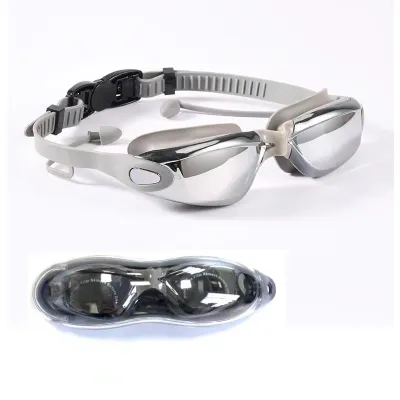
![[COD] CHENJ Adult Swimming Goggles HD Anti Fog Waterproof Oversized Frame Easy Adjust Strap for Men Women Swim Practice](https://img.lazcdn.com/g/p/0161511ec6deed1e9215e71488044c57.jpg_400x400q80.jpg_.webp)
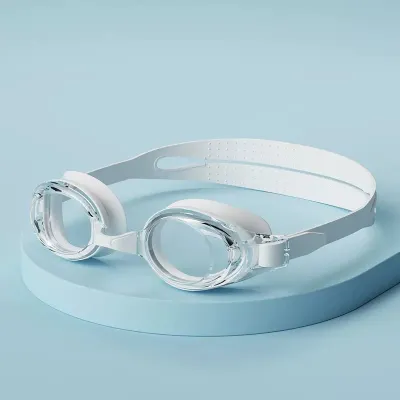
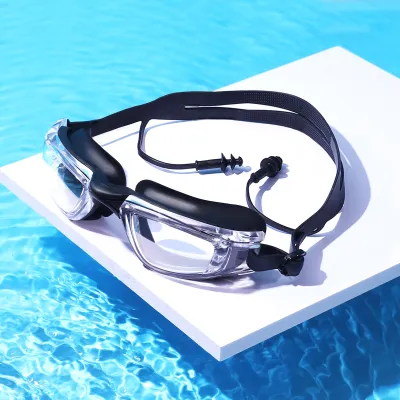
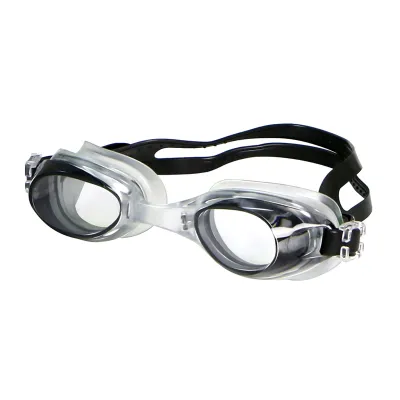
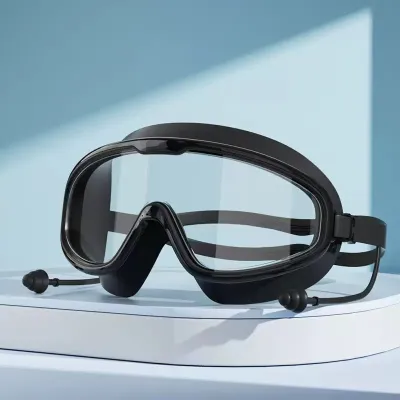
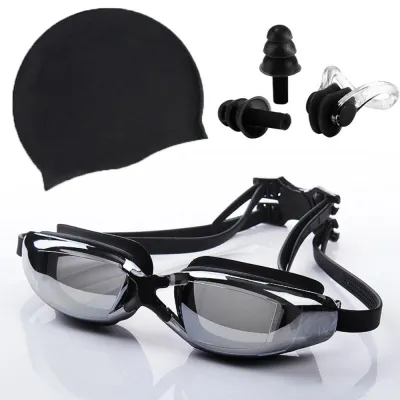
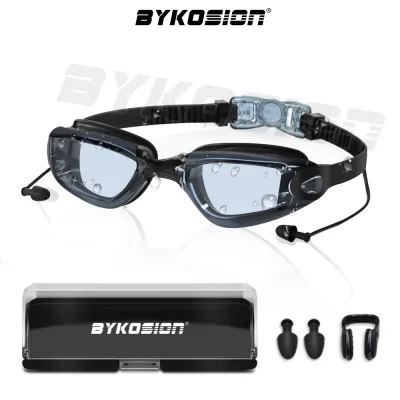
Prices are valid at publication and may change. Please refer to the product page for the latest price.
An improper fit does more than just let water inside; it also increases hydrodynamic drag and causes physical discomfort. When water constantly enters the eye cups, the natural reaction is to pull the head strap tighter to force a seal. This over-tightening places excessive pressure on the delicate skin around the eyes, leading to severe post-swim bruising, headaches, and premature wear on the goggle materials. A correct fit relies on the natural suction of the eye cups against your facial contours, not the tension of the strap.
Choosing the Right Eye Cup Profile and Size
The eye cup profile refers to how far the goggle lenses protrude from your face and the overall surface area they cover. For women with smaller facial frames, low-profile or frameless designs are beneficial. These designs sit closer to the eye sockets, reducing the surface area that water pushes against as you swim. This streamlined shape minimizes drag, making your movement through the water feel smoother and preventing the goggles from shifting during flip turns or dives.

Evaluating the volume of the eye cup is equally important when matching goggles to narrower orbital bones. Large-volume goggles can overlap with the cheekbones or the outer edges of the eyebrows, preventing a clean seal. Smaller eye cups are designed to sit neatly within the orbital socket, contouring precisely to the natural curves of a woman’s face. This targeted fit ensures that the suction is distributed evenly along the bone structure rather than pressing directly on sensitive soft tissues.
You must also consider the trade-offs between hard, traditional eye cups and cushioned gaskets. Swedish-style goggles, which feature hard plastic cups with no rubber gasket, offer a highly customizable fit and minimal drag, but they require a period of adaptation and can feel harsh on sensitive skin. Cushioned silicone gaskets, on the other hand, provide a soft, forgiving barrier that distributes pressure evenly, making them a preferred choice for long training sessions or recreational swimming.
Assessing Nose Bridges and Silicone Seals
The nose bridge is the critical link that determines how far apart the eye cups sit on your face. A bridge that is too wide will cause the eye cups to sit too far outward, leaving gaps near the inner corners of your eyes. Conversely, a bridge that is too narrow will pinch the nose and pull the eye cups inward, causing discomfort and breaking the seal on the outer edges. Look for goggles that feature interchangeable nose bridges of varying sizes or a flexible, self-adjusting nose bridge that molds to your profile.
The quality of the silicone gasket itself plays a massive role in maintaining a leak-free experience. High-grade, liquid silicone gaskets offer notable softness, flexibility, and thickness compared to cheaper rubber or foam alternatives. This flexibility allows the gasket to adapt to subtle facial movements, such as smiling or squinting, without breaking the seal. In tropical climates, high-quality silicone also resists degradation from sweat, sunscreen, and chlorine much better than standard plastics.
When trying on goggles, pay close attention to the transition areas around the inner corners of the eyes and the brow bone. The silicone should transition smoothly without folding, bunching, or leaving gaps. A high-quality seal will feel like a gentle, uniform cushion that conforms to your unique bone structure without requiring heavy pressure to stay in place.
Selecting Straps for Stability and Hair Protection
A secure strap system keeps your goggles in place without causing discomfort, hair breakage, or tension headaches. Split-strap designs, which feature a single strap that divides into two sections at the back of the head, are effective for distributing pressure. By placing one strap higher on the crown and the other lower on the back of the head, you achieve a secure hold that prevents the goggles from slipping down during active swimming.
For women with long hair, standard silicone straps can be a source of frustration, often snagging, tangling, or pulling out strands during adjustment. To protect your hair, consider goggles with fabric-coated or textile straps, which glide smoothly over hair without catching. Alternatively, wearing a silicone or latex swim cap can shield your hair from the grip of standard silicone straps while keeping your hair securely tucked away.
Quick-adjust buckles are another essential feature to look for. These mechanisms, usually located on the sides of the frame or at the back of the head, allow you to make micro-adjustments to the strap tension with a simple pinch or pull. This eliminates the need to struggle with tight, rigid buckles that can pull on your hair or force you to over-tension the seal just to keep the goggles secure.
Matching Lens Tints and Coatings to Your Environment
The environment where you swim should dictate the type of lenses you choose. In the Philippines, outdoor swimming is incredibly popular, whether you are training in an open-air pool or exploring coastal waters. For these bright, sunny environments, mirrored or dark-tinted lenses are highly practical. They act like sunglasses for your eyes, reducing glare from the water’s surface, blocking harmful UV rays, and preventing eye strain during long sessions under the tropical sun.
If your routine involves indoor pools, early morning training, or swimming under overcast skies, clear or lightly tinted lenses are much more suitable. Clear lenses provide maximum visibility and a natural view of your surroundings without darkening your field of vision. Light blue or violet tints can also help enhance contrast in indoor environments, making it easier to see lane lines and other swimmers.
Regardless of the tint, factory-applied anti-fog coatings are important for maintaining clear vision. High humidity and temperature differences between your face and the water can quickly cause lenses to mist up. To preserve this coating, avoid touching or wiping the inside of the lenses with your fingers or towels. Instead, rinse your goggles in clean, cold water after each swim and allow them to air dry in a shaded area away from direct sunlight.
The Pre-Purchase Fit Test and Comfort Checklist
Before finalizing your purchase, performing a simple fit test can save you from the disappointment of a leaking pair of goggles. Start by performing the “suction test.” Gently press the eye cups against your eye sockets without putting the strap over your head. If the goggles are a good fit for your facial structure, they should stick to your face for a few seconds through natural suction alone. If they fall off immediately, it indicates that air is entering the seal, and water will likely do the same.
Next, check for immediate pressure points. Even with light suction, you should not feel any sharp pinching or hard plastic pressing against your brow, cheekbones, or the bridge of your nose. If you feel discomfort within the first few seconds of trying them on, that pressure will only intensify during a long swim.
Finally, verify your peripheral field of vision. Put the goggles on fully, adjusting the strap to a comfortable tension. Look side to side and up and down to ensure the frame does not obstruct your line of sight. A wide, unobstructed view is essential for navigating busy lanes, spotting open-water landmarks, and maintaining spatial awareness while swimming.
Frequently Asked Questions (FAQ)
Can women comfortably wear unisex or men's swimming goggles?
Yes, women can comfortably wear unisex goggles if their facial dimensions naturally align with standard sizing. If you have a wider face, a broader nasal bridge, or deeper eye sockets, a unisex model may provide a reliable seal. However, if you notice that the goggles gap at the inner corners of your eyes, feel overly rigid, or require you to pull the strap painfully tight to prevent leaks, the frame is likely too large or wide for your facial structure.
How can I prevent harsh pressure marks around my eyes?
To prevent harsh pressure marks, start by loosening your goggle straps. The strap’s purpose is simply to keep the goggles in place, not to create the seal; the natural suction of the eye cups should do most of the work. If you continue to experience deep indentations or discomfort after loosening the straps, consider transitioning to goggles with softer, wider, or more flexible liquid silicone gaskets that distribute pressure more evenly across your skin.

Community discussion
Share your experience or ask a question. Comments are reviewed before publication.