
Selecting the correct hand gloves for taekwondo depends entirely on your training activity. Sparring requires lightweight gloves that protect your partner and allow for fast, technical movements, while bag training demands thicker padding and robust wrist support to absorb heavy impacts. Using the wrong type can lead to hand injuries, partner harm, or competition disqualification. In tropical climates like the Philippines, where high humidity and intense heat lead to heavy sweating during training, choosing the right glove also involves evaluating ventilation and material durability. This guide breaks down the specific features you need to evaluate for each training context so you can make an informed decision.
Understanding the Physical Demands of Sparring vs. Bag Work
To choose the right gear, you must first understand how the physical forces of sparring differ from those of bag work. Sparring is a dynamic, two-way interaction focused on speed, timing, and precision. When you strike a sparring partner, your target is a moving human body equipped with protective gear, which naturally yields and absorbs some of the impact force. The primary safety goal here is mutual protection: you need to prevent cuts, bruises, and blunt-force trauma to your partner while maintaining enough hand flexibility to block, parry, and clinch. Consequently, sparring gloves prioritize lightweight materials and flexible designs that do not hinder your hand speed or defensive reflexes.
In contrast, training on a heavy bag or dense kicking pads involves striking an unyielding, stationary, or swinging target. A heavy bag does not yield like a human body; instead, it resists your strikes, sending the kinetic energy directly back into your knuckles, wrist joints, and forearms. Without adequate protection, this repetitive shock can cause micro-fractures, joint inflammation, and wrist sprains. Therefore, bag training requires gloves with dense, multi-layered padding and rigid wrist support to absorb these heavy forces and keep your skeletal structure aligned. The focus shifts entirely from partner safety to self-protection and joint longevity.
Products mentioned in this guide
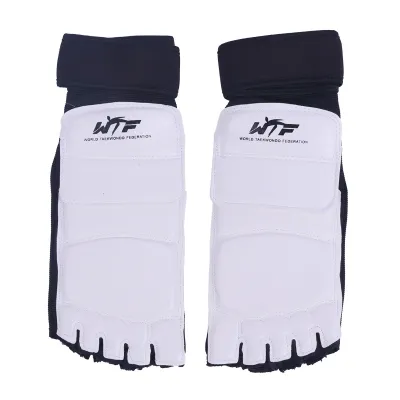
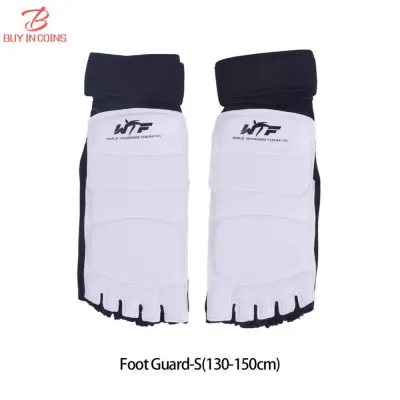
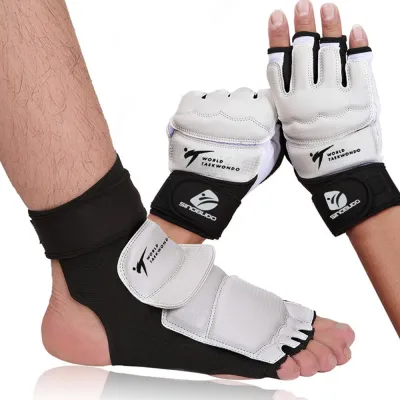
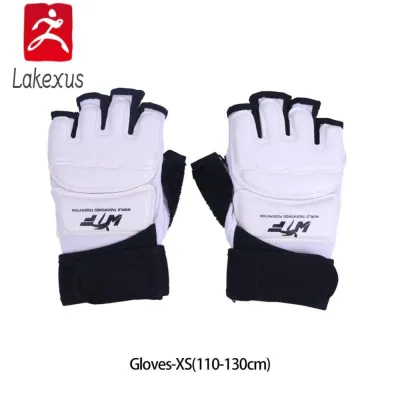
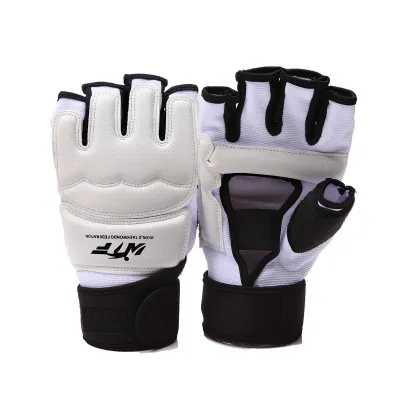
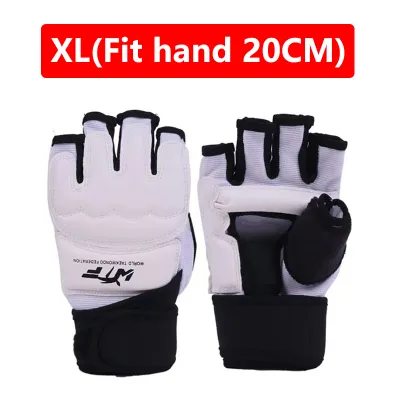
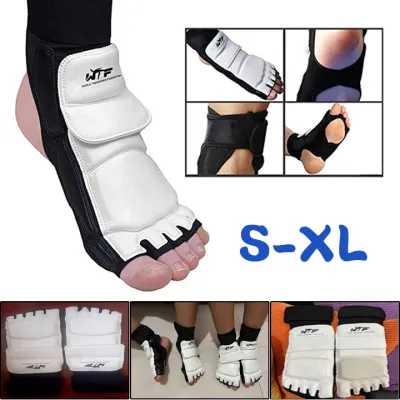
Prices are valid at publication and may change. Please refer to the product page for the latest price.
Choosing Sparring Gloves for Speed and Partner Safety
When selecting hand gloves for taekwondo sparring, your primary focus should be on speed, mobility, and regulatory compliance. Sparring gloves are typically lightweight and low-profile, often weighing only a few ounces. This minimal weight ensures that your hands remain fast enough to execute rapid counter-punches and quick defensive blocks without throwing off your overall body balance. Look for designs that feature open palms or semi-open fingers, which allow your hands to breathe and give you the dexterity needed to grab or push within the rules of your specific style.

Another critical feature to check is the presence of an integrated grip bar or ergonomic finger loops. A grip bar is a small, padded cylinder positioned inside the palm that allows you to form a secure, natural fist when you close your hand. This design prevents hand fatigue during long rounds, as you do not have to constantly exert force just to keep the glove shaped correctly. Proper finger placement also ensures that your knuckles align perfectly with the padded impact zone, reducing the risk of scraping your skin or jamming your fingers during a fast exchange.
Finally, if you plan to compete in sanctioned tournaments, you must verify that your gloves comply with the relevant governing body’s rules. For example, competitions under World Taekwondo rules require specific approved gloves that feature distinct safety markings, precise padding thicknesses, and specific color options. Before purchasing, check the product specifications or consult your coach to ensure the gloves meet these tournament standards, as non-compliant gear will lead to disqualification at the equipment check.
Selecting Bag Gloves for Maximum Hand Protection
Bag training and pad work demand a completely different set of glove characteristics, centered around shock absorption and wrist stability. Because you are striking dense, heavy targets, you need gloves with thick, multi-layered foam padding. High-quality bag gloves often utilize a combination of gel layers and high-density foam to disperse the force of high-impact strikes across the entire surface of the hand. This prevents the padding from compressing completely, leaving your bare knuckles to absorb the full force of the impact against the hard bag.
Wrist support is equally vital when hitting heavy bags. Look for gloves that feature wide, supportive hook-and-loop wrist straps that wrap securely around your wrist joint. A proper wrist support system acts like a splint, keeping your hand and forearm in a straight, continuous line upon impact. This alignment is crucial because even a slight bend in your wrist when hitting a heavy bag can result in painful sprains or severe joint strain. Some advanced bag gloves also offer dual-strap systems or extended cuffs to provide extra rigidity and stability.
You must also consider the weight of the gloves in relation to your current conditioning level. Bag gloves are generally heavier than sparring gloves, often ranging from 10 to 16 ounces. While heavier gloves provide superior protection and help build shoulder endurance and punching power, they can also cause rapid fatigue if you are not accustomed to the weight. Beginners should start with a moderate weight that offers a balanced mix of protection and manageability, gradually working up as their forearm and shoulder strength improves.
Evaluating Hybrid Gloves: Can One Pair Do Both?
Many practitioners wonder if they can save money and space in their gear bags by purchasing a single pair of hybrid or general-purpose training gloves. While the idea of a do-it-all glove is appealing, using one pair for both sparring and bag work carries significant risks and limitations. Using thin, lightweight sparring gloves on a heavy bag is highly discouraged. The minimal padding of a sparring glove is not designed to withstand the repetitive, high-velocity impacts of heavy bag training, which quickly degrades the foam and exposes your knuckles and wrists to severe injury.
Conversely, using thick, heavy bag gloves for sparring poses a serious safety hazard to your training partners. The dense, rigid padding designed to protect your hands from a hard bag can act like a blunt instrument against a partner’s face or body, significantly increasing the risk of cuts, concussions, or bruising. Furthermore, bulky bag gloves lack the flexibility required for quick defensive maneuvers and will not be permitted in any official taekwondo sparring competition due to safety regulations.
A mid-weight general training glove may serve as a temporary, budget-friendly compromise under very specific conditions. If you are an absolute beginner who is primarily focusing on light pad drills, basic forms, and non-contact partner work, a single pair of utility gloves can help you get started. However, as soon as you transition to full-contact sparring or regular heavy bag workouts, you should invest in dedicated pairs for each activity. Having specialized gear ensures you remain safe, respect your training partners, and get the most out of your training sessions.
Verifying Fit, Sizing, and Wrist Support
To get the maximum protection and performance from your taekwondo gloves, securing the correct fit is essential. Do not rely on generic small, medium, or large labels, as sizing standards vary widely between different manufacturers. Instead, use a flexible measuring tape to measure the circumference of your hand around the knuckles, excluding the thumb. Compare this measurement directly to the manufacturer’s specific sizing chart to identify the correct size.
When trying on the gloves, pay close attention to how they feel around your knuckles and fingers. The fit should be snug but comfortable, with no excess room for your hand to slide around inside the glove. Internal movement during a strike can cause painful friction blisters and can lead to improper hand alignment, increasing the risk of injury. At the same time, the gloves should not be so tight that they pinch your fingers, restrict your ability to make a fist, or cut off your blood circulation. Ensure the wrist strap wraps tightly and securely, providing a firm anchor that does not slip or loosen during active movement.
Given the tropical climate and high humidity in the Philippines, managing sweat and moisture is a critical factor for both comfort and hygiene. Look for gloves constructed with breathable materials, such as mesh palm panels, ventilation holes, and moisture-wicking inner linings. These features help keep your hands dry, improve your grip, and prevent the buildup of bacteria and unpleasant odors inside the glove. Choosing high-quality synthetic or natural leather that resists moisture damage will also extend the lifespan of your gear.
Frequently Asked Questions (FAQ)
How should I clean and maintain my taekwondo gloves to prevent odor?
To prevent unpleasant odors and extend the life of your gloves, wipe down both the exterior and interior with a slightly damp cloth after every training session to remove sweat and salt buildup. Avoid using harsh chemical detergents, which can degrade the glove materials. Always air dry your gloves completely in a well-ventilated indoor area away from direct sunlight or direct heat sources, as excessive heat can warp the padding and crack the outer shell. Never machine wash or tumble dry your gloves unless the manufacturer’s care label explicitly states it is safe to do so.
Do I need specific gloves for children or beginners?
Yes, children and beginners require gloves that prioritize lightweight protection and ease of use. For younger practitioners, look for gloves with soft, forgiving padding that protects their developing hand joints without adding unnecessary weight that could compromise their form. Ensure the wrist closure system is simple and intuitive, such as a wide hook-and-loop strap, which allows beginners or parents to secure the gloves tightly and correctly without restricting blood flow or requiring professional assistance.

Community discussion
Share your experience or ask a question. Comments are reviewed before publication.