
Choosing the right fishing rod is a balance between convenience and performance. For anglers in the Philippines, where fishing environments range from urban waterways and freshwater lakes to remote coastal reefs, transport logistics are just as important as casting dynamics. The choice between a telescopic and a traditional multi-piece rod centers on this exact trade-off. While one style allows you to carry your gear anywhere with ease, the other ensures you have the structural integrity needed to handle challenging catches. Understanding how these designs perform under real-world conditions will help you select the configuration that matches your lifestyle and target species.
Core Differences in Design and Casting Performance
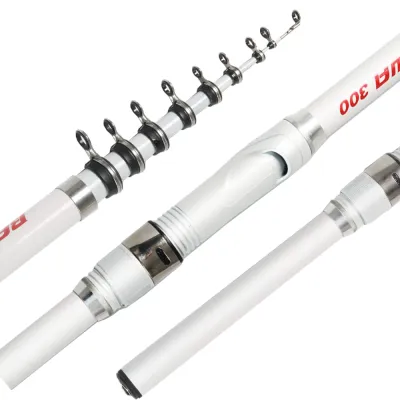
Telescopic rods feature a nested design where each section slides inside the larger one below it. When extended, friction locks these sections in place. Because of this collapsible structure, the guides must be positioned at the top of each section. Some telescopic rods use sliding guides to distribute line tension, but this design inherently limits how smoothly the rod bends. The resulting curve often has flat spots where the sections overlap, which can affect casting distance and reduce the efficiency of power transfer when fighting a fish.
Traditional multi-piece rods, usually consisting of two to four sections, connect using precision-engineered joints called ferrules. These ferrules are designed to slide together snugly, preserving the continuous taper of the rod blank. Because the manufacturer can place the guides exactly where they are needed along the blank, a traditional rod maintains a natural, consistent flex. This seamless bend allows for highly accurate casting and ensures that vibrations from subtle bites travel directly from the tip to your hand, offering clear sensitivity.
Products mentioned in this guide
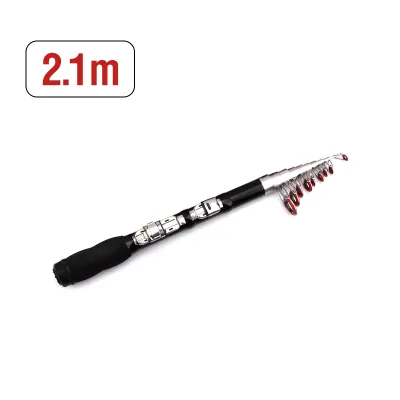
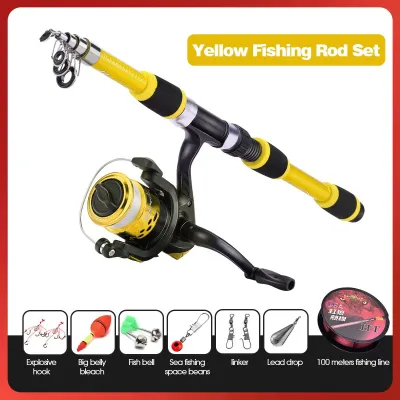
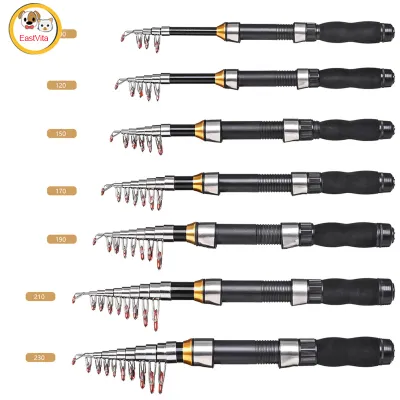
![[COD]Telescopic Fishing Rod 2.1M-2.7M High Carbon Ultra Light Portable Fishing Rod Super Hard Spinning Fishing Rod for Freshwater and Saltwater](https://img.lazcdn.com/g/p/82d36d975e8072240b5696306290fabd.jpg_400x400q80.jpg_.webp)
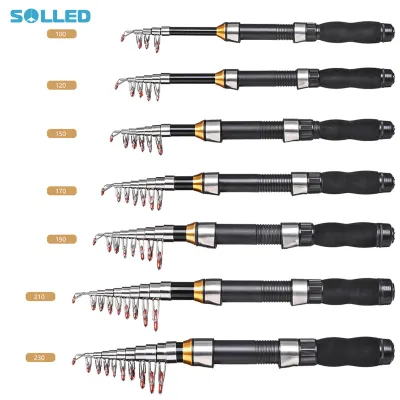
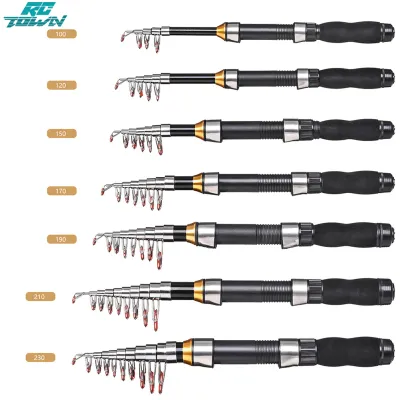
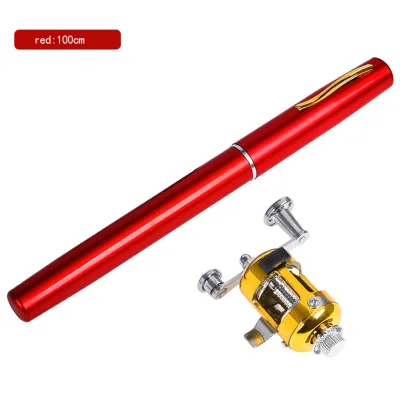
Prices are valid at publication and may change. Please refer to the product page for the latest price.
Weight distribution also differs significantly between the two designs. Telescopic rods require overlapping material at every joint, which adds weight toward the middle and upper sections of the rod. This can make the rod feel tip-heavy, leading to wrist fatigue during long casting sessions. Traditional rods distribute their weight more evenly across the blank, providing a balanced feel that enhances comfort when casting repeatedly over several hours.
Maintenance requirements highlight another structural contrast. The nested joints of a telescopic rod are highly susceptible to trapping fine particles like sand, dirt, or salt crystals. If these contaminants are not cleaned out, they can scratch the protective coating of the blank or cause the joints to jam permanently. Traditional ferrules also experience wear over time, but their open design makes them much easier to inspect, wipe clean, and maintain.
Transport and Storage: Matching the Rod to Your Logistics
The primary appeal of a telescopic fishing rod is its ultra-compact collapsed length. Most models collapse to less than 60 centimeters, allowing them to fit easily inside a standard backpack, a motorcycle top box, or the under-seat compartment of a scooter. For anglers who rely on public transportation or two-wheeled travel to reach their favorite fishing spots, this level of portability is incredibly valuable. It eliminates the hassle of carrying a long, awkward rod tube through crowded spaces.

Traditional multi-piece rods require more planning when it comes to transport. Even a two-piece rod, when disassembled, requires a protective tube that can measure over a meter in length. Carrying a long tube on a motorcycle requires secure strapping and can create wind resistance, while placing it inside a compact car cabin often requires folding down seats. For long-distance travel or flights to island destinations, a multi-piece rod usually demands a heavy-duty, rigid travel case to protect the delicate tips from impact.
Storage environments in tropical climates present unique challenges. The high humidity and warm temperatures common in the Philippines can trap moisture inside the hollow sections of a collapsed telescopic rod. If stored wet, this trapped moisture can lead to mold growth, weaken the fiberglass or carbon fiber composite, and cause the joints to seize. Traditional rods are much easier to dry completely before storage. They can be placed in a simple vertical rod rack in a well-ventilated room, allowing air to circulate freely around each individual section.
At the water’s edge, setup and breakdown times differ. A telescopic rod can be stored with the reel attached and the line fully rigged through the guides. When you arrive at your spot, you simply pull the sections out to extend the rod, and you are ready to cast within seconds. A traditional rod requires you to align each section carefully, join the ferrules securely, mount the reel, and thread the line through every guide before you can make your first cast.
Fishing Styles and Target Species Compatibility
Your choice of rod should align with the species you target and the environments you fish. Telescopic rods are highly suitable for light to medium tackle applications. They perform well for casual shoreline bait fishing, targeting freshwater species like tilapia in local ponds, or catching small snapper and grouper around coastal rock walls. In these scenarios, the extreme sensitivity and heavy lifting power of a traditional rod are not strictly necessary to enjoy a successful day of fishing.
For techniques that demand high precision and structural strength, traditional rods are the standard choice. If you are casting lightweight lures into tight pockets among mangrove roots for mangrove jack, the casting accuracy of a traditional rod is essential. Furthermore, when targeting hard-fighting species like barramundi or large saltwater predators, the seamless power transfer of a multi-piece rod provides the necessary backbone to control the fish and prevent it from diving into sharp structure.
Saltwater environments demand strict attention to corrosion resistance. Saltwater can easily find its way into the nested joints of a telescopic rod, where it dries and forms abrasive crystals. Traditional rods have fewer joints and no internal cavities, making them far easier to rinse thoroughly with fresh water after a saltwater session. If you plan to fish primarily in coastal areas or estuaries, a traditional rod generally offers better long-term durability against saltwater exposure.
Before purchasing any rod, always check the manufacturer’s specifications for line weight and lure weight limits. Telescopic rods are generally less forgiving of overloading than traditional rods. Exceeding the recommended limits on a telescopic rod can place excessive stress on the joint collars, leading to sudden structural failure. Traditional rods, with their continuous flex, distribute heavy loads more safely across the entire length of the blank.
Decision Framework: Which Rod Configuration Should You Buy?
To finalize your decision, evaluate your primary fishing habits against these key conditions.
Choose a telescopic rod if your fishing style is defined by spontaneous trips, remote hiking, or motorcycle travel. If you have limited storage space at home or want a rod that can live permanently in your vehicle without taking up valuable room, the convenience of a collapsible design outweighs the slight loss in casting performance. It is the ideal tool for the mobile angler who values readiness and portability above all else.
Choose a traditional multi-piece rod if you prioritize casting accuracy, sensitivity, and long-term durability. If you plan to fish regularly, target larger or more powerful species, or practice active lure-casting techniques, a traditional two-piece or four-piece rod will provide a much more responsive and reliable experience. It remains the preferred configuration for anglers who view fishing as a dedicated sport rather than a casual pastime.
Verify the specifications of any rod before making a purchase. Check the guide inserts to ensure they are smooth and securely attached, and test the joints to make sure they fit snugly without slipping. If you plan to fish in demanding environments or target specific large species, confirm that the rod’s action and power ratings are officially certified by the manufacturer to handle those conditions.
Be cautious of ultra-cheap, unbranded options in either category. Very low-cost telescopic rods often suffer from loose guides that twist during casting, while cheap multi-piece rods frequently break at the ferrule connections. Investing in a reputable brand from a trusted local tackle shop ensures that the materials and construction meet basic safety and performance standards, protecting your investment and preventing frustrating gear failures on the water.
Frequently Asked Questions (FAQ)
How do I prevent a telescopic fishing rod from getting stuck?
To keep collapsible joints functioning smoothly, always rinse the rod thoroughly with fresh water after every use, especially after fishing in saltwater or muddy conditions. Extend the rod fully and wipe down each section with a clean, dry cloth to remove any grit or salt residue. Allow the rod to dry completely in a shaded, well-ventilated area before collapsing it for storage. Avoid using heavy oils or greases on the joints, as these can attract sand and dirt; instead, consult the manufacturer’s guidelines for approved dry lubricants or cleaning methods.
Are traditional 2-piece rods more durable than 4-piece rods?
Generally, traditional two-piece rods are considered slightly more durable than four-piece rods because they have fewer ferrule connections. Each joint represents a potential weak point and a slight interruption in the rod’s natural bend. However, modern manufacturing techniques have greatly improved the strength of multi-piece travel rods. When choosing between them, balance the convenience of a shorter transport length against the slightly smoother flex of a two-piece design. Always inspect the ferrule fit and finish before buying to ensure a secure, flush connection.

Community discussion
Share your experience or ask a question. Comments are reviewed before publication.