
To comfortably fit a standard queen air mattress or a pair of camping cots, you generally need a tent rated for at least 4 to 6 people, with a minimum floor footprint of 8 feet by 9 feet (approximately 2.4 meters by 2.7 meters). However, simple floor dimensions do not tell the whole story. The tent’s wall angle, peak height, and door placement dictate whether your bed will press against the fabric, collect condensation, or block your entry. Choosing the right setup requires balancing the physical footprint of your bedding with the structural design of the tent to ensure adequate clearance, ventilation, and livable space.
When planning a comfortable camping trip, treating the tent’s advertised capacity as a literal guide often leads to a cramped and damp experience. By understanding how your bedding interacts with the tent’s interior volume, you can select a combination that keeps your gear dry, your movement unrestricted, and your sleep comfortable. This guide breaks down the spatial calculations, shape comparisons, and structural features you need to verify before heading out to the campsite.
Calculating Your Bed Footprint and Usable Tent Space
Before looking at tent specifications, you must establish the exact footprint of your sleeping setup. A standard queen-size air mattress typically measures 60 inches wide by 80 inches long (approximately 152 centimeters by 203 centimeters). Camping cots vary more widely in size, but a standard single cot generally measures 25 to 30 inches wide and 75 inches long (64 centimeters by 190 centimeters). If you plan to place two cots side-by-side, they will occupy a combined footprint of roughly 50 to 60 inches wide and 75 inches long, which is comparable to a queen bed but with different structural support points.
Products mentioned in this guide
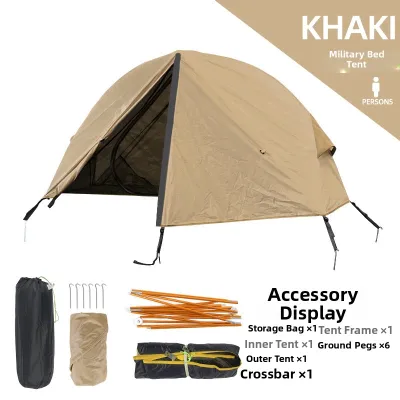
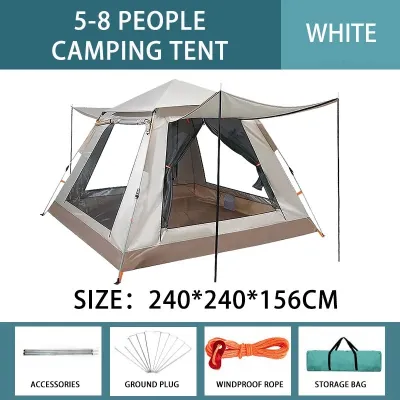
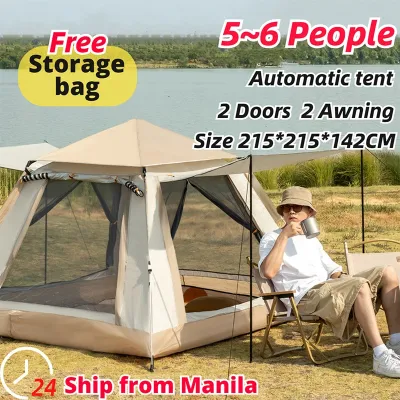
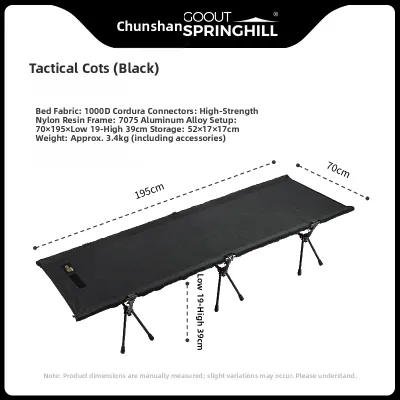
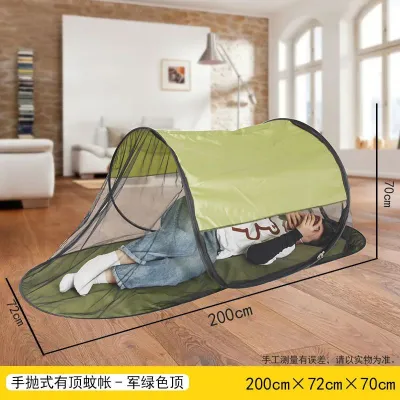
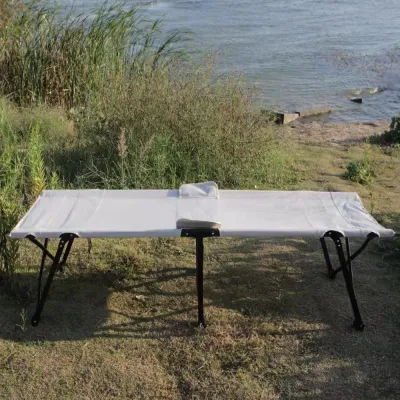
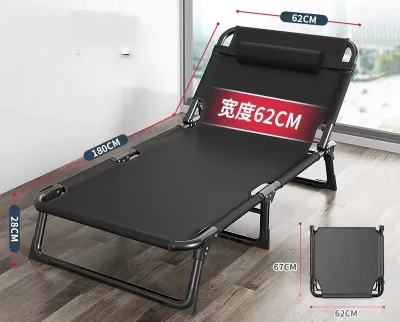
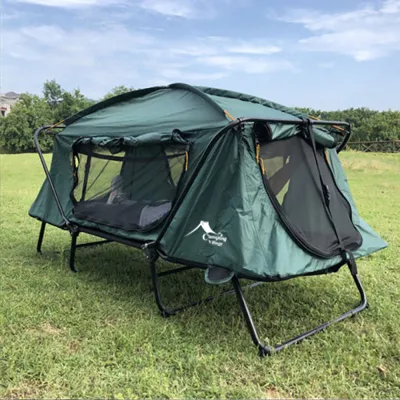
Prices are valid at publication and may change. Please refer to the product page for the latest price.
Advertised tent capacity ratings are based on the maximum number of sleeping pads that can fit on the floor with zero clearance between them. This calculation assumes campers are sleeping directly on the floor in mummy-style bags, with no luggage, personal gear, or walking paths. When you introduce an elevated bed like an air mattress or a cot, you introduce vertical height that conflicts with the sloping walls of most tents. A mattress that is 8 to 20 inches tall will push against the tent walls much sooner than a flat sleeping pad would.
To calculate your minimum required floor area, add at least 1.5 to 2 feet of clearance on at least one side of the bed for standing, changing, and accessing your gear. If you place a queen mattress directly against a sloping tent wall, the mattress will push the inner tent fabric outward. This contact can compromise the rainfly’s ability to shed water, allowing exterior moisture or heavy overnight condensation to seep directly into your mattress and bedding. In warm, humid tropical environments like the Philippines, keeping your bedding completely clear of the tent walls is essential for staying dry.
Selecting the Right Tent Capacity for a Queen Mattress or Cot
For a single queen air mattress, a 4-person tent is the absolute bare minimum required to fit the bed, but a 6-person tent is highly recommended for a comfortable camping experience. In a 4-person tent, the mattress will likely occupy almost the entire floor, leaving only narrow slivers of space at the head and foot of the bed. Upgrading to a 6-person tent provides the necessary breathing room to walk around the bed, store your bags, and set up a small table or portable fan.

When reviewing product specifications, look for specific floor dimension thresholds rather than relying solely on the person-capacity rating. A suitable 4-person tent should have a minimum floor dimension of 8 feet by 8 feet or 9 feet by 7 feet. For a 6-person tent, look for dimensions of at least 10 feet by 9 feet or 10 feet by 10 feet. These dimensions ensure that even after centering a 6.6-foot-long queen mattress, you will have several feet of clearance at the ends and sides of the bed.
If you plan to use multiple cots or add extra gear to your layout, your space requirements will scale up quickly. Two cots placed side-by-side require a similar footprint to a queen mattress, but they allow you to store low-profile gear bags directly underneath them. However, if you want to place a walkway between the two cots, you will need a tent with a width of at least 10 feet. If you are camping with family, pets, or large storage bins, look toward an 8-person or 10-person multi-room tent to keep your sleeping area separate from your living and storage zones.
Comparing Tent Shapes for Maximum Headroom and Layout
Cabin-style tents are the most practical choice for campers who prefer using elevated beds. These tents feature near-vertical walls and high peak heights, often exceeding 6 feet, which allow you to stand upright throughout most of the interior. The straight walls mean you can push a high-profile air mattress or an elevated camping cot close to the edge of the tent without the fabric touching your face or bedding. This maximizes the usable floor space and makes the interior feel like a small bedroom.
Dome and tunnel tents feature sloping walls that arch toward the center of the structure. While these designs are excellent for shedding wind and rain in exposed environments, they severely restrict your usable edge space. A queen mattress placed inside a dome tent often must be positioned dead center where the ceiling is highest. This placement leaves the sloping sides of the tent unusable for anything other than low-profile gear storage, making a large tent feel surprisingly small once the bed is inside.
Choosing between these shapes involves a clear trade-off between weather resistance and interior living comfort. Cabin tents offer superior volume and comfort, but their tall, flat walls act like sails in high winds, requiring robust staking and guy lines. They are also heavier and bulkier to transport. Dome and tunnel tents are more aerodynamic and easier to carry, but they require you to sacrifice headroom and edge-to-edge bed placement. For casual camping in sheltered campgrounds, the comfort of a cabin tent usually outweighs the aerodynamic benefits of a dome.
Checking Doors, Ventilation, and Gear Storage
Before purchasing a camping tent for bed setups, verify that the door design allows you to easily move your gear inside. A common mistake is choosing a tent with the correct floor dimensions but a small, awkwardly angled door. A queen-size air mattress should ideally be inflated inside the tent, but you still need a wide door to maneuver the deflated mattress, pump, and bulky bedding. If you are using camping cots, check if the door is wide enough to pass a fully assembled cot through, as assembling a metal-framed cot inside the tight confines of a tent can be difficult and may damage the floor fabric.
Ventilation is another critical factor when a large bed occupies a significant portion of the tent floor. Elevated mattresses and cots can block the natural airflow that circulates near the ground. In humid climates, look for tents with extensive mesh panels, adjustable ground vents, and a rainfly that can be rolled back or guyed out to create a chimney effect. Proper cross-ventilation prevents warm, moist air from trapping inside, reducing the risk of condensation forming on the ceiling and dripping onto your bed.
Because a large bed consumes most of your floor space, keeping your personal items organized requires utilizing the tent’s vertical storage features. Look for models equipped with built-in wall pockets, gear lofts, and lantern hooks. Keeping items like phones, flashlights, and glasses off the floor prevents them from getting stepped on or lost under the mattress. Utilizing these elevated storage options helps maintain a clean, organized, and safe living environment inside your tent.
Frequently Asked Questions (FAQ)
Can a queen air mattress fit in a 3-person tent?
While a standard 3-person tent with floor dimensions of 7 feet by 7 feet can technically accommodate the physical footprint of a 5-foot by 6.6-foot queen mattress, doing so is highly impractical. The mattress will press tightly against almost all four walls, leaving no room for gear, shoes, or movement. This tight fit blocks the doorway, makes entry and exit difficult, and increases the risk of transferring exterior condensation directly onto your bedding.
Do I need a protective layer under my air mattress inside the tent?
Yes, placing a protective barrier between your tent floor and your air mattress or camping cot is highly recommended. The friction between heavy PVC or nylon mattress materials and the thin tent floor can cause premature wear and punctures over time. Camping cot legs, in particular, exert concentrated pressure that can easily pierce tent fabric. Investing a few hundred pesos (₱) in a durable ground tarp, a fitted moving blanket, or specialized rubber cot coasters to place inside the tent will protect your tent floor from damage.

Community discussion
Share your experience or ask a question. Comments are reviewed before publication.