
Choosing the right kick pad depends on your primary martial arts discipline, the specific strikes you want to practice, and your training partner’s ability to hold the gear. If you focus on Muay Thai or kickboxing with heavy roundhouses and knees, Thai pads are highly suitable. For high-impact power development in Taekwondo or MMA, a kicking shield offers the necessary surface area and protection. If your training centers on boxing combinations, speed, and head movement, focus mitts are the appropriate choice. Selecting the wrong gear not only limits your skill development but also increases the risk of injury for both the striker and the pad holder.
Core Functions and Design Differences
To make an informed choice, you must first understand how these three training tools differ in their physical design and intended use. Each pad is engineered to handle specific types of kinetic energy and strike trajectories.
Thai pads are long, rectangular, and thick, typically worn in pairs on the holder’s forearms. They are designed to cover the arm from the wrist to just below the elbow, providing a solid surface to absorb lower-body strikes like roundhouse kicks, knees, and teeps.
Products mentioned in this guide
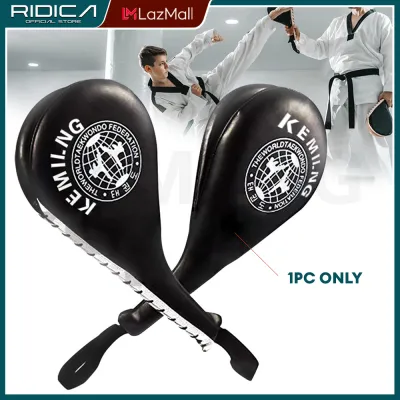
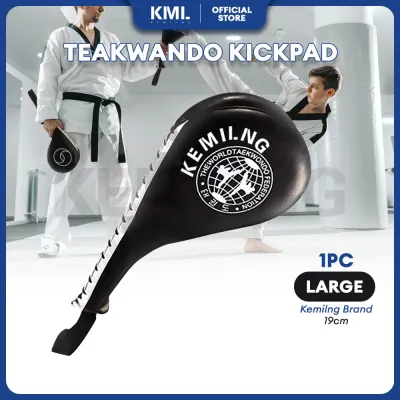
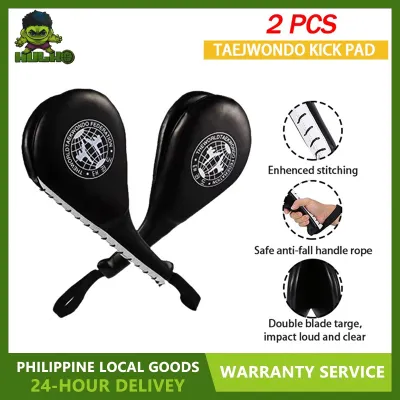
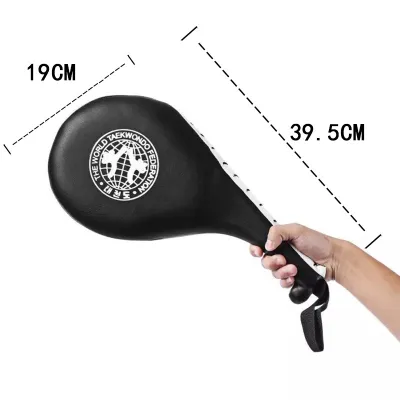
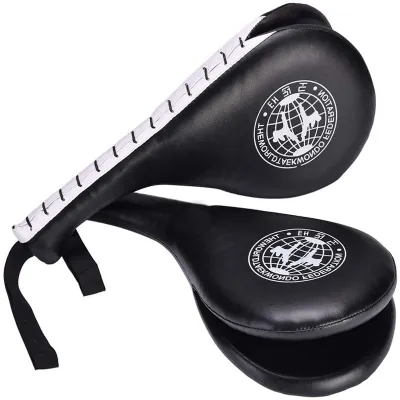
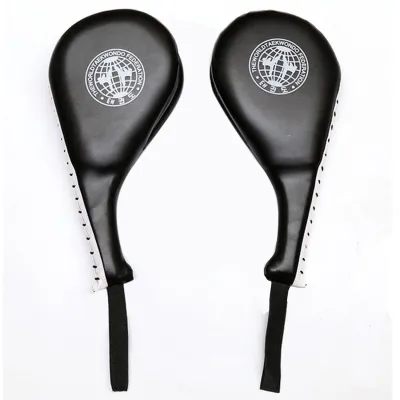
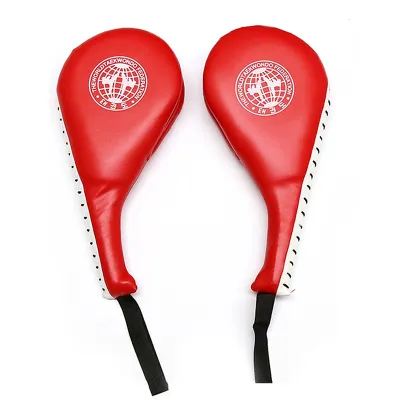
Prices are valid at publication and may change. Please refer to the product page for the latest price.
Kicking shields are large, dense, and heavily padded single units. They feature multiple handles on the back, allowing the holder to grip the shield with both hands and press it against their torso. This design is specifically built to absorb full-power kicks, dispersing the force across a wide surface area to protect the holder’s chest, ribs, and abdomen.
Focus mitts are small, lightweight, and often feature a curved surface that fits over the holder’s hands like gloves. They are designed primarily for hand strikes, allowing for rapid movement, slip-and-counter drills, and light lower-body taps. Because they lack the thick padding and surface area of the other two options, they are not built to absorb heavy, full-power kicks.
When to Use Thai Pads for Striking Drills
Thai pads are widely utilized for Muay Thai, traditional kickboxing, and mixed martial arts drills that combine upper- and lower-body strikes. If your training routine involves transitioning quickly from punches to roundhouse kicks, elbows, and knee strikes, these pads offer the versatility you need. They allow the holder to keep their hands active, mimicking an opponent’s guard while providing a realistic target for mid-to-high kicks.

However, using Thai pads effectively requires a high level of technical skill from the holder. When absorbing heavy roundhouse kicks, the holder must actively brace against the impact, timing their resistance to meet the kick. Without proper bracing technique, the force of the strike can push the pads back into the holder’s own face or cause significant strain on the elbows and shoulders. This makes partner communication and shared technical knowledge essential during high-intensity sessions.
It is also important to note that Thai pads are less suitable for pure boxing combinations. Their bulk and weight make rapid hand movements difficult for the holder, and they lack the precise, small target area required for developing fast, accurate punches. If your primary goal is to polish your boxing defense, head movement, and rapid-fire combinations, the weight of Thai pads will likely cause premature fatigue for the holder.
When to Use Kicking Shields for Power Training
When your primary training objective is to develop raw, explosive kicking power, a kicking shield is a highly practical tool. This gear is highly favored in Taekwondo, karate, and MMA training where practitioners need to practice full-force roundhouses, side kicks, and spinning back kicks. The massive surface area and thick foam construction allow the striker to unleash power without worrying about injuring their partner.
This large surface area provides excellent protection for the holder’s torso, but it comes with a trade-off in terms of weight and mobility. Holding a large kicking shield for extended periods can cause significant fatigue in the holder’s arms, shoulders, and core. Because the holder must use both hands to secure the shield against their body, their ability to move quickly, throw counter-strikes, or simulate realistic head movement is highly restricted.
Consequently, kicking shields are not recommended for fast, multi-strike combinations or close-range clinch work. They are best utilized for repetitive power drills, single-strike conditioning, or as a mobile alternative to a heavy bag. If you train in a home gym or garage where mounting a heavy bag is not structurally feasible, a kicking shield paired with a dedicated training partner offers an excellent alternative for power development.
When to Use Focus Mitts for Speed and Precision
Focus mitts are indispensable for boxing, western-style kickboxing, and any martial art that prioritizes hand speed, timing, and defensive head movement. Their lightweight, compact design allows the holder to move their hands rapidly, simulating the unpredictable targets of a real opponent. This makes them the perfect tool for practicing complex punch combinations, slip-and-counter drills, and footwork.
While focus mitts excel at hand strikes, they have strict limitations when it comes to lower-body training. They can be used to catch light calf kicks, low kicks, or knee taps to help the striker practice transition timing, but they are not designed to absorb full-power leg strikes. Attempting to throw a full-force roundhouse kick at a focus mitt can easily bypass the pad, leading to wrist, hand, or elbow injuries for the holder, or joint hyperextension for the striker.
Holding focus mitts also demands a high level of reaction time and mobility from the holder. Rather than just acting as a passive target, the holder must actively feed punches, move their feet, and use the mitts to tap the striker to prompt defensive slips and rolls. If you or your training partner are still developing your coordination and reaction times, starting with slower, controlled drills is essential to prevent accidental collisions.
Decision Framework: Which Kick Pad Should You Buy?
Choosing the right kick pad comes down to matching the equipment to your specific training goals, discipline, and partner dynamics. If your training centers on Muay Thai, kickboxing, or MMA, and you regularly practice a mix of punches, kicks, knees, and clinch work, you should invest in a pair of Thai pads. They offer the best balance of versatility and protection for multi-range striking.
If your primary goal is to build maximum kicking power, or if you practice a kicking-dominant art like Taekwondo, a kicking shield is the most practical choice. It provides the necessary surface area to absorb heavy impacts safely, making it an excellent tool for power conditioning and a great substitute for a heavy bag when space is limited.
For those focusing on boxing, hand speed, precision, and defensive head movement, focus mitts are highly suitable. They allow for rapid-fire combinations and realistic defensive drills that are simply not possible with heavier, bulkier pads.
Before making your final purchase, always verify that your training partner has the physical strength and technical knowledge to hold the selected pad safely. Heavy Thai pads and kicking shields require proper bracing techniques to prevent joint strain, while focus mitts require quick reflexes to avoid accidental strikes. If you frequently train with partners of varying sizes or experience levels, choosing a pad that matches the holder’s physical capabilities is just as important as matching your own striking needs.
Essential Features to Verify Before Purchasing
When shopping for kick pads on online marketplaces or in local sports stores, you should carefully evaluate several physical specifications to ensure safety and durability. First, inspect the handle and strap configuration. Look for secure D-rings, adjustable hook-and-loop forearm straps, and ergonomic riveted handles. A secure fit prevents the pad from slipping or twisting on the holder’s arm during high-impact strikes, reducing the risk of wrist and elbow strain.
Next, consider the foam density and weight of the pads. High-density foam is essential for absorbing heavy kicks, but it also increases the overall weight of the gear. You must balance the need for impact absorption with the potential for holder fatigue. If the pads are too heavy, your partner may struggle to keep them in position during longer training sessions, leading to dropped guards and improper striking angles.
Material durability is another critical factor, especially when training in tropical climates with high humidity. Look for heavy-duty synthetic leathers or genuine leather with reinforced double stitching. These materials resist moisture absorption, preventing the inner foam from becoming waterlogged with sweat, which can degrade the padding and cause unpleasant odors over time.
Finally, ensure the pad dimensions are appropriate for the holder’s body size. A pad that is too small for the holder’s forearm leaves vulnerable areas exposed to stray kicks, while a pad that is too large can be unwieldy and difficult to control. Checking these specifications beforehand helps support a safer, more productive training experience for both partners.
Frequently Asked Questions (FAQ)
How do I clean and maintain kick pads to prevent odor?
To keep your kick pads hygienic and extend their lifespan, wipe down the entire surface with a damp cloth and mild soap after every training session. Avoid using harsh chemical cleaners, bleach, or alcohol-based disinfectants, as these can dry out and crack the synthetic or genuine leather exterior.
After wiping them down, allow the pads to air dry completely in a well-ventilated indoor area. In humid tropical environments, it is crucial to keep them away from direct sunlight, as extreme heat can warp the internal foam and degrade the outer material.
Always check the manufacturer’s care label for specific cleaning instructions before applying any specialized leather conditioners or disinfectant sprays to ensure compatibility with the materials used.

Community discussion
Share your experience or ask a question. Comments are reviewed before publication.