
Selecting the right indoor cardio equipment is one of the most impactful decisions you can make for your long-term mobility, cardiovascular health, and independence. However, there is no single machine that serves every older adult perfectly. The ideal choice depends on your current balance, joint health, and overall mobility level. While a treadmill allows you to maintain natural walking patterns, a spin bike provides excellent seated stability, and a rowing machine offers a low-impact, full-body workout. Matching your physical capabilities to the specific safety features of these machines ensures a safe and sustainable fitness routine.
Match the Equipment to Your Mobility and Joint Needs
Before browsing online marketplaces or visiting local fitness showrooms in the Philippines, you must conduct an honest self-assessment of your physical capabilities. Your current balance and fall risk are the most critical factors to evaluate. If you occasionally feel unsteady when walking on uneven outdoor paths or climbing stairs, standing exercises on a treadmill may present unnecessary risks. In contrast, if you can stand and walk confidently without assistance, weight-bearing exercise is highly beneficial for maintaining bone density.
Next, consider your joint health, particularly in your knees, hips, and lower back. Chronic joint sensitivities require equipment that minimizes sudden impacts and allows for controlled, smooth movements. For instance, severe knee osteoarthritis often makes high-impact walking painful, whereas the smooth, circular motion of cycling can help lubricate the joint and reduce stiffness. Conversely, if you suffer from chronic lower back pain, the repetitive bending required by a rowing machine might exacerbate your symptoms, making an upright or supported seated position more appropriate.
Products mentioned in this guide
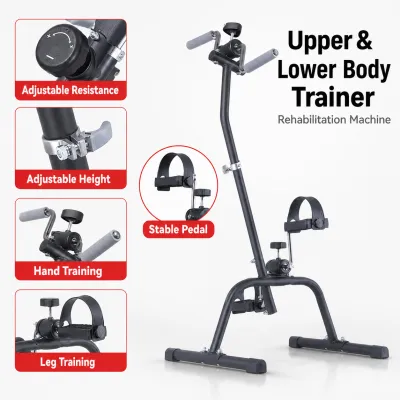
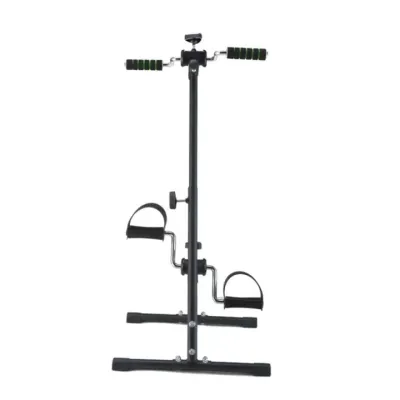
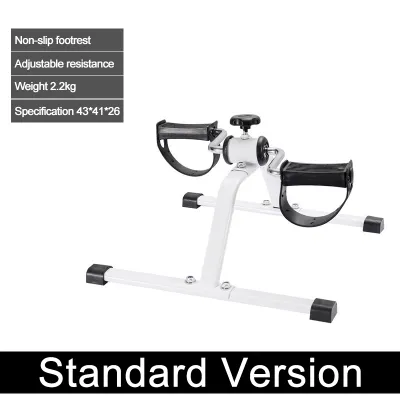
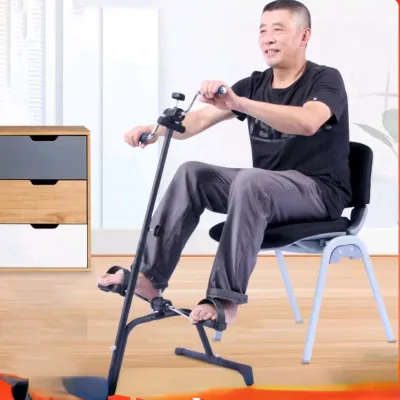
Prices are valid at publication and may change. Please refer to the product page for the latest price.
Finally, consult your healthcare provider or physical therapist to determine whether seated or standing exercises are recommended for your specific medical history. A professional can help you establish clear boundaries, such as target heart rate zones and movement restrictions. They can also advise you on whether your body is ready for the multi-joint coordination required by rowing, or if you should focus on the simpler, isolated movements of stationary cycling or walking.
Treadmills: Evaluating Walking Comfort and Fall Risks
Treadmills are a popular choice for seniors because they mimic the natural, everyday movement of walking. This weight-bearing exercise is excellent for strengthening the muscles of the lower body and supporting bone health, which is vital for preventing osteoporosis. However, because treadmills require you to walk on a moving belt, they demand constant balance and coordination. For seniors with excellent stability, a treadmill offers a highly functional workout that directly translates to improved real-world mobility.

When evaluating treadmills, prioritize safety specifications over high-tech entertainment consoles. Look for a machine with a low step-up height, which makes mounting and dismounting the deck much easier and reduces the risk of tripping. The running belt should be wide and long enough to accommodate your natural stride without forcing you to walk too close to the edges. Additionally, high-quality deck cushioning is essential; it absorbs a significant portion of the impact force, protecting your ankles, knees, and hips from the harsh vibrations of walking on hard surfaces.
Safety mechanisms are non-negotiable for senior users. Ensure the treadmill features a prominent, easily accessible emergency stop clip that attaches securely to your clothing. If you slip or lose your footing, the clip pulls free and immediately halts the belt. Sturdy, extended handrails that run along the sides of the deck—rather than just a short front bar—provide crucial physical support and a secure grip if you feel momentarily off-balance.
While treadmill walking is highly beneficial, you must listen to your body and know when to stop. If you experience sudden dizziness, lightheadedness, sharp knee pain, or a feeling of instability, safely bring the machine to a halt immediately. In the humid tropical climate of the Philippines, indoor workouts can quickly lead to dehydration and fatigue, which directly impair balance. Always keep a water bottle within arm’s reach on the console and ensure your workout area is well-ventilated with a fan or air conditioning.
Spin Bikes: Maximizing Seated Stability and Low Impact
For seniors seeking a highly effective cardiovascular workout without the joint impact or balance demands of walking, a stationary spin bike is an exceptional option. Because you remain seated throughout the exercise, your body weight is supported, which virtually eliminates the risk of falling during your workout. This makes cycling highly suitable for individuals with balance concerns, mild vertigo, or lower back sensitivities that make standing for long periods uncomfortable.
To prevent muscle strain and joint discomfort, the bike must offer comprehensive adjustability. Look for models with multi-directional seat adjustments that allow you to move the saddle both vertically and horizontally. This ensures you can position your knees at a safe, slight bend at the bottom of the pedal stroke, preventing hyperextension. The handlebars should also be adjustable in height and reach, allowing you to maintain an upright, relaxed posture that does not strain your neck, shoulders, or lower back.
The resistance system is another critical component to verify. Magnetic resistance systems are highly recommended for senior users because they operate smoothly and quietly without the jerky friction of felt-pad systems. With magnetic resistance, you can make micro-adjustments to the tension, allowing you to increase the intensity gradually as your strength improves. This smooth transition is much gentler on sensitive knee joints, particularly for those managing osteoarthritis.
Before purchasing, verify the bike’s overall stability by checking its weight capacity and base footprint. A heavy steel frame with wide stabilizer feet prevents the bike from rocking or tipping when you mount, dismount, or pedal. In humid environments, sweat can cause hands to slip on handlebars and feet to slip from pedals. Look for textured, non-slip handlebars and pedals equipped with adjustable toe cages or straps to keep your feet securely in place throughout your session.
Rowing Machines: Assessing Core Strength and Flexibility
Rowing machines offer a unique, low-impact workout that engages up to 86 percent of your body’s muscles, including your legs, core, back, and arms. Because rowing is performed while seated, it is exceptionally gentle on the joints of the lower body, making it a great alternative to running or walking. However, rowing is a highly technical exercise that requires a coordinated, multi-phase movement pattern, making it best suited for seniors who already possess moderate core strength and good joint flexibility.
When assessing a rowing machine, pay close attention to the seat rail and gliding mechanism. The seat should glide smoothly along the rail without sticking or catching, which can cause sudden, jarring forces on your lower back. The seat itself should be ergonomically contoured and positioned at a height that allows you to sit down and stand up without straining. Additionally, look for wide, pivoting footplates with secure, adjustable straps that keep your feet firmly anchored while allowing your ankles to flex naturally.
The type of resistance used by the rower significantly impacts the feel of the workout. Magnetic or water resistance systems are generally preferred for seniors because they provide a smooth, consistent pull from the start of the stroke to the finish. Avoid cheap hydraulic cylinder rowers, which can overheat during use and produce an uneven, jerky resistance that strains your muscles and joints. A smooth catch and release phase are essential for protecting your shoulders and elbows from repetitive strain.
Despite its benefits, rowing is not suitable for everyone. If you suffer from severe lower back issues, herniated discs, limited hip mobility, or difficulty bending forward, the repetitive flexing and extending of the spine during rowing can worsen your condition. If you find it difficult to maintain a straight, strong back throughout the rowing motion, or if you experience pain in your lower back or shoulders, stop using the machine immediately and consult a professional.
Side-by-Side Comparison for Senior Fitness Goals
To help you visualize how these three popular cardio machines compare across key senior-specific criteria, review the summary table below. This comparison focuses on the physical demands, safety profiles, and practical space requirements of each option.
| Criteria | Treadmill | Spin Bike | Rowing Machine |
|---|---|---|---|
| Impact Level | Low to Moderate | Very Low | Very Low |
| Balance Requirement | High (Standing) | Low (Seated) | Low (Seated) |
| Primary Muscle Focus | Lower Body & Core | Lower Body | Full Body (Legs, Core, Back, Arms) |
| Space Footprint | Large (Requires clearance) | Compact to Medium | Long (Requires length) |
| Joint Strain Risk | Moderate (Knees/Ankles) | Low (Knees/Hips) | Low (Knees) / Moderate (Lower Back) |
To simplify your decision-making process, use this straightforward framework to match your physical needs to the right machine:
- Choose a treadmill if you have good balance, want to maintain natural walking mobility, prefer weight-bearing exercise to support bone density, and have sufficient floor space for a larger machine.
- Choose a spin bike if you have balance concerns, suffer from knee osteoarthritis, prefer a highly stable seated workout, and need a compact machine that fits easily into a smaller room.
- Choose a rower if you have good core strength, adequate hip and knee flexibility, want a low-impact full-body workout, and do not suffer from chronic lower back pain.
If none of these options seem to fit your current physical condition—for instance, if you experience severe balance issues, joint pain, or find it difficult to mount standard fitness equipment—do not force yourself to use them. Instead, explore alternative low-impact options such as recumbent cross-trainers, water aerobics, or simple chair-based resistance band exercises, which can provide excellent cardiovascular benefits with minimal risk.
Essential Safety Checks Before You Buy
Before finalizing your purchase and setting up your home gym, perform a few essential safety and practical checks. First, measure your available floor space carefully. Manufacturers typically recommend leaving at least two to three feet of clear space around the sides of a treadmill or rower, and at least four feet behind a treadmill in case of a fall. Placing a high-quality, non-slip rubber equipment mat underneath your machine is highly recommended; it protects your floors, dampens noise, and prevents the machine from shifting during use, especially on tiled floors common in many homes in the Philippines.
Next, carefully read the product specifications, user manual, or product label to verify the exact weight capacity and recommended maintenance schedules. Ensure the machine’s weight limit comfortably exceeds your current weight to guarantee structural stability. In tropical climates, high humidity can accelerate the wear and tear of mechanical parts, making regular maintenance—such as lubricating a treadmill belt or tightening bike pedals—essential for safe operation.
The console and user interface should also be senior-friendly. Look for a display with large, high-contrast numbers that are easy to read without straining your eyes. The controls should be simple and intuitive, featuring large buttons for starting, stopping, and adjusting speed or resistance. Avoid overly complicated digital screens that require navigating multiple menus just to begin a basic workout.
Finally, never hesitate to consult your physician, physical therapist, or a certified fitness professional before starting a new exercise regimen. They can review your chosen equipment, help you set safe limits, and ensure your home workouts support your health goals without putting you at risk of injury.
Frequently Asked Questions (FAQ)
Are recumbent bikes better than spin bikes for seniors?
Yes, for many seniors, a recumbent bike is a safer and more comfortable alternative to a traditional upright spin bike. Recumbent bikes feature a wide, bucket-style seat with a supportive backrest, which significantly reduces pressure on the lower back and tailbone. The pedals are positioned in front of the body rather than directly underneath, allowing for a relaxed, semi-reclined riding position. Additionally, recumbent bikes typically have a step-through frame design, making them much easier to mount and dismount for individuals with limited hip mobility or balance issues. If you suffer from chronic back pain or severe balance difficulties, a recumbent bike is generally the preferred choice.
How should I budget for safe senior cardio equipment?
When budgeting for home fitness equipment in the Philippines, prioritize structural stability, smooth resistance systems, and robust safety features over high-tech entertainment screens or Bluetooth connectivity. High-quality, entry-level to mid-range machines typically range from ₱15,000 to ₱45,000 or more, depending on the type of equipment and build quality. While it can be tempting to purchase cheap, lightweight models from online marketplaces, these often lack the heavy-duty frames and safety mechanisms required for stable, long-term use. Additionally, always check the manufacturer’s warranty terms and verify if local service centers are available in your area to handle repairs, belt replacements, or routine maintenance.

Community discussion
Share your experience or ask a question. Comments are reviewed before publication.