
Selecting the right home cardio equipment is a significant decision that impacts both your physical fitness and your daily living environment. In the Philippines, where tropical heat, high humidity, and sudden downpours often make outdoor exercise challenging, having a reliable indoor workout option is highly practical. However, home layouts—ranging from compact high-rise condominiums in urban centers to multi-story townhouses—present unique spatial and acoustic challenges.
To make an informed investment, you must evaluate how a treadmill, a spin bike, and a rowing machine compare across key performance areas. There is no single universally ideal machine; the right choice depends on your joint health, available floor space, noise tolerance, and whether you prioritize full-body muscle engagement or lower-body conditioning. By understanding the mechanics, physical demands, and maintenance requirements of each option, you can select the equipment that best aligns with your lifestyle and fitness objectives.
Comparing Workout Effectiveness and Muscle Engagement
Each of these three cardio machines offers a distinct pattern of muscle recruitment and cardiovascular conditioning. A treadmill primarily facilitates weight-bearing exercise, which closely mimics natural human movement like walking, jogging, and running. This activity heavily engages the lower body, specifically targeting the quadriceps, hamstrings, glutes, and calves. To vary muscle recruitment, you can adjust the incline setting. Walking or running on an incline shifts the workload toward your posterior chain—the hamstrings and glutes—while simultaneously increasing your heart rate without requiring an increase in speed. This makes the treadmill an excellent tool for functional, real-world movement training.
Products mentioned in this guide
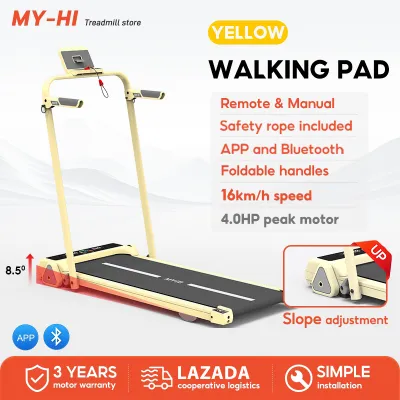
Prices are valid at publication and may change. Please refer to the product page for the latest price.
In contrast, a spin bike isolates the lower body in a non-weight-bearing, seated position. The primary muscles targeted during indoor cycling are the quadriceps and hamstrings, with secondary engagement from the calves and glutes. Intensity on a spin bike is controlled by adjusting the resistance level, which simulates riding up steep hills or sprinting on flat roads. Because your upper body remains relatively stationary, cycling allows you to focus purely on lower-body muscular endurance and high-intensity cardiovascular intervals. It is a highly efficient way to build leg power and aerobic capacity without placing stress on your upper body.
A rowing machine offers a highly integrated, full-body workout that engages both the upper and lower muscle groups. A proper rowing stroke utilizes approximately 86 percent of your musculature, distributing the work across your legs, core, back, and arms. The movement begins with the “drive” phase, where you push off the footplates using your quadriceps and glutes. This force is then transferred through a stabilized core to the upper body, finishing with a pull from your upper back, shoulders, and biceps. Because it recruits so many muscle groups simultaneously, rowing is exceptionally efficient for comprehensive physical conditioning.
It is important to note that actual cardiovascular benefits and calorie expenditure depend heavily on your personal effort, consistency, and the resistance levels you select, rather than the machine type alone. A high-intensity interval session on a spin bike can easily match or exceed the energy expenditure of a moderate jog on a treadmill. Ultimately, the most effective machine is the one you enjoy using consistently, as regular habit formation is the most critical factor in achieving long-term fitness progress.
Joint Impact and Safety Considerations
Your physical history, joint health, and current mobility levels should heavily influence your choice of home cardio equipment. Treadmills present the highest level of joint impact among the three options. Every time your foot strikes the treadmill belt during a run, your knees, ankles, and hips absorb forces equivalent to several times your body weight. While modern treadmill decks are engineered with shock-absorbing cushioning to mitigate these forces, running remains a high-impact activity. Walking on a treadmill significantly reduces this impact while still providing the bone-density benefits of weight-bearing exercise, but it may still cause discomfort for individuals with pre-existing joint issues.

Spin bikes offer a low-impact, closed-chain movement pattern that is exceptionally gentle on the joints. Because your feet remain securely strapped or clipped into the pedals throughout the entire rotation, there are no jarring impact forces. This makes indoor cycling an ideal option for joint protection, cardiovascular conditioning during injury rehabilitation, and high-intensity interval training for those with sensitive knees or ankles. The smooth, circular motion helps lubricate the knee joints and strengthen the surrounding supporting muscles without aggravating joint surfaces.
Rowing machines also provide a low-impact workout for your lower-body joints, as you remain seated throughout the exercise. However, rowing requires strict adherence to proper technique to prevent lower back strain. The repetitive flexing and extending of the torso during the rowing stroke can place significant stress on the lumbar spine if your core is not engaged or if you round your back. Learning the correct movement sequence—legs, core, arms on the pull, and arms, core, legs on the return—is essential for safe operation.
If you have pre-existing joint, spinal, or balance conditions, it is highly recommended to consult a healthcare professional or physical therapist before purchasing any home fitness equipment. A professional can help you determine which movement patterns are safe for your specific body and guide you on how to integrate the machine into a balanced recovery or fitness routine.
Space, Noise, and Practical Home Setup
Before purchasing, you must carefully measure your living space to ensure the equipment fits comfortably and safely. Treadmills typically require the largest permanent footprint. Even models designed with folding decks that lift vertically when not in use still occupy a substantial amount of floor space and are often too heavy to move frequently. Spin bikes are highly compact and have the smallest footprint, making them easy to tuck into a bedroom corner or a small study. Rowing machines have a long, narrow profile; while they require significant floor length during a workout, many models are designed to stand upright against a wall or fold in half for convenient storage.
In addition to the floor footprint, you must account for vertical and operational clearance. For treadmills, calculate your height plus the height of the treadmill deck, and ensure you have ample ceiling clearance, especially if you plan to use the maximum incline setting. For rowing machines, you need to verify that you have enough rear clearance for the seat slide and sufficient lateral space for your elbows and the handlebar sweep at the end of each stroke.
Noise generation is another critical factor, particularly if you live in a multi-story building or a shared household. Treadmills are generally the loudest option, as they combine the hum of an electric motor with the repetitive, heavy thud of your feet hitting the deck. Spin bikes that utilize magnetic resistance are virtually silent, allowing you to exercise at any hour without disturbing others. Rowing machines vary depending on the resistance type; magnetic rowers are very quiet, water rowers produce a rhythmic sloshing sound, and air rowers generate a consistent wind-whooshing noise that can be quite loud at high speeds.
To ensure a safe and durable setup, always verify the manufacturer’s exact dimensions and check your floor’s load limits. It is highly recommended to place a protective, heavy-duty equipment mat beneath your machine. This mat helps reduce structural vibrations, dampens noise, and protects your flooring from sweat and moisture, which is especially important in humid tropical climates.
Evaluating Price, Value, and Maintenance
Understanding the relationship between price, build quality, and ongoing maintenance will help you maximize the value of your investment. When budgeting for home cardio equipment in the Philippines, you will generally encounter three distinct price tiers. Entry-level options, often priced under ₱15,000, typically feature basic digital monitors, lighter frames, and manual adjustments. Mid-range models, ranging from ₱15,000 to ₱45,000, offer sturdier steel frames, heavier flywheels for smoother motion, motorized resistance or incline, and more advanced console features. Premium tiers, which exceed ₱45,000, provide commercial-grade durability, powerful motors, advanced magnetic resistance systems, and large touchscreen displays for streaming interactive workouts.
To evaluate the durability of a machine without relying solely on price, look closely at key build specifications. The maximum user weight capacity is a highly reliable indicator of structural integrity; machines with higher weight capacities are built with thicker steel frames and more robust internal components. Additionally, check the manufacturer’s warranty terms, particularly the coverage period for the frame and motor, as longer warranties reflect the manufacturer’s confidence in the product’s longevity.
Routine maintenance is essential to keep your equipment running smoothly and safely. Treadmills require the most active upkeep, including regular alignment of the running belt and periodic application of silicone lubricant beneath the belt to reduce friction and protect the motor. Spin bikes require you to periodically tighten the pedals, check the tension of the drive belt or chain, and wipe down the frame after every workout to prevent sweat from corroding the metal. Rowing machines are relatively low-maintenance, requiring you to wipe down the slide rail regularly to ensure a smooth seat glide and inspect the pull strap or chain for signs of wear.
Finally, remember to factor in potential hidden costs when calculating your total budget. Heavy fitness equipment often incurs substantial delivery fees due to its weight and bulk. You should also consider professional assembly costs if you are not comfortable assembling complex mechanical parts yourself, as improper assembly can void your warranty or lead to premature wear.
Decision Framework: Which Machine Should You Choose?
To finalize your decision, evaluate how your personal goals, physical needs, and home environment align with the unique characteristics of each machine.
You should choose a treadmill if your primary goal is to maintain or improve your walking and running mechanics, you want to support bone density through weight-bearing exercise, and you have a dedicated space with high ceilings. It is the most practical option for those training for outdoor road events or looking to achieve a daily step goal regardless of outdoor weather conditions.
You should choose a spin bike if you require a highly compact, low-impact, and quiet cardio solution that fits easily into a small apartment or shared living space. It is an excellent choice for high-intensity interval training, lower-body endurance building, and cardiovascular exercise that is gentle on sensitive joints.
You should choose a rowing machine if you want a highly efficient, full-body workout that builds both cardiovascular endurance and muscular strength simultaneously. This option is ideal if you enjoy learning technical movement patterns and are committed to maintaining proper form to protect your lower back.
Before making your purchase, always verify your physical readiness and home constraints. If you have severe joint limitations, restricted ceiling heights, or live in a multi-story building with strict noise regulations, take the time to test the equipment or consult with a professional to ensure your chosen machine is a suitable fit for your lifestyle.
Frequently Asked Questions (FAQ)
Can I use a treadmill for walking instead of running?
Yes, walking is a primary and highly effective use case for a treadmill. You do not need to run to achieve a high-quality cardiovascular workout; adjusting the speed and incline settings allows you to create varied, challenging walking routines. Walking on an incline increases your heart rate and muscle engagement without the high-impact forces associated with running, making it an excellent option for daily low-impact exercise.
Is a rowing machine suitable for beginners?
Yes, a rowing machine is suitable for beginners, but it does require a willingness to learn proper technique. While the movement pattern is natural, mastering the correct sequence—initiating the drive with your legs, stabilizing with your core, and finishing with your arms—takes practice. Beginners should start with low resistance levels and focus entirely on form and rhythm before attempting to increase workout intensity.
Do spin bikes require special cycling shoes?
Not necessarily, as pedal compatibility depends on the specific bike model. Many home spin bikes come equipped with dual-sided pedals or toe cages that allow you to ride using standard athletic sneakers. However, some models feature clipless pedals designed for specific cycling cleats, which lock your feet into place for improved power transfer. Always check the bike’s pedal specifications to ensure they match your preferred footwear.

Community discussion
Share your experience or ask a question. Comments are reviewed before publication.