
A circular carabiner, often referred to as a ring or round carabiner, is a specialized piece of hardware designed with a perfectly symmetrical, circular geometry. Unlike traditional asymmetrical designs, its uniform curvature allows ropes, webbing, and rigging lines to slide smoothly along any point of its inner surface. While standard climbing setups rely heavily on D-shape or oval connectors, the circular carabiner serves a distinct role in multi-directional rigging, complex anchor systems, and specialized rope work where force can come from several angles at once. Understanding how this unique shape behaves under load is essential for maintaining safety and efficiency in the field.
Defining Characteristics of a Circular Carabiner
The defining feature of a circular carabiner is its complete symmetry. Unlike an oval carabiner, which has elongated straight sides, or a D-shape carabiner, which features a distinct spine and a narrower basket, a circular carabiner maintains a consistent radius throughout its frame. This geometry ensures that there is no single designated top or bottom to the basket. When a rope or sling is threaded through, it can glide along the entire inner circumference without catching on sharp transitions or shifting abruptly into a corner.
This round profile is particularly effective at reducing localized friction during multi-directional movement. In complex rigging setups, such as those used in arboriculture, canyoning, or rescue operations, ropes often pull from unpredictable angles. A circular frame allows the connection point to self-align dynamically, tracking the direction of the pull without twisting the carabiner or forcing the rope against a sharp edge.
Products mentioned in this guide

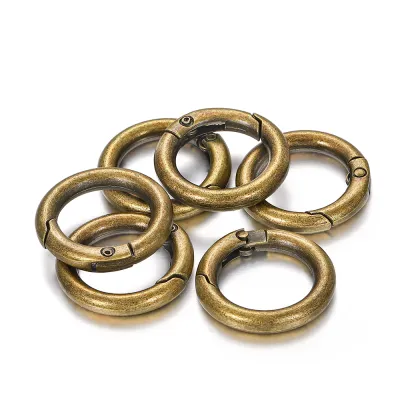
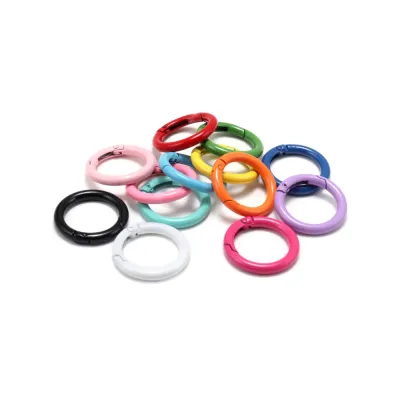
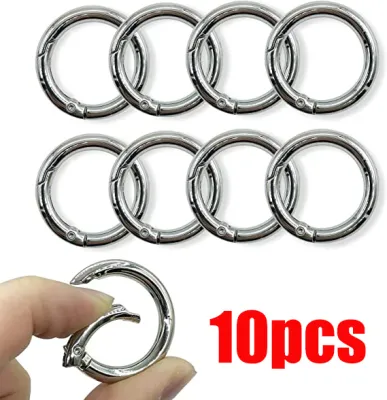
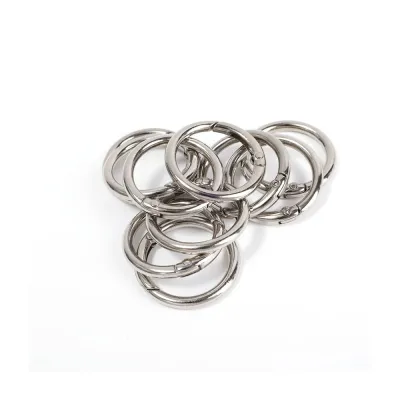
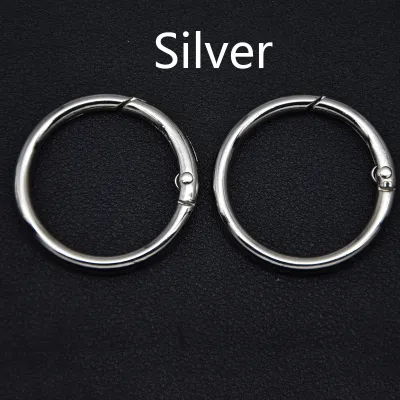
Prices are valid at publication and may change. Please refer to the product page for the latest price.
To distinguish a true circular carabiner from offset or asymmetrical designs, look closely at the curvature of the spine. While some modern carabiners feature rounded baskets but retain a straight spine to save weight, a true circular carabiner forms a continuous, unbroken circle when the gate is closed. This structural design is easily identified by its uniform thickness and lack of flat sections along the load-bearing frame.
How Shape Affects Strength, Weight, and Gate Behavior
The physical shape of a carabiner directly dictates how it manages mechanical stress. In a standard D-shape carabiner, the asymmetrical design naturally coaxes the rope or load toward the spine, which is the strongest part of the frame. Because a circular carabiner lacks this asymmetrical bias, it distributes forces evenly across its entire circumference. While this is highly beneficial for multi-directional loading, it means the carabiner does not benefit from the structural efficiency of directing the load solely along a reinforced spine.

Consequently, the weight-to-strength ratio of a circular carabiner is generally lower than that of a D-shape model. To achieve the same major-axis strength rating, a circular carabiner must often use a thicker, heavier gauge of aluminum or steel. This added material compensates for the lack of a dedicated load-bearing spine, making circular designs heavier than their asymmetrical counterparts of equivalent strength.
Gate behavior is another critical trade-off influenced by the circular shape. Because the frame curves uniformly, the distance between the hinge and the gate latch is structurally constrained. This symmetrical curvature inherently reduces the usable gate clearance, or the maximum opening width, when compared to an offset D-shape. A smaller gate opening can make clipping thick ropes, multiple slings, or bulky anchor nodes more challenging.
Because of these structural differences, you should never assume a carabiner’s strength based on its appearance alone. Always verify the major axis, minor axis, and open-gate strength ratings, which are laser-etched or stamped directly onto the frame by the manufacturer. These ratings, along with safety certifications such as the UIAA (International Climbing and Mountaineering Federation) or CE marks, provide the only reliable measure of the gear’s load capacity.
Circular vs. D-Shape vs. Oval: A Practical Comparison
Choosing the right carabiner shape requires balancing the specific demands of your rigging or climbing task against the mechanical properties of each design.
D-shape carabiners are the workhorses of modern climbing. Their asymmetrical design ensures that the load is transferred directly to the strong spine, allowing for a lightweight frame with exceptionally high major-axis strength. They also offer a large gate opening, making them the preferred choice for quickdraws, belay devices, and primary harness connections. However, they perform poorly under multi-directional loads, which can force the rope away from the spine and onto the weaker gate side.
Oval carabiners feature a symmetrical shape with elongated straight sides. They are excellent for holding centering loads, such as pulleys, swivels, and ascenders, because they prevent the gear from shifting or tilting. They also allow ropes to run smoothly side-by-side. However, like circular designs, they do not direct loads to the spine as efficiently as D-shapes, resulting in lower overall strength-to-weight ratios.
Circular carabiners occupy a highly specific niche. They excel in complex rigging scenarios where forces pull from multiple directions simultaneously, as their round frame prevents cross-loading. However, their weight, limited gate clearance, and lower major-axis strength make them unsuitable for standard belay setups or lead climbing.
| Feature | Circular (Round) | D-Shape (Asymmetrical) | Oval (Symmetrical) |
|---|---|---|---|
| Load Distribution | Multi-directional, even distribution | Directs load to the strong spine | Symmetrical, centers loads |
| Gate Clearance | Narrow / Limited | Wide / Generous | Moderate |
| Primary Use | Complex rigging, multi-directional anchors | Quickdraws, belay devices, primary links | Pulleys, aid climbing, gear racking |
| Strength-to-Weight | Lower (requires more material) | High (highly efficient design) | Moderate |
When to Choose a Circular Carabiner for Climbing Tasks
In real-world climbing and rigging, circular carabiners should be reserved for scenarios where their unique geometry provides a clear safety or functional advantage. They are ideal for complex rigging anchors, pulley redirects, and slackline setups where forces are distributed across multiple angles. In these configurations, the circular frame allows the system to self-adjust smoothly, preventing the dangerous twisting or binding that can occur with asymmetrical connectors.
Conversely, there are several scenarios where using a circular carabiner is highly discouraged. You should avoid using them as primary belay connectors, in lead climbing quickdraws, or at any critical point where fast, easy clipping is required. The limited gate clearance and the potential for the carabiner to rotate freely can complicate belay transitions and increase the risk of accidental gate interference.
Before taking any gear into the field, perform a thorough pre-use inspection. Check the gate spring tension to ensure it snaps shut and locks completely without hesitation. Inspect the inner curvature of the frame for deep grooves, sharp burrs, or excessive wear caused by rope friction. In warm, humid tropical environments like the Philippines, pay close attention to any signs of oxidation, pitting, or corrosion, which can compromise structural integrity over time.
Safety in vertical environments depends entirely on proper training and correct gear application. If you are ever unsure about a specific rigging configuration, or if the manufacturer’s instructions are unclear, stop use immediately. Consult a certified climbing instructor or contact the gear manufacturer directly to verify that your equipment is appropriate for the intended task.
Frequently Asked Questions (FAQ)
Are circular carabiners safe for lead climbing?
Circular carabiners are generally not recommended or practical for lead climbing. Their symmetrical shape and limited gate clearance make them difficult to clip quickly into protection bolts while on lead. Additionally, they do not direct the force of a fall along a reinforced spine like a D-shape carabiner does. For lead climbing quickdraws, asymmetrical D-shape or offset-D carabiners are the industry standard due to their superior strength-to-weight ratio and ease of handling. Always consult the manufacturer’s guidelines to verify the approved uses of your specific gear.
Does a circular shape cause more rope wear than an oval?
A circular shape does not inherently cause more rope wear than an oval, as both designs feature smooth, rounded baskets that allow for gentle rope transitions. The rate of rope wear is primarily determined by the radius of the rope-bearing surface and the material of the carabiner, rather than the overall shape of the frame. A wider radius distributes friction over a larger area, reducing sheath wear. To ensure safety, regularly inspect your ropes and carabiners for wear, sharp edges, or grooving, and retire any gear that shows signs of deep abrasion according to manufacturer specifications.

Community discussion
Share your experience or ask a question. Comments are reviewed before publication.