
The term “heavy” on a resistance band packaging does not represent a universal standard weight. Instead, a heavy resistance band indicates a higher level of tension relative only to other bands within that specific manufacturer’s product line. For fitness enthusiasts in the Philippines looking to build strength at home or in the gym, understanding what “heavy” actually means is crucial to selecting the right gear and avoiding injury.
Because there is no centralized governing body regulating fitness equipment specifications, one brand’s heavy band might feel like another brand’s medium. This lack of standardization can lead to mismatched expectations, improper workouts, or even physical strain if you attempt to use a band that is far stiffer than anticipated.
Decoding the "Heavy" Label: Why Weight Ratings Vary
When shopping on an online marketplace or at a local sporting goods store, you will quickly notice that color-coding systems vary wildly. While many brands use black or blue to denote a heavy resistance band, others might use red, green, or even patterned fabric designs. Relying solely on color to judge tension is a common mistake that can disrupt your training progression.
Products mentioned in this guide
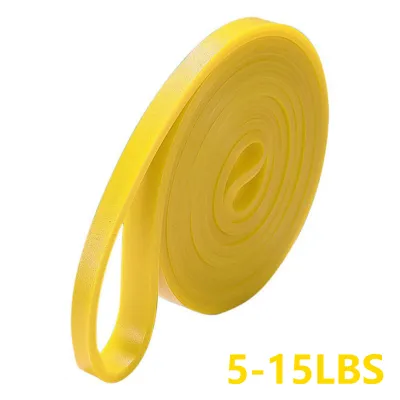
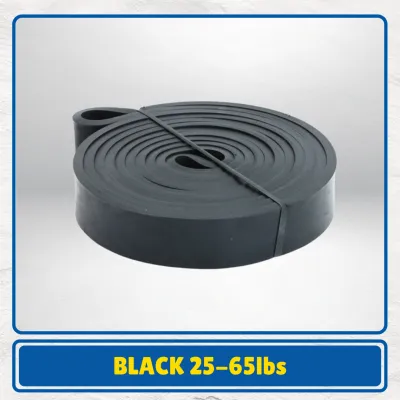
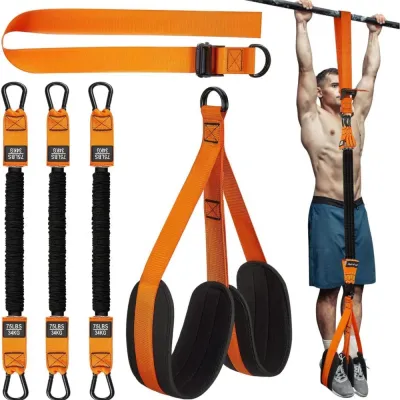
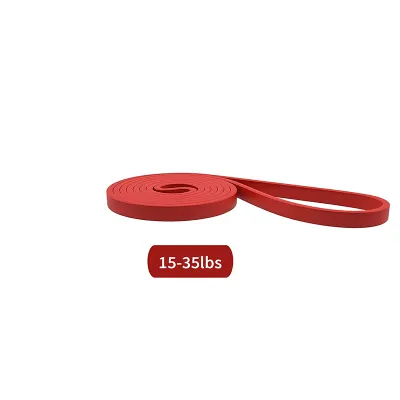
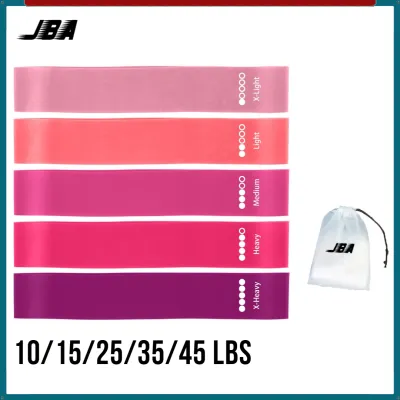
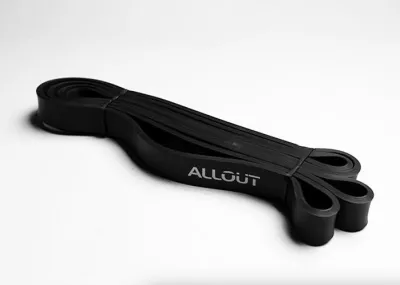

Prices are valid at publication and may change. Please refer to the product page for the latest price.
The physical design of the band also plays a massive role in how the resistance feels during an exercise. Flat continuous loop bands, often made of layered latex or woven fabric, distribute tension evenly across a wide surface area. In contrast, hollow resistance tubes with plastic handles concentrate the force along a thin rubber line, which can make the resistance feel more sudden and intense at the end of a movement.
Furthermore, the weight rating printed on a band packaging usually represents peak resistance rather than a constant load. This peak rating is the amount of tension generated when the band is stretched to its maximum safe limit, often three times its original length. During a standard range of motion, such as a bicep curl or a squat, you are likely working with only a fraction of that maximum rated weight.
How to Verify the Actual Resistance of a Heavy Band
To avoid guesswork, you should always consult the manufacturer’s specification charts before making a purchase. Reputable brands publish detailed tension guides that list the estimated weight equivalent at specific stretch percentages, such as 100%, 200%, and 300% elongation. Checking these charts allows you to compare different products on a more objective scale.

If you already own a band and want to verify its actual tension, you can perform a simple physical test using a standard digital luggage scale. Secure one end of the band to a sturdy anchor point close to the floor and attach the other end to the hook of the luggage scale. Pull the scale to the exact distance your body would stretch the band during your typical exercises, and read the displayed weight.
Comparing this tested tension against standard dumbbell or barbell weights provides a familiar frame of reference for your workouts. However, keep in mind that a heavy resistance band behaves differently than free weights. While a 15-kilogram dumbbell exerts a constant gravitational pull throughout the entire movement, a band starts with very light tension and becomes progressively heavier as it stretches.
Matching Heavy Resistance Bands to Your Training Goals
A heavy resistance band is highly effective for targeting lower-body muscles and large muscle groups that require substantial resistance to stimulate growth. Exercises like glute bridges, Romanian deadlifts, and assisted pull-ups are excellent candidates for high-tension bands. These movements involve large joints and powerful muscle groups that can safely handle the increased load.
However, using a band that is too stiff can quickly lead to improper form, momentum use, or joint strain. If you find yourself jerking your body to complete a repetition, or if you feel a sharp pinch in your shoulders or knees, the resistance is likely too high. Your muscles should control the band smoothly through both the stretching phase and the return phase of the movement.
To progress safely, you should establish a structured transition strategy from medium to heavy bands based on clear performance markers. A reliable rule of thumb is to monitor your repetition targets and time under tension. Once you can comfortably complete three sets of fifteen repetitions with perfect, controlled form using a medium band, you are likely ready to step up to a heavier level.
Safety Checks and Usage Limits for High-Resistance Bands
High-tension workouts place significant stress on the synthetic materials of your equipment, making regular safety inspections essential. Before every training session, perform a thorough visual and tactile check of your bands, looking for micro-tears, discoloration, or small nicks along the edges. In the warm and humid climate of the Philippines, latex can degrade more rapidly if stored in damp areas or exposed to direct sunlight, making these checks even more critical.
You must also verify that your anchoring points are fully capable of withstanding the high pull force of a heavy resistance band. If you are using a door anchor, ensure the door closes securely toward the direction of the pull and that the frame is structurally sound. Avoid anchoring bands around sharp metal edges, rough wooden posts, or lightweight furniture that could slide or break under tension.
Finally, always adhere to the manufacturer’s maximum stretch percentage limits to prevent sudden material fatigue and dangerous snap-backs. Most high-quality latex bands are designed to stretch up to three times their resting length, but stretching them beyond this limit risks snapping the material. Keeping your movements within safe elongation boundaries protects both your body and your investment.
Frequently Asked Questions (FAQ)
Can I combine two medium bands to equal one heavy band?
Yes, you can stack multiple bands to increase total tension, but doing so alters the resistance curve of your exercise. When you combine two medium bands, the initial resistance will feel heavier than a single heavy band, while the peak tension at full stretch may feel slightly different. This stacking method can be a useful temporary solution when transitioning between resistance levels.
However, stacking bands increases the risk of premature wear and sudden snapping. As the bands stretch together, they rub against each other, creating friction that can degrade the latex or fabric over time. If you choose to stack your bands, inspect them frequently for signs of friction damage and consult the manufacturer’s guidelines to ensure the models are designed for combined use.
How do I know when it is time to upgrade to a heavy resistance band?
You will know it is time to upgrade when your current resistance level no longer challenges your muscles during the final repetitions of a set. If you can easily breeze through your target repetition range with perfect form and minimal muscle fatigue, your body has adapted to that workload. To continue stimulating muscle growth and strength gains, you need to introduce a heavier stimulus.
Another clear indicator is a noticeable loss of muscle tension at the peak contraction point of an exercise. If the band feels loose or slack at the start or end of your movement, it is no longer providing the continuous tension required for effective training. Upgrading to a heavy resistance band will restore that vital resistance throughout the entire range of motion.

Community discussion
Share your experience or ask a question. Comments are reviewed before publication.