
To evaluate if the Haixine Fire flashlight is suitable for your diving needs, you must verify its key specifications—specifically its brightness, beam angle, depth rating, battery life, and build quality—against your planned dive profile. Because technical specifications can vary across production batches and regional models, checking the official user manual and physical packaging is the only reliable way to confirm these metrics. No piece of equipment can replace proper dive training, situational judgment, and strict adherence to safety protocols. In tropical diving environments like the Philippines, where high humidity and warm saltwater accelerate wear, understanding these specifications and performing rigorous pre-dive checks is essential to prevent underwater gear failure.
Brightness and Beam Angle: Illuminating Your Dive
When evaluating the light output of the Haixine Fire flashlight, distinguish between lumens and lux. Lumens measure the total light emitted by the source, while lux measures the intensity of that light focused on a surface at a distance. In plankton-rich or turbid waters, high lumens alone do not guarantee visibility. If the light is too diffused, it can reflect off suspended particles and create a blinding glare, similar to driving through high beams in heavy fog.
The beam angle determines its suitability for different underwater activities. A wide flood beam (60 to 120 degrees) distributes light evenly, making it ideal for night diving, illuminating expansive reef structures, or capturing underwater video. Conversely, a narrow spot beam (5 to 15 degrees) concentrates the light into a tight, piercing column. This narrow beam is essential for signaling your dive buddy, cutting through low-visibility water, and peering deep into crevices where marine life hides.
Products mentioned in this guide
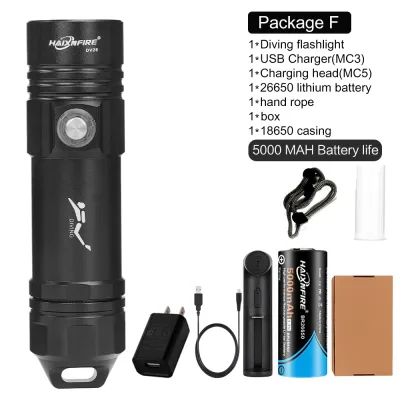
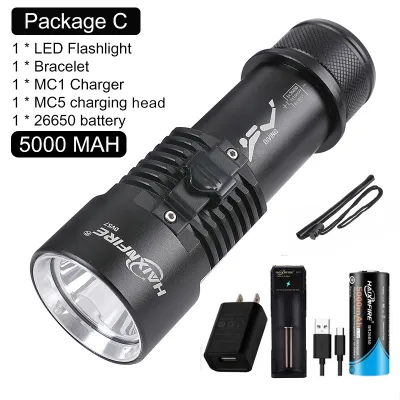
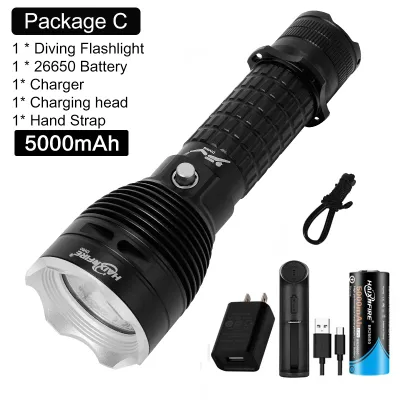
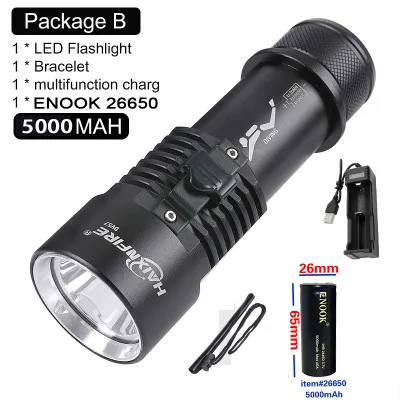
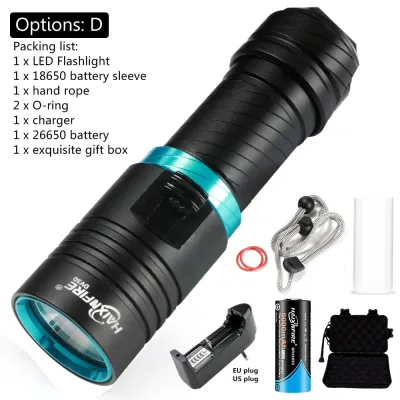
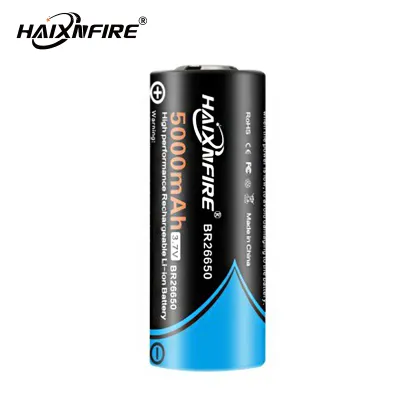
Prices are valid at publication and may change. Please refer to the product page for the latest price.
Before diving, consult the official manual to check for multiple brightness modes and thermal regulation features. High-power LED lights generate significant heat, and many modern dive lights feature automatic step-down thermal regulation to protect internal circuitry. This means the light may automatically lower its brightness if operated on land or in warm tropical surface waters. Additionally, verify whether the flashlight uses a regulated driver that maintains consistent brightness throughout the battery cycle, or an unregulated system where the light gradually dims as the battery drains.
Depth Rating and Waterproofing: Ensuring Underwater Safety
A dive light’s depth rating is its most critical safety specification. You must locate the exact depth limit, specified in meters or feet, or indicated by an IPX8 waterproof rating with a defined depth boundary, on your specific unit’s packaging or manual. Never exceed this manufacturer-specified limit, as hydrostatic pressure increases by one atmosphere for every 10 meters of depth, rapidly compounding the stress on the flashlight’s seals.

It is vital to distinguish between general surface water resistance and true hydrostatic pressure resistance. Many consumer flashlights are rated for heavy rain or temporary shallow submersion, but they lack the structural integrity, double O-ring seals, and thick tempered glass lenses required to withstand the crushing pressures of scuba diving. Using a surface-rated light at depth will result in immediate flooding, battery destruction, and potential safety hazards.
To maintain the waterproof integrity of your Haixine Fire, establish a strict pre-dive inspection routine. Examine the O-rings for any signs of flattening, cracking, or debris such as sand, hair, or salt crystals. In highly humid tropical climates, sealing your flashlight in an air-conditioned room can trap humid air inside the body. When you descend into cooler water, this trapped moisture can condense on the inside of the lens, obscuring your beam. To prevent this, assemble and seal your flashlight in a dry, cool environment, and ensure the seals are lightly lubricated with manufacturer-approved grease.
Battery Life and Power Management: Planning Your Dive Time
A flashlight’s rated burn time is a theoretical measurement calculated under controlled laboratory conditions. In real-world diving scenarios, actual battery life can vary significantly. Cold water temperatures, battery degradation over time, and continuous operation on the highest brightness setting will deplete the battery much faster than the maximum burn time listed on the box.
Review the battery specifications of your specific Haixine Fire model to understand its power source. Many high-performance dive lights rely on rechargeable lithium-ion cells, which require careful handling, charging, and storage. If you plan to travel by air to dive destinations, be aware of aviation safety regulations regarding lithium batteries. These cells must typically be carried in your hand luggage rather than checked baggage, and they should be protected from short circuits using dedicated battery cases.
Proper dive planning requires calculating your power redundancy. Never plan a dive where your expected bottom time matches your flashlight’s maximum burn time. Always factor in a safety margin, ensuring your primary light has ample battery life to last well beyond your planned ascent. For night dives, wreck penetrations, or deep dives, carrying a completely independent, reliable backup light source is a mandatory safety practice, regardless of how dependable your primary light seems.
Build Quality and Ergonomics: Handling Underwater
The physical construction of your dive light dictates its durability in harsh marine environments. Look for body materials like hard-anodized aluminum or high-impact polycarbonate, which resist saltwater corrosion and accidental impacts against rocks or boat decks. Saltwater is highly corrosive, so you must establish a post-dive freshwater rinsing protocol. Soak the flashlight in clean, fresh water after every dive, and operate the switch several times while submerged to flush out trapped salt crystals and prevent mechanical binding.
Consider the flashlight’s buoyancy characteristics when planning your gear configuration. A heavy, negatively buoyant flashlight will sink rapidly if dropped, potentially becoming lost in deep water, and it can affect your overall trim and weight distribution. A positively buoyant light will float to the surface, which can also be problematic if it detaches during a dive. Secure your flashlight to your BCD (Buoyancy Control Device) or wrist using a heavy-duty lanyard, bolt snap, or retractor.
The switch mechanism is another critical ergonomic factor. Dive lights commonly use magnetic sliders, rotary bezels, or push-buttons. Ensure you can easily operate the switch while wearing thick neoprene diving gloves. Magnetic switches are highly reliable because they do not require a physical hole through the flashlight body, reducing leak points. However, they can attract fine volcanic sand, which is common in many popular diving regions. Regularly check the switch area for grit buildup to ensure smooth operation.
How to Verify Your Specific Haixine Fire Model
To prevent relying on outdated, inaccurate, or mismatched information, always verify the technical specifications of your exact Haixine Fire unit. Locate the specifications printed on the original product packaging, engraved directly onto the flashlight body, or detailed in the official printed user manual that came in the box. Avoid relying solely on online retail descriptions, which may combine details from multiple different models or older product generations.
Technical specifications, battery capacities, and depth ratings can vary between different production batches, regional models, or hardware revisions. A model sold in one region may have different LED components or battery configurations than a similarly named model sold elsewhere.
If you find any conflicting information, if the specifications are unclear, or if the unit shows any physical compromise—such as a hairline crack in the lens, worn threads, or a damaged battery compartment—stop using the flashlight immediately. Do not attempt to take a compromised light underwater. Consult the manufacturer or an authorized service center to verify its safety and integrity before your next dive.
Frequently Asked Questions (FAQ)
Can I use the Haixine Fire flashlight for cave diving?
Cave diving is an extreme, high-risk activity that requires specialized training and highly redundant equipment. Overhead environments demand primary lights with long, guaranteed burn times and multiple dedicated backup lights. You must verify if your specific Haixine Fire model and its battery capacity meet the strict safety standards set by your diving certification agency before attempting any cave or cavern penetration.
How do I maintain the O-rings before a dive?
Before every dive, carefully remove the O-rings using a blunt tool to avoid scratching the sealing grooves. Inspect the rings for debris, hair, sand, or cracks, and clean the grooves with a lint-free cloth. Apply a very small, pea-sized amount of manufacturer-approved silicone grease to your fingertips and run the O-ring through them to coat it lightly. Avoid over-lubrication, which can attract sand, and replace the O-ring immediately if it shows signs of wear, stretching, or flattening. Replacing a damaged O-ring costs only a few pesos (₱), whereas replacing a flooded flashlight is far more costly.
Is the battery user-replaceable?
You must check the official user manual for your specific Haixine Fire model to confirm if it features a sealed internal rechargeable battery or uses user-replaceable cells. If the battery is user-replaceable, always follow the manufacturer’s threading, alignment, and sealing instructions when opening and closing the battery compartment to maintain its waterproof integrity.

Community discussion
Share your experience or ask a question. Comments are reviewed before publication.