
Choosing the right under water flashlight is more than just finding the brightest beam on the shelf. For divers exploring the rich marine biodiversity of the Philippines—from the deep walls of Tubbataha to the night-diving havens of Anilao—a reliable light is a vital safety tool. However, no piece of equipment can replace formal training, sound judgment, and strict adherence to dive limits. Before relying on any light for night dives or overhead environments, ensure your navigation and buoyancy skills are fully certified. When selecting a light, the specifications that matter most are actual lumen output, beam angle, depth rating, and battery reliability.
Brightness and Beam Angle: Matching Light to Water Conditions
Lumens measure the total light output, but how that light behaves underwater depends heavily on water clarity. In highly turbid or murky water, a high-lumen floodlight can create a blinding glare, much like high beams in fog. For these conditions, a narrow spot beam (typically 8 to 12 degrees) is essential to cut through suspended particles and point out macro life. Conversely, wide flood beams (60 degrees or more) are ideal for clear tropical waters, reef exploration, and underwater photography where even illumination is required.
When comparing options, check the manufacturer’s packaging for ANSI/PLATO FL 1 standards. This rating verifies that the listed lumens reflect sustained output rather than a brief, unsustainable peak that drops off after a few minutes of use. Matching your beam angle to your typical diving environment ensures you do not waste battery power illuminating useless reflection.
Products mentioned in this guide
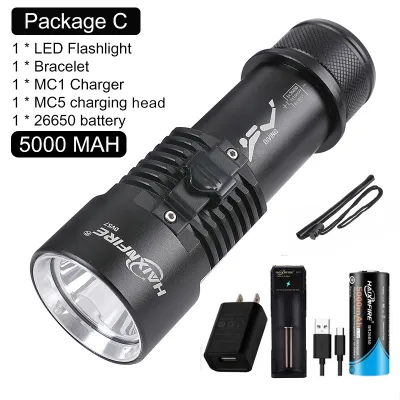
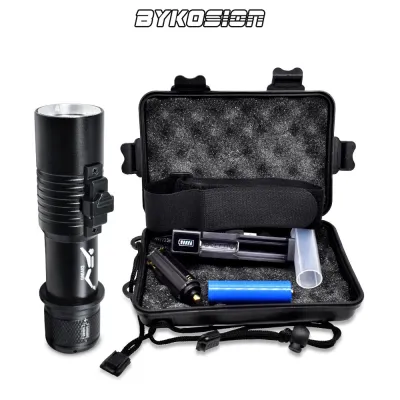
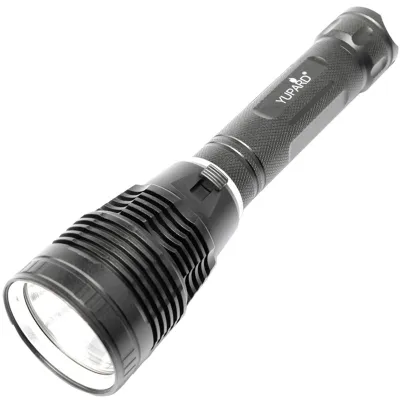
![[Buy 1 Take 1] LED Diving Flashlight IPX8 Waterproof 10000LM Long-distance Lighting USB Rechargeable Strong Light Flashlight Can Soak In Water For Daily Use Original Portable Flashlight](https://img.lazcdn.com/g/p/1757ac87fdbf0260660db90fbee0a847.jpg_400x400q80.jpg_.webp)
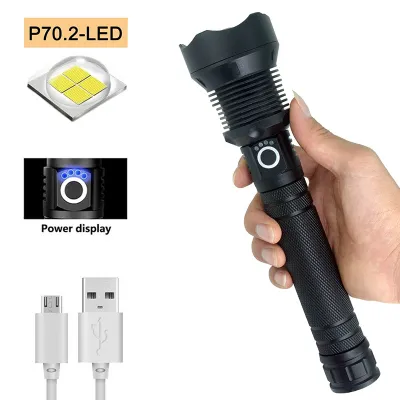
![[Buy 1 Take 1] LED Diving flashlight Waterproof Headlights Fishing Rechargeable Long Endurance Super Bright Deep Diving Underwater Searchlights Suitable For Outdoor Work Camping Fishing And Hiking In Babalux](https://img.lazcdn.com/g/p/d4730ed9a455d47cfc8cfd5f3a304c17.jpg_400x400q80.jpg_.webp)
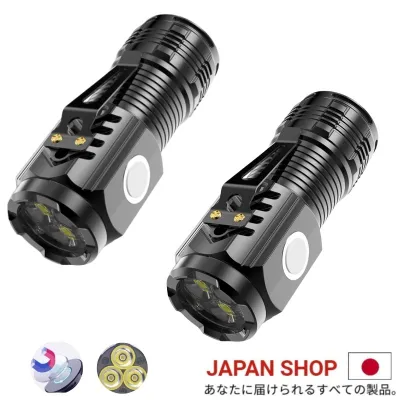
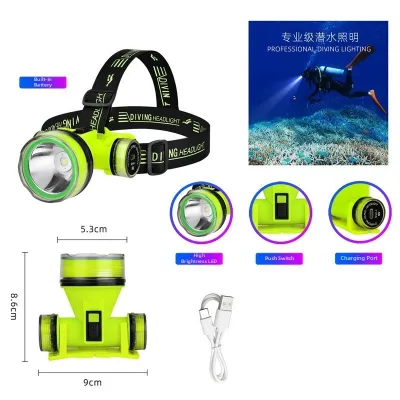
Prices are valid at publication and may change. Please refer to the product page for the latest price.
Depth Rating and Housing: Verifying Pressure Limits
Never take a light past its certified depth rating. For recreational diving, which caps at 40 meters, a light rated to at least 60 or 100 meters provides a necessary safety margin against pressure spikes during rapid descents or accidental drops. Operating a light near its absolute limit increases the risk of housing deformation and seal failure.

The housing material also dictates durability and heat management. Anodized aluminum bodies offer excellent heat dissipation—crucial when testing your light on land or in warm tropical surface waters—and resist scratches from coral or rocky overhangs. Polycarbonate housings are lighter and naturally corrosion-resistant but may not dissipate heat as effectively. Regardless of material, inspect the dual O-ring seals before every descent to ensure they are free of sand, hair, and salt crystals.
Battery Type and Burn Time: Planning Your Dive Duration
Your dive plan must always align with your light’s burn time. Rechargeable lithium-ion batteries are the industry standard, offering high energy density and consistent voltage throughout the dive. However, if you are traveling to remote island destinations, verify airline regulations regarding lithium-ion batteries, which must be carried in your cabin baggage rather than checked luggage.
Disposable alkaline batteries are convenient backups but suffer from voltage drops that cause the light to dim gradually. Always check the manufacturer’s burn-time curve; a light rated for “2 hours” may only provide peak brightness for the first 30 minutes before stepping down. Look for models with built-in battery indicators, such as color-changing LED rings around the switch, so you are never caught off guard in the dark.
Controls and Mounting: Usability Underwater
Operating your light should be intuitive, even when wearing thick neoprene gloves or managing a camera rig. Magnetic slide switches and rotary twist heads are highly reliable because they do not require a physical opening through the housing, minimizing potential leak points. Push-button switches are common but should feature a physical or electronic lock-out mode to prevent the light from turning on accidentally inside your gear bag, which can generate enough heat to melt synthetic fabrics.
For carrying, a secure wrist lanyard or a Goodman-style hand mount keeps your hands free to adjust your buoyancy compensator, check your pressure gauge, or signal your buddy. Ensure the attachment points on the light housing are robust and made of corrosion-resistant materials like marine-grade stainless steel or heavy-duty polymer.
Secondary Specs: What You Can Safely Ignore
It is easy to get distracted by marketing hype. Extreme claims of 5,000 lumens or more are rarely necessary for standard recreational night dives and can actually startle marine life, causing fish to flee before you can observe them. High outputs also drain batteries rapidly and generate extreme heat.
Similarly, a high Color Rendering Index (CRI) is a premium feature that only truly matters if you are shooting high-definition underwater video; for general navigation and safety, standard LED color temperatures are perfectly adequate. Avoid overly complex smart features, such as Bluetooth connectivity or multiple strobe patterns, which introduce unnecessary failure points in a high-pressure, saltwater environment.
Frequently Asked Questions (FAQ)
Can I use a regular waterproof flashlight for scuba diving?
No. Standard waterproof flashlights are typically rated for rain or shallow splashes (IPX7 or IPX8 down to a few meters) but cannot withstand the crushing pressure of deep water. Scuba diving requires a dedicated under water flashlight with a certified depth rating (usually 60 meters or deeper) and pressure-resistant seals.
How should I maintain the O-rings on my dive light?
After every dive, rinse the sealed light thoroughly in fresh water to remove salt and sand. Periodically open the battery compartment, remove the O-rings with a soft tool (never a sharp metal object), wipe them clean, and inspect them for cracks. Apply a very thin coat of manufacturer-approved silicone grease to keep them supple before reassembling.
Do I need a red light filter for night diving?
A red filter or a dedicated red-light mode is highly useful for observing shy marine creatures, like octopuses and lobsters, which cannot easily detect red wavelengths. It also helps preserve your natural night vision, though it significantly reduces the overall distance and brightness of your beam.

Community discussion
Share your experience or ask a question. Comments are reviewed before publication.