
Quick Diagnosis: Walking Pad vs. Full Treadmill
Choosing the right home cardio equipment can be challenging when balancing fitness aspirations with the realities of modern living spaces. If your primary goal is to combat a sedentary lifestyle by accumulating daily steps while working or watching television, a compact treadmill walking pad is likely your best option. However, if you are training for a local race, performing high-intensity interval training, or require steep incline options, a full-sized treadmill remains the standard.
A walking pad is a streamlined, lightweight fitness device designed specifically for low-speed movement, typically topping out at 6 to 8 kilometers per hour. These machines feature a low-profile deck, a smaller motor, and often lack upright handrails or a complex console, allowing them to slide easily under furniture. In contrast, a full treadmill is a robust, stationary machine equipped with a powerful motor, a wide running belt, physical handrails, integrated shock absorption, and adjustable incline settings designed to support high-impact running.
Ultimately, the ideal machine is not the one with the most features, but the one that aligns with your physical space, body profile, and actual fitness habits. Investing in equipment that does not fit your lifestyle often leads to it becoming an expensive storage rack.
Products mentioned in this guide
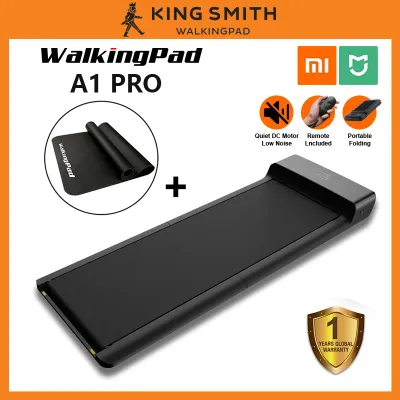
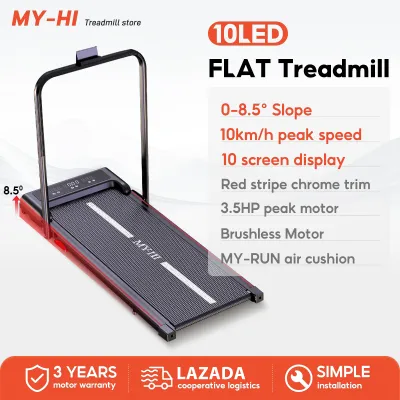
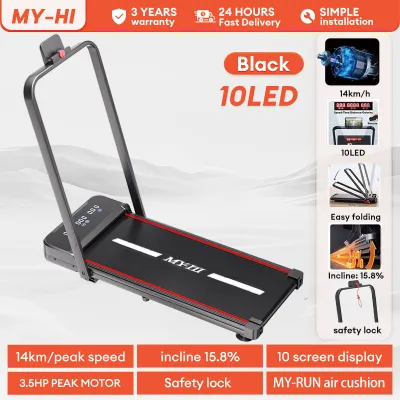
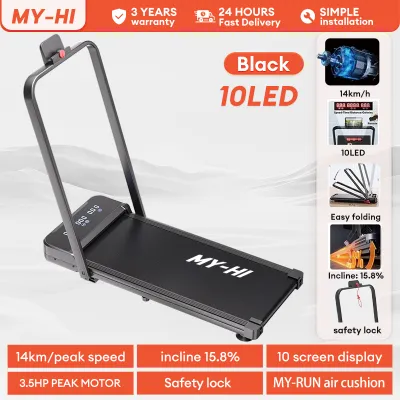
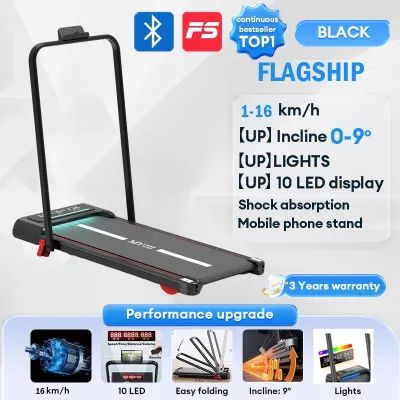
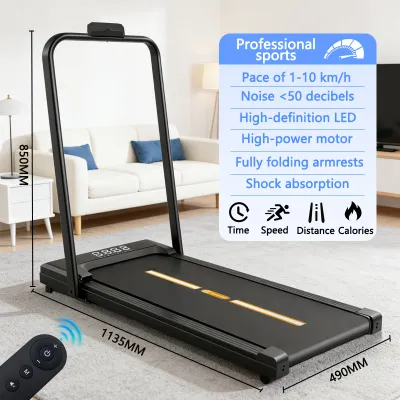
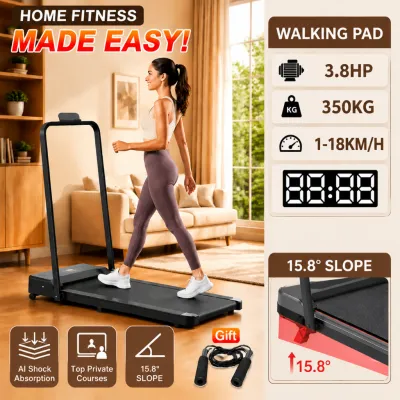
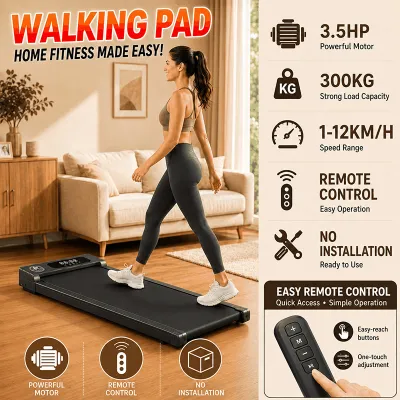
Prices are valid at publication and may change. Please refer to the product page for the latest price.
Assess Your Fitness Goals: Daily Steps vs. Serious Training
Before comparing technical specifications, you must clearly define what you expect to achieve during your workouts. Your fitness objectives dictate the level of structural support, speed, and impact absorption your machine must provide.

Signs a Walking Pad Is Enough
A walking pad is highly effective if your primary objective is to increase your daily step count and reduce sedentary behavior. In the Philippines, where tropical heat and unpredictable monsoon rains can make outdoor walking uncomfortable or unsafe, an indoor walking pad provides a convenient way to stay active. It is particularly suited for remote workers who want to use a standing desk to walk at a slow, steady pace of 2 to 3 kilometers per hour while typing or attending virtual meetings.
This setup allows you to burn calories and improve cardiovascular health without breaking into a heavy sweat that interrupts your workday. If your fitness routine consists of low-impact recovery walks, active recovery days, or light cardiovascular maintenance while watching television, the lower speed limits of a walking pad will not restrict your progress.
Signs You Need a Full Treadmill
If your fitness goals involve athletic conditioning, speed development, or preparing for local running events, a walking pad will fall short. Serious running requires a machine that can handle sustained speeds of 10 kilometers per hour or faster, which only a full treadmill can safely deliver. Running also subjects your joints to impact forces equal to several times your body weight, demanding the advanced deck cushioning and structural stability found in full-sized frames.
Furthermore, if you incorporate high-intensity interval training (HIIT) into your routine, you need a machine that can quickly accelerate and decelerate without shaking or sliding. Full treadmills also feature motorized incline adjustments, allowing you to simulate outdoor hills to build lower-body strength and increase caloric burn. If your training program relies on progressive overload, heart-rate monitoring, and varied terrain simulation, a full-sized treadmill is an essential tool.
Evaluate Your Space: Footprint, Storage, and Clearance
The physical constraints of your home are often the ultimate deciding factor when choosing fitness equipment. A machine that blocks high-traffic areas or is too difficult to store will quickly become a source of frustration.
Before purchasing any equipment from online marketplaces or official brand stores, you must carefully measure your dedicated workout area. For a full treadmill, do not only measure the floor footprint; you must also calculate your ceiling clearance. When a treadmill is set to an incline, the deck rises significantly. To prevent injury, add your height to the deck’s maximum step-up height, and ensure you have at least 30 centimeters of clearance below your ceiling.
Walking pads excel in space-constrained environments, such as studio apartments or condominiums in dense urban areas. Their flat, low-profile design allows them to be stored horizontally under a bed or sofa, or stood vertically against a wall or inside a closet. This mobility makes them perfect for multi-functional rooms where you need to reclaim your floor space after a workout.
A full treadmill, even a folding model, requires a semi-permanent or permanent footprint. It is significantly heavier, often weighing between 60 to 100 kilograms, making daily relocation impractical. Additionally, safety guidelines dictate leaving at least 1.8 meters of clear, unobstructed space behind the treadmill belt in case of an accidental fall. You must also ensure the room has adequate ventilation or air conditioning, as running indoors in a humid climate produces substantial heat and perspiration.
Check Your Profile: Stride, Weight, and Motor Requirements
Your physical dimensions—specifically your height, weight, and stride length—must directly influence your equipment choice. Using a machine that is too small for your body can compromise your natural biomechanics and increase the risk of injury.
Deck Size and Stride Length
Your natural walking stride is shorter than your running stride, which expands significantly as you speed up. Walking pads typically feature shorter belts, often measuring between 100 and 110 centimeters in length, and narrower widths of around 40 centimeters. While this is sufficient for walking, taller users (especially those over 175 centimeters) may find themselves hitting the front motor cover or stepping off the back of a short belt.
Full treadmills generally offer spacious running decks measuring 130 to 150 centimeters in length and 45 to 55 centimeters in width. This generous surface area allows you to run naturally, swing your arms, and adjust your positioning without fear of misstepping. If you have a longer natural stride, verifying the deck dimensions before buying is a critical safety step.
Weight Capacity and Motor Power
Every piece of fitness equipment has a maximum user weight rating specified by the manufacturer. For safety and longevity, it is wise to choose a machine with a weight capacity that exceeds your actual weight by at least 15 to 20 percent. Walking pads often have lower structural limits, typically capping out between 90 and 110 kilograms, whereas full treadmills feature heavy-duty steel frames that easily support 120 to 150 kilograms.
Motor power is equally critical and is measured in Continuous Duty Horsepower (CHP). Walking pads usually feature smaller motors (around 0.75 to 1.5 CHP) designed for low-speed, steady walking loads. If you attempt to run on a low-CHP motor, the constant friction of your feet striking the belt will cause the motor to struggle, overheat, and eventually burn out. A full treadmill designed for running should have a motor rating of at least 2.5 to 3.0 CHP to sustain high speeds smoothly under heavy, repetitive impact.
Budget and Value: Upfront Cost vs. Long-Term Durability
Purchasing home fitness equipment is a financial commitment that should be weighed against the machine’s expected lifespan and your long-term usage.
In the Philippines, walking pads represent a highly accessible entry point, with prices generally ranging from ₱8,000 to ₱18,000. This lower price bracket makes them an attractive, low-risk option for beginners who want to test their consistency before spending a significant amount of money. Because they require minimal setup, they are easy to order and deploy.
Full treadmills require a more substantial upfront investment. Entry-level motorized models start around ₱25,000, while high-end, commercial-grade treadmills featuring advanced shock absorption, interactive touchscreens, and powerful motors can exceed ₱80,000. However, this higher cost often translates to superior durability, thicker running belts, robust frame construction, and comprehensive manufacturer warranties that protect your investment for several years.
When budgeting, remember to account for potential hidden expenses. Shipping heavy machinery to provinces outside Metro Manila can incur substantial freight charges on e-commerce platforms. Additionally, you may want to pay for professional assembly services, as full treadmills are incredibly heavy and require precise mechanical alignment during setup to prevent belt drift and premature wear.
Final Verdict: Which Equipment Matches Your Reality?
To make your final decision, match your personal circumstances to one of the following three paths.
- Path A (Choose the Walking Pad): Select a walking pad if you live in a compact apartment or condominium where floor space is at a premium. This option is ideal if your primary fitness goal is to increase daily movement while multitasking at a standing desk, your budget is under ₱20,000, and you do not intend to run or use incline features.
- Path B (Choose the Full Treadmill): Invest in a full treadmill if you have a dedicated workout area with high ceilings, plan to train for distance running or high-intensity intervals, and require advanced features like physical handrails, motorized incline, and robust shock absorption. This path is best for those with a higher budget who prioritize long-term durability and athletic progression.
- Path C (Wait and Reassess): If you are uncertain whether you will maintain a home workout routine, avoid buying expensive equipment immediately. Start by walking or running outdoors in your local neighborhood or community park, or secure a short-term local gym membership. Once you have established a consistent exercise habit over three to six months, you can confidently invest in the machine that matches your proven routine.
Frequently Asked Questions (FAQ)
Can I safely run on a walking pad?
Generally, walking pads are not designed for running. Most models have a maximum speed limit of 6 to 8 kilometers per hour, which only supports a brisk walk or a very light jog. Attempting to run on a walking pad can be hazardous due to the lack of supportive handrails, narrow deck dimensions, and a motor that may overheat under high-speed impact. Always check the manufacturer’s speed limits and usage guidelines before attempting anything faster than a walking pace.
Will a walking pad cause noise complaints in a condominium?
While walking pads have quieter motors than full treadmills, the impact of your feet striking the deck can still transmit vibrations through concrete floors, potentially disturbing neighbors below. To minimize noise in a condominium, place a high-density rubber equipment mat under the machine to absorb vibrations. Additionally, try to schedule your workouts during reasonable daytime hours and keep the belt clean to reduce motor strain and squeaking.
Do walking pads require special maintenance?
Yes, regular maintenance is essential to keep a walking pad running smoothly and to prevent motor burnout. You should regularly wipe down the belt to remove dust and sweat, check that the belt remains centered, and vacuum away any debris that accumulates underneath the unit. Most manufacturers recommend applying a small amount of 100% silicone lubricant beneath the belt after a set number of hours of use; always consult your specific product manual for exact maintenance steps and approved lubricants.

Community discussion
Share your experience or ask a question. Comments are reviewed before publication.