
Choosing between a walking pad electric machine and a traditional treadmill comes down to a fundamental trade-off between space-saving convenience and high-performance training. A walking pad is designed primarily for compact footprints, low-to-moderate speeds, and seamless integration under standing desks, making it an excellent tool for accumulating daily steps while working. In contrast, a traditional treadmill is built for high-intensity running, sprint intervals, and incline training, requiring a dedicated, permanent floor space in your home. Deciding which electric cardio machine fits your household requires measuring your available floor area, checking structural weight and height limits, and clarifying your daily fitness targets.
Space, Storage, and Footprint Considerations
Living in modern urban spaces, such as high-rise condominiums or compact townhouses, requires careful spatial planning before bringing in heavy fitness equipment. A traditional treadmill typically demands a permanent footprint, often measuring around 160 to 220 centimeters in length and up to 90 centimeters in width. Even folding models, which pivot the deck upward when not in use, still occupy significant vertical and floor space, requiring a dedicated corner where they will not obstruct daily foot traffic or block natural ventilation.
Conversely, a walking pad electric machine is engineered specifically for minimal spatial impact. These low-profile devices generally feature a deck height of less than 15 centimeters, allowing them to slide easily under a bed, sofa, or inside a closet when your workout is complete. Some advanced models even fold completely in half, reducing their storage footprint to less than a square meter. This makes them highly suitable for multi-purpose rooms where a permanent fitness machine would disrupt the living area’s flow.
Products mentioned in this guide
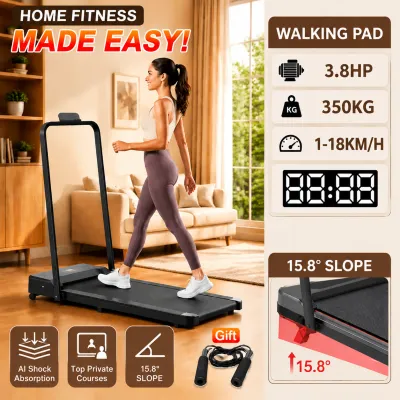
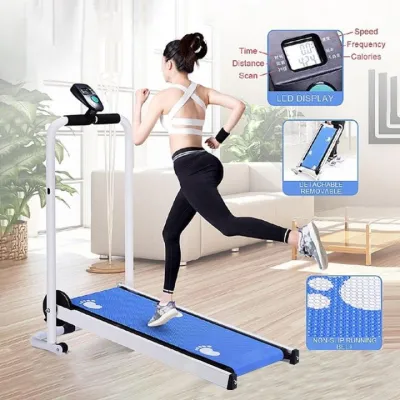
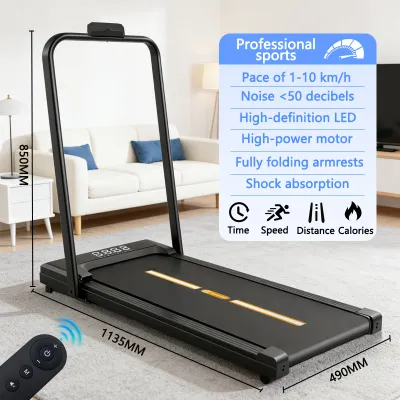
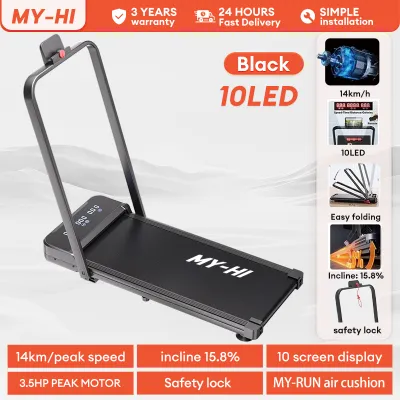
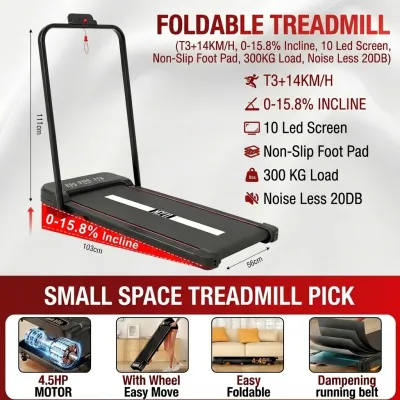
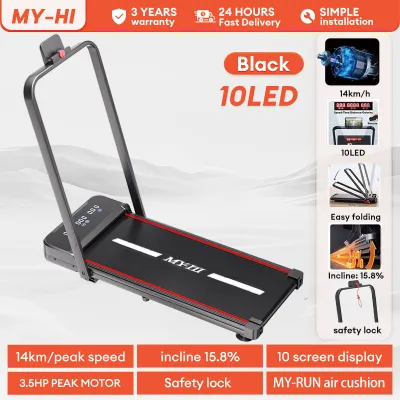
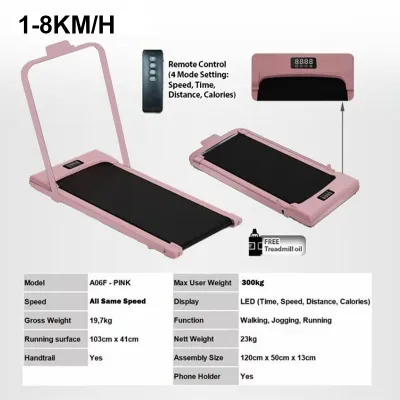
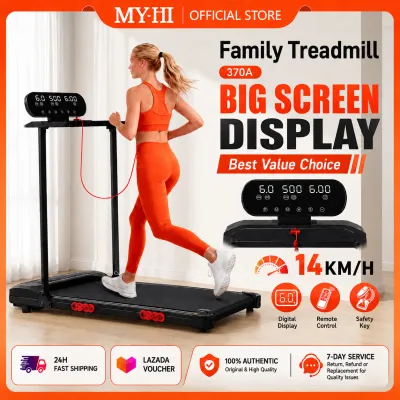
Prices are valid at publication and may change. Please refer to the product page for the latest price.
Before making a purchase on any online marketplace, it is essential to perform a thorough physical audit of your home. Use a tape measure to verify the following spatial and structural parameters:
- Ceiling Height: Measure the height of your ceiling and subtract your own height plus the deck height of the machine. For traditional treadmills, the deck can raise you by 20 to 30 centimeters off the ground; ensure you have at least 30 centimeters of clearance above your head to prevent injury during high-impact running.
- Doorway and Hallway Clearance: Verify that the boxed dimensions of the machine can clear your building's elevators, narrow hallways, and front door frames during delivery.
- Floor Weight Capacity: Consider the combined weight of the machine and the heaviest user. While walking pads are relatively light, traditional treadmills can weigh well over 80 kilograms, requiring a structurally sound floor that can support dynamic, high-impact loads.
- Storage Environment: In humid tropical climates, storing a walking pad under a bed or in a closet requires adequate ventilation. Dust and moisture accumulation can damage the electronic console and belt over time, so ensure your storage area remains dry and clean.
Performance, Belt Size, and Incline Features
The mechanical capabilities of these two categories dictate the type of workouts they can safely support. Traditional treadmills are equipped with powerful motors, typically ranging from 2.5 to 4.0 continuous horsepower (CHP). This robust motor capacity is necessary to sustain high speeds for prolonged periods and to handle the friction generated by a running user. The running belt on a traditional treadmill is also significantly wider and longer, often measuring at least 140 centimeters in length and 50 centimeters in width. This spacious deck is crucial for safety, as it accommodates the longer stride lengths associated with sprinting and prevents taller users from accidentally stepping off the back of the machine.

A walking pad electric machine operates on a much smaller scale, usually featuring a motor between 0.75 and 1.5 horsepower. Because these machines are designed for walking or light jogging, their maximum speed limits are typically capped between 6 and 10 kilometers per hour. The belt dimensions are also narrower and shorter, which requires users to maintain a straight, focused walking path. If you are a taller individual with a naturally long stride, you must verify the belt length specifications of any walking pad to ensure you can walk comfortably without hitting the front motor cover or slipping off the rear roller.
Incline features represent another major dividing line. Traditional treadmills frequently offer motorized incline adjustments, allowing users to simulate hill climbs up to 10% to 15% grade. This feature is highly effective for increasing cardiovascular intensity and targeting different muscle groups without increasing speed. On the other hand, the vast majority of walking pads feature a completely flat deck with no incline capabilities. While some models offer manual riser adjustments, they do not provide the dynamic, on-the-fly incline changes found on traditional machines, limiting your ability to perform varied hill workouts.
Noise Levels and Apartment-Friendly Checks
In shared living environments or multi-story apartment buildings, noise is a critical factor that can affect your relationship with family members and neighbors. When evaluating noise, you must distinguish between motor noise and footstrike impact noise. The electric motor of a high-quality walking pad is generally quiet, producing a low hum that is easily masked by a television or background music. However, because walking pads lack the heavy steel frames and advanced shock-absorption systems of traditional treadmills, the impact of your feet can transfer directly into the floor as low-frequency vibrations.
Traditional treadmills feature substantial deck mass and integrated elastomeric dampeners designed to absorb the heavy impact of running. Despite these features, the sheer force of a running stride creates a significant thudding sound that can easily travel through concrete floor slabs in typical condominium buildings. Additionally, the larger cooling fans and higher-horsepower motors of traditional treadmills generate more ambient noise than a compact walking pad.
To minimize neighbor complaints and maintain a peaceful household, consider the following apartment-friendly checks and mitigation strategies:
- Anti-Vibration Mats: Always place a high-density rubber or foam equipment mat underneath either machine. This simple addition helps absorb structural vibrations before they penetrate the floor.
- Placement: Position the machine away from shared walls and directly over structural support beams or columns where the floor is most rigid.
- Strata and Building Rules: Review your condominium or subdivision association guidelines regarding home gym equipment, noise limits, and permitted hours of operation.
- Footwear Selection: Wearing clean, dedicated indoor running shoes with good cushioning can significantly reduce the impact noise of your steps on both walking pads and treadmills.
Aligning the Machine With Your Fitness Goals
Your choice of machine must align directly with your specific health, fitness, and lifestyle objectives. A walking pad electric machine is highly effective for increasing Non-Exercise Activity Thermogenesis (NEAT). It is designed for individuals who spend long hours sitting at a desk and want to accumulate daily steps while answering emails, attending virtual meetings, or watching television. It provides a low-barrier way to combat a sedentary lifestyle, improve circulation, and burn extra calories throughout the day without requiring a dedicated workout outfit or intense physical exertion.
If your fitness goals involve cardiovascular conditioning, building endurance, interval training, or preparing for local running events like marathons, a traditional treadmill is the necessary choice. The structural stability, wider belt, and higher speed limits of a treadmill are essential for safe, high-intensity running. Attempting to run or sprint on a machine designed solely for walking can lead to motor burnout, belt slippage, and an increased risk of falls or joint injuries due to inadequate shock absorption.
Conversely, you should avoid purchasing a large, expensive traditional treadmill if your primary intention is casual strolling. Heavy treadmills that are too cumbersome to move often end up unused, taking up valuable living space and serving as expensive clothes racks. Be honest about your daily habits and fitness level; a compact walking pad that you use consistently while working is far more valuable than a high-end treadmill that sits idle in a corner.
Budget, Pricing, and Long-Term Value
The financial investment required for these machines varies widely, reflecting their mechanical complexity and structural materials. In the local market, entry-level walking pads generally range from ₱8,000 to ₱20,000. These models offer a cost-effective entry point for casual users looking to add movement to their daily routine. Mid-range to commercial-grade traditional treadmills, however, represent a much larger investment, typically starting around ₱25,000 and easily exceeding ₱80,000 for robust, feature-rich models with high-horsepower motors and motorized incline systems.
When calculating the total cost of ownership, you must factor in long-term maintenance and operational requirements. Both types of machines require regular belt lubrication to prevent friction-induced motor damage; check if the manufacturer includes silicone lubricant or if you need to purchase it separately. Additionally, verify the warranty terms, specifically looking at the coverage duration for the motor, frame, and electronics. Access to replacement parts and local technician support is highly variable, so purchasing from reputable retailers with established customer service channels is recommended.
Finally, do not overlook delivery and assembly fees. Traditional treadmills are incredibly heavy and often arrive in massive, palletized boxes that require professional assembly to ensure structural safety. These delivery and setup services can add several thousand pesos to your initial purchase price, especially if you live on an upper floor without elevator access. In contrast, most walking pads are delivered fully assembled or require minimal setup, allowing you to unbox and use them immediately without professional assistance.
Final Decision Framework: Which Machine Should You Buy?
To make your final decision, evaluate your home environment and fitness aspirations against this structured framework:
- Choose a walking pad if: You have limited floor space, need to store the machine under furniture, primarily want to increase your daily step count while working or watching TV, and prefer a lightweight, low-maintenance device.
- Choose a traditional treadmill if: You are training for running events, require high-speed intervals or incline training, have a dedicated room or garage gym with sufficient ceiling height, and have a budget that accommodates a heavier, more robust machine.
- Reconsider both options if: Your ceiling height does not allow for safe head clearance when standing on a treadmill deck, or if your building's floor structure cannot support the dynamic weight and vibration of a running user. In these cases, outdoor walking or alternative compact cardio equipment may be more suitable.
Before finalizing your purchase on any online marketplace, always verify the manufacturer’s maximum user weight capacity. Ensure your weight falls safely within the recommended limit, leaving a buffer of at least 10 to 15 kilograms to account for dynamic impact forces. Additionally, carefully review the retailer’s return and warranty policies for heavy fitness equipment, as returning a bulky machine can be logistically challenging and expensive.
Frequently Asked Questions (FAQ)
Can I safely use a walking pad under a standing desk?
Yes, you can safely use a walking pad under a standing desk, provided you maintain proper ergonomic alignment and safety precautions. Ensure your standing desk is highly adjustable so you can position your keyboard and mouse at a comfortable height where your elbows rest at a 90-degree angle. Your monitor should be positioned at eye level to prevent neck strain while walking. Before starting, perform a safety check to ensure the desk frame and cables do not obstruct the walking pad’s belt, control panel, remote sensor, or emergency stop clip. Always keep the remote control within easy reach or attached to your clothing so you can stop the machine instantly if you lose your balance.
How much electricity do walking pads and treadmills consume?
The electricity consumption of these machines depends on the motor’s horsepower rating, the user’s weight, and the speed at which the machine is operated. Walking pads, with their smaller motors (typically 0.75 to 1.5 HP), draw relatively little power, often consuming between 500 to 1,000 watts during active use. Traditional treadmills, featuring larger motors (2.5 to 4.0 HP), can draw significantly more power, ranging from 1,500 to 3,000 watts, especially when operating at high speeds or maximum incline. To prevent electrical issues in your home, check the manufacturer’s wattage specifications and ensure your wall outlet and circuit breakers can handle the startup surge of a larger treadmill motor without tripping. Avoid using extension cords or sharing the same outlet with other high-power appliances.

Community discussion
Share your experience or ask a question. Comments are reviewed before publication.