
To choose the right diving flashlight, you must look beyond standard IP ratings and focus on explicit depth ratings measured in meters. While an IPX8 rating sounds completely waterproof, it only guarantees protection under specific, often shallow, conditions defined by the manufacturer. For actual diving in tropical waters, where hydrostatic pressure increases rapidly with depth, you need a dedicated dive light with a certified depth rating that exceeds your planned dive profile by a safe margin. Selecting the wrong equipment can lead to immediate failure, leaving you in the dark during a critical moment underwater.
Understanding IP Ratings vs. Depth Ratings
Standard water resistance is typically measured using the Ingress Protection (IP) marking system. An IPX8 rating is the highest standard rating for liquid ingress, indicating that the device can withstand continuous immersion in water. However, this rating is highly variable because the exact depth and duration of the test are defined by the manufacturer rather than a universal standard. A standard outdoor flashlight might carry an IPX8 rating based on a test of just two meters for thirty minutes, which is wholly inadequate for scuba diving.
In contrast, dedicated diving flashlights feature explicit depth ratings, such as 50 meters, 100 meters, or even deeper. These ratings indicate that the flashlight’s housing, lens, and seals are engineered to withstand the immense hydrostatic pressure exerted at those specific depths. Underwater pressure increases by approximately one atmosphere for every ten meters of depth, meaning a light at thirty meters experiences four times the pressure felt at the surface.
Products mentioned in this guide
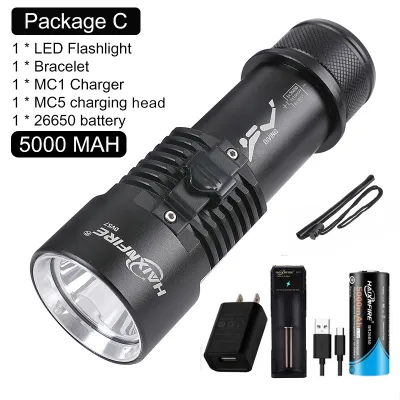
![[Buy 1 Take 1] LED Diving Flashlight IPX8 Waterproof 10000LM Long-distance Lighting USB Rechargeable Strong Light Flashlight Can Soak In Water For Daily Use Original Portable Flashlight](https://img.lazcdn.com/g/p/1757ac87fdbf0260660db90fbee0a847.jpg_400x400q80.jpg_.webp)
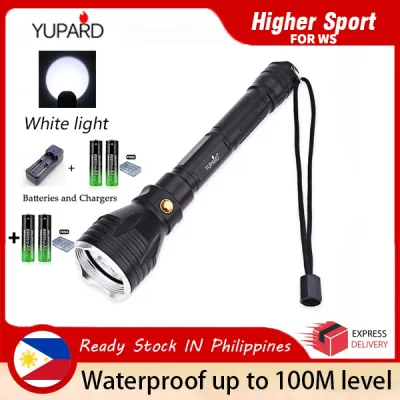
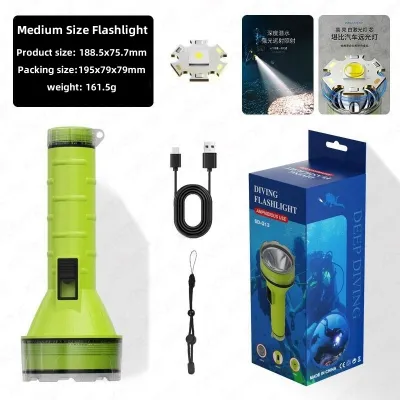
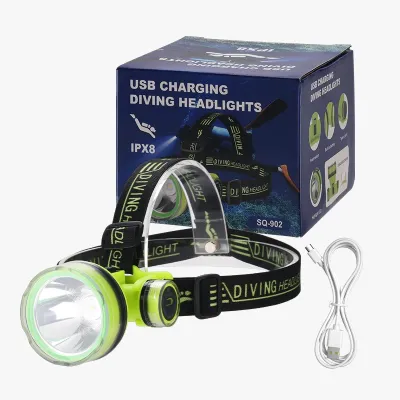
![[Buy 1 Take 1] LED Diving flashlight Waterproof Headlights Fishing Rechargeable Long Endurance Super Bright Deep Diving Underwater Searchlights Suitable For Outdoor Work Camping Fishing And Hiking In Babalux](https://img.lazcdn.com/g/p/d4730ed9a455d47cfc8cfd5f3a304c17.jpg_400x400q80.jpg_.webp)
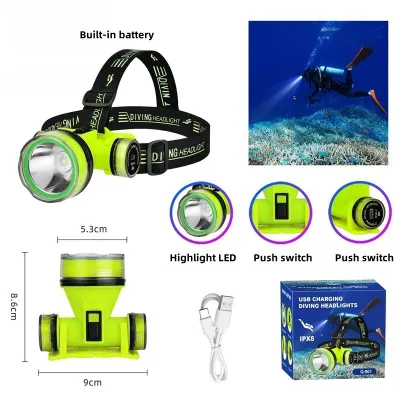
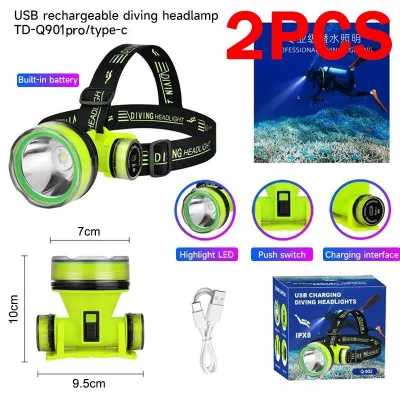
Prices are valid at publication and may change. Please refer to the product page for the latest price.
Before purchasing any underwater lighting equipment, you must verify both the IP code and the explicit depth limit on the product label or user manual. Do not rely on vague marketing terms like “waterproof” or “submersible” without a corresponding numerical depth limit. Checking the manufacturer’s official specifications ensures that the device has been designed and tested for the physical demands of deep-water environments.
Matching Depth Ratings to Your Diving Profile
Your choice of depth rating should directly align with your specific water sport, skill level, and planned diving environment. For snorkeling, shallow freediving, or surface-level water sports, lower depth ratings are generally sufficient. A light rated for 10 to 20 meters will easily handle the minimal pressure encountered near the surface, providing ample illumination for exploring shallow coral reefs or crevices during the day.

For recreational scuba diving, which typically caps at a maximum depth of 40 meters, you require a flashlight with a much higher rating. It is highly recommended to choose a light rated for at least 60 to 100 meters. This extra headroom accounts for pressure spikes that occur when you move the light quickly through the water or accidentally bump it against equipment, which can momentarily increase the localized pressure on the seals.
Technical diving, wreck diving, and deep exploration demand specialized equipment with extreme depth ratings, often exceeding 100 or 150 meters. At these depths, any structural weakness or seal compromise will result in immediate implosion or flooding. Divers engaging in these high-risk activities must consult detailed manufacturer specifications and verify that the equipment is certified for sustained use at extreme pressures.
As a general rule of safety, always choose a diving flashlight with a depth rating significantly deeper than your planned dive profile. This pressure buffer ensures that the seals are never pushed to their absolute physical limits during a standard dive. Remember that high-quality equipment is a vital tool, but it can never replace proper dive training, situational awareness, and conservative dive planning.
Critical Pre-Dive Checks to Maintain Waterproof Integrity
Maintaining the waterproof integrity of your diving flashlight requires diligent pre-dive preparation and post-dive care. The primary defense against water ingress is the rubber O-ring system located at the battery compartment and lens joints. You must inspect and lubricate these O-rings strictly according to the manufacturer’s instructions using approved silicone grease. Avoid petroleum-based lubricants, as they can chemically degrade the rubber and cause the seals to fail under pressure.
Before every dive, carefully inspect the battery compartment threads and seals for any foreign debris. Even a single grain of sand, a strand of hair, or a tiny piece of lint can create a microscopic gap in the seal, allowing water to slowly seep in under pressure. Clean the threads gently with a lint-free cloth and ensure the O-rings are seated perfectly flat without any twists or pinches.
After diving in saltwater, always rinse your flashlight thoroughly with clean, fresh water before opening the battery compartment. In warm, humid tropical climates, salt crystals can form rapidly as saltwater dries, which can scratch the seals or damage the threads during disassembly. Allow the flashlight to dry completely in a shaded, well-ventilated area away from direct sunlight to prevent heat damage to the internal electronics.
You must establish clear stop conditions for your equipment to prevent dangerous failures underwater. If you notice any cracks in the housing, deep scratches on the lens, cross-threaded battery caps, or flattened and dry O-rings, halt use immediately. Do not attempt to submerge a compromised flashlight; instead, replace the damaged seals or consult a qualified technician or the manufacturer for professional repair.
Frequently Asked Questions (FAQ)
Can I use a standard IPX8 everyday flashlight for scuba diving?
No, you should not use a standard IPX8 everyday flashlight for scuba diving. While an IPX8 rating indicates resistance to continuous immersion, these lights are typically tested at very shallow depths and are not built to withstand the high hydrostatic pressure of scuba diving. Standard flashlights often feature push-button switches that can be compressed and permanently turned on or off by water pressure, or they may suffer housing implosion and battery short-circuits. Always verify that your light has an explicit diving depth rating before taking it underwater.
What should I do if my diving flashlight fogs up inside the lens?
If you notice condensation or fogging inside the lens of your diving flashlight, you must stop using it underwater immediately and turn it off to prevent permanent battery or circuit damage. Once back on land, open the flashlight in a clean, dry, and dust-free environment to allow the moisture to evaporate. Inspect the O-rings and seals for signs of wear, dirt, or damage, and replace them if necessary according to the user manual. If the fogging persists after cleaning and re-lubricating the seals, consult the manufacturer or a qualified technician for service.

Community discussion
Share your experience or ask a question. Comments are reviewed before publication.