
Choosing between a weighted jump rope and a regular speed rope depends entirely on your specific fitness goals, your current physical conditioning, and the environment where you train. While both tools offer excellent cardiovascular benefits, they target different muscle groups and demand distinct movement mechanics. A regular speed rope focuses on rapid rotations, agility, and footwork, making it a staple for high-intensity cardio and coordination. In contrast, a weighted jump rope introduces resistance that shifts the workload to your upper body, building muscular endurance in your shoulders, forearms, and back.
To make the right choice, you must evaluate what you want to achieve during your workouts. Whether you are training in a local gym, on an outdoor concrete patio, or in a humid home setup, selecting the correct gear requires looking past visual thickness and understanding how weight distribution, handle ergonomics, and cable materials affect your performance.
Identify Your Primary Fitness Goals
Before purchasing any fitness accessory, pinpointing your primary workout objectives establishes a clear baseline for your decision. If your main target is cardiovascular endurance and rapid footwork, your training requires a tool that allows for high-velocity rotations without causing premature muscular fatigue in your arms. On the other hand, if you want to develop upper body muscle endurance and core stability, introducing resistance through a heavier rope will help you engage those muscle groups more intensely during your sessions.
Products mentioned in this guide

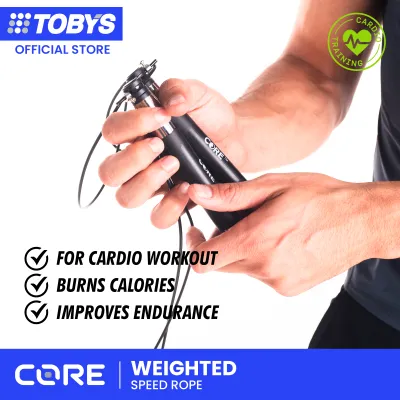
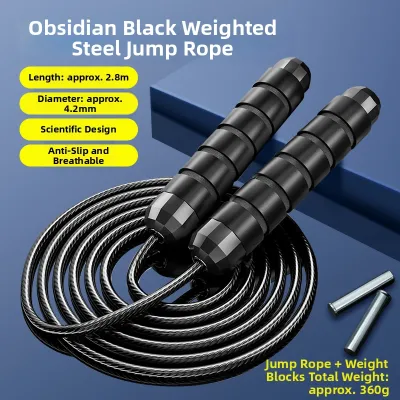
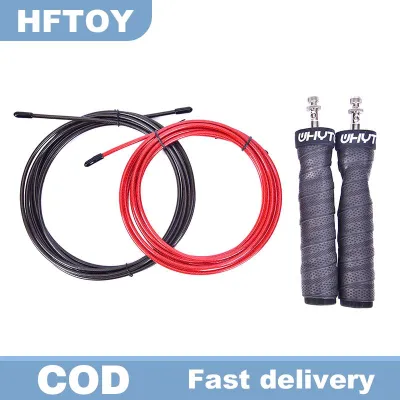
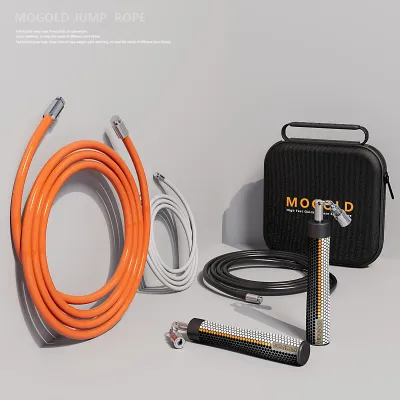
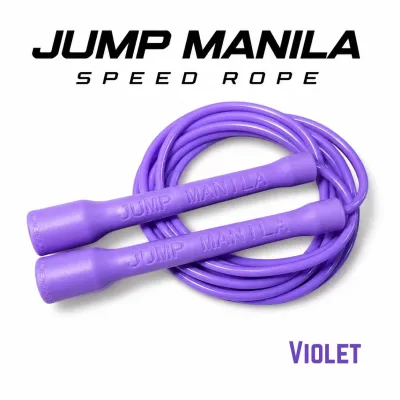
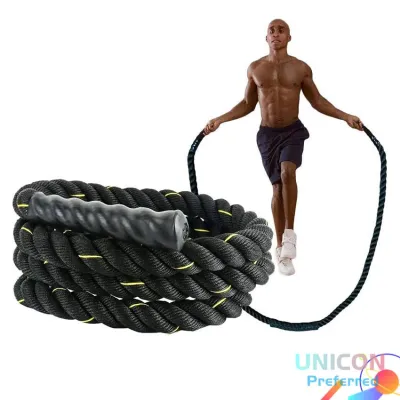
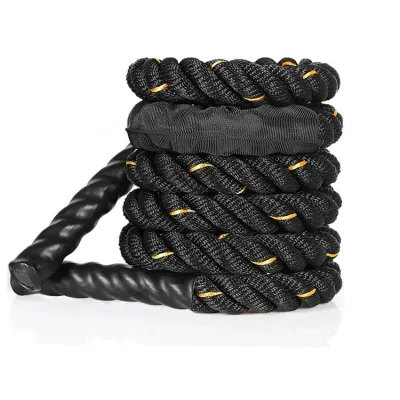
Prices are valid at publication and may change. Please refer to the product page for the latest price.
Your current fitness level and joint health must also play a critical role in this decision. Jumping rope is a high-impact activity that puts repetitive stress on your ankles, knees, wrists, and shoulders. If you are recovering from a joint injury or have sensitive wrists, the added resistance of a heavy rope might exacerbate discomfort, whereas a lightweight speed rope requires less joint torque but demands faster reflexes.
Additionally, consider whether your immediate focus is on skill acquisition or high-intensity interval training (HIIT). Learning complex jump patterns, timing, and rhythm requires a different sensory experience than pushing through a short, explosive cardio circuit. By defining these priorities early, you can avoid buying a tool that sits unused in your gym bag.
When to Choose a Weighted Jump Rope
A weighted jump rope is an excellent choice if you want to increase the physical demand on your upper body and improve your overall muscular endurance. When exploring these ropes, it is important to understand how the weight is distributed. Some models feature heavy handles with removable weights, while others incorporate the weight directly into the cable itself. According to manufacturer descriptions, handle-weighted ropes place more emphasis on wrist and forearm strength, whereas cable-weighted ropes distribute the resistance throughout the entire arc of the swing, engaging your shoulders, upper back, and core more dynamically.

This distributed resistance makes the weighted rope highly effective for building shoulder and forearm muscle endurance during longer, sustained training sessions. Because the rope moves slower due to its mass, you have to apply continuous force to keep it in motion, which keeps your upper body muscles under tension for the duration of the exercise.
For many users, the added weight provides valuable tactile feedback. As the heavy cable rotates around your body, you can easily feel its position in the air, which helps you time your jumps more accurately. This physical feedback can be highly beneficial for maintaining a steady rhythm, especially if you struggle with the timing of lighter ropes.
However, using a weighted rope requires strict attention to your body’s signals. The increased resistance puts additional strain on your wrists, elbows, and shoulders. You must check your joint comfort throughout your workout and stop immediately if you experience any sharp pain, persistent strain, or unusual joint fatigue. Equipment cannot replace proper joint preparation and gradual conditioning.
When to Choose a Regular Speed Rope
If your training goals center on speed, agility, and pure cardiovascular conditioning, a regular speed rope is the superior tool. These ropes typically feature lightweight coated wire or thin PVC cables designed to cut through the air with minimal resistance. This lightweight construction allows you to maximize rotation speed, making it possible to perform advanced jump rope skills such as double unders, crossovers, and rapid footwork variations.
Using a speed rope correctly relies heavily on efficient technique. Instead of swinging your entire arms to move the rope, proper form dictates using quick, subtle wrist flicks to keep the cable spinning. This minimizes energy waste, allowing you to sustain high-intensity cardio sessions for longer periods without your shoulders giving out before your lungs do.
These characteristics make speed ropes the ideal choice for boxing conditioning, cross-training, and high-intensity interval training (HIIT) where rapid heart rate spikes are the goal. They are highly portable, easy to pack, and allow you to transition quickly between jumping and bodyweight exercises during a fast-paced circuit.
However, beginners should be prepared for a steeper learning curve when starting with a speed rope. Because the thin cable is incredibly light, it provides very little tactile feedback as it rotates. Without being able to feel the rope’s position clearly, beginners often struggle with timing, leading to frequent trips and frustration during the initial learning phase.
Essential Specifications to Verify Before Buying
To ensure your selected rope fits your body and your training environment, you must verify several physical attributes and specifications before making a purchase.
Sizing and Adjustability: A rope that is too long will drag excessively on the ground, while a rope that is too short will clip your feet. To measure the correct length, stand on the center of the cable with one foot and pull the handles upward; they should reach your armpits. Check the product specifications to ensure the rope features an adjustable mechanism—such as thumb screws or adjustable end caps—so you can customize the length to your height.
Handle Ergonomics: Your grip is the primary point of contact with the rope. Evaluate the handle’s texture, thickness, and material to ensure comfort and slip resistance. In warm, humid climates, sweat can quickly make smooth plastic handles slippery, leading to a loss of control. Look for handles wrapped in textured grip tape, contoured foam, or ribbed rubber to maintain a secure hold during intense workouts.
Surface Compatibility: Matching the cable material to your workout surface is essential to prevent premature wear and tear. Coated wire cables are highly durable on indoor gym mats or rubber flooring but can fray rapidly if used directly on outdoor concrete or asphalt. If you plan to jump outdoors, verify that the rope is made of thick PVC or features a protective outdoor sleeve to shield the inner cable from abrasive surfaces.
Weight Verification: Do not assume a rope’s weight based solely on its visual thickness or the size of its handles. Always rely on the product labels and manufacturer specifications for the exact weight in ounces or grams. This ensures you know exactly how much resistance you are adding to your routine, allowing you to progress safely without overloading your joints.
Frequently Asked Questions (FAQ)
Can I use a weighted jump rope for cardio?
Yes, you can use a weighted jump rope for cardiovascular training, as the added resistance forces your heart and lungs to work harder to support your working muscles. However, because your shoulders, forearms, and grip must work continuously to swing the heavier weight, upper body fatigue may cause you to stop your workout before you reach your peak cardiovascular capacity. To get the most out of your training, consider alternating between weighted and regular ropes within your routine, allowing your upper body to recover while keeping your heart rate elevated.
Is a weighted jump rope better for beginners?
A weighted jump rope can be highly beneficial for beginners because the heavier cable moves at a slower pace and provides clear tactile feedback, making it easier to feel where the rope is and time your jumps. This physical awareness helps reduce the frequency of tripping over the cable. However, because a heavy rope can encourage poor mechanics—such as swinging the arms widely instead of using the wrists—beginners should transition to a lighter rope as soon as they grasp the basic timing to develop proper, efficient wrist mechanics.

Community discussion
Share your experience or ask a question. Comments are reviewed before publication.