
A high-quality running belt bag for women is defined by its ability to remain completely stable against the body while protecting essential gear from moisture, friction, and wear. Unlike casual waist packs, a dedicated running belt must withstand continuous vertical oscillation and high-intensity movement without riding up, chafing the skin, or losing its elasticity over time. Finding the right balance between storage capacity and a streamlined profile requires looking closely at material composition, hardware durability, and anatomical fit adjustments.
In tropical climates where high humidity and heavy sweating are constant factors, a running belt must also excel at moisture management. Standard fabrics can quickly become waterlogged, adding unnecessary weight and causing the belt to sag or slip. By understanding the key construction markers and design features of premium running gear, you can select a belt bag that supports your training routine and keeps your valuables secure across every kilometer.
Identifying Durability and Construction in Running Belts
The foundation of any durable running belt lies in its fabric composition and its ability to recover its shape after being stretched. High-quality belts typically utilize a blend of high-density nylon or polyester combined with elastane or spandex. When evaluating a belt, check the product specifications or inner labels for a high percentage of elastane, which provides the necessary stretch to accommodate bulky items while ensuring the band snaps back to its original shape. Lower-grade materials often stretch out permanently after a few runs, leading to a loose fit that causes the bag to bounce uncontrollably.
Products mentioned in this guide
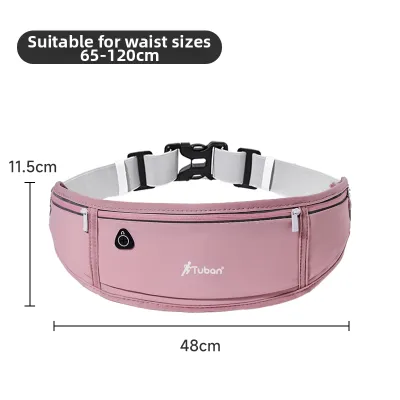
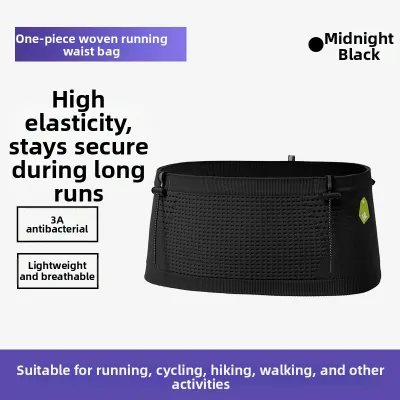

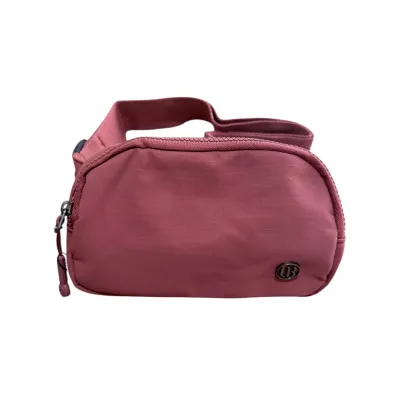
Prices are valid at publication and may change. Please refer to the product page for the latest price.
To test stretch recovery before committing to a purchase, observe how the fabric behaves when pulled to its limit. Premium fabrics feel dense and offer firm resistance, immediately returning to their original dimensions without leaving wavy or distorted edges. In contrast, cheap fabrics often feel thin, overly loose, and slow to snap back. This material resilience is especially critical in humid environments, where moisture can accelerate the breakdown of low-quality elastic fibers.
Zipper mechanisms are another common failure point on running gear, making them a primary indicator of overall construction quality. Look for zippers equipped with auto-lock sliders, which feature a small internal pin that prevents the zipper from sliding open under the vibration of your stride. Additionally, high-quality running belts often feature water-resistant polyurethane coatings over the zipper teeth or integrated fabric storm flaps. These design elements help shield your phone and car keys from sudden tropical downpours and heavy perspiration.
Examine the seam construction closely, paying attention to high-tension areas where the pouch connects to the waistband. Durable running belts utilize flatlock stitching or reinforced bartack stitches—dense, zig-zagging stitch patterns—to distribute weight and tension evenly. Raw or single-stitched edges are highly susceptible to fraying and tearing under the stress of carrying modern, heavier smartphone models. Choosing a belt with clean, bound, or heat-sealed seams minimizes the risk of structural failure and prevents rough thread edges from rubbing against your skin or technical running apparel.
Aligning Storage and Accessibility With Your Running Routine
Your daily running mileage and the specific gear you carry should dictate the storage layout of your belt bag. A well-designed running belt features dedicated compartments that prevent items from shifting or damaging one another during a run. For instance, carrying a heavy set of keys in the same pocket as a large smartphone can easily lead to scratched screens or cracked glass. Look for belts that offer separate, zippered compartments or internal mesh dividers to keep your gear organized and immobilized.

When evaluating pocket dimensions, do not rely solely on generic compatibility claims like “fits most smartphones.” Measure your phone while it is inside its daily protective case, as rugged or thick cases can significantly alter the overall dimensions and depth required. A high-quality belt pocket should allow you to slide your phone in and out smoothly without forcing the zipper or overstretching the fabric seams. If you frequently need to access your phone to check navigation or change music, prioritize external, quick-access stretch pockets with secure top flaps.
For longer training runs, hydration integration becomes a key consideration. Some running belts feature dedicated holsters designed to carry soft flasks or small water bottles. If you choose a hydration-compatible belt, verify how the design distributes the weight of the liquid. Holsters that position the flask horizontally or at a 45-degree angle across the lower back generally offer better weight distribution, minimizing the rotational bounce that occurs when carrying fluid on one side of the body.
Keep in mind that carrying water significantly increases the load on your waistband. A high-quality hydration belt will feature reinforced backing panels to prevent the bottle from pressing uncomfortably into your spine or hips. If your routine only consists of short, neighborhood runs, opting for a ultra-slim, single-pocket belt without hydration sleeves will keep your gear lightweight and highly streamlined.
Ensuring a Secure, Bounce-Free Fit Across Different Paces
Achieving a secure, bounce-free fit requires a waistband design that conforms to your anatomy and stays anchored during rapid movement. Wider waistbands, typically measuring between three to five centimeters, are highly effective at distributing pressure across your hips or waist. This wider surface area prevents the belt from cutting into your midsection and reduces the localized friction that leads to painful chafing over long distances.
To prevent the belt from riding up onto your waist during a run, look for interior stability features. Many premium running belts incorporate thin, hypoallergenic silicone grip strips or textured neoprene backings on the inner side of the band. These materials grip the smooth, synthetic fabrics of running tights and shorts, keeping the belt firmly anchored in your preferred position. Without these grip elements, lightweight belts tend to migrate upward toward the narrowest part of your waist, causing the pocket to bounce against your stomach.
Adjustability mechanisms play a crucial role in maintaining a customized fit as your body moves. Heavy-duty plastic tension buckles allow for precise micro-adjustments, enabling you to tighten the belt on the go as your hydration flasks empty or your load lightens. However, ensure the buckle profile is flat and smooth to prevent it from digging into your back when you perform floor stretches or wear a hydration vest over the belt. Alternatively, some tubular compression belts slip on over the feet and rely entirely on high-elastane fabric compression, which eliminates buckles entirely but requires highly accurate sizing.
To find your correct size, always refer to the manufacturer’s specific sizing chart rather than relying on your standard clothing size. Use a flexible measuring tape to measure the circumference of your body at the exact height you plan to wear the belt—whether that is low on your hips or high around your natural waist. If your measurements fall between two sizes, consider how you plan to load the belt; a heavily loaded belt often fits more securely in the smaller size to ensure adequate compression, while a lightly loaded belt may be more comfortable in the larger size.
Building Your Shortlist: Final Checks Before You Buy
Before finalizing your purchase on any online marketplace, take the time to validate product claims by analyzing user feedback. When reading customer reviews, use the search or filter functions to look for specific keywords such as “bounce,” “chafing,” “zipper failure,” or “humidity.” Pay close attention to reviews written by runners who train in similar climates or cover comparable distances, as their experiences will provide realistic insights into how the materials hold up under heavy sweat and repeated washing.
Cross-referencing official product descriptions with actual user-uploaded photos is an excellent way to confirm the true proportions and material texture of the belt. Promotional images are often styled to make pockets appear larger or fabrics look thicker than they are in reality. User photos can help you verify if the fabric has a premium, dense weave or if it appears thin and translucent. Additionally, check if the color of the fabric matches the listing, especially if you prefer high-visibility neon shades for safety during early morning or evening runs.
Finally, verify the seller’s return and exchange policies regarding fit-related issues. Because a running belt must fit snugly to function correctly, there is always a slight chance you may need to swap sizes after trying it on at home. A reputable seller or brand should offer a clear, hassle-free exchange window for unused items with the tags still attached. Confirming these details beforehand ensures you can shop with confidence and secure a high-quality training accessory that will support your fitness journey for seasons to come.
Frequently Asked Questions (FAQ)
How do I clean a running belt bag without ruining the elastic?
To preserve the elastic fibers and technical coatings of your running belt, hand-washing is highly recommended. Fill a basin with cool water (under 30°C) and add a small amount of mild, liquid sports detergent. Gently submerge the belt and agitate it by hand, paying extra attention to areas that contact your skin directly. Avoid using fabric softeners or bleach, as these chemical agents coat synthetic fibers and rapidly degrade the elastane’s stretch recovery properties.
After washing, rinse the belt thoroughly with clean, cool water to remove all soap residue. Gently squeeze out excess water without wringing or twisting the fabric, which can warp the internal elastic bands. Always air-dry your running belt flat or hang it up in a well-ventilated indoor space out of direct sunlight. Never place a running belt in a mechanical dryer, as the high heat will melt the delicate elastic fibers and damage any water-resistant polyurethane coatings.
Can a running belt bag safely hold a large smartphone during sprints?
Yes, a high-quality running belt can safely secure a large smartphone during high-intensity sprints, provided the belt is sized correctly and positioned properly. To minimize movement, place your phone in the pocket that sits closest to your center of gravity, which is typically flat against your lower back or lower abdomen. Ensure the pocket fabric provides sufficient compression to hold the phone snugly against your body, preventing it from shifting inside the pouch.
Before starting a high-speed workout, perform a quick warm-up test consisting of a few jumping jacks or a short jog in place. If you feel the phone bouncing or sliding, adjust the waistband to be slightly tighter, or reposition the belt lower on your hips where the skeletal structure provides natural stability. If the belt continues to bounce despite adjustments, the pocket may be overloaded, or the elastic fabric may have lost its structural tension, indicating it is time to resize or upgrade your gear.

Community discussion
Share your experience or ask a question. Comments are reviewed before publication.