
Finding the right fitness equipment for a compact living space requires a careful balance of functionality and floor area. In a typical Philippine condominium unit, where studio and one-bedroom layouts often range from 22 to 35 square meters, every square centimeter of floor space is highly valuable. A manual walking pad treadmill offers an excellent solution for staying active at home without relying on electricity or taking up the massive footprint of a traditional motorized treadmill. To determine what size manual walking pad fits in your small condo, you must look beyond the basic product photos and analyze the physical dimensions, safety clearances, and storage requirements of the machine.
Generally, a manual walking pad with an overall footprint of approximately 120 centimeters in length and 50 to 60 centimeters in width is the ideal size for small condo units. This size provides a sufficient walking surface for most strides while remaining compact enough to store under a bed, behind a sofa, or vertically in a closet. However, selecting the right machine involves more than just matching these base measurements to an open patch of floor. You must also account for your own body size, your walking stride, and the physical constraints of your specific condo layout to ensure a safe and comfortable workout environment.
Assessing Your Condo Space and Clearance Requirements
Before browsing online catalogs or visiting fitness equipment showrooms, you must accurately map out your available condo space. Start by identifying a dedicated workout zone or a multi-use area that can temporarily accommodate the machine. Use a physical tape measure to outline the potential footprint on your floor rather than relying on visual estimation, as furniture arrangements and wall angles can easily distort your perception of available space.
Products mentioned in this guide
![[COD] Foldable Manual Home Treadmill with Adjustable Slope LED Display Anti-Slip Running Belt Free Twist Disc & Resistance Rope Space Saving Walking Machine for Home Fitness Exercise](https://img.lazcdn.com/g/p/1446617c7dcf63717d1a1640b68a647e.jpg_400x400q80.jpg_.webp)
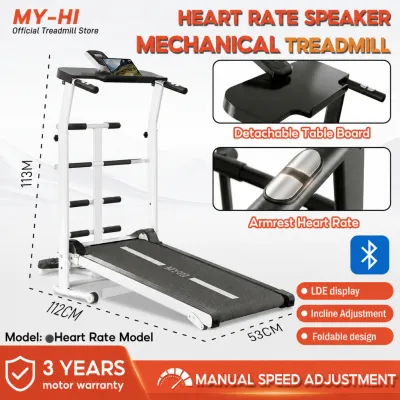
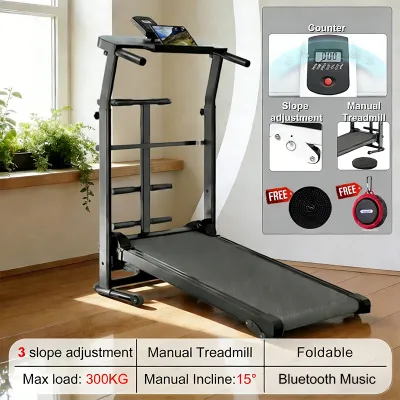
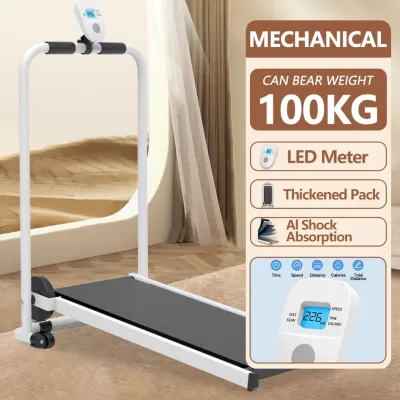
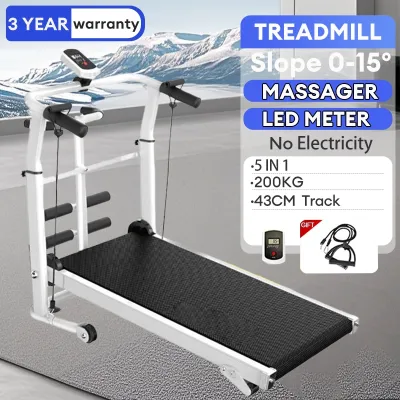
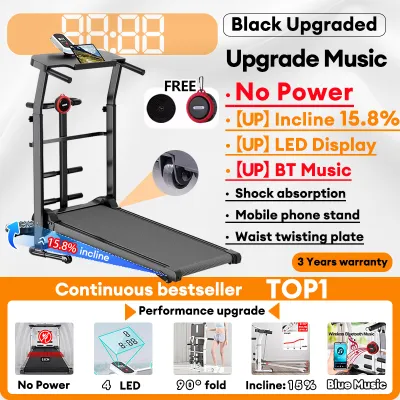
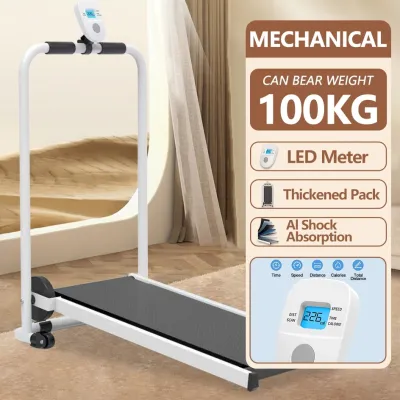
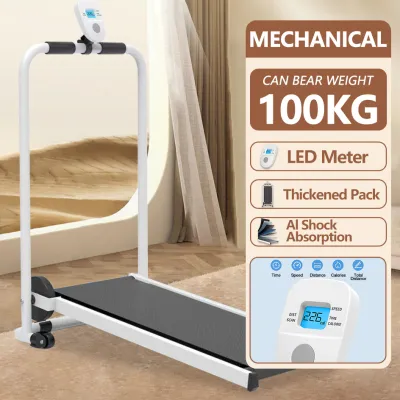
Prices are valid at publication and may change. Please refer to the product page for the latest price.
Safety clearance is a critical factor that many condo residents overlook when planning a home gym setup. Manufacturers generally recommend leaving at least 0.5 to 1 meter of clear, unobstructed space directly behind the machine. This rear clearance serves as a vital safety buffer in case you lose your balance, slip, or need to step off the moving belt quickly. Additionally, you should maintain at least 0.5 meters of open space on both sides of the walking pad to allow for easy mounting, dismounting, and natural arm movement.
Another essential step in the planning process is evaluating the delivery and transport pathways within your condominium building. A manual walking pad might be highly compact once unfolded, but it will arrive in a large, heavy shipping box that must navigate tight spaces. Measure the width and height of your building’s elevator doors, the angles of the hallway corners, and the clear opening of your unit’s main doorway to prevent delivery day complications.
Finally, consider the structural and surface characteristics of your condo’s flooring. Most modern high-rise buildings easily support the weight of a manual walking pad, which typically ranges from 15 to 30 kilograms. However, the concentrated pressure from the machine’s feet can damage delicate flooring materials like laminate, vinyl planks, or engineered wood. Identifying your floor type beforehand allows you to select the appropriate protective accessories, such as a high-density equipment mat, to distribute the weight evenly.
Understanding Manual Walking Pad Dimensions and Footprints
To make an informed purchase, you must understand how to interpret the dimensions listed on equipment specification sheets. The most important distinction to make is between the total physical footprint of the machine and the actual usable walking surface. The walking belt dimensions—often referred to as the running area—represent the space where your feet actually make contact. For a comfortable walking stride, a belt width of at least 40 centimeters and a belt length of 100 centimeters are standard entry-level dimensions, but the overall machine frame will always be larger.

The total footprint of the manual walking pad treadmill includes the frame, side rails, front roller housings, and any folding mechanisms. A machine with a 100-centimeter walking belt may actually measure 120 to 130 centimeters in total length once you account for the structural end caps and front housing. When planning your layout, always use the total unfolded dimensions of the machine rather than the belt dimensions to ensure the unit physically fits within your designated workout zone.
It is also helpful to compare the spatial profiles of flat manual walking pads with curved manual treadmills. Flat manual walking pads are designed specifically for low-intensity walking and light jogging, featuring a low-profile frame that lies close to the ground. Curved manual treadmills, on the other hand, are built for high-performance running and athletic training. Because of their curved deck design and heavy-duty frames, curved treadmills have a significantly larger vertical and horizontal footprint, making them generally unsuitable for small studio apartments.
Additionally, pay close attention to how motorless designs affect the overall shape and height of the machine. Because manual walking pads do not contain a heavy electric motor, they lack the bulky front hood found on motorized treadmills, allowing for a sleeker and more uniform profile. However, some manual models feature fixed or folding handlebars that extend upward to provide stability while walking. You must verify whether these handlebars fold completely flat against the frame or if they require manual disassembly, as this will directly impact both your active workout space and your storage options.
Layout Strategies and Storage Solutions for Small Units
Integrating fitness equipment into a small condo requires creative layout strategies to maintain a clean, uncluttered living environment. One effective approach is to position your walking pad parallel to a main wall or directly behind a sofa. This placement helps the machine blend into the room’s existing lines, keeping the central floor area open for daily activities and social gatherings. If your condo has a multi-functional layout, placing the walking pad near a window or television can make your workouts more engaging without disrupting the room’s visual flow.
When selecting a manual walking pad treadmill, prioritize models that offer convenient folding mechanisms and built-in transport wheels. High-quality transport wheels located at the front of the frame allow you to easily tilt the machine and roll it across the floor without straining your back. This mobility is essential for daily use, as it allows you to quickly transition the walking pad from its active workout position to its designated storage spot in just a few seconds.
Before finalizing your purchase, measure the vertical clearance under your bed frame, sofa, or storage cabinets to identify potential flat storage locations. Many modern flat walking pads feature a folded height of 12 to 15 centimeters, which allows them to slide easily under standard furniture. However, you must check for any low-hanging support beams, center legs, or dust ruffles under your bed that could block the machine from sliding completely out of sight.
If under-furniture storage is not an option, evaluate the feasibility of vertical storage. Some manual walking pads are designed with built-in feet or wall-leaning brackets that allow them to stand upright against a wall or inside a utility closet. Storing the machine vertically is an excellent way to reclaim floor space, but you must ensure the unit is structurally stable and cannot be easily knocked over. If you plan to lean the machine against a wall, verify if the manufacturer recommends using a safety strap or wall anchor for added security.
Common Sizing Mistakes and Safety Boundaries
Avoiding common spatial planning mistakes is crucial for maintaining both a safe workout environment and a comfortable home life. The most frequent error is failing to leave adequate rear clearance behind the walking pad. Because manual walking pads rely entirely on your physical movement to drive the belt, any sudden loss of balance requires immediate space to step off safely. If the rear of the machine is positioned directly against a wall, a desk, or a glass balcony door, you risk colliding with these hard surfaces if you slip or fall.
Another common mistake is blocking essential pathways, emergency exits, or balcony doors with your fitness equipment. Even if a walking pad fits perfectly in a specific corner, it should never obstruct the natural flow of traffic through your condo. Blocking access to your main entrance, bathroom, or kitchen creates a daily inconvenience and a serious safety hazard during an emergency evacuation. Always ensure that your active workout zone leaves a clear, unobstructed path to all exits.
Do not assume that all models advertised as “foldable” or “compact” will automatically fit under your existing furniture. Many buyers purchase a walking pad based on marketing claims, only to find that their bed frame is a few centimeters too low or has center support legs that prevent the machine from sliding underneath. Always take precise measurements of your furniture’s clearance height and compare them directly to the folded height specifications provided in the manufacturer’s user manual.
Finally, remember to account for the space required for handlebars, console mounts, and your own body movement when the machine is in use. While the base of the walking pad may fit within a tight space, your arms will naturally swing as you walk, and your upper body may lean forward. If the machine features a console or handlebar that tilts outward, it can easily bump into wall-mounted televisions, shelves, or decorative items. Ensure your workout zone has plenty of upper-body clearance to prevent accidental damage to your home decor.
Frequently Asked Questions (FAQ)
Can I use a manual walking pad on a condo balcony?
Using a manual walking pad on a condo balcony is generally not recommended due to environmental factors. The tropical climate in the Philippines brings high humidity, salt air in coastal areas, and sudden rain showers, all of which can quickly rust the steel frame, degrade the walking belt, and damage the internal bearings of the machine. Furthermore, many condominium building administrations have strict rules regarding the placement of fitness equipment on balconies for safety and aesthetic reasons. If you do choose to use the walking pad on a covered balcony, you must verify that the floor has a proper drainage slope to prevent water from pooling around the machine, and you should always store the unit indoors immediately after your workout.
Do I need a special mat for a manual walking pad in a small unit?
Yes, using a dedicated equipment mat is highly recommended when setting up a manual walking pad in a small condo unit. A high-density rubber or PVC mat serves multiple important functions: it protects your laminate, vinyl, or tile flooring from scratches and sweat, prevents the machine from sliding during use, and helps dampen the vibration and structural noise generated by your footsteps. This noise reduction is particularly important in high-rise buildings to avoid disturbing your downstairs neighbors. When planning your layout, remember to measure the dimensions of the mat as well, as it will slightly expand the total floor area required for your workout setup.

Community discussion
Share your experience or ask a question. Comments are reviewed before publication.