
When choosing a Cimoco diving flashlight, verifying the technical specifications is the most critical step to ensure safety and visibility underwater. Diving environments present unique physical challenges, including rapid light absorption, high hydrostatic pressure, and corrosive saltwater. Relying solely on general marketing terms can lead to equipment failure at depth, compromising your dive plan. By carefully analyzing the specification sheet, you can select a tool that matches your specific diving style, skill level, and environmental conditions.
Understanding Brightness and Beam Angle
Evaluating the brightness of an underwater light requires looking beyond the headline lumen number. Manufacturers often list peak lumens, which represent the maximum output the LED can produce for a brief period. However, high-output LEDs generate significant heat, causing the flashlight’s internal circuitry to step down the brightness to prevent damage. You should check the specifications for the sustained or rated lumen output on medium and low settings, as these are the modes you will likely use for the majority of your dive.
The beam angle is equally important and must match your primary underwater activities. A narrow beam, typically between 5 and 15 degrees, concentrates light into a tight, intense spotlight. This is highly effective for cutting through murky water, exploring deep crevices, and signaling your dive buddy. Conversely, a wide beam of 60 to 120 degrees distributes light evenly across a larger area. Wide beams are ideal for general night navigation and underwater photography, as they eliminate harsh hot spots that can ruin photos or videos.
Products mentioned in this guide
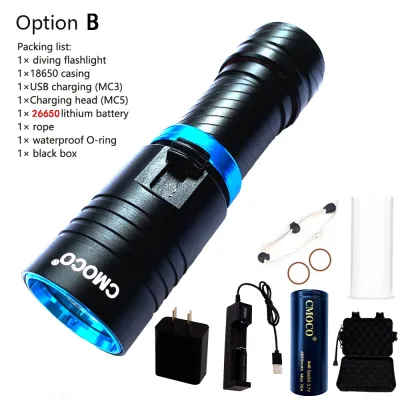
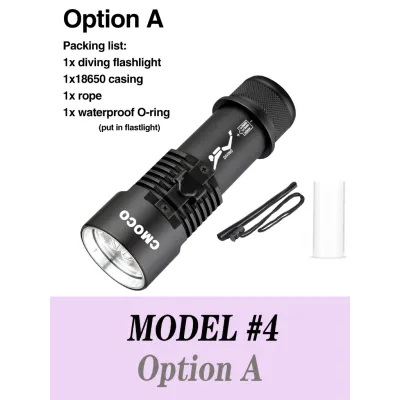
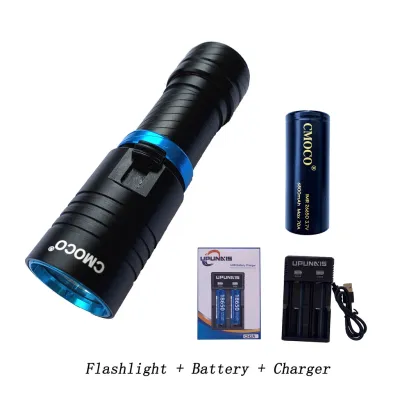
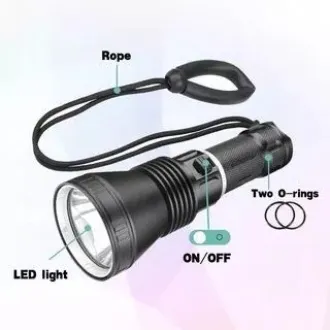
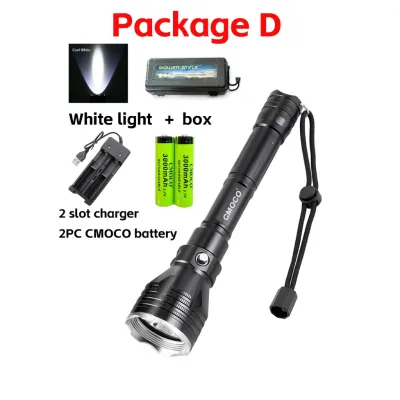
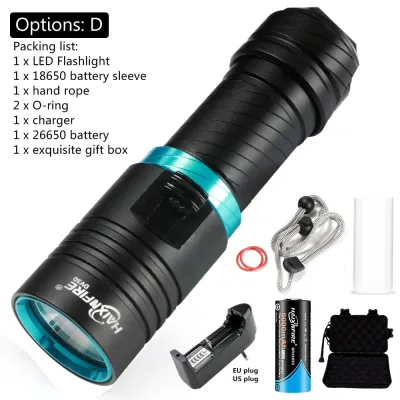
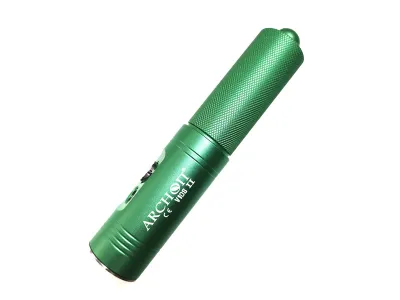
Prices are valid at publication and may change. Please refer to the product page for the latest price.
Color temperature, measured in Kelvin (K), determines how colors appear underwater. Water absorbs red and orange light first, leaving deep dives looking monochromatic and blue. A flashlight with a warm color temperature (around 4000K to 5000K) helps restore these lost warm tones, making it excellent for marine life observation. Cool white light (6000K and above) appears brighter to the human eye and penetrates further through the water, but it can cause backscatter by reflecting off suspended particles.
Decoding Depth Ratings and Waterproof Standards
Water sports equipment requires strict adherence to safety limits, and a diving flashlight is no exception. Before purchasing, you must distinguish between basic water resistance and true pressure resistance. Flashlights labeled as splash-proof or water-resistant are only suitable for surface rain or shallow snorkeling. For scuba diving, you must verify that the light has a dedicated depth rating, typically expressed in meters, indicating it can withstand sustained hydrostatic pressure.

Never plan a dive that approaches the absolute maximum depth rating of your flashlight. Dynamic movements, rapid descents, and water currents can create localized pressure spikes that exceed static test conditions. A reliable safety margin is to select a flashlight rated for at least double your planned maximum depth. To verify these claims, look for official waterproof testing standards, such as the IPX8 rating, on the specification sheet. Additionally, check if the flashlight utilizes a double O-ring sealing system, which provides a redundant barrier against leaks.
Evaluating Battery Life and Power Sources
Reliable power management is a cornerstone of safe diving, especially during night dives. When reviewing battery specifications, compare the advantages of rechargeable lithium-ion cells against standard disposable batteries. Rechargeable batteries, such as 18650 or 26650 lithium-ion cells, offer high energy density and maintain a consistent voltage output throughout most of the discharge cycle. Disposable alkaline batteries are convenient for remote travel where charging is unavailable, but they suffer from rapid voltage drops and shorter runtimes.
Analyze the runtime specifications across all available brightness modes. Be aware that water temperature directly impacts battery performance. Cold water accelerates chemical reactions inside the battery, reducing its overall capacity and shortening the expected runtime. While tropical waters are generally warm, deep thermoclines can still expose your gear to sudden temperature drops. Always plan your dive with a conservative battery buffer, and look for specifications that mention a low-battery warning system, such as a color-changing LED indicator.
Build Quality, Materials, and Controls
The physical construction of a diving flashlight determines how well it survives the harsh marine environment. Saltwater is highly corrosive to metals, making material selection a primary concern. Look for housings constructed from hard-anodized aluminum (Type III) or high-impact engineering plastics. Anodized aluminum provides excellent heat dissipation for the LED while resisting scratches and corrosion, whereas plastic bodies are lightweight and completely immune to rust.
The mechanism used to control the flashlight must be reliable and easy to operate under water. Magnetic slide or push-button switches are highly preferred because they do not require a physical shaft to penetrate the flashlight body, eliminating a common point of water leakage. Ensure the switch design allows for effortless one-handed operation, even when wearing thick neoprene dive gloves. Finally, check the specifications for a secure, robust lanyard attachment point to prevent losing the light if dropped.
Matching Specs to Your Diving Profile
To make the right purchase, you must align the flashlight’s specifications with your specific diving activities. Snorkelers and shallow-water free divers generally only need a compact, lightweight light with a modest output of 300 to 500 lumens and a basic IPX8 rating. For these activities, high-end technical specifications are unnecessary and only add unwanted weight and cost to your gear setup.
Recreational scuba divers who participate in daytime reef dives or occasional night dives should look for a versatile mid-range light. A brightness of 1000 to 1200 lumens, a depth rating of 60 to 100 meters, and a medium beam angle offer the best balance of performance. Before taking any new flashlight on a dive, always cross-reference the retail specifications with the official user manual. Perform a shallow-water test in a swimming pool or a shallow beach entry before your first deep dive to verify the integrity of the seals.
Frequently Asked Questions (FAQ)
Can I use a diving flashlight for regular camping or hiking?
While you can physically use a diving flashlight on land, it is not recommended for extended periods. Diving lights are designed to be cooled by the surrounding water; using them on high-power modes on dry land can cause rapid overheating, potentially damaging the LED or the internal battery. Furthermore, their fixed, concentrated beam angles lack the adjustable focus or wide flood options typical of dedicated camping headlamps.
How should I rinse and store the flashlight after a saltwater dive?
After every saltwater dive, soak the flashlight in clean, fresh water for several minutes to dissolve salt deposits. Operate the switch multiple times while submerged to flush out trapped salt crystals and sand from the moving parts. Dry the exterior completely with a soft towel before opening the battery compartment. For long-term storage, remove the batteries to prevent damage from potential internal leakage, and apply a thin layer of silicone grease to the O-rings to keep them pliable.

Community discussion
Share your experience or ask a question. Comments are reviewed before publication.