
Starting your fishing journey can feel overwhelming when faced with aisles of specialized gear, which is why a complete fishing rod set is an appealing entry point. A well-designed beginner bundle eliminates the guesswork of matching a rod with a compatible reel, line, and basic tackle. However, not all pre-packaged sets are created equal, and choosing the wrong one can lead to tangles, broken parts, and early frustration on the water.
To get the most out of your investment, a beginner should look for a set that prioritizes a durable, medium-power rod, a smooth spinning reel, and a small selection of high-quality terminal tackle rather than a box filled with cheap plastic novelties. By focusing on the quality of the core components, you ensure that your gear remains reliable as you develop your casting and fish-handling skills.
Essential Components of a True Complete Set
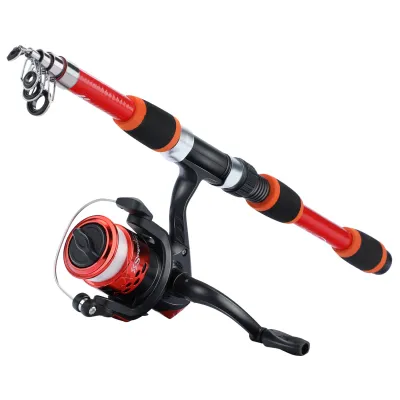
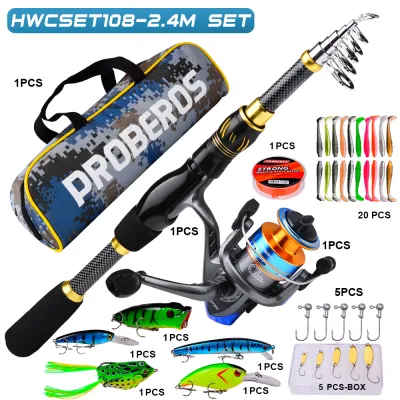
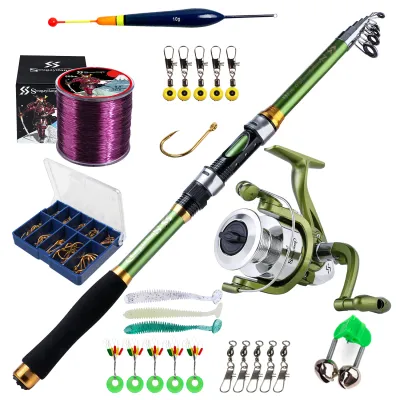
When evaluating a fishing rod complete set, the first step is verifying that the package contains all the baseline hardware required to start fishing immediately. A true complete set should not require a secondary trip to the tackle shop just to get your line in the water. The core of the bundle is the rod and reel pairing, which must be accompanied by a suitable fishing line, either pre-spooled onto the reel or included as a separate spool in the box.
Products mentioned in this guide
![[In Stock]Sougayilang Fishing Rod Set Full Set 1.8mTelescopic Fishing Rod and Spinning Fishing Reel and Fishing Accessories Fishing Rod Complete Set](https://img.lazcdn.com/g/p/e37753596223983276174dfaf93f2cb3.jpg_400x400q80.jpg_.webp)
![[COD]Fishing Rod and Reel Set Fishing Rod Set Full Set Fish rods 1.8m Telesscopic Fishing Rod Fishing Rod and Reel Combos](https://img.lazcdn.com/g/p/dd36fe77f96794e78e35359c533a3b87.jpg_400x400q80.jpg_.webp)
Prices are valid at publication and may change. Please refer to the product page for the latest price.
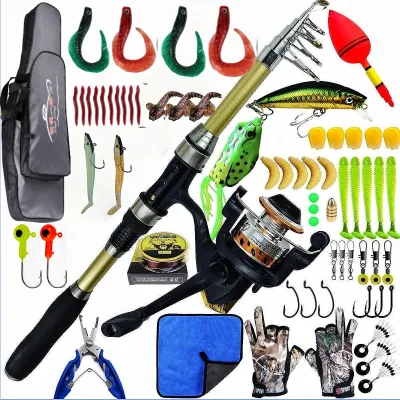
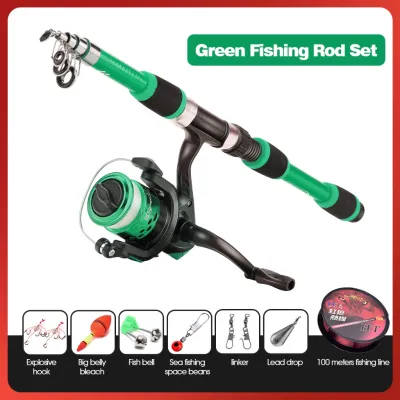
Beyond the rod and reel, the set must include essential terminal tackle to connect you to the fish. Look for a package that provides a modest but practical selection of hooks in various sizes, compatible sinkers or weights, and a few bobbers or floats. If the set includes artificial lures, they should be simple, versatile options like spoons or soft plastics rather than complex, highly specialized lures that require advanced retrieval techniques.
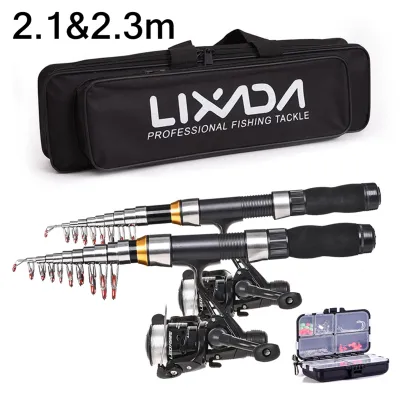
Finally, a high-value beginner set includes basic utility accessories that protect your gear and simplify your time on the water. A protective rod case, sleeve, or tube is highly beneficial for transporting your rod safely in a vehicle or storing it at home without risking guide damage. Simple tools, such as a basic line clipper or a small pair of pliers, are also incredibly useful additions that save you from struggling to cut tough monofilament line with your teeth or household scissors.
Evaluating the Rod and Reel for Beginner Usability
The rod and reel are the most critical parts of your set, and their specifications will directly impact how quickly you master casting and retrieving. For most beginners, a medium-power rod with a moderate or moderate-fast action is the most versatile and forgiving choice. Power refers to the rod’s resistance to bending, and a medium rating provides enough backbone to handle moderate-sized fish while remaining sensitive enough to feel gentle bites. Action describes where the rod bends; a moderate action bends throughout the top half of the rod, which helps cushion casting mistakes and prevents the hook from tearing out of a fish’s mouth.

When comparing rod materials, you will generally choose between fiberglass and graphite. Fiberglass is highly durable, flexible, and incredibly resistant to accidental impacts, making it an excellent, worry-free option for absolute beginners. Graphite, on the other hand, is lighter and much more sensitive, allowing you to feel subtle vibrations, though it is more brittle and prone to snapping if mishandled. Many modern beginner sets utilize a composite blend of both materials, offering a balanced compromise of durability and sensitivity.
For the reel, a spinning reel (often called an open-face reel) is highly recommended over a baitcasting reel for beginners. Spinning reels are intuitive to operate, less prone to the severe line tangles known as “backlashes,” and highly effective for casting lightweight baits. When inspecting the reel in a set, check for a smooth, adjustable drag system, which allows line to pull off the spool under tension when a strong fish fights. Additionally, ensure the reel has an instant anti-reverse feature, which prevents the handle from spinning backward and ensures solid hooksets.
Lastly, verify that the reel size matches the rod’s ratings. The rod blank will usually have specifications printed near the handle, indicating the recommended line weight (such as 6 to 12 pounds) and lure weight. The reel should be sized appropriately—typically a 2000 to 3000 size for general freshwater and light coastal fishing—to ensure the entire system feels balanced in your hands and casts smoothly without putting undue stress on the line.
Checking Material Quality and Build Indicators
You do not need specialized tools to assess the build quality of a bundled fishing set; a simple physical inspection can reveal whether a set is built to last or cheaply assembled. Start by closely examining the line guides, which are the metal rings secured along the length of the rod. The inner inserts of these guides should be perfectly smooth, ceramic, or polished metal, with no cracks, chips, or rough edges that could fray your fishing line. Ensure that the guides are aligned in a straight line from the reel seat to the rod tip, and check that the thread wraps securing them to the blank are coated in a smooth, protective epoxy.
Next, inspect the reel seat, which is the mechanism that clamps the reel to the rod handle. Insert the reel into the seat and tighten the locking nut; the reel should sit firmly with absolutely no wobble, play, or twisting. The locking nut should turn smoothly without skipping threads. For the handle grip, evaluate the material for comfort and slip resistance. High-density EVA foam and natural cork are the industry standards; both provide a comfortable, secure grip even when your hands are wet or covered in fish slime. Avoid hard, slick plastics that become difficult to hold when wet.
Finally, assemble the rod and reel completely and hold the setup at the grip as if you were preparing to cast. A well-designed set should feel balanced, meaning the weight is distributed comfortably near your hand rather than pulling heavily toward the tip of the rod. A tip-heavy setup will quickly fatigue your wrist and forearm during a long day of casting, making the sport feel like a chore rather than an enjoyable outdoor activity.
Common Pitfalls When Buying Bundled Fishing Gear
One of the most common traps beginners fall into is the “accessory trap,” where manufacturers pack a tackle box with dozens of low-quality items to make the bundle look incredibly generous. A set that boasts “over one hundred pieces” often consists of cheap, brittle plastic bobbers, tiny hooks that bend easily, and lures that do not swim correctly in the water. It is always wiser to choose a set that focuses its value on a high-quality rod and reel, even if it only comes with a handful of reliable hooks and sinkers that you will actually use.
Another red flag is unlabeled or missing specifications on the packaging. Reputable fishing brands clearly print the rod length, power, action, line rating, and reel gear ratio on the box or the rod blank itself. If a complete set only describes the rod as “strong” or “flexible” without providing specific ratings, it is highly likely a low-grade product made from substandard materials. Knowing these specifications is essential for selecting the correct replacement line and lures in the future.
Additionally, be cautious of the pre-spooled line that comes with many entry-level reels. While convenient, factory-installed line is often cheap monofilament that has sat tightly coiled on the spool in a warehouse for months or even years. This causes the line to develop “memory,” meaning it retains a coiled, spring-like shape when cast, leading to frequent tangles, knots, and reduced casting distance. If the line feels stiff, wiry, or easily kinks, it is highly recommended to strip it off and spool the reel with fresh, high-quality monofilament before your first outing.
Matching the Set to Your Target Fishing Environment
To ensure your complete set performs well, you must match its design to the specific environments you plan to fish. In the tropical climate of the Philippines, coastal and saltwater fishing are highly popular, but saltwater is incredibly corrosive to standard fishing gear. If you plan to fish along beaches, estuaries, or saltwater piers, you must look for a set specifically rated for saltwater use, featuring corrosion-resistant materials like stainless steel guides, anodized aluminum components, and sealed bearings in the reel. Standard freshwater gear will quickly rust and seize up if exposed to salt spray without immediate, meticulous cleaning.
The physical space of your fishing spot also dictates the ideal rod length. If you plan to fish along narrow, heavily vegetated riverbanks, mangrove edges, or under low-hanging tree branches, a shorter rod (around 5.5 to 6 feet) is much easier to maneuver and cast without snagging foliage. Conversely, if you are casting from an open sandy beach, a wide lake shore, or a spacious pier, a longer rod (6.5 to 7.5 feet) will allow you to cast much further to reach deeper water where fish may be holding.
Finally, consider the size of the fish you expect to catch. If you are targeting small freshwater species like tilapia or local gourami, a light to medium-light rod set with a thin, sensitive line is perfect. However, if you are targeting larger coastal species like barramundi, mangrove snapper, or small trevally, you will need a sturdy medium-heavy rod and a reel with a robust drag system to control the fish and prevent your line from snapping against underwater structures.
Frequently Asked Questions (FAQ)
Is it better to buy a complete set or build a custom setup?
For an absolute beginner, buying a complete set is almost always the better option because it eliminates the risk of purchasing incompatible components. A pre-matched bundle ensures that the reel size, rod power, and line weight are balanced to work together seamlessly, saving you time and preventing frustrating casting issues. Building a custom setup requires a deeper understanding of gear specifications and is best reserved for when you have gained hands-on experience and want to specialize in a specific fishing technique.
How do I maintain a beginner fishing rod set after use?
Proper maintenance is essential for extending the life of your gear, especially in humid, tropical environments. After every fishing trip, gently rinse the rod, reel, and line with clean, cool freshwater to remove salt, sand, and dirt, taking care not to blast water directly into the reel’s internal gears with high pressure. Wipe the gear down with a soft cloth and allow it to dry completely in a shaded, well-ventilated area before storing. Store your rod unjointed or vertically in a rod rack, and avoid leaving it in a hot car trunk, as extreme heat can weaken the rod’s fiberglass or graphite structure and degrade the fishing line.
What should I budget for a reliable first fishing rod complete set?
When setting your budget, focus on finding a balance where you are paying for structural quality rather than excessive accessories. A reliable, entry-level complete set in the Philippines typically ranges from ₱1,500 to ₱4,000. Within this range, you can expect a durable composite rod, a smooth spinning reel with a functional drag system, and a basic selection of usable tackle. Spending significantly less often results in fragile plastic components that break on your first few trips, while spending more is rarely necessary until you are ready to upgrade to specialized, technique-specific gear.

Community discussion
Share your experience or ask a question. Comments are reviewed before publication.