
Finding the right badminton racket is not about choosing the most expensive model; it is about finding a tool that acts as an extension of your arm. For players navigating the vibrant badminton scene in the Philippines, where local indoor courts can range from breezy, high-ceilinged arenas to humid, enclosed sports centers, selecting the correct gear directly impacts your performance and physical comfort. The ideal Alps badminton racket for you is one that matches your current physical capabilities, swing speed, and tactical role on the court. By aligning these personal factors with key racket specifications like weight, balance, and shaft flexibility, you can elevate your game, execute cleaner shots, and protect your joints from unnecessary strain.
Assess Your Skill Level and Court Strategy
Before browsing through different racket models, you must honestly evaluate your current skill level and how you prefer to play. Beginners typically focus on making consistent contact with the shuttle, learning the basic mechanics of the overhead clear, and developing fundamental footwork. At this stage, rallies are usually short, and the wrist and forearm muscles have not yet developed the specialized strength required for explosive, high-speed swings.
As you transition to an intermediate level, your shot consistency improves, and you begin to direct the shuttle with intent rather than just returning it. Intermediate players can reliably clear the shuttle from baseline to baseline, execute basic drop shots, and initiate smashes when presented with a high lift. Your rally endurance is higher, and you are beginning to understand court positioning, especially in doubles play.
Products mentioned in this guide
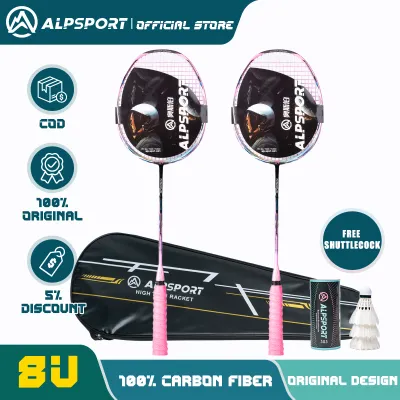
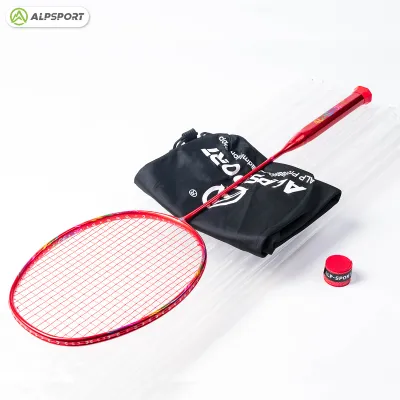
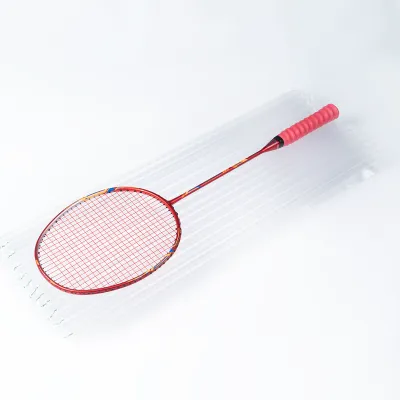
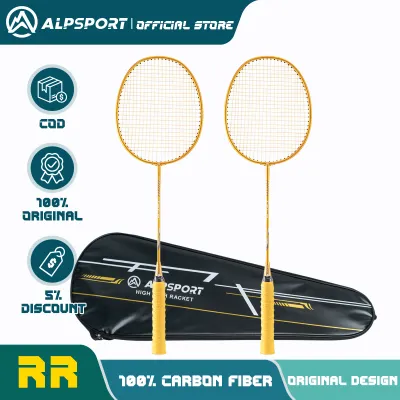
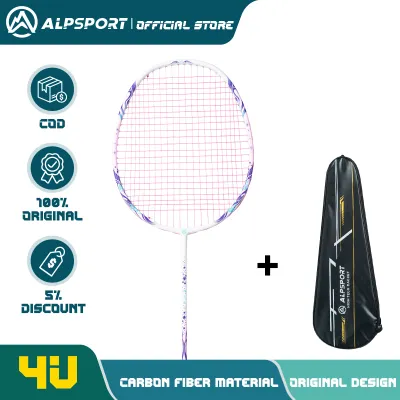


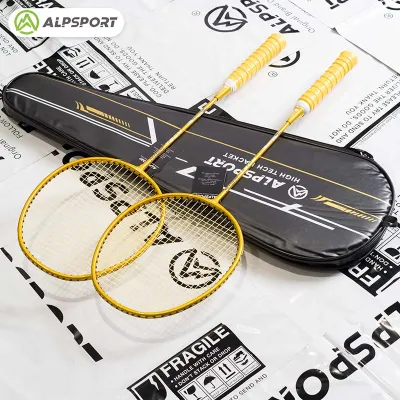
Prices are valid at publication and may change. Please refer to the product page for the latest price.
Advanced players possess highly refined stroke mechanics, rapid footwork transitions, and the ability to generate explosive power from a short, compact swing. At this level, tactical variation is key, and players can seamlessly switch between high-speed drives, deceptive drops, and powerful smashes while maintaining intense physical output over long, grueling matches.
Alongside your skill level, your court strategy—or playing style—dictates the kind of racket that will serve you best. Offensive players rely heavily on powerful smashes and steep downward angles to end rallies quickly, requiring gear that maximizes power transfer. Defensive players prioritize quick reactions, net control, and defensive lifts to exhaust their opponents and force errors. All-round players seek a balance, adapting their strategy dynamically based on their opponent’s weaknesses. Mismatching your racket to your actual skill level—such as a beginner using an ultra-stiff, head-heavy advanced racket—can severely hinder your technical progress and lead to chronic shoulder or wrist injuries.
Read Racket Specifications on Alps Models
To make an informed decision, you must understand how to read the technical specifications printed on the shaft or cone of Alps rackets. The first key metric is the weight category, which is universally designated by the “U” system. A higher number indicates a lighter racket frame; for example, a 5U racket is significantly lighter than a 3U racket. Lighter rackets (4U and 5U) offer exceptional maneuverability and faster swing speeds, making them ideal for quick defensive reactions and net play, whereas heavier rackets (3U) provide more mass and momentum to generate heavy, powerful smashes.

The balance point of a racket determines how its weight is distributed and is categorized into head-heavy, head-light, or even balance. Head-heavy rackets concentrate more mass toward the top of the frame, which acts like a hammer to deliver extra momentum during overhead smashes, though this comes at the cost of slower defensive recovery. Head-light rackets shift the weight toward the handle, allowing for lightning-fast racket face manipulation during quick drives and defensive lifts. Even-balance rackets distribute weight uniformly, offering a versatile middle ground that supports both attacking and defensive play styles.
Shaft flexibility is another critical factor that dictates how energy is transferred from your swing to the shuttle. Flexible shafts bend easily during a swing, storing elastic energy that whips forward to help players with slower swing speeds clear the shuttle deep into the opponent’s court. Stiff shafts, on the other hand, do not bend easily and require a highly developed, rapid swing speed to flex; however, they offer unmatched precision, control, and instantaneous energy transfer for players who can generate explosive power.
Lastly, pay attention to the grip size markings, usually denoted by a “G” followed by a number, where larger numbers represent thinner handles. In the tropical climate of the Philippines, high humidity levels lead to heavy sweating, making grip customization essential. Choosing a slightly smaller grip size (such as G5 or G6) gives you the flexibility to apply aftermarket overgrips, such as absorbent towel grips or tacky polyurethane wraps, to maintain a secure hold and prevent the racket from slipping during intense rallies.
Match Racket Profiles to Your Player Type
Selecting the right Alps racket profile requires finding the sweet spot where your skill level and playing style intersect. For beginners, the primary goal is forgiveness and ease of use. If you are just starting out, you should prioritize rackets with flexible shafts and an even or slightly head-light balance, typically in a manageable 4U weight class. This combination allows you to generate sufficient depth on your clears without needing perfect technique, while the lighter weight prevents early fatigue during long training sessions.
Intermediate offensive players who want to develop a more aggressive game should look for a medium-stiff shaft paired with a slightly head-heavy balance. A 4U weight is highly recommended here, as it provides a comfortable balance between smash power and defensive recovery. The medium-stiff shaft offers enough resistance to help you refine your smash timing and power transfer, while the slight head-heavy bias adds extra weight to your downward shots without overwhelming your wrist.
For advanced defensive or control-oriented players, the ideal profile shifts toward a stiff shaft combined with a head-light or even-balance frame. This setup is perfect for fast-paced doubles play, where quick defensive blocks, flat drives, and precise net drops are crucial. The stiff shaft ensures that the racket face responds instantly to your wrist movements, providing the extreme precision needed to place the shuttle into tight spaces, while the head-light balance allows you to defend rapid smashes with ease.
When shopping, keep in mind that specific model availability, exact weight distributions, and factory string setups can vary. You should always verify these specifications against current retailer stock and the physical manufacturer tags attached to the racket frame rather than relying solely on general online catalogs. This ensures you get the exact configuration that matches your physical needs and playing environment.
Inspect the Racket Before Purchase
Once you have identified the ideal specifications for your style, performing a thorough physical inspection of the racket before finalizing your purchase is essential. Begin by carefully examining the frame and shaft for any visual defects. Look closely for hairline cracks, uneven paint applications, or distorted grommet holes. Even minor structural imperfections can compromise the integrity of the carbon fiber, potentially causing the frame to warp or collapse when subjected to high string tensions.
Next, check the alignment and physical characteristics of the shaft. Hold the racket at eye level and sight down from the handle cap to the top of the frame to ensure the shaft is perfectly straight. Gently apply a small amount of pressure to the middle of the shaft to feel its resistance; this physical check helps confirm that the actual flexibility matches the stiffness rating printed on the label.
If you are purchasing a pre-strung racket, inspect the string bed for uniform tension and check that the strings are not overlapping incorrectly or showing early signs of fraying. For unstrung frames, plan to take the racket to a reputable local sports shop equipped with a professional electronic stringing machine. This allows you to customize your string type and tension to match your skill level, ensuring optimal performance on the court.
Finally, test the grip and overall feel of the racket in your hand. Wrap your fingers around the handle to ensure the grip size feels comfortable, and perform a few gentle shadow swings in a clear space. Pay attention to how the weight is distributed during the swing; if the racket feels too heavy or causes immediate strain in your wrist, you may need to consider a lighter weight class or a more balanced profile to ensure long-term comfort and safety.
Frequently Asked Questions (FAQ)
How often should I restring my Alps badminton racket?
You should monitor your strings regularly for visual signs of wear, such as fraying fibers, deep notches where the main and cross strings intersect, or strings that shift out of place and fail to return to their original alignment. Over time, strings naturally lose tension due to stretching and environmental factors like the high humidity common in local indoor courts. This tension loss reduces your control over the shuttle and makes your shots feel dull or hollow. A practical guideline is to restring your racket as many times a year as you play per week; however, you should always consult a professional stringer to select a tension that remains strictly within the maximum limit printed on your specific Alps frame.
Can I use an advanced Alps racket as a beginner?
Using an advanced racket with a highly stiff shaft and a head-heavy balance can actually slow down a beginner’s development and increase the risk of injury. Stiff shafts require rapid swing speeds and precise timing to flex and generate power; if your technique is still developing, your shots will lack depth, and you may struggle to clear the shuttle past mid-court. Additionally, swinging a heavy or stiff racket repeatedly without proper form puts excessive stress on your wrist, elbow, and shoulder joints, which can lead to painful conditions like tennis elbow. It is much safer and more effective to start with a forgiving, flexible racket and upgrade to stiffer, more advanced specifications only as your physical conditioning and stroke mechanics improve.

Community discussion
Share your experience or ask a question. Comments are reviewed before publication.