
Choosing the right basketball ring is the first step toward building a reliable home court. The most suitable setup depends on your available space, playing style, and installation flexibility. If you have a shared driveway or rental restrictions, a portable system offers the mobility you need. Homeowners with dedicated concrete driveways who want high stability often opt for an in-ground hoop, while those with limited ground space but a sturdy brick or concrete wall can maximize their playing area with a wall-mounted setup.
Assess Your Space and Installation Limits
Before purchasing any equipment, you must carefully measure your outdoor area to ensure safe and functional play. A standard half-court requires significant flat ground, but even a simple shootout spot needs adequate clearance. Measure the distance from the proposed hoop location to any nearby hazards, such as glass windows, parked vehicles, or busy streets. You also need to account for the overhang, which is the distance the backboard extends forward from the support pole or wall. A larger overhang allows players to drive to the basket and complete layups without colliding with the pole, but it requires more ground space.
Property rules and local guidelines are another critical factor. Many residential subdivisions, homeowner associations, and rental properties have strict regulations regarding outdoor structures. Some communities ban permanent in-ground installations entirely, while others restrict where portable hoops can be parked. Always review your local deed restrictions or consult your landlord before making a purchase to avoid fines or the hassle of dismantling a newly installed system.
Products mentioned in this guide
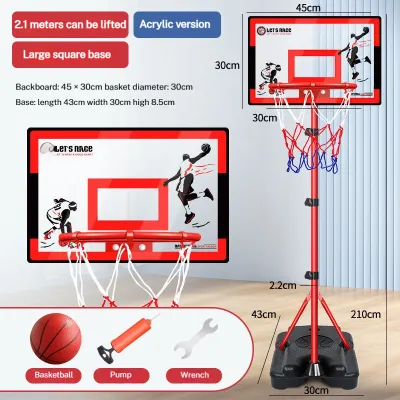
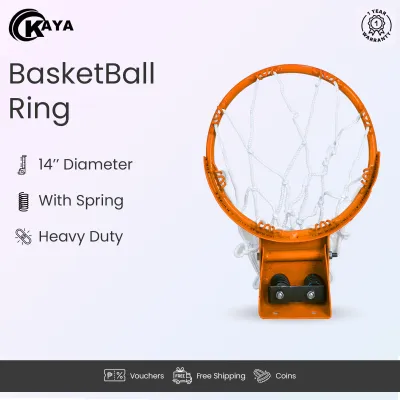
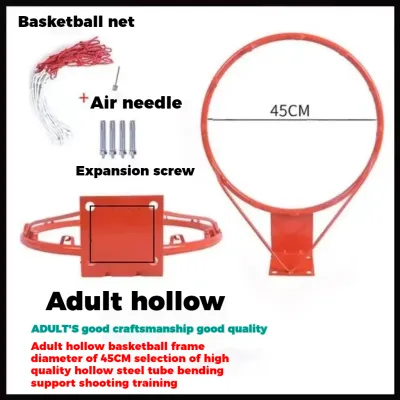
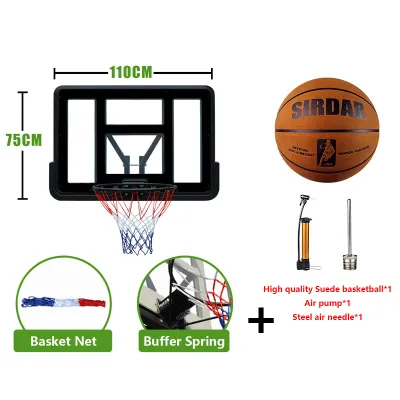
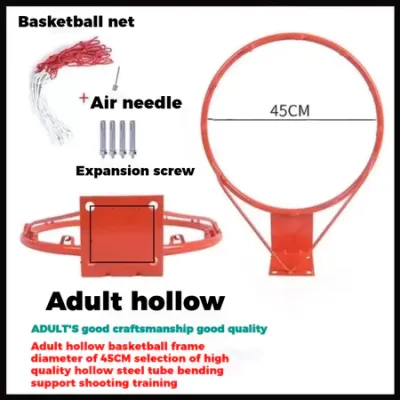
![Dunk basket heavy duty rim 16-inch/18-inch standard NBA standard [with screws]](https://img.lazcdn.com/g/p/c66ebc4b50d520078321209023d5b9d1.jpg_400x400q80.jpg_.webp)
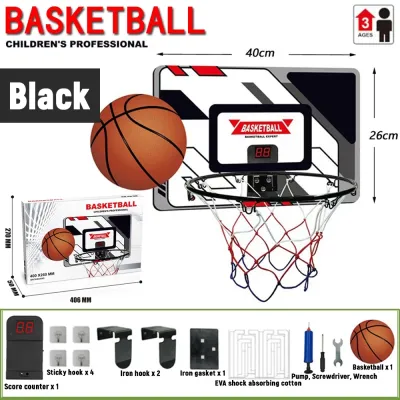
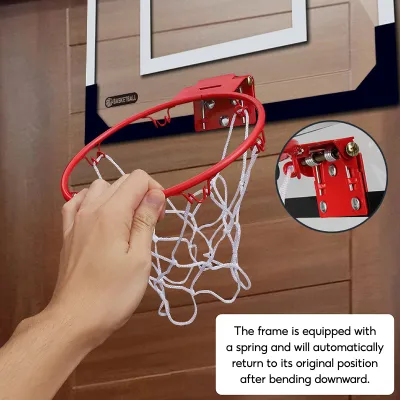
Prices are valid at publication and may change. Please refer to the product page for the latest price.
Finally, evaluate the ground surface where the hoop will stand. Concrete and asphalt are highly recommended surfaces because they provide a consistent ball bounce and a level foundation. If your driveway has a steep slope, a portable hoop may become unstable and prone to tipping, while the angle of the backboard will be distorted. Setting up a hoop on grass or dirt is generally not recommended for active play, as the soft ground absorbs the ball’s energy and makes dribbling difficult, while also compromising the stability of portable bases.
Match the Hoop Type to Your Usage and Skill Level
The age, height, and skill level of the players in your household should directly influence your choice of basketball ring. For families with young children or growing teenagers, an adjustable height system is highly beneficial. Many modern hoops feature counterbalanced adjustment mechanisms that allow you to easily raise or lower the rim from 7.5 feet to the regulation 10 feet. This ensures that younger players can develop proper shooting form before transitioning to standard heights.

Your playing style also dictates the structural strength and backboard materials you require. If your games involve aggressive driving, physical play, or dunking, a basic portable hoop will not suffice. Hanging on the rim of an unstable hoop is extremely dangerous and can lead to severe injury or property damage. For high-impact play, look for heavy-duty systems featuring breakaway rims with steel spring enclosures that absorb the force of a dunk.
Backboard materials play a major role in both durability and performance. Polycarbonate backboards are highly durable and weather-resistant, making them excellent for casual family use, though they tend to have a dull rebound response. Acrylic backboards offer a clearer look and better ball bounce. Tempered glass is widely used in professional courts, providing the most consistent rebound and scratch resistance, but it is heavy and requires a highly rigid support structure to prevent shattering.
Compare Portable, Wall-Mounted, and In-Ground Basketball Rings
Portable basketball hoops are a popular choice for residential use due to their convenience and ease of setup. These systems rely on a large plastic base filled with water or sand to counteract the weight of the backboard and rim. Because they do not require professional installation or concrete pouring, you can assemble them quickly and move them around your property as needed. However, portable systems are inherently less stable than permanent options. They tend to shake or vibrate after a shot, and the bulky base can take up valuable playing space directly under the basket.
Wall-mounted hoops are an excellent space-saving solution for tight driveways or compact outdoor areas. By bolting the backboard bracket directly to an existing garage header, brick wall, or solid concrete pillar, you eliminate the need for a ground pole entirely. This leaves the playing surface completely clear of obstructions. The primary challenge with wall-mounted systems is ensuring structural compatibility. The mounting surface must be perfectly flat, vertical, and strong enough to handle the constant vibration and downward pull of active play. Mounting a hoop to a thin wood siding or a non-structural brick facade without proper internal reinforcement can cause serious structural damage to your home.
In-ground hoops offer the highest level of stability and performance, mimicking the feel of an indoor gymnasium. These systems feature a heavy steel pole anchored directly into a deep concrete footyard. Because the foundation is solid concrete, in-ground hoops experience minimal vibration, allowing for clean rebounds and a highly professional feel. Many premium in-ground systems use a bolt-down anchor plate design, which allows you to level the pole perfectly during installation and even unbolt the system if you move houses. The main trade-offs are the high initial cost, the labor-intensive installation process, and the permanent nature of the setup.
Budgeting and Long-Term Maintenance
When planning your purchase, look beyond the retail price of the basketball hoop itself. A complete budget should include the cost of installation materials, such as multiple bags of concrete mix, rebar, and digging tools for an in-ground system, or play sand for a portable base. While a basic portable hoop might fit a modest budget, premium in-ground systems require a larger investment in ₱ for both the unit and the concrete installation. If you do not have the tools or physical capability to dig a deep trench and mix concrete, you will need to budget for professional installation or local masonry services.
Ongoing maintenance is essential to keep your basketball ring safe and functional, especially in tropical climates. High humidity, intense sunlight, and heavy rainfall can accelerate the degradation of outdoor sports equipment. Regularly inspect all metal components for signs of rust or corrosion. Applying a rust-inhibiting spray or outdoor touch-up paint to the steel pole and rim can prevent structural weakening. Check all bolts, brackets, and adjustment pins monthly to ensure they remain tight and secure.
Weather protection is a critical consideration in the Philippines during the local typhoon season. High winds can easily blow over portable hoops, leading to broken backboards, bent rims, or damage to nearby property. Before a severe storm or typhoon arrives, always lower your portable hoop to its lowest height setting to reduce wind resistance. If possible, roll the system into a garage, carport, or shed. For permanent in-ground or wall-mounted systems, ensure the backboard padding and net are securely fastened, and inspect the structural anchors immediately after any major weather event.
Frequently Asked Questions (FAQ)
Can I convert a portable basketball ring into an in-ground system later?
Converting a portable basketball hoop into a permanent in-ground system is generally not recommended unless the manufacturer explicitly provides an approved ground sleeve or conversion kit for your specific model. Portable hoop poles are typically designed in multiple thin-walled sections that slide together, which lack the structural thickness and rigidity of dedicated one-piece in-ground poles. Attempting to cement a standard portable pole directly into the ground can lead to rapid rust, structural failure, and safety hazards. Always consult your product manual or contact the manufacturer to verify if a safe conversion path exists for your equipment.
What is the safest base fill for a portable basketball ring?
For maximum safety and stability, dry play sand is the preferred base fill material for portable basketball hoops. Sand is significantly denser and heavier than water, providing a more solid counterweight that reduces the risk of the hoop tipping over during aggressive play or high winds. While water is easier to fill and drain, it is susceptible to evaporation, slow leaks through microscopic cracks in the plastic base, and algae growth. If you choose to use water, regularly check the fill level and inspect the base for leaks. Some manufacturers recommend a combination of sand and water to completely fill any remaining air gaps in the base for maximum weight.

Community discussion
Share your experience or ask a question. Comments are reviewed before publication.