
Starting a home boxing corner transforms your fitness routine, but selecting the wrong equipment can lead to structural damage or unused gear. The ideal boxing bag for your home depends on a balance between your physical space, structural installation limits, and specific training goals. Before purchasing, you must evaluate whether your ceiling can support a hanging weight, how much noise your household can tolerate, and whether you are training for raw power, cardiovascular endurance, or rapid hand-eye coordination.
Assess Your Space and Installation Limits
Hanging a traditional heavy bag requires a structural support system capable of handling not just the static weight of the bag, but the dynamic, multiplying forces of every strike. In many homes, especially those with plasterboard or drop ceilings, finding a solid wood ceiling joist is the first critical step. You must use a stud finder to locate the center of a load-bearing beam and verify its structural integrity; mounting a bag to a simple ceiling batten or decorative beam can result in severe ceiling collapse.
Beyond structural strength, you must calculate the swing radius. A heavy bag does not stay stationary; it swings in a wide arc when struck. Plan for at least 1.5 to 2 meters of clear, unobstructed space in all directions from the mounting point to prevent the bag from crashing into walls, windows, or furniture. This clearance also ensures you have enough room to move your feet and practice proper angling.
Products mentioned in this guide
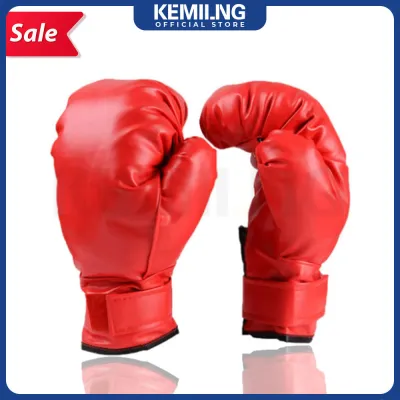
![[2023 New] EVERLAST Boxing Punching Bag for Adults Black PU Leather Heavy Duty MMA Training With Free Gloves](https://img.lazcdn.com/g/p/d30681ff0343b6c727f903cea5a0c6f2.jpg_400x400q80.jpg_.webp)
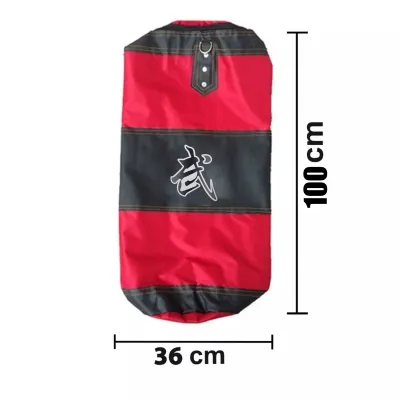
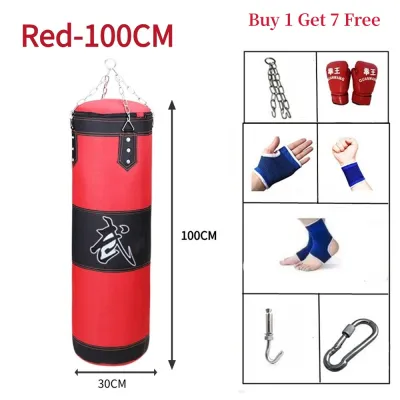
Prices are valid at publication and may change. Please refer to the product page for the latest price.
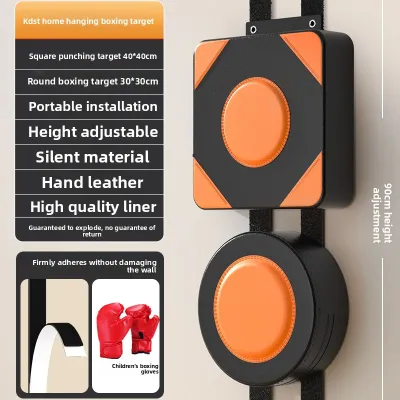
For renters or those living in apartments where drilling into concrete or joists is prohibited, permanent mounting is rarely an option. In these scenarios, non-permanent alternatives like heavy bag stands or freestanding units are necessary. However, stands require a large footprint, often taking up more floor space than the bag’s swing radius itself, which must be factored into your room layout.
Match the Bag Type to Your Training Goals
Your choice of boxing bag should directly reflect your primary training objectives, whether you are practicing Muay Thai low kicks, refining rapid boxing combinations, or building explosive punching power. Selecting a bag that matches your discipline ensures you develop proper form without risking joint strain or equipment failure.

Hanging Heavy Bags for Power and Conditioning
Traditional hanging heavy bags are the standard for developing raw striking power, structural body alignment, and cardiovascular conditioning. Because they hang freely, they swing naturally, forcing you to move your feet, manage distance, and time your strikes as the bag returns to you. This dynamic movement closely mimics the rhythm of an actual opponent, making it excellent for full-body conditioning.
To install a hanging bag, you need heavy-duty hardware, including a high-tensile ceiling mount, a heavy-duty swivel to prevent chain twisting, and a compression spring. The spring is highly recommended for home setups as it absorbs vertical vibrations, significantly reducing the noise transmitted through the ceiling structure to the rest of the house.
These bags are highly suitable for classic boxing, kickboxing, and Muay Thai. If you practice low kicks, look for longer, heavier designs (often called banana bags) that extend close to the floor, allowing you to throw low shin kicks safely without hitting empty air or the bottom metal ring.
Freestanding Bags for Convenience and Kicks
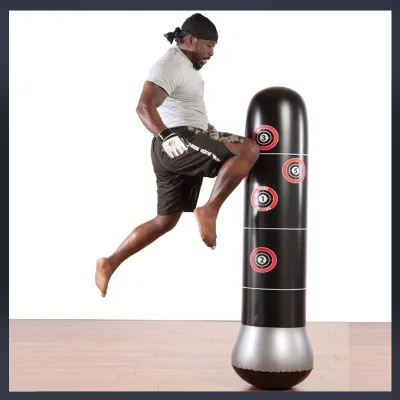
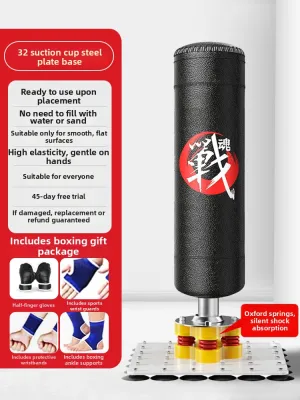
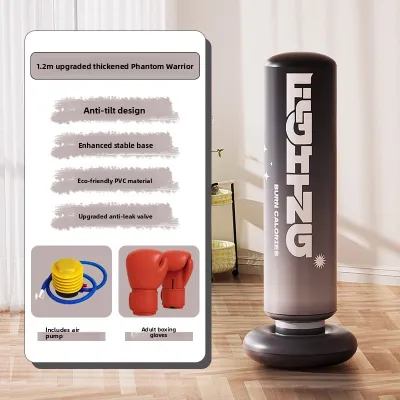
Freestanding bags offer a highly convenient, drill-free solution for homes with structural limitations or limited space. These units feature a striking column attached to a heavy plastic base that sits directly on the floor. Because they do not require ceiling mounts, you can easily position them in a corner when not in use, making them ideal for multi-purpose rooms.
To keep the unit stable, the base must be filled with either water or dry sand. Sand is significantly heavier and provides superior stability, reducing the likelihood of the bag sliding across the floor during intense workouts, though it is more difficult to fill and empty. If you use water, regular checks for cap seals and cracks are essential to prevent leaks that can ruin your flooring.
While convenient, freestanding bags have distinct trade-offs. They do not swing like hanging bags; instead, they pivot or flex from the base, which offers a faster, spring-back rebound that requires quick reflexes. They also tend to transfer impact noise directly into the floor, which can be highly disruptive to neighbors downstairs unless paired with thick rubber floor mats.
Speed and Double-End Bags for Timing and Accuracy
If your training goals focus on hand-eye coordination, rhythm, head movement, and reflex speed rather than raw power, smaller specialized bags are the appropriate choice. These tools do not require massive structural support but do need specific spatial configurations to function correctly.
Double-end bags are suspended between the ceiling and the floor using elastic cords. When struck, they rebound rapidly in unpredictable directions, forcing you to slip, duck, and counter-punch. This setup requires secure anchor points on both the ceiling and the floor; while the tension is relatively low, the anchors must remain firm to maintain the bag’s elasticity and rebound speed.
Speed bags, on the other hand, require a rigid wooden platform mounted to a wall or ceiling to rebound properly. The platform must be completely level and securely anchored to masonry or wall studs to prevent vibrations from ruining the rhythm of the bag. Because these are supplementary tools, they should be paired with gloves or hand wraps designed for light, rapid contact rather than heavy impact.
Evaluate Safety and Maintenance Requirements
Maintaining your home boxing setup is vital for both personal safety and equipment longevity. For hanging setups, establish a monthly inspection routine to check the wear on metal chains, S-hooks, and swivels. Over time, the friction of metal-on-metal contact can grind down hooks, leading to sudden failure during a workout. Replacing worn hardware early prevents dangerous accidents.
For freestanding models, regularly inspect the base for stress fractures, especially around the neck joint where the striking column meets the base. Ensure the weight distribution remains even; if using sand, check that it has not settled into a solid, uneven block that unbalances the unit.
In humid tropical environments, such as the Philippines, moisture and sweat can quickly degrade synthetic leather shells and foster mold growth. Wipe down the outer shell with a damp cloth and mild soap after every session, and ensure the training area has adequate ventilation. Additionally, check the inner filling regularly; compressed fabric or sand fillings can settle over time, making the bottom of the bag rock-hard and increasing the risk of hand or wrist injuries if struck improperly.
Build Your Home Boxing Setup Shortlist
To finalize your home boxing corner, map your physical constraints against your training goals to select the correct category. If you own your home, have exposed wooden joists or solid concrete ceilings, and want to focus on power, a hanging heavy bag is the standard choice. If you rent an apartment or have plaster ceilings, a high-quality freestanding bag paired with sound-dampening floor mats is the most practical path.
When budgeting for your setup, do not allocate all your funds to the bag alone. Set aside approximately ₱1,500 to ₱4,000 for essential protective gear, such as high-quality hand wraps and properly weighted boxing gloves (typically 12oz to 16oz for bag work), which are mandatory to protect your wrists and knuckles from impact injuries. Additionally, invest in interlocking EVA foam or heavy rubber mats to protect your flooring from scuffs and absorb impact vibrations.
If you encounter complex structural situations—such as post-tension concrete slabs, metal trusses, or suspended ceilings—stop immediately. Do not attempt to drill or mount heavy hardware without consulting a qualified structural engineer or professional contractor to ensure your home remains safe and secure.
Frequently Asked Questions (FAQ)
Can I hang a heavy bag on a standard apartment ceiling?
Hanging a heavy bag from a standard apartment ceiling is generally not recommended due to structural risks and noise transmission. Most apartment ceilings utilize drywall suspended from light metal furring channels, which cannot support the dynamic load of a swinging bag. Additionally, the vibrations from strikes will travel through the building’s framework, causing significant noise disturbance for your neighbors. If you live in an apartment, a freestanding bag or a heavy bag stand is a much safer, non-destructive alternative.
Do freestanding bags leak or tip over easily?
Freestanding bags can tip over or slide if they are not filled to the manufacturer’s recommended weight or if they are struck with heavy, low-angle kicks. Filling the base completely with dry play sand rather than water provides the highest density and stability, making tipping highly unlikely during standard boxing workouts. To prevent sliding on smooth tile or wood floors, place a high-grip rubber utility mat underneath the base to increase friction and absorb base vibrations.

Community discussion
Share your experience or ask a question. Comments are reviewed before publication.