
Quick Answer: Matching Skates to Your Ability
Selecting the right pair of Decathlon skates depends entirely on your current skill level, your typical skating environment, and your physical control. Choosing a model that matches your ability ensures you have the correct balance of stability, speed, and safety. Beginners require maximum ankle support and slower, high-grip wheels to maintain balance, while intermediate and advanced skaters benefit from stiffer frames, harder wheels, and more responsive boots designed for speed and maneuverability.
Mismatched equipment can lead to frustration, rapid wear, or even injury. For instance, putting a novice in high-speed advanced skates without a heel brake increases the risk of falls, while an advanced skater will quickly feel limited by the flexible frames and slower bearings of entry-level models. By verifying product labels, checking wheel durometer ratings, and assessing your local skating terrain, you can make an informed purchase that supports your progression.
How to Accurately Assess Your Skating Skill Level
Before browsing the shelves or online catalog, you must objectively evaluate your current skating proficiency. Skating skill is not just about how fast you can travel forward; it is defined by your ability to control your speed, navigate obstacles, and stop reliably under pressure.
Products mentioned in this guide
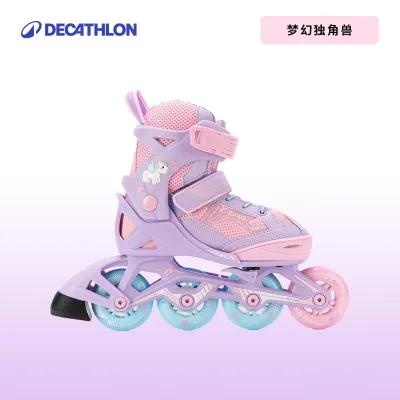
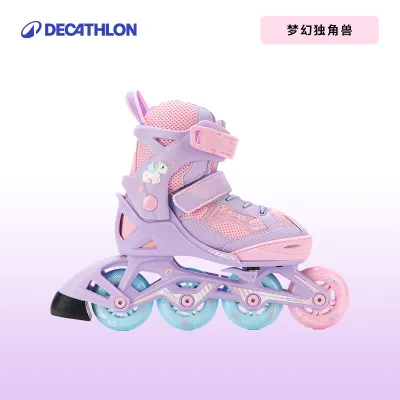
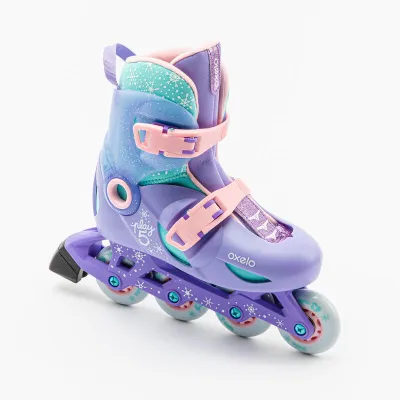
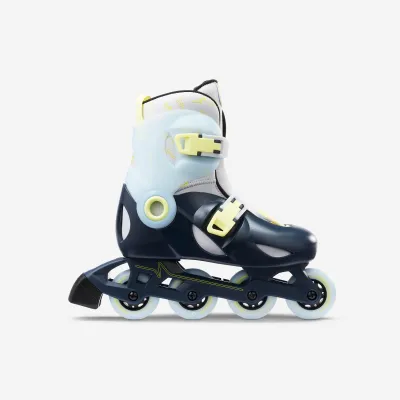
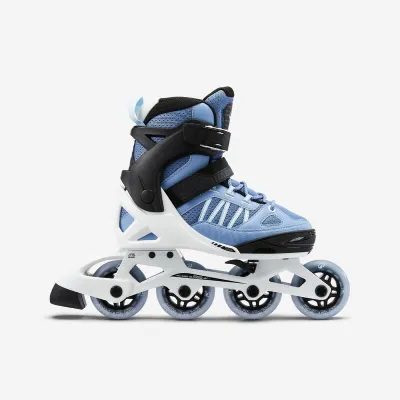
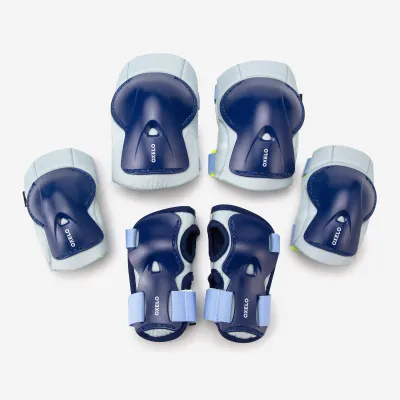
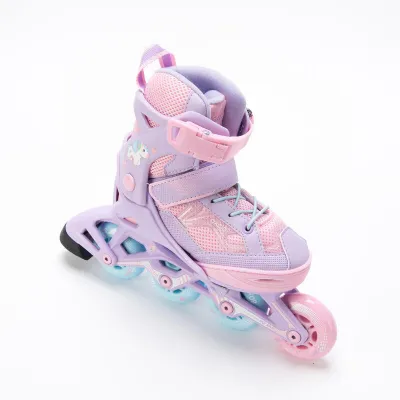
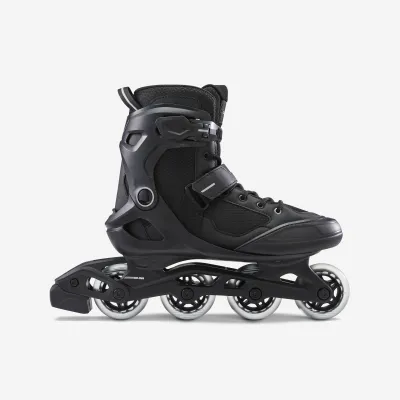
Prices are valid at publication and may change. Please refer to the product page for the latest price.

Beginner skaters are those who are still mastering basic balance, forward gliding, and gentle turning. If you rely heavily on a heel brake to slow down, feel anxious on slight inclines, or primarily skate on flat, smooth indoor surfaces or quiet subdivision streets, you fall into this category. At this stage, your primary equipment needs are maximum lateral ankle support and predictable, controlled rolling speeds.
Intermediate skaters can confidently execute parallel turns, skate backward for short distances, and navigate minor outdoor obstacles like pavement cracks or small debris. If you can transition from forward to backward skating and use alternative stopping methods like the plow stop or a basic T-stop, you are ready for intermediate gear. Your equipment should offer a balance of ankle mobility and structural power transfer to handle longer fitness sessions.
Advanced skaters possess highly developed edge control, allowing them to execute sharp parallel turns, jumps, and rapid transitions. If you regularly skate in high-traffic urban environments, perform specialized tricks, or participate in high-speed long-distance cruising, you require advanced gear. At this level, you need highly responsive, stiff boots and specialized frame configurations that can withstand high-impact forces.
To help determine where you stand, consider this self-assessment checklist based on typical outdoor environments:
- Beginner: Skates exclusively on flat, dry concrete plazas; relies on the heel brake; cannot skate backward.
- Intermediate: Skates on public park paths with moderate pedestrian traffic; comfortable navigating gentle slopes; uses T-stops and plow stops.
- Advanced: Skates on open roads, busy urban streets, or dedicated skateparks; comfortable stopping at high speeds without a heel brake; executes jumps and tight transitions.
Choosing Decathlon Skates for Beginners
When starting your skating journey, your equipment should prioritize safety, stability, and comfort over raw speed. Decathlon’s entry-level models are engineered specifically to help new skaters build confidence without feeling overwhelmed by excessive roll.
Look for skates featuring a high-cut plastic cuff. This rigid upper structure wraps securely around your ankle, preventing your feet from bowing inward or outward, which is a common cause of early fatigue and ankle strain. The boot liner should be thick and well-padded to cushion your feet against pressure points as you learn to balance.
Pay close attention to the wheel and bearing specifications on the product label. Beginner models typically feature softer polyurethane wheels, usually rated between 78A and 80A on the durometer scale. These softer wheels provide excellent grip on humid, dusty concrete surfaces and absorb road vibrations, making your ride smoother. They are paired with lower-rated bearings, such as ABEC 3 or ABEC 5, which naturally limit top speed to keep your movements manageable.
These safety-first features come with intentional trade-offs. Beginner skates are often heavier due to the thick padding and composite plastic frames. The composite frames are excellent for dampening vibrations on rough pavement, but they lack the rigid power transfer needed for high-speed skating. Additionally, softer wheels will wear down faster on hot asphalt, especially in warm tropical climates, requiring more frequent rotation.
If you are purchasing skates for growing children, look for Decathlon’s adjustable sizing models. These allow the toe cap of the boot to slide forward via a simple button or lever mechanism, typically covering three to four shoe sizes. Ensure the closure system combines a micro-metric buckle at the ankle, a hook-and-loop strap across the instep, and standard laces to keep the foot locked firmly in place.
Choosing Decathlon Skates for Intermediate Skaters
As your balance improves and your strides become more powerful, beginner skates can begin to feel sluggish and restrictive. Upgrading to an intermediate model allows you to travel faster and execute more precise maneuvers.
Intermediate skates transition from flexible composite frames to rigid aluminum frames. Aluminum frames do not flex under your weight, meaning more of the energy from each stride is transferred directly to the pavement. This rigidity allows you to maintain higher speeds with less physical effort, which is ideal for longer fitness skates around local parks or coastal boardwalks.
At this level, the wheels are harder, typically ranging from 82A to 84A. Harder wheels roll more efficiently on smooth surfaces and offer greater durability against the abrasive heat of outdoor concrete. They are paired with higher-precision bearings, such as ABEC 7, which spin more freely and allow for longer glides between strides. The boot design also shifts, offering a slightly lower cut or a more articulated cuff to allow for greater forward ankle flexion during deep strides.
When selecting an intermediate model, verify the manufacturer’s stated load limits and frame compatibility. If you plan to upgrade your setup later, check if the frame can accommodate larger wheels. Many intermediate frames are designed with standard 8mm axles, allowing you to swap out worn parts or upgrade to higher-performance wheels and bearings as your skills continue to evolve.
Keep in mind that intermediate skates require more precise foot control. The reduced padding inside the boot provides a closer fit for better responsiveness, but it may feel less forgiving than a plush beginner boot during the first few sessions. Regular maintenance, such as wiping down the aluminum frames and keeping the bearings dry, is essential to prevent performance loss in humid environments.
Choosing Decathlon Skates for Advanced Skaters
Advanced skaters require highly specialized equipment tailored to specific disciplines, such as urban freeskating, long-distance fitness, or aggressive skatepark riding. Decathlon’s high-end lines focus on maximum structural rigidity, customization, and rapid response.
For urban and freeskate disciplines, look for hardboot designs. These skates feature a thick, molded plastic outer shell with a removable, high-density foam liner. The rigid shell provides unparalleled lateral support and impact protection, allowing you to perform jumps, stairs, and sharp parallel slides without the boot flexing or losing energy. The frames are typically made of extruded aluminum, which is lighter and significantly stronger than cast aluminum.
Advanced wheel setups vary depending on your specific goals:
- Freeskate/Urban: Stiff 80mm wheels with a hard durometer of 85A or higher, mounted on a short, highly maneuverable frame.
- Fitness/Speed: Larger wheels, often 90mm to 110mm, designed to maintain high speeds over long distances with minimal rolling resistance.
- Aggressive: Very small, flat-profile wheels with anti-rocker center wheels, designed specifically for grinding rails and coping.
Before purchasing, carefully inspect the product specification sheets for mounting standards. Many advanced Decathlon models use standard 165mm frame mounting points, allowing you to swap the entire frame out for a different wheel configuration. You should also verify the bearing grade, looking for high-precision ratings or specialized rust-resistant coatings that can withstand humid tropical conditions.
It is critical to note that most advanced skates do not come equipped with a heel brake. Because advanced maneuvers require deep edge angles and rapid foot crossovers, a protruding heel brake can become a tripping hazard. You must have fully mastered alternative stopping techniques, such as the slide or T-stop, before transitioning to these high-performance models.
Essential Fit and Safety Checks Before You Buy
No matter which skill level you fall into, a poor fit or a mechanical oversight can ruin your skating experience and compromise your safety. Always perform a thorough physical evaluation of the skates before taking them to the pavement.
When trying on skates, wear the exact socks you plan to use while skating. Slide your foot into the boot, push your heel all the way to the back, and secure all buckles, straps, and laces tightly. Stand up in a basic skating stance with your knees slightly bent; your toes should gently brush the front of the toe box. If your toes are curled or painful, the skate is too small. If your heel lifts off the footbed when you bend your knees, the skate is too large, which can cause severe blisters and reduce your control.
Before your first roll, and periodically before every session, perform these critical safety checks:
- Axle Tightness: Use the included hex key to ensure all wheel axles are firmly tightened into the frame.
- Buckle Integrity: Inspect all plastic straps and buckles for cracks, ensuring they click lock securely and do not slip under pressure.
- Brake Pad Check: If your model has a heel brake, verify that the rubber pad is securely attached and has not worn down past the wear indicator line.
- Wheel Spin: Spin each wheel manually to ensure they rotate freely without grinding noises, which could indicate dirty or damaged bearings.
Always consult the manufacturer’s specific sizing chart rather than relying on your standard everyday shoe size. Skate sizing can vary significantly between brands and even between different models within the Decathlon range.
Finally, remember that high-quality skates cannot replace proper safety gear. Always pair your skates with a certified helmet, wrist guards, knee pads, and elbow pads. In the event of a fall, especially on hard concrete or asphalt, proper protective gear is your primary defense against severe injury.
Frequently Asked Questions (FAQ)
Can I upgrade the wheels and bearings on entry-level Decathlon skates?
Yes, you can upgrade the wheels and bearings on most entry-level Decathlon skates, provided the replacement parts match the physical dimensions of the original frame. Check the product specifications or the side of the frame to find the maximum allowable wheel diameter, as installing wheels that are too large will cause them to rub against the boot or frame. Keep in mind that while upgrading to faster bearings or harder wheels can improve roll, it will not change the structural flexibility of a composite plastic frame, which may still limit overall power transfer and high-speed stability.
How do I know when it is time to replace my skate brake pad?
Most Decathlon brake pads feature a molded wear indicator line on the side or bottom of the rubber block. Once the rubber has worn down close to this line, or if you notice a significant decrease in braking responsiveness, it is time for a replacement. If you begin to feel the plastic housing of the brake assembly scraping against the ground, stop skating immediately; continuing to use a completely worn brake pad can damage the frame and prevent you from stopping safely in an emergency.

Community discussion
Share your experience or ask a question. Comments are reviewed before publication.