
Finding the right shelter is the most critical decision for any outdoor excursion. In the Philippines, where a single camping trip can throw scorching midday heat, sudden monsoon downpours, and high coastal humidity at you, choosing the correct tent is about both comfort and safety. Decathlon has become a go-to destination for outdoor gear, but their massive wall of tents can be overwhelming. The secret to choosing the perfect Decathlon tent lies in aligning your specific camping style—whether that is multi-day mountain trekking, weekend trail camping, or family car camping—with the brand’s distinct product design philosophies.
To make an informed purchase, you must evaluate how you plan to transport your gear, the typical weather conditions of your destinations, and your personal space requirements. A tent that is perfect for a car camping setup at a beach resort in Zambales will be a heavy, bulky burden if you try to haul it up the steep trails of Mount Pulag. By understanding the technical specifications, design differences, and maintenance needs of these tents, you can select a model that keeps you dry, cool, and secure on every adventure.
Decathlon Tent Brands Explained: Quechua vs. Forclaz
To navigate Decathlon’s catalog, you must first understand their two primary outdoor brands: Quechua and Forclaz. While both brands are engineered under the same parent company, they serve entirely different user profiles and environments.
Products mentioned in this guide
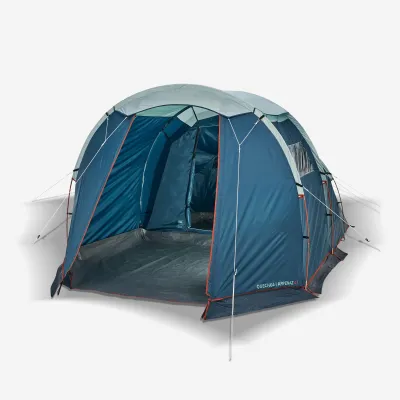
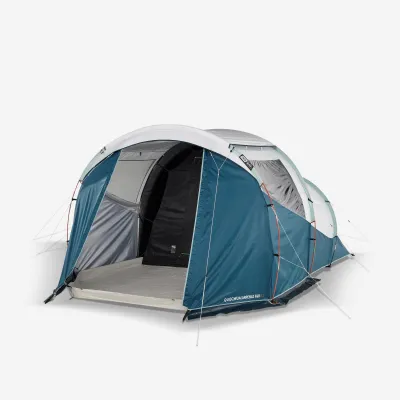
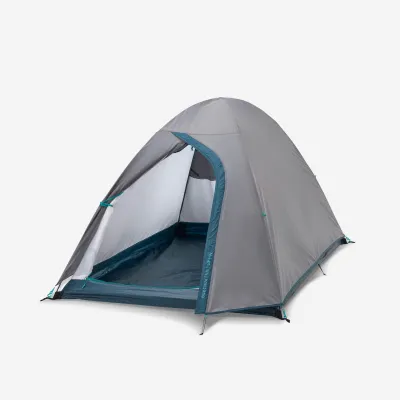
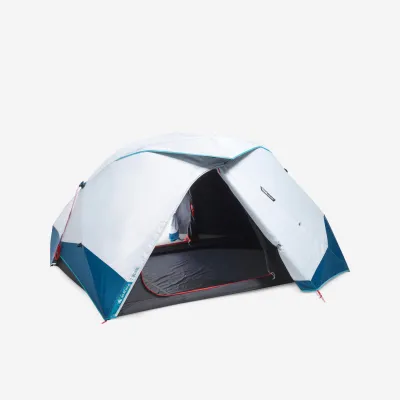
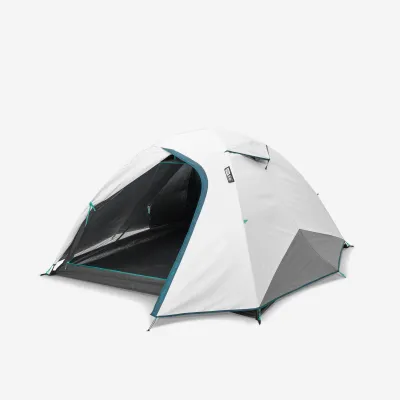
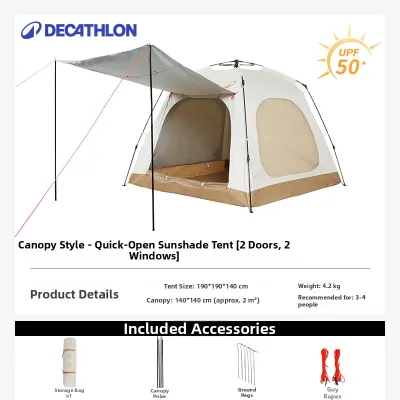
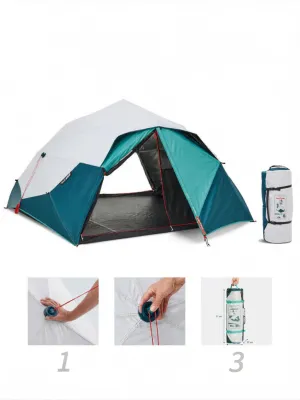
Prices are valid at publication and may change. Please refer to the product page for the latest price.
Quechua is Decathlon’s brand dedicated to hiking and camping. Tents under this label are designed with a focus on static comfort, spaciousness, and straightforward assembly. They are ideal for car camping, beach trips, and established campsites where you do not have to carry your gear on your back for hours. Because weight and packed volume are secondary considerations for Quechua designers, these tents often feature heavier, more robust materials, spacious vestibules, and higher ceilings.
Forclaz, on the other hand, is Decathlon’s dedicated trekking and backpacking brand. These tents are engineered for mobility, weight optimization, and durability under demanding trail conditions. When you are hiking up steep mountain trails, every gram counts. Forclaz tents utilize lightweight aluminum poles, thinner yet highly tear-resistant fabrics, and minimalist designs that pack down incredibly small. They are built to withstand harsher weather, stronger winds, and uneven terrain.
To simplify your decision, use this quick framework:
- Choose Quechua if you plan to transport your gear in a vehicle, camp close to your car, prioritize interior space, or want a quick, stress-free setup.
- Choose Forclaz if you are carrying your shelter in a backpack, trekking multi-day routes, or camping in exposed, high-altitude environments where wind and weight are critical factors.
Decathlon Tents for Solo and Duo Backpacking
For backpackers, trekkers, and fast-packers, your shelter is one of the heaviest items in your pack. Managing this load is crucial for long-distance comfort and endurance. Decathlon addresses this with the Forclaz MT (Mountain Trekking) series, specifically designed for those who carry their homes on their backs.

The MT100 and MT500 lines are the workhorses of the Forclaz backpacking collection. When selecting a backpacking tent, your first step should always be to check the packed weight and packed volume listed on the product tag. For a solo hiker, a tent weighing under 2 kg is ideal, while a two-person backpacking tent should ideally stay under 2.8 kg. If your tent is too bulky, it will force you to use a larger, heavier backpack, cascading your overall pack weight.
Another critical design aspect to evaluate is the pole structure. Forclaz offers both freestanding and semi-freestanding designs:
- Freestanding tents (like the MT500 dome models) can stand upright without any stakes. This is incredibly advantageous when camping on rocky summits, hard-packed volcanic soil, or wooden platforms common in many established Philippine campsites. You can easily pitch the tent, lift it up, and move it to find the flattest spot before securing it.
- Semi-freestanding tents (like some ultra-light MT900 models) require a few stakes at the foot end to fully expand the interior space. While they require more careful pitch site selection, they save significant weight by using fewer pole sections.
In the warm, humid climate of the Philippines, ventilation is paramount for a comfortable night’s sleep. When warm, moist air from your breath meets the cooler flysheet of the tent, condensation forms on the inside. Without proper airflow, you will wake up to a damp sleeping bag. Look for Forclaz models that feature extensive mesh inner walls and adjustable high vents on the flysheet. These features encourage cross-ventilation, allowing humid air to escape before it condenses.
Decathlon Tents for Weekend Trail Camping
If your camping style falls between rugged multi-day backpacking and static car camping, weekend trail camping is likely your sweet spot. These are trips where you might hike for two to four hours to reach a scenic basecamp, requiring a tent that balances portability with a higher level of comfort than a minimalist backpacking tent.
For this style of outdoor adventure, the Quechua MH (Mountain Hiking) series offers an excellent middle ground. The MH100 and MH500 models are designed to be carried over moderate distances while offering generous interior space once pitched.
Most weekend trail tents utilize a classic dome structure. Dome tents are highly favored because they provide excellent headroom throughout the entire cabin, rather than just at the center peak. This extra volume makes waiting out an afternoon rain shower much more comfortable. Furthermore, the symmetrical design of a dome tent inherently distributes wind forces evenly, providing stable shelter when pitched in moderately exposed areas.
Ease of setup is another hallmark of the MH series. When you arrive at a campsite after a hot hike, the last thing you want is a frustrating pitching process. Look for models featuring color-coded poles and matching sleeve or clip systems. These intuitive designs allow a single person to pitch the tent in under ten minutes, even in fading light.
Before purchasing a weekend tent, always verify the wind resistance rating and waterproof rating on the label. Ensure these specifications align with the terrain and weather forecast of your destination. If you are heading to an exposed ridge, a tent rated for higher wind speeds is essential, whereas a sheltered forest campsite allows you to prioritize ventilation and interior space.
Decathlon Tents for Family and Car Camping
When weight is no longer a constraint because your vehicle is doing the heavy lifting, your focus should shift entirely to livability, space, and thermal comfort. Family camping trips and car camping excursions demand tents that feel less like a survival shelter and more like a home away from home.
For this segment, the Quechua Arpenaz series and the popular “2 Seconds” pop-up tents are the premier choices. The Quechua 2 Seconds tents are legendary for their rapid deployment; you simply unclip the straps, toss the tent into the air, and it pops into shape instantly. This is a massive benefit for parents managing young children or anyone arriving at a campsite late in the evening. However, keep in mind that pop-up tents fold into a large, flat disc, which requires ample trunk space in your car.
One of Decathlon’s most significant innovations for tropical camping is their patented Fresh & Black technology. Standard tent fabrics can turn your shelter into an oven under the tropical sun. Fresh & Black tents utilize a multi-layered fabric: the outer “Fresh” layer reflects solar radiation to keep the interior cooler, while the inner “Black” layer blocks up to 99% of daylight. This technology is a major advantage in the Philippines, allowing you to sleep in past sunrise without waking up drenched in sweat, or providing a cool, dark space for children to nap during the day.
If you are camping with a larger group or family, look for cabin-style tents (such as the Arpenaz Family series). These models often feature:
- Room dividers: Creating separate sleeping quarters for parents and children, or dividing sleeping space from gear storage.
- Spacious vestibules/living areas: A covered front area where you can set up camp chairs, store muddy shoes, or sit comfortably out of the rain.
- Generous peak height: Many family models allow an adult of average height to stand completely upright, making changing clothes and moving around much easier on your back.
- Multiple doors and windows: Essential for maximizing airflow and providing easy entry and exit without crawling over sleeping campmates.
How to Read Decathlon Tent Specs and Labels
Decathlon is known for providing detailed technical specifications on their product packaging and website. Understanding how to read these labels is key to verifying whether a tent can handle the specific environmental conditions of your camping destinations.
The first specification to examine is the hydrostatic head rating, which measures waterproofness in millimeters (mm). This rating indicates the height of a water column the fabric can support before water starts to penetrate. Decathlon tests their tents under a specialized shower system simulating extreme rainfall (usually 200 liters of water per square meter per hour for several hours).
- A flysheet rating of 2,000 mm is standard for Decathlon tents and is highly capable of shedding heavy tropical downpours, provided the tent is pitched correctly.
- The groundsheet rating is often higher (frequently 3,000 mm to 5,000 mm) because body weight exerts physical pressure on the floor, forcing water through less waterproof fabrics if the ground is saturated.
Decathlon also provides clear wind resistance ratings, expressed in kilometers per hour (km/h) or on the Beaufort scale. They test their tents in a wind tunnel on a rotating turntable to ensure the structure can withstand wind from any direction. For sheltered valley camping, a tent rated for 40 to 50 km/h is perfectly adequate. If you plan to camp on exposed mountain peaks or windy coastlines, look for models rated for 60 km/h or higher, and ensure you know how to properly tension the guy lines.
Additionally, check if the tent package includes a compatible footprint (groundsheet). While the integrated floor of a Decathlon tent is highly durable, using an additional footprint underneath provides an extra layer of defense against sharp rocks, twigs, and rising ground moisture.
Because Decathlon frequently updates their product lines, exact specifications, materials, and pole configurations can vary slightly by model year and size. Always read the physical tag on the tent bag or the detailed specification sheet on the official product page for the exact unit you are purchasing to verify its features.
It is important to remember that no recreational tent is designed to withstand typhoon-force winds or severe tropical storms. Always check local weather advisories before heading out, and if a storm warning is active, postpone your trip. Equipment cannot replace sound judgment and safety training.
Maintaining Your Tent in Humid Conditions
The tropical climate of the Philippines, characterized by high humidity and frequent rainfall, presents unique challenges for gear maintenance. Proper care is essential to prevent mold, mildew, and the premature breakdown of waterproof coatings.
The absolute golden rule of tent maintenance is to never pack away a wet or damp tent long-term. If you must pack up in the rain, unpack the tent as soon as you return home and hang it up to dry completely. Always dry your tent in the shade; direct, intense sunlight can degrade the polyurethane coatings and weaken the polyester fibers over time.
When your tent gets dirty from mud, sand, or salt spray, clean it gently:
- Use a soft sponge, lukewarm water, and a mild, non-detergent soap if absolutely necessary.
- Never use harsh detergents, bleach, or washing machines. The mechanical agitation of a washing machine and the chemical agents in standard laundry detergents will strip away the waterproof polyurethane coatings and damage the seam tape.
- Gently rinse off any soap residue and let the tent air dry completely.
For long-term storage, store your tent in a cool, dry, and well-ventilated space. Avoid keeping it compressed tightly inside its original stuff sack for months on end, as this can crease the fabric and weaken the seam tape. Instead, store it loosely in a breathable cotton bag or a large mesh storage sack. Keep it away from areas prone to extreme heat, such as hot car trunks or uninsulated attics, which can melt or degrade the waterproof seals.
Frequently Asked Questions (FAQ)
Are Decathlon tents waterproof enough for heavy tropical rain?
Yes, Decathlon tents are thoroughly tested to withstand heavy rain. The flysheets typically feature a polyurethane coating with a hydrostatic head rating of at least 2,000 mm, and all seams are heat-sealed with waterproof tape. However, the fabric rating is only half the battle. To ensure complete protection during a heavy tropical downpour, you must pitch the tent correctly. Keep the flysheet taut using the guy lines so that water sheds off efficiently and the wet flysheet does not make contact with the inner mesh tent, which can cause moisture transfer.
Do I need to buy a separate footprint for my Decathlon tent?
While Decathlon tents feature durable, integrated groundsheets, buying a separate footprint is highly recommended. A footprint acts as a sacrificial barrier, protecting your tent’s floor from abrasion caused by sharp rocks, roots, and sand. It also makes packing up much cleaner, as the mud and moisture stick to the footprint rather than the bottom of your tent. Decathlon sells universal groundsheets and model-specific footprints that match the exact dimensions of their tents; check your specific model’s product details to see if a matching footprint is available.

Community discussion
Share your experience or ask a question. Comments are reviewed before publication.