
Finding the ideal fishing reel is not about tracking down the most expensive or popular model on the shelf. Instead, the right choice hinges on matching a reel’s mechanical design to your personal experience, your target species, and the specific environments where you plan to cast your line. This guide will help you evaluate your personal needs and match them to the mechanical strengths of spinning, baitcasting, and spincast reels before you make a purchase.
Assess Your Fishing Experience and Casting Comfort
To find the right gear, start by evaluating your current comfort level with mechanical equipment. Absolute beginners often benefit from systems that require minimal manual intervention during the cast. If you are new to the sport, ask yourself how much patience you have for untangling line knots. Intermediate anglers who understand basic line tension can easily step up to more open designs, while advanced users who prioritize pinpoint accuracy are often willing to master complex casting physics.
Managing line tangles, commonly known as backlash, is a major factor in your overall enjoyment. Some reels require your thumb to act as a physical brake on a spinning spool, which takes practice to master. If you prefer a plug-and-play experience where you can focus entirely on the scenery, a simpler reel design will save you significant frustration.
Products mentioned in this guide
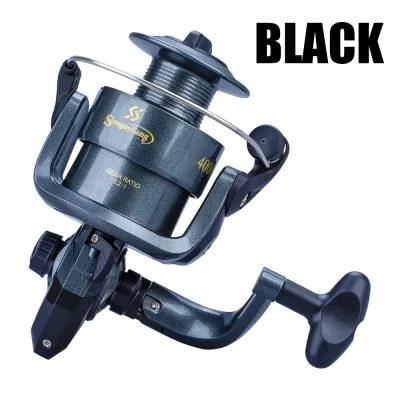
![[COD] Spinning Reel 6 Ball Bearings 5.2:1 Gear Ratio Spinning Fishing Reel 1000 2000 3000 Series Anti-Corrosion Drive Gear Fishing Wheel for Freshwater and Salwater](https://img.lazcdn.com/g/p/4bc7c8457631426ac9503525dd53b8ed.jpg_400x400q80.jpg_.webp)
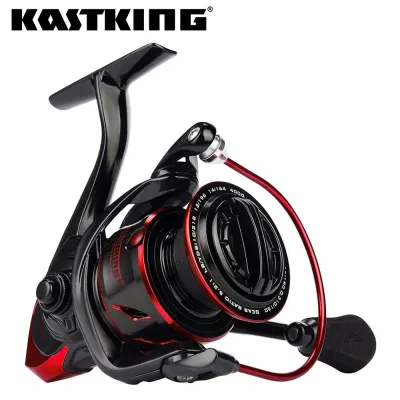
![[COD] Fishing Reel 5.2:1 GR Spinning Fishing Reel 1000 2000 3000 4000Series Anti-Corrosion Drive Gear Fishing Wheel for Freshwater and Salwater](https://img.lazcdn.com/g/p/aa219aa2ca4dff7d7c8ed1d28a366adf.jpg_400x400q80.jpg_.webp)
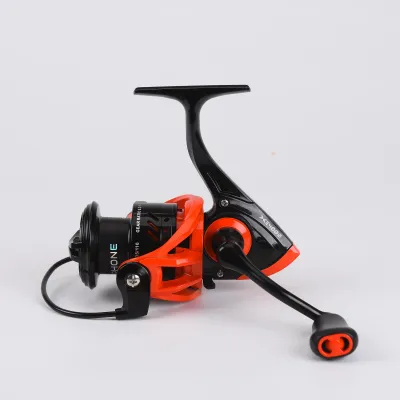
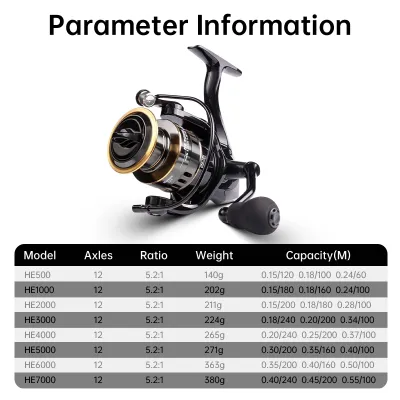
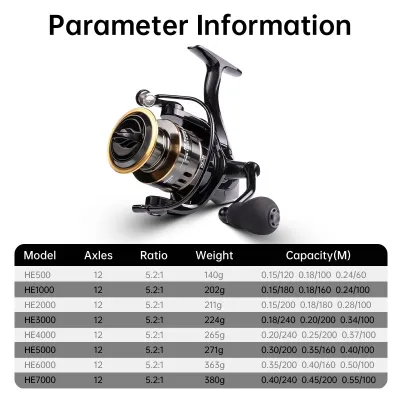
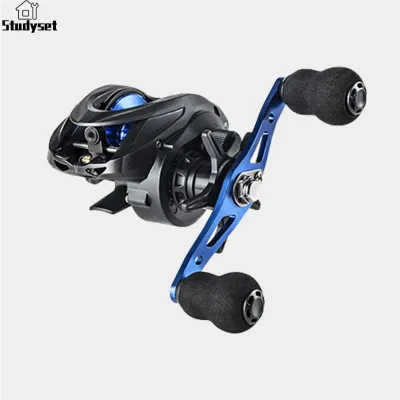
Prices are valid at publication and may change. Please refer to the product page for the latest price.
Physical comfort and ergonomics also play a critical role. Consider your dominant hand and how you prefer to hold the rod. Some reels mount on top of the rod, requiring you to balance the setup differently than reels that hang underneath. Testing how a reel feels in your hand, noting the weight distribution, and checking if the handle can be switched from left to right-hand retrieve will ensure you can fish for hours without hand fatigue.
Match the Reel to Your Target Species and Environment
The species you target and the environments you fish in dictate the mechanical demands placed on your reel. Larger, hard-fighting fish require robust drag systems that let out line smoothly under heavy tension, preventing the line from snapping. You must also consider line capacity; deep-water fishing or targeting fast-running species requires a spool that can hold hundreds of meters of line without jamming.

Water conditions vary dramatically, from calm freshwater lakes to turbulent coastal shores. If you plan to fish in heavy structural cover, such as submerged logs, mangrove roots, or thick aquatic vegetation, you need a reel with high cranking power to pull fish out before they tangle your line. Open-water fishing, by contrast, prioritizes casting distance and smooth line release over raw pulling power. When fishing near deep water or coastal areas, equipment cannot replace safety training; always check local weather forecasts, wear a personal flotation device, and understand your physical limits before heading out.
In tropical environments like the Philippines, high humidity and saltwater exposure present severe corrosion risks. Saltwater can quickly degrade internal gears and bearings, leading to mechanical failure. When shopping, carefully check manufacturer specifications and product labels for corrosion-resistant materials, such as sealed drag systems, anodized aluminum frames, and stainless steel ball bearings, to ensure your investment survives the harsh coastal elements.
Spinning Reels: Evaluating Versatility and Ease of Use
Spinning reels are widely regarded as the most versatile option for both novice and experienced anglers. They feature an open-face design with a fixed spool that sits parallel to the rod. When you cast, the line uncoils freely from the stationary spool, which virtually eliminates the risk of backlash. This mechanical simplicity makes them incredibly easy to learn and highly reliable in various weather conditions.
These reels excel in finesse fishing scenarios where you need to cast light lures, live bait, or lightweight rigs. They are the go-to choice for targeting light to medium species in both fresh and saltwater. Because they allow the line to flow freely with minimal friction, you can achieve impressive casting distances even with very light tackle.
However, spinning reels do have limitations that you should verify on product labels before buying. The way the line wraps around the fixed spool can occasionally introduce line twist, especially if you continue to reel while a fish is pulling drag. Additionally, because the line makes a 90-degree turn through the line roller before wrapping onto the spool, spinning reels generally offer less direct cranking power for extremely heavy loads compared to baitcasting designs.
Baitcasting Reels: Weighing Precision and Power
Baitcasting reels are designed for anglers who require absolute precision and maximum pulling power. Unlike spinning reels, baitcasters feature a revolving spool that rotates as you cast, keeping the line in direct alignment with the rod guides. This direct line path provides superior casting accuracy, allowing you to place lures exactly where fish are hiding.
This design is ideal for power-fishing applications, such as targeting large, aggressive species with heavy lures or thick braided lines. The physical orientation of the reel on top of the rod gives you excellent leverage and high cranking power, making it much easier to muscle strong fish out of dense cover or heavy structures.
The primary trade-off is the learning curve associated with the revolving spool. If the spool spins faster than the lure is traveling through the air, the excess line will bunch up into a severe tangle. To prevent this, you must learn to use your thumb as a manual brake on the spool. When selecting a baitcaster, check the user manual to understand how to adjust the magnetic or centrifugal braking systems, which help control the spool speed during different phases of the cast.
Spincast Reels: Considering Simplicity for Casual Outings
Spincast reels offer the most straightforward, user-friendly design on the market, making them a popular choice for casual outings. They feature a closed-face design where the spool and internal mechanisms are completely enclosed under a protective plastic or metal cone. Casting is activated by pressing and releasing a simple push-button on the back of the reel, which requires almost no practice to master.
This enclosed design keeps the line protected from wind and external obstructions, preventing the vast majority of common line tangles. It is an exceptional option for youth anglers, absolute beginners, or anyone planning a relaxed family fishing trip where the goal is immediate fun rather than mastering complex gear.
Despite their ease of use, spincast reels have notable performance trade-offs. The closed-face design introduces friction as the line rubs against the inner cone during a cast, which significantly limits your maximum casting distance. Furthermore, they typically have limited line capacity and basic drag systems, meaning they are not built to handle large, powerful fish or heavy-duty fishing environments.
Final Selection Checklist Before You Buy
Before finalizing your purchase, take a moment to cross-reference your diagnosed skill level and target species with the mechanical strengths of each reel type. If you are a beginner looking for a hassle-free experience, a spincast reel is a safe starting point. If you want a versatile tool that can handle a wide range of situations and light-to-medium fish, a spinning reel is highly recommended. For experienced anglers targeting large fish in heavy cover, a baitcasting reel is the optimal choice.
Next, verify rod compatibility to ensure your new reel fits your existing gear. Spinning reels must be paired with spinning rods, which feature large, downward-facing line guides to accommodate the wide loops of uncoiling line. Baitcasting reels require casting rods, which have smaller, upward-facing guides and a specialized trigger grip on the reel seat to help you maintain control.
Finally, protect your investment by purchasing from authorized retailers on your preferred online marketplace or at a local tackle shop. Whether you are investing ₱1,500 or ₱8,000, check the product listing for clear warranty terms and return policies. Verifying these details beforehand ensures that you can easily exchange the item if you encounter any manufacturing defects or compatibility issues.
Frequently Asked Questions (FAQ)
Can I use a spinning reel on a baitcasting rod?
No, you should avoid mounting a spinning reel on a baitcasting rod. Baitcasting rods are designed with smaller line guides that sit on top of the blank, which will choke the wide, looping line coming off a spinning reel, severely reducing your casting distance. Additionally, baitcasting rods feature a trigger grip on the reel seat that interferes with how you hold a spinning reel, making the setup highly uncomfortable and mechanically inefficient.
Do I need to clean my fishing reel after every trip?
Yes, basic maintenance is essential to preserve the performance and lifespan of your reel. If you fish in freshwater, a quick wipe-down with a damp cloth is usually sufficient. However, if you fish in saltwater, you must gently rinse the reel with fresh water after every trip to remove salt deposits, then follow the manufacturer’s specific disassembly, cleaning, and lubrication instructions. Proper maintenance not only keeps the gears running smoothly but also ensures you do not void the manufacturer’s warranty.

Community discussion
Share your experience or ask a question. Comments are reviewed before publication.