
Starting your fishing journey in the Philippines is an exciting venture, given the country’s vast coastlines, rich marine biodiversity, and abundant freshwater systems. However, walking into a tackle shop or browsing an online marketplace can quickly become overwhelming with hundreds of rod types, lengths, and materials on display. For most beginners, the most reliable and forgiving entry point is a medium-power spinning rod paired with a matching spinning reel. This setup offers the ideal balance of ease of use, versatility across different water conditions, and a gentle learning curve that keeps the sport fun rather than frustrating.
Choosing the right gear requires understanding where you plan to fish and what you hope to catch. By matching your equipment to your target environment and checking key specifications on the rod itself, you can avoid common beginner mistakes and ensure a successful day on the water.
Diagnose Your Fishing Environment and Target Species
Before purchasing any gear, you must identify where you will spend most of your time fishing. The Philippines offers diverse aquatic environments, each presenting unique challenges for an angler. Freshwater fishing typically takes place in inland lakes, rivers, or managed payponds, where you might target species like tilapia, dalag (mudfish), or hito (catfish). Saltwater fishing, which is highly popular across the archipelago, occurs along sandy beaches, concrete public piers, rocky shorelines, or mangrove estuaries. Common saltwater targets for beginners include kitang (spadefish), small talakitok (trevally), and lapu-lapu (grouper).
Products mentioned in this guide
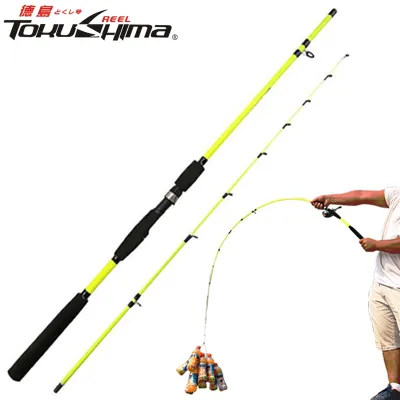
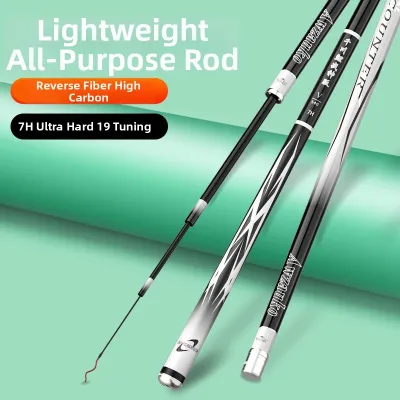
![[COD]Telescopic Fishing Rod 2.1M-2.7M High Carbon Ultra Light Portable Fishing Rod Super Hard Spinning Fishing Rod for Freshwater and Saltwater](https://img.lazcdn.com/g/p/82d36d975e8072240b5696306290fabd.jpg_400x400q80.jpg_.webp)
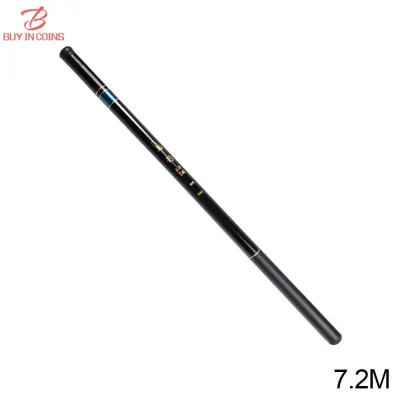
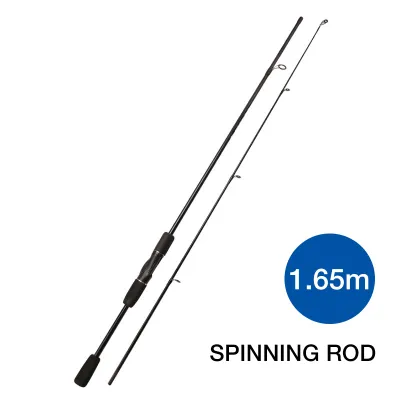
![[COD]Fishing Rod Set Full Set 1.8-3.3M Telescopic Fishing Rod and Spinning Fishing Reel Fishing Rod Set Fishing Rod and Reel Set](https://img.lazcdn.com/g/p/8e0c16fe9721dcb5ea94c2bf3a18f9d5.jpg_400x400q80.jpg_.webp)
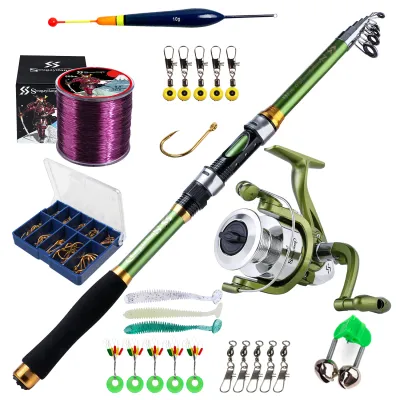
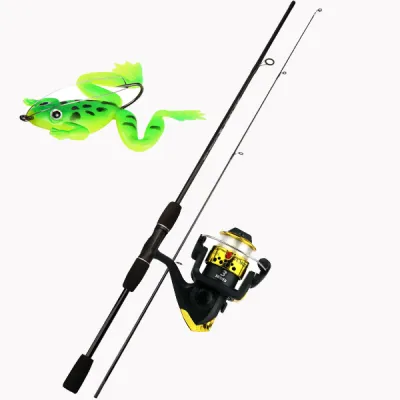
Prices are valid at publication and may change. Please refer to the product page for the latest price.
The size of your target fish dictates the strength of the gear you need. Beginners in local waters generally target fish weighing under two kilograms, such as tilapia or small snapper. Selecting heavy-duty offshore gear is unnecessary and makes casting tiring. Lightweight to medium gear allows you to feel subtle bites while providing enough strength to land your catch.
Physical space constraints also dictate your rod choice. If you plan to fish from crowded public piers or tight mangrove areas, a long rod is difficult to cast and prone to snagging. Conversely, casting from an open sandy beach requires a longer rod to push your bait past the breaking waves into deeper water.
Evaluate the Main Fishing Rod Types for Beginners
Understanding the different types of fishing rods and reels will help you select a setup that matches your current skill level. Spinning rod and reel combos are widely considered the best choice for those new to the sport. On a spinning rod, the reel hangs underneath the rod, and the line flows freely off an open spool during a cast. This design minimizes line friction and virtually eliminates the severe line tangles that often frustrate beginners. Spinning setups are highly versatile, allowing you to cast lightweight live bait or artificial lures with minimal effort, making them ideal for both freshwater ponds and coastal shores.

Spincast setups feature a closed-face reel with a push-button mechanism. While easy for absolute novices, they have notable drawbacks. The enclosed design limits casting distance and traps saltwater, sand, and humidity. In our tropical climate, this trapped moisture leads to rapid internal corrosion, reducing the gear’s lifespan.
Baitcasting setups position the reel on top of the rod with a rotating spool. While accurate and powerful, they require precise thumb control to prevent the spool from overrunning. For a beginner, a slight mistake in timing results in a severe line tangle, often called a bird’s nest, which can quickly ruin a day on the water.
Telescopic versus multi-piece rods is another key decision for travel. Many local anglers commute via motorcycle or jeepney, making portability essential. Telescopic rods collapse into a single compact piece but can sacrifice sensitivity and strength. Multi-piece rods (two or three sections) offer a better compromise, providing durability and a natural bend while fitting easily into a rod tube.
Check Key Specifications and Matching Conditions
Once you decide on a rod type, you must understand how to read the specifications printed on the rod blank, starting with rod power. Rod power refers to the rod’s resistance to bending under weight, ranging from Ultra-Light to Heavy. For general beginner use in the Philippines, a Medium (M) or Medium-Light (ML) power rod is highly recommended. This rating provides enough lifting strength to handle a fighting talakitok or a large tilapia while remaining sensitive enough to register the delicate nibbles of smaller baitfish.
Rod action describes where the rod bends under pressure. Fast-action rods bend near the tip, offering high sensitivity and quick hook sets. Moderate-action rods bend further down the middle, providing a forgiving cushion that prevents hooks from tearing out of a fish’s mouth during a fight.
Rod length balances casting distance against maneuverability. A rod between 6 and 7 feet is the ideal sweet spot for beginners. This length provides sufficient casting distance for open shores while remaining manageable in tighter spaces like piers or riverbanks.
Always check the manufacturer’s printed line and lure weight ratings on the rod blank. Using a line that is too heavy or a lure that exceeds the recommended limit can snap the rod tip. Conversely, using gear that is too light results in poor casting distance and accuracy.
Set Your Budget and Purchasing Path
Navigating your first purchase involves balancing cost, quality, and convenience, which is why buying a pre-matched spinning rod and reel combo is the most practical path for beginners. Manufacturers design these combos to balance perfectly, ensuring the reel size matches the rod’s power and weight ratings.
A starter budget for a reliable setup ranges from ₱1,500 to ₱3,000. Instead of spending entirely on the rod, allocate funds for essential terminal tackle. This includes quality monofilament line, hooks, sinkers, swivels, floats, and a basic tackle box.
Local physical tackle shops offer invaluable advantages. Visiting a shop allows you to hold the rod, check its weight, and ensure the reel seat holds securely. Staff can also provide localized advice on what is biting nearby. Online marketplaces offer wider selection, but you must verify seller ratings to ensure you purchase genuine, undamaged gear.
Before finalizing your purchase, inspect the rod guides for any cracks or rough edges that could fray your fishing line. Check the store’s return policy or warranty terms, especially for entry-level gear, to protect your investment against manufacturing defects.
Frequently Asked Questions (FAQ)
How do I clean my fishing rod after saltwater use?
Saltwater is highly corrosive, especially in hot, humid tropical climates. After every saltwater outing, gently rinse the entire rod and reel with cool, fresh water to wash away salt deposits. Avoid using high-pressure hoses, which can force salt and sand deeper into the reel’s internal gears. Wipe the rod down with a soft, clean cloth and let it air dry completely in a shaded, well-ventilated area before storing it. Avoid harsh household detergents or chemical solvents, as these can degrade the protective coatings on the rod blank and guides.
When should a beginner upgrade from their first fishing rod?
You should consider upgrading when you notice physical limitations in your current gear or when your skills outgrow its capabilities. Physical signs include cracked guides, a slipping reel seat, or persistent corrosion that hinders smooth casting. From a skill perspective, if you find yourself wanting to target larger species that require heavier lines, or if you want to practice specialized techniques like ultra-light lure casting or heavy bottom fishing, a specialized rod will become necessary. Visit a local tackle shop to handle different mid-range rods and seek advice on matching your next purchase to your evolving fishing style.

Community discussion
Share your experience or ask a question. Comments are reviewed before publication.