
Selecting the ideal heavy-duty 3×3 tent requires matching its structural design to your specific environment and operational needs. A 3×3-meter (approximately 10×10 feet) footprint is the industry standard for versatile outdoor shelter, but a design built for a weekend market bazaar will fail quickly if pitched on an exposed mountain ridge. To make the right choice, you must evaluate whether your activity demands the rapid, one-person deployment of a popup canopy, the robust wind-shedding geometry of a dome tent, or the open, high-clearance interior of a rigid frame tent.
Understanding the Three Main Heavy-Duty 3×3 Tent Designs
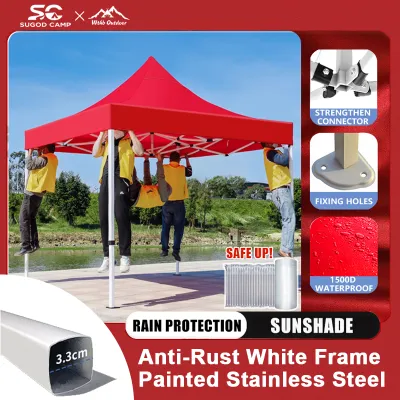
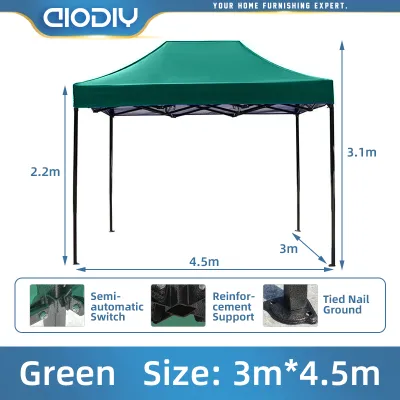
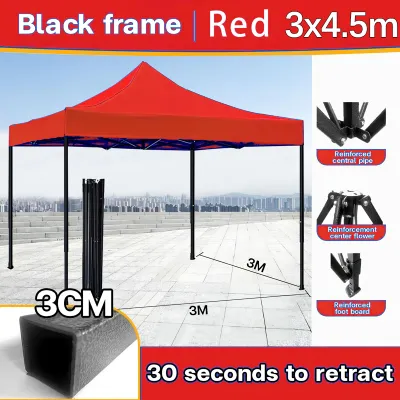
To choose effectively, you must first understand how these three designs handle physical forces and spatial layout. Popup canopies utilize an interconnected, scissor-action accordion frame that expands outward from the center. This design allows for rapid setup, often taking under ten minutes, but the numerous moving joints represent potential failure points under high wind loads. Heavy-duty versions typically feature thick steel or anodized aluminum legs to offset this vulnerability, though this significantly increases the carrying weight.
Frame tents, by contrast, rely on a rigid skeleton of individual poles connected by heavy-duty corner joints, over which the canopy fabric is stretched. Because they lack a center pole or scissor joints, they offer completely unobstructed interior space and superior structural stability. However, assembly is a manual, multi-person process that requires assembling the rafters and legs piece by piece, making them less suitable for quick, single-day events.
Products mentioned in this guide
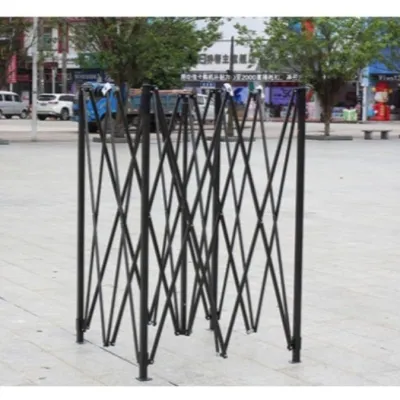
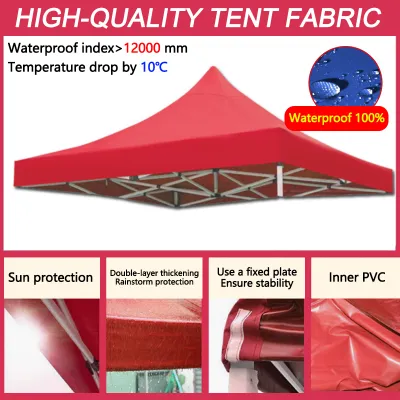
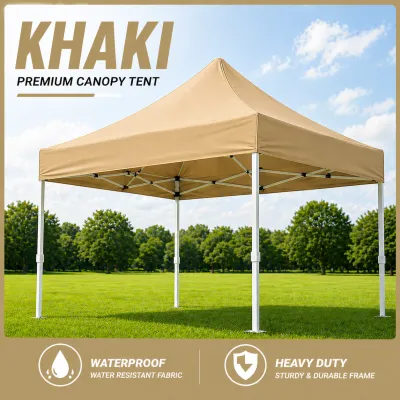
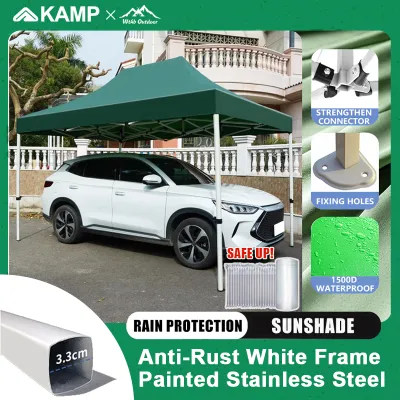
Prices are valid at publication and may change. Please refer to the product page for the latest price.
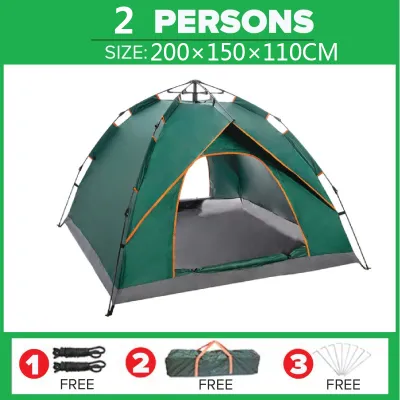
Dome tents employ flexible, tensioned poles that cross over the center to create a self-supporting, aerodynamic structure. This design is highly efficient at shedding wind and rain, making it the standard for overnight outdoor adventures. The trade-off is spatial efficiency; the sloping walls of a dome tent reduce the standing headroom near the perimeter, meaning a 3×3 dome tent feels significantly smaller inside than a 3×3 popup canopy with vertical walls.
Matching Tent Types to Your Specific Outdoor Activity
Every outdoor setting introduces unique environmental stressors, from intense tropical sun and sudden downpours to high wind gusts and hard paved surfaces. Aligning your tent’s architecture with these conditions ensures safety, comfort, and longevity.

Weekend Camping and Hiking Basecamps
For overnight stays in the wilderness, weather resistance and sleeping capacity are your primary concerns. Dome tents are the superior choice here due to their low profile and aerodynamic shape, which allow them to shed high winds that would easily buckle a flat-sided popup canopy. When selecting a camping tent, verify the manufacturer’s hydrostatic head rating on the product label; a rating of 2,000mm or higher is recommended to withstand heavy tropical rainstorms.
Additionally, look for fully taped or welded seams and a bathtub-style floor design, which prevents ground water from seeping into your sleeping area. Packed weight and dimensions are critical if you must carry the gear to your campsite. While a heavy-duty dome tent can weigh between 8 to 15 kilograms, a heavy-duty frame or popup tent can easily exceed 25 kilograms, making them impractical for anything other than direct car-camping setups where the vehicle is parked adjacent to the pitch site.
Market Vending and Commercial Pop-Ups
Commercial use in local weekend markets or outdoor bazaars demands rapid deployment, high visibility, and maximum vertical clearance. Popup canopies are the industry standard for these environments because a single vendor can often set them up with minimal assistance. For frequent commercial use, look for frames with square or hexagonal legs measuring at least 40mm in diameter, as thin-walled budget frames will quickly bend or snap at the joints during repeated assembly.
The canopy fabric must also withstand prolonged exposure to intense sunlight. Verify that the fabric has a certified UV-protection rating (such as UPF 50+) and a high denier count to prevent premature tearing and color fading. Because market stalls are frequently set up on concrete or asphalt where stakes cannot be driven into the ground, you must budget for dedicated leg weights. Heavy-duty sandbags, cast-iron weight plates, or water-filled weight boots—often costing around ₱1,000 to ₱3,000 per set—are mandatory to prevent the canopy from becoming airborne in sudden gusts.
Backyard Events and Gatherings
For hosting family gatherings, backyard fiestas, or semi-permanent outdoor dining spaces, aesthetics, shade coverage, and guest comfort are paramount. Frame tents are highly suited for these scenarios because their open, high-clearance interiors allow you to place tables, chairs, and buffet setups right up to the perimeter without guests bumping their heads. They also offer excellent compatibility with attachable sidewalls, which can be zipped or Velcroed into place to block late-afternoon sun, wind, or rain.
When using a tent for backyard events, check the clearance height specifications to ensure it can safely accommodate any lighting fixtures, fans, or catering equipment you plan to use. If you intend to leave the tent erected for several days or weeks, ensure the frame is anchored securely into the lawn using heavy-duty spiral stakes and guy lines. Long-term outdoor exposure in humid climates requires regular inspection; standing water must be cleared from the roof promptly to prevent the fabric from stretching, sagging, or developing mold.
Key Specifications to Check Before You Buy
To avoid falling victim to misleading “heavy-duty” marketing claims, you must learn to read the technical specifications on the manufacturer’s product tag or spec sheet. The density and strength of the fabric are measured in denier (D). For a tent to be legitimately considered heavy-duty, the canopy fabric should be at least 300D, while commercial-grade popups often utilize 500D or 600D polyester. Ensure the fabric features a polyurethane (PU) or polyvinyl chloride (PVC) backing, which provides the actual water barrier.
Next, examine the frame specifications. Steel frames should be powder-coated or galvanized to resist rust, which is especially critical in humid, coastal regions. If choosing aluminum, ensure it is structural-grade, anodized aluminum, which offers a high strength-to-weight ratio but comes at a premium price. Check the wall thickness of the metal tubing; heavy-duty frames typically feature a wall thickness of 1.2mm to 2.0mm, whereas cheap, light-duty alternatives often measure under 0.8mm.
Finally, inspect the physical construction of the stress points. Look for double-stitched seams, reinforced corner patches where the fabric contacts the metal frame, and heavy-duty nylon or metal joint brackets rather than thin plastic connectors. A manufacturer’s warranty that specifically covers structural components is a strong indicator of build quality, though you should always read the fine print to see if wind damage or improper anchoring voids the coverage.
Cross-Scenario Compatibility: Can One Tent Do It All?
While it is tempting to purchase a single heavy-duty 3×3 tent to handle both weekend camping trips and occasional market vending, the physical trade-offs make a single-tent solution highly impractical. The heavy steel frame and vertical-walled design of a commercial popup canopy make it far too heavy and bulky to transport in a standard car trunk alongside camping gear, and its flat roof profile is highly vulnerable to pooling water and collapsing during overnight storms.
Conversely, using a dome camping tent for a commercial market stall is equally problematic. The sloping walls severely limit the standing headroom for customers, and the enclosed design prevents the open, inviting layout required to display goods effectively. Furthermore, many market organizers prohibit the use of dome tents due to safety and aesthetic guidelines.
If your budget allows, investing in two specialized tents—a lightweight, aerodynamic dome tent for camping and a rugged, quick-setup popup canopy for commercial or backyard events—is ultimately safer and more cost-effective. Attempting to force one design into the wrong scenario often results in ruined gear, safety hazards, and the premature expense of replacing a damaged shelter.
Frequently Asked Questions (FAQ)
Is a 3×3 tent large enough for a family camping trip?
A 3×3-meter footprint provides 9 square meters of ground space, which is theoretically large enough to fit up to four standard sleeping pads side by side. However, in a dome tent design, the sloping walls significantly reduce the usable headroom and vertical space near the edges, meaning gear storage will quickly crowd the sleeping area. For a family of four, a 3×3 dome tent is comfortable only if you store your main luggage and bulky gear in your vehicle or under an external vestibule.
How do I maintain a heavy-duty tent in humid conditions?
To prevent mold, mildew, and fabric rot in humid tropical climates, you must never store your tent while it is damp. After use, perform a visual inspection to remove any leaves, dirt, or insects, and wipe down the frame to remove moisture or salt residue. If you must pack up the tent in the rain, unpack it within 24 hours and pitch it in a shaded, well-ventilated area until both the fabric and the carrying bag are completely dry. For stubborn dirt, use a soft sponge and mild, non-detergent soap, as harsh chemicals can strip away the protective waterproof coatings.

Community discussion
Share your experience or ask a question. Comments are reviewed before publication.