
Selecting the right fishing rod requires matching the gear to the specific aquatic environments and species found across the Philippine archipelago. With thousands of islands offering diverse fishing grounds—from freshwater lakes and brackish estuaries to deep marine drop-offs—anglers must carefully evaluate their target techniques before choosing a rod. KastKing has become a popular brand among local anglers due to its wide range of accessible, technique-specific rods. Finding the right match involves analyzing your primary fishing environment, understanding the target species, and verifying key rod specifications to ensure your gear can withstand tropical conditions.
Identify Your Fishing Technique and Target Species
Before browsing specific rod models, define where you plan to fish. The Philippines offers distinct aquatic environments, including freshwater lakes (such as Taal or Laguna de Bay), brackish mangrove estuaries, sandy inshore beaches, and deep offshore waters. Each environment presents unique challenges, such as high salinity, strong currents, and underwater structures like sharp volcanic rocks or dense mangrove roots that can easily snap a line or damage a rod under pressure.
Next, consider your target species and their fighting characteristics. Freshwater targets like tilapia, hito (catfish), and dalag (mudfish) generally require lighter, more sensitive rods that allow you to feel subtle bites and navigate shallow vegetation. In contrast, saltwater species like lapu-lapu (grouper), talakitok (trevally), and mangrove jack are known for powerful, sudden runs into heavy cover. Extracting these fish requires a rod with a strong backbone. For offshore game fish like tuna or dorado, you will need heavy-duty gear designed to handle sustained, high-endurance battles in open water.
Products mentioned in this guide
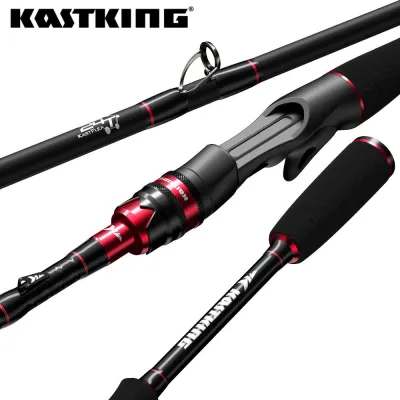
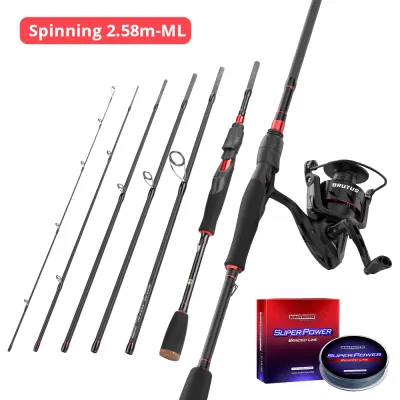
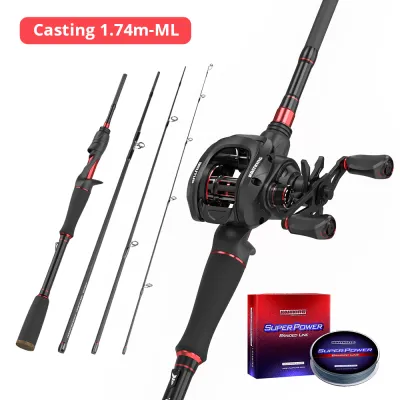
Prices are valid at publication and may change. Please refer to the product page for the latest price.
Finally, identify your primary fishing technique. Lure casting requires a lightweight rod that minimizes fatigue during hours of repetitive casting, while bottom fishing with heavy sinkers demands a robust rod capable of lifting weight from the sea floor. Trolling requires a stiff, durable rod that can handle the constant drag of a moving boat, and fly fishing requires highly specialized flexibility to cast lightweight flies. Matching your rod to both the species and the technique ensures better lure presentation and a much higher success rate.
Match KastKing Rod Categories to Your Fishing Style
KastKing designs rods tailored to specific reel types and fishing scenarios. The primary categories include spinning rods, baitcasting rods, and highly portable telescopic or multi-piece travel rods. Choosing between these categories depends on your experience level, the type of reel you prefer, and how you plan to transport your gear to your favorite fishing spot.

Each rod category serves a distinct purpose on the water. For example, a kayak angler navigating narrow rivers in Mindanao will have different storage and casting needs compared to a surf caster on the beaches of Aurora. Matching the rod category to your physical environment and transport method is the first step toward a successful outing.
Spinning Rods for Versatile Lure and Bait Fishing
Spinning rods are the most versatile option for both beginners and experienced anglers in the Philippines. These rods feature large guides on the underside of the blank to accommodate the wide loops of line coming off a spinning reel. This design minimizes friction, making it easier to cast lightweight lures like soft plastics, small crankbaits, and live bait rigs into the wind.
If you target light to medium species such as tilapia in local ponds or small talakitok along sandy shores, a spinning rod offers excellent control and ease of use. However, spinning setups have limitations when fishing in heavy cover, such as dense water hyacinths or thick mangrove roots. They generally do not offer the same winch-like pulling power or pinpoint casting accuracy as baitcasting setups when trying to extract a stubborn lapu-lapu from a deep crevice.
Baitcasting Rods for Precision and Heavy Cover
Baitcasting rods are designed with the reel seat and guides on top of the blank, built specifically to pair with baitcasting reels. This configuration provides experienced anglers with superior leverage, direct line control, and pinpoint casting accuracy. It is highly effective for techniques like flipping and pitching lures into tight pockets of structure, such as submerged logs or dock pilings.
In Philippine waters, a baitcasting rod is excellent for targeting predatory species like dalag or mangrove jack that hide deep within heavy cover. The direct line path allows you to use heavier braided lines and apply immediate pressure to stop a fish from wrapping your line around obstacles. The primary trade-off is the learning curve; baitcasting reels require active thumb braking to prevent backlashes, which can be frustrating for beginners, especially when casting into strong coastal breezes.
Telescopic and Travel Rods for Portability
For anglers who love island-hopping, backpacking, or fishing from small kayaks and public transport, portability is a major factor. KastKing offers telescopic and multi-piece travel rods designed to collapse or break down into compact carrying cases. These rods fit easily into a backpack, a motorcycle saddlebag, or carry-on luggage for flights to destinations like Siargao or Palawan.
While highly convenient, travel rods require careful inspection. Multi-piece and telescopic designs inherently have more joint connections, which can slightly reduce overall sensitivity and create flat spots in the rod’s bend compared to one-piece or two-piece rods. Before casting, always verify that the locking mechanisms are secure and that all guides are perfectly aligned. This prevents premature wear on your line and ensures the rod bends evenly under the weight of a fish.
Check Key Rod Specifications Before Purchasing
To select the right KastKing rod, you must understand the technical specifications printed on the rod blank near the handle. These specifications dictate how the rod behaves under load and whether it matches your intended fishing style.
Rod Power: This refers to the rod’s resistance to bending, ranging from ultra-light to heavy. Ultra-light rods are perfect for small freshwater species like tilapia, offering maximum excitement and sensitivity. Medium to medium-heavy rods are the workhorses for general inshore and freshwater fishing, handling a wide range of lure weights. Heavy power rods are necessary when targeting large reef species or offshore game fish where you must exert significant pressure to control the fish.
Rod Action: This describes where the rod bends along its length. Fast-action rods bend primarily near the tip, providing high sensitivity and quick hook sets, which is ideal for single-hook lures like soft plastics. Moderate or slow-action rods bend deeper down the blank, absorbing the shock of hard-fighting fish and making them better suited for treble-hook lures like crankbaits, as they help prevent the hooks from tearing out of the fish’s mouth.
Rod Length: Length influences both casting distance and leverage. Longer rods (7.5 to 9 feet or more) are excellent for surf casting or open-water situations where maximizing distance is critical. Shorter rods (5.5 to 6.5 feet) offer better accuracy and maneuverability when fishing in tight spaces, such as overgrown riverbanks or from a crowded boat.
Material Composition: KastKing rods utilize various materials, including graphite (carbon fiber), fiberglass, and composite blends. Graphite offers high sensitivity and lightweight performance, allowing you to feel subtle bites, but it can be brittle under sudden, extreme loads. Fiberglass is highly durable and flexible, making it ideal for heavy trolling or bait fishing, though it is heavier and less sensitive. Composite rods combine both materials to offer a balance of durability and sensitivity.
Verify Authenticity and Purchase from Reliable Channels
As the popularity of recreational fishing grows in the Philippines, so does the risk of encountering counterfeit fishing gear. When shopping for KastKing rods, it is crucial to prioritize official brand stores, authorized local distributors, and reputable outdoor retailers. Purchasing from unverified sellers on online marketplaces increases the risk of buying low-quality replicas that lack the structural integrity of genuine products.
Before making a purchase on any ecommerce platform, carefully check the seller’s ratings, read customer reviews, and verify their return policies. Look for reviews that include photos of the packaging and the rod’s logo to confirm authenticity. Compare prices across multiple authorized sellers; if a deal seems too good to be true and is priced significantly lower than the standard market rate in ₱, it may be a counterfeit or a damaged item.
Upon receiving your rod, perform a thorough physical inspection before taking it to the water. Check the alignment of the guides from the reel seat to the tip to ensure they form a straight line. Inspect the rod blank for any hairline cracks, deep scratches, or blemishes in the protective coating. Gently flex the rod to ensure there are no unusual creaking sounds, which could indicate internal structural damage or poor bonding at the joints.
Frequently Asked Questions (FAQ)
How do I clean my KastKing rod after saltwater fishing?
Saltwater is highly corrosive and can quickly damage even high-quality fishing gear. After every saltwater outing, rinse your KastKing rod thoroughly with cool, clean fresh water to remove salt crystals, sand, and grime. Pay close attention to the guides, reel seat, and metal hoods. Use a soft cloth to wipe down the entire blank. Avoid using high-pressure hose sprays, as the force can push salt and water into the reel seat threads or under the guide wraps, leading to hidden corrosion. Allow the rod to air dry completely in a shaded, well-ventilated area before storing it in a rod sleeve or rack.
Can I use a freshwater KastKing rod for saltwater fishing?
While you can physically use a freshwater rod in saltwater, doing so carries significant risks. Freshwater rods often feature components, such as guide frames and reel seat hoods, made from materials that are not optimized for harsh marine environments. If you choose to use a freshwater rod in saltwater, you must perform a rigorous freshwater rinse and dry immediately after use to prevent rapid rust and corrosion. For long-term durability and performance, it is highly recommended to check the manufacturer’s specifications and select a rod explicitly rated for saltwater use, which features corrosion-resistant components like stainless steel or titanium guides.

Community discussion
Share your experience or ask a question. Comments are reviewed before publication.