
Selecting the right volleyball ball mikasa requires a clear understanding of your playing environment, your skill level, and your training goals. Mikasa is globally recognized for engineering top-tier volleyballs, but their extensive lineup means a ball designed for an air-conditioned indoor stadium will perform poorly—and degrade quickly—if used on a sandy beach or a concrete outdoor court. By matching the specific construction, materials, and aerodynamic properties of a Mikasa model to your typical playing conditions, you ensure optimal flight consistency, reduce the risk of arm fatigue, and get the maximum lifespan out of your investment. Whether you are a varsity player preparing for a major tournament, a weekend warrior playing on local outdoor courts, or a beginner looking to avoid painful forearm stings, finding the perfect match is the first step toward elevating your game.
Indoor vs. Outdoor: How Court Type Dictates Your Choice
Indoor volleyball courts are controlled environments where precision, speed, and predictable flight dynamics are paramount. To meet these demands, indoor Mikasa volleyballs are engineered with advanced aerodynamics and premium synthetic leather covers. These balls feature laminated panels that are seamlessly bonded together, creating a perfectly spherical shape that minimizes air resistance and ensures a true trajectory when set or spiked. The outer composite materials are exceptionally soft to the touch, offering players maximum tactile feedback and precise control over spin. However, this sophisticated construction is highly delicate and is not designed to withstand contact with abrasive surfaces or moisture.
In contrast, outdoor and beach volleyball environments present a variety of harsh elements, including abrasive sand, wind, direct sunlight, and high tropical humidity. Beach-specific Mikasa volleyballs are constructed with water-resistant synthetic materials and utilize machine-stitched seams rather than lamination. These deeper, stitched seams are functional design choices; they prevent sand particles and water from penetrating the inner carcass of the ball, which would otherwise increase its weight and ruin its balance. Meanwhile, outdoor hardcourt volleyballs are built with heavy-duty vulcanized rubber or ultra-durable synthetic covers designed specifically to endure the intense friction of playing on concrete, asphalt, or dirt.
Products mentioned in this guide
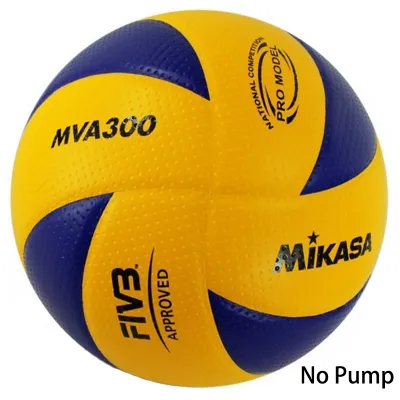
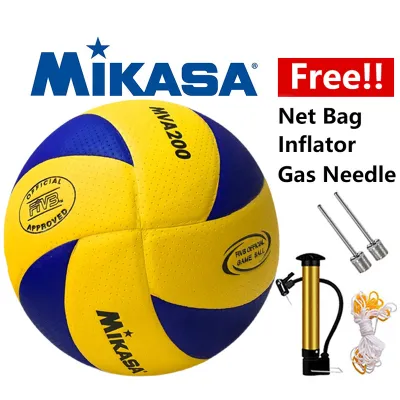
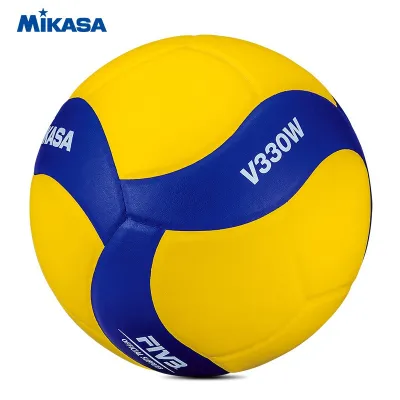
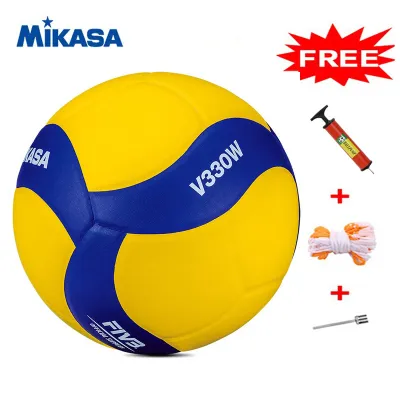
Prices are valid at publication and may change. Please refer to the product page for the latest price.
Using the wrong type of ball on a given court surface will inevitably lead to disappointing performance and rapid product failure. An indoor ball used on an outdoor concrete court will suffer immediate scuffing, panel peeling, and structural misalignment, rendering it unusable within a few sessions. Conversely, a heavy outdoor or beach ball will feel sluggish and overly dense on a polished indoor wooden floor, disrupting the fast-paced flow of gym play. To avoid these issues, always check the manufacturer’s label, packaging, or product specifications to confirm the intended court surface before making your purchase.
Matching the Ball to Your Playing Level
Competitive and Official Matches
If you are playing in organized leagues, collegiate tournaments, or high-level club competitions, your choice of equipment must align with international standards. Competitive players require a volleyball ball mikasa that carries official certifications, such as the FIVB (Fédération Internationale de Volleyball) approved logo, printed directly on the ball’s outer panels. These certified models undergo rigorous testing to ensure they meet exact specifications for weight, circumference, spherical deviation, and rebound height, guaranteeing that your training sessions mirror the exact conditions of an official match.

In addition to official certifications, elite competitive models incorporate advanced surface technologies designed to optimize grip and sweat management. During intense, high-energy matches, players sweat heavily, which can make a standard smooth ball slippery and difficult to control. To combat this, Mikasa utilizes specialized double-dimple microfiber covers on its flagship match balls. This textured surface creates tiny air pockets that stabilize the ball’s flight path and provide setters and passers with a secure, non-slip grip even under wet conditions.
Club Training and Advanced Practice
For club athletes, varsity players, and dedicated enthusiasts who train multiple times a week, durability and consistency are the primary concerns. Training at a high level requires a ball that can withstand hours of repetitive hitting, serving, and digging drills without losing its shape or air pressure. At the same time, the ball must closely mimic the weight, size, and flight characteristics of an official match ball to ensure that players develop correct muscle memory and spatial awareness.
To bridge this gap, Mikasa offers specialized training-grade models that feature the exact same panel configurations and weight profiles as their elite counterparts, but utilize slightly more cost-effective, highly durable synthetic composite materials. These materials are engineered to resist wear from daily gym floor contact while maintaining a highly responsive feel. When selecting a training model, always cross-reference its technical specifications with your league’s official match ball to guarantee a seamless transition during game days.
Recreational Play and Beginners
For physical education classes, casual weekend games, and absolute beginners, the physical sensation of hitting a volleyball is a critical factor. Standard competitive volleyballs are highly pressurized and firm, which can cause significant forearm pain, bruising, and a discouraging stinging sensation for players who have not yet conditioned their arms. Beginners should prioritize Mikasa models that are specifically designed with a “soft touch” composite cover or an underlying foam backing layer that cushions the impact of receives and blocks.
Recreational play also demands versatile gear that can handle occasional mis-hits, outdoor grass setups, and varied storage conditions without requiring immediate replacement. Opting for a budget-friendly, high-durability Mikasa model allows beginners and casual groups to focus on learning the fundamentals of the sport—such as passing, setting, and serving—without the barrier of physical discomfort or the worry of damaging an expensive piece of professional equipment.
Scenario-Based Mikasa Model Guide
Indoor Court Scenarios
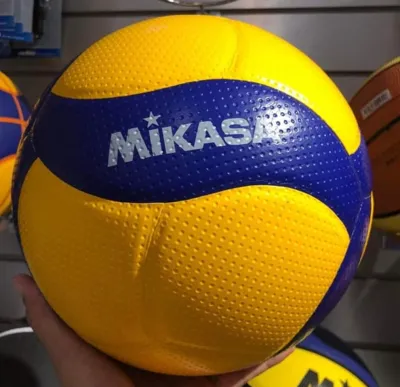
The Gold Standard (V200W): The Mikasa V200W is the premier choice for official indoor competitions and serves as the exclusive game ball for major international tournaments. This model features an aerodynamic 18-panel design and a double-dimple microfiber cover that delivers exceptional flight stability and anti-slip grip. It represents the premium price tier, typically ranging from ₱4,500 to ₱6,000 in the local market. When purchasing a V200W, always inspect the packaging to verify its official FIVB certification markings.
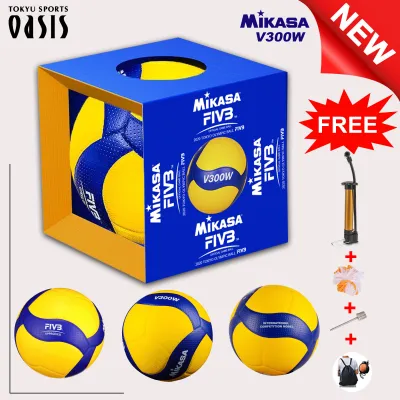
The Club Trainer (V300W): For competitive club teams and advanced training sessions, the Mikasa V300W offers a highly comparable alternative to the flagship model at a slightly more accessible mid-tier price point, usually between ₱3,000 and ₱4,000. While it utilizes a single-dimple microfiber surface instead of the double-dimple layout, it retains the identical 18-panel configuration, weight, and rebound characteristics. This makes it an outstanding, durable choice for rigorous daily team practices.
Beach and Sand Scenarios
The Beach Benchmark (VLS300): For those who play on the sand, the Mikasa VLS300 is the benchmark for competitive beach volleyball. This model features a specialized 10-panel design that enhances visibility against bright skies, alongside a machine-stitched, highly water-resistant composite cover that prevents water weight gain in humid coastal conditions. It sits in the premium price bracket of ₱4,000 to ₱5,500, making it a worthy investment for serious beach players.
The Recreational Beach Alternative (VXT30): If you are looking for a casual companion for weekend beach outings or resort games, the Mikasa VXT30 is an excellent, budget-friendly option. Priced around ₱1,500 to ₱2,500, it mimics the iconic look of the VLS300 but is built with robust materials optimized for casual playability and long-term durability against sand and sun exposure.
Outdoor Hardcourt and Casual Scenarios
The Concrete Survivor (VS Series): Playing on concrete, asphalt, or dirt courts requires a ball built for extreme abrasion resistance. Mikasa’s VS series, featuring vulcanized rubber covers, is engineered specifically to survive these punishing surfaces without tearing or peeling. These highly durable models are very affordable, typically priced between ₱800 and ₱1,500, making them the perfect choice for neighborhood street games and local outdoor courts.
The Entry-Level All-Rounder (V330W): For players who want a softer feel than rubber but still need a ball that can handle occasional outdoor play, the Mikasa V330W is a versatile synthetic leather option. It features a laminated construction that provides a comfortable touch for recreational indoor and smooth outdoor play. Always check the retailer’s description for “outdoor” or “recreational” tags to ensure it matches your specific playing environment.
Pre-Purchase Verification and Authenticity Checks
Due to the global popularity of the volleyball ball mikasa brand, counterfeit products are highly common across online marketplaces and unauthorized physical stores. Purchasing a counterfeit ball is a major disappointment, as fake models suffer from poor air retention, unbalanced weight distribution, off-center valves, and cheap outer materials that peel after only a few uses. To protect your investment, perform a close physical inspection of the ball before purchasing or immediately upon delivery. Check the panel seams for clean, uniform lamination or stitching, and ensure the inflation valve is perfectly centered and flush with the surface.
Genuine Mikasa volleyballs feature official security holograms, distinct brand packaging, and authorized retailer tags that are difficult for counterfeiters to replicate. Look closely at the printed logos and text on the ball’s surface; authentic models feature crisp, clear lettering with no smudges, spelling errors, or misaligned graphics. Furthermore, genuine balls have a distinct, balanced weight in the hand, whereas fakes often feel unusually light, heavy, or lopsided when spun in the air.
To guarantee you are receiving an authentic product, always purchase your volleyball from reputable sports specialty stores, official brand flagship channels, or verified local distributors. Avoid purchasing from unverified third-party sellers on general ecommerce platforms, especially if the listed price is significantly lower than the standard market rates. Investing in a genuine Mikasa ball ensures you get the exact aerodynamic performance, safety, and durability that the brand has spent decades perfecting.
Maintenance Tips for Tropical and Outdoor Conditions
The hot, humid tropical climate of the Philippines presents unique challenges for sports equipment maintenance. High humidity can degrade synthetic leather adhesives, while sweat and dirt can erode the outer protective coatings of your ball. To maximize the lifespan of your volleyball, establish a consistent cleaning routine. After every play session, gently wipe down the surface using a soft, damp cloth and mild soap. Never use harsh chemical solvents, alcohol-based sanitizers, or abrasive scrubbers, as these will strip the synthetic leather and cause it to dry out, crack, or peel.
Proper storage is equally critical to preserving the ball’s structural integrity. Never leave your volleyball in direct, harsh sunlight for extended periods, and avoid storing it inside hot cars or unventilated metal lockers. Extreme heat causes the air inside the internal rubber bladder to expand rapidly, which can warp the ball’s spherical shape, weaken the laminated seams, and cause the outer panels to bubble or delaminate. Store your ball in a cool, dry, and well-ventilated space inside a breathable mesh bag.
Finally, maintaining correct inflation pressure is essential to protect the seams and ensure a consistent bounce. Always refer to the recommended inflation guidelines printed directly near the ball’s valve (typically ranging from 4.26 to 4.61 PSI for indoor models). Use a dedicated ball pump equipped with a reliable pressure gauge, and always moisten the inflation needle with water or glycerin before inserting it into the valve. This simple step prevents the needle from tearing or dislodging the delicate rubber valve seal, which is the primary cause of slow air leaks.
Frequently Asked Questions (FAQ)
How do I know the correct air pressure for my Mikasa volleyball?
The recommended inflation pressure is printed directly on the surface of the ball, usually right next to the inflation valve. For most standard Mikasa indoor volleyballs, this pressure is specified in kilograms per square centimeter (kgf/cm²) or pounds per square inch (PSI), typically falling between 0.30 to 0.325 kgf/cm² (approximately 4.26 to 4.61 PSI). Always use a pump with a built-in pressure gauge to measure this pressure accurately, as over-inflation can split the seams, while under-inflation ruins the ball’s rebound performance.
Can I use an indoor Mikasa volleyball for outdoor grass play?
While it is physically possible to play on grass with an indoor ball, it is highly discouraged. Indoor synthetic leather is designed specifically for smooth, polished gym floors and is highly susceptible to moisture absorption from dew or damp grass, which will ruin the internal bladder and weight balance. Additionally, hidden dirt, twigs, or rough patches on the ground can easily scuff and peel the delicate outer panels. To protect your investment, reserve your premium indoor balls for the gym and use a designated outdoor synthetic or rubber model for grass and park play.

Community discussion
Share your experience or ask a question. Comments are reviewed before publication.