
Choosing the right molten ball volleyball depends heavily on where you play and how serious your games are. Molten is a dominant brand in Philippine volleyball, from local barangay leagues to collegiate tournaments. To get the best performance and value, you must match the ball’s material, construction, and design to your primary playing surface—whether that is a polished indoor hardwood court, a sandy beach, or a concrete outdoor training ground.
Identifying Your Primary Playing Environment and Skill Level
Before investing in a new volleyball, you need to evaluate where you will play most of your matches. Indoor courts, outdoor concrete courts, and sandy beaches present completely different physical challenges. Indoor courts feature consistent, flat wooden or synthetic flooring where a ball must deliver predictable, high-speed aerodynamic flight. Beach sand, on the other hand, is highly uneven and exposed to wind, requiring a slightly larger, lighter ball with a softer touch to allow players to adjust their control under shifting outdoor conditions. General training environments, such as open-air covered courts, demand exceptional durability to withstand rough surfaces and high heat.
Your skill level also determines which ball features you should prioritize. Beginners require a softer, cushioned touch to minimize forearm discomfort and build confidence during repetitive passing drills. Intermediate players benefit from synthetic leather balls that offer a balance of durability and responsive control. Competitive athletes need premium match balls that feature advanced aerodynamic technologies, precise weight distribution, and moisture-absorbing surfaces to maintain optimal grip during high-stakes rallies.
Products mentioned in this guide
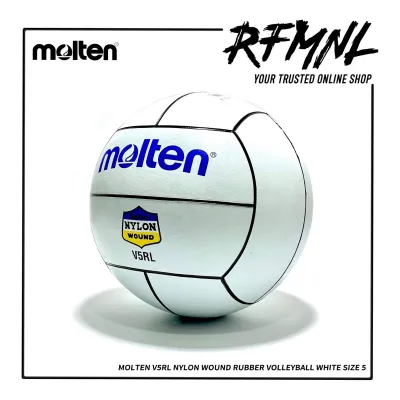
Prices are valid at publication and may change. Please refer to the product page for the latest price.
Use this quick self-assessment to narrow down your category before looking at specific Molten models:
- Primary Venue: Is your court indoor hardwood/synthetic, outdoor concrete, or beach sand?
- Frequency of Play: Do you play casual weekend games, participate in daily training drills, or compete in organized league tournaments?
- Player Skill Level: Are you a beginner learning the basics, an intermediate player refining your sets and spikes, or an advanced competitor?
- Weather Exposure: Will the ball be regularly exposed to intense tropical sun, high humidity, or coastal salt air?
Choosing a Molten Ball Volleyball for Indoor Courts
Indoor volleyball is a game of high speed, precise sets, and powerful spikes. To perform at this level, indoor balls are engineered with specific structural characteristics. They typically feature an 18-panel construction designed to optimize flight stability and reduce air resistance. Premium indoor models utilize genuine or high-grade synthetic leather covers that incorporate moisture-managing surfaces. This technology prevents the ball from becoming slippery when players sweat, ensuring a secure grip and precise setting touch even during long, intense rallies.

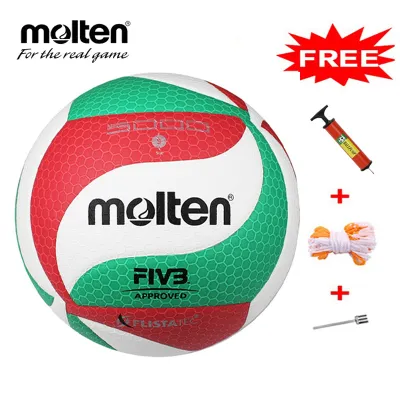
Molten’s flagship indoor series is the V5M5000, which features their patented FLISTATEC (Flight Stability Technology). This model is easily recognized by its distinct red, white, and green hexagonal panel design. The textured surface of the FLISTATEC ball is engineered to control the air disturbance around the ball during flight, resulting in a more stable and predictable trajectory when serving or setting. Premium match balls like the V5M5000 typically fall into the ₱3,500 to ₱5,000 price range. For intermediate indoor play, the V5M4500 offers a similar aesthetic and excellent touch using a premium composite synthetic leather cover, usually priced between ₱2,000 and ₱3,000. When purchasing a ball for official league play, always inspect the product packaging or the ball’s surface for official federation approval logos, such as the FIVB Approved or national association stamps, to ensure tournament legality.
The unique panel design and high-contrast color patterns of Molten’s indoor balls are not just for aesthetics; they significantly enhance visibility. On polished wooden or synthetic indoor floors, under bright gymnasium lighting, the rotating green, white, and red panels allow players to track the ball’s spin and speed instantly. This visual feedback is crucial for defensive players preparing to receive a spin serve or blockers timing their jumps.
Selecting a Molten Volleyball for Beach and Outdoor Play
Playing beach volleyball under the tropical sun of the Philippines requires a ball designed to withstand harsh outdoor elements. Unlike indoor balls, beach-specific volleyballs are built with water-resistant materials to prevent them from absorbing moisture from wet sand or coastal humidity. They feature a slightly larger circumference and a lighter weight compared to indoor balls, which helps players control the ball against unpredictable coastal winds and uneven footing on the sand.
A prime example of Molten’s outdoor craftsmanship is the V5B5000 beach volleyball. This model features a machine-stitched polyurethane cover designed to repel water and keep sand from penetrating the seams. The soft-touch construction ensures that players can comfortably pass and set the ball, even when playing in high-temperature environments. Before purchasing any outdoor ball, verify the water-resistance and outdoor durability specifications printed on the manufacturer’s product label or packaging to ensure it matches your intended playing environment.
The Philippine climate presents unique challenges for outdoor sports gear. Intense UV exposure can quickly degrade cheap plastics, causing them to crack, fade, or lose their shape. High relative humidity can also weaken adhesives used in laminated balls. Molten’s dedicated beach models address these issues by using UV-resistant synthetic materials and stitched panel construction rather than laminated seams. This ensures the ball maintains its structural integrity and roundness despite prolonged exposure to sun, salt, and sand.
Finding the Right Molten Training and Practice Ball
For schools, sports clubs, and recreational players who practice daily, premium match balls can be a costly investment that wears down quickly on rough surfaces. This is where dedicated training and practice volleyballs are essential. These balls prioritize extreme durability and cost-effectiveness over advanced aerodynamic flight. They are built to withstand high-volume usage, repetitive hitting drills against training walls, and the abrasive nature of outdoor concrete courts.
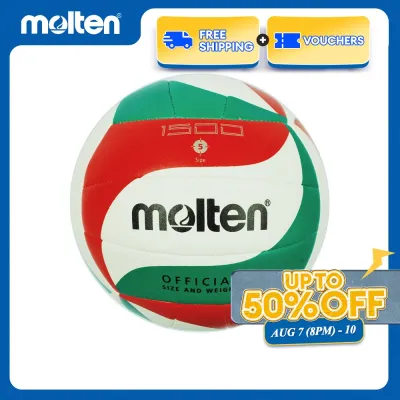
Molten offers several reliable practice lines, such as the V5M3500 and the V5M1500. The V5M3500 features a durable synthetic polyurethane cover that mimics the feel of a match ball while offering enhanced wear resistance, making it an excellent choice for school physical education classes and club training sessions. These durable training models are highly accessible, usually priced between ₱1,000 and ₱2,000, making them ideal for budget-conscious schools and clubs. The V5M1500 and various rubber-molded models are highly resilient options designed for casual outdoor play on asphalt or concrete barangay courts, where laminated leather balls would quickly scuff and peel.
Coaches and beginners should prioritize a softer touch and a durable cover over premium flight characteristics. When learning to pass, set, and serve, a ball with a cushioned or soft-touch synthetic cover reduces the sting on a player’s arms. This allows beginners to focus on correct form and technique without fearing physical discomfort. Furthermore, a highly durable cover ensures that the ball remains perfectly round and usable through months of rigorous, high-repetition drills.
Cross-Scenario Compatibility: Can One Ball Do It All?
It is a common temptation to buy a single volleyball and use it for indoor gyms, beach trips, and concrete court practice to save money and storage space. However, mismatching a volleyball to its unintended environment can ruin the ball and degrade your playing experience. If you take a premium, laminated indoor leather ball to a humid beach, the leather cover will absorb moisture and sand, making the ball heavy, waterlogged, and highly prone to peeling. Conversely, using a lightweight, stitched beach volleyball on a fast-paced indoor court results in sluggish, unpredictable flight paths and a lack of the crisp bounce required for indoor attacks.
If you are a competitive player or training seriously for a specific discipline, using a dedicated ball for each environment is strictly necessary. However, if you are a casual recreational player looking for a single compromise ball, a mid-tier synthetic training ball like the V5M3500 is your best option. While it will not perform perfectly on sand and will wear out faster on concrete than a rubber ball, its durable synthetic cover and balanced weight offer an acceptable middle ground for occasional, mixed-use casual games.
Maintenance and Care in Humid Climates
To maximize the lifespan of your volleyball in a tropical, high-humidity climate, consistent maintenance is essential. Proper care prevents premature material degradation, bladder leakage, and warping.
- Inflation and Pressure Checks: Always inflate your volleyball to the recommended pressure range printed directly around the ball's valve. Over-inflating the ball stretches the seams and panels, leading to warping, while under-inflation ruins the bounce and control. Always moisten your inflation needle with glycerin or soapy water before inserting it into the valve to avoid damaging the rubber core.
- Cleaning After Play: After a match, wipe down the ball with a soft, damp cloth to remove sweat, sand, dirt, and court dust. Avoid using harsh chemical detergents, bleach, or abrasive scrubs, as these can strip away the protective coating of synthetic leather and weaken laminated seams. Allow the ball to air dry completely in a shaded, well-ventilated area.
- Storage Best Practices: Store your volleyball in a cool, dry place away from direct sunlight, which can dry out the synthetic materials and cause the colors to fade. Avoid leaving the ball inside a hot car trunk or in an unventilated outdoor storage bin, as extreme heat can melt the adhesives holding the panels together and cause the inner bladder to expand and warp.

Community discussion
Share your experience or ask a question. Comments are reviewed before publication.